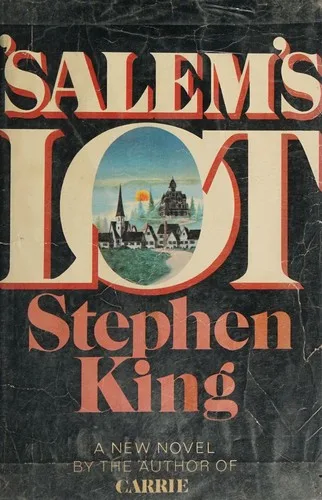
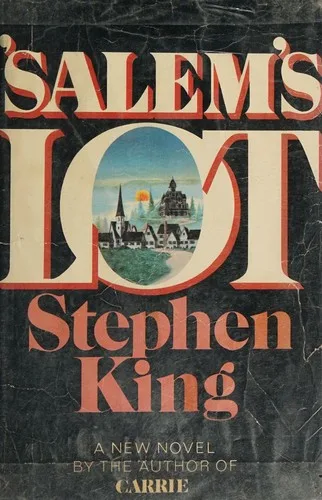
'Salem’s Lot
 72
72

'Salem’s Lot
Stephen King’s debut novel, 'Salem’s Lot, is an ambitious expansion of the vampire legend, grounding it in the mundane anxieties of small-town America. The strength lies in its painstaking depiction of dread; the slow seep of vampirism into Jerusalem's Lot feels terrifyingly plausible. King excels at showing the subtle shifts in community behavior, the growing unease that precedes overt horror. The passage describing the gradual transformation of the town's inhabitants into bloodthirsty creatures, their humanity draining away, is particularly unsettling. However, the novel occasionally falters under its own weight; the sprawling narrative sometimes dilutes the core tension, and the resolution feels somewhat rushed compared to the meticulous build-up. The introduction of Father Callahan and his subsequent fate offers a fascinating theological dimension but feels slightly disconnected from the primary narrative thrust. Ultimately, 'Salem's Lot remains a potent, if imperfect, examination of evil's insidious nature and humanity's struggle against it.
📝 Description
72
Stephen King's 1975 novel, 'Salem's Lot, depicts a Maine town's slow corruption by a vampiric entity.
Ben Mears returns to his childhood home of Jerusalem's Lot, a small Maine town, intending to confront a dark presence from his past. What he finds is a community gradually falling under the sway of an ancient vampiric evil. The narrative details the insidious spread of this corruption, transforming once familiar places into sites of dread. King focuses less on sudden frights and more on the psychological horror that comes with a community surrendering to an overwhelming darkness.
The story unfolds as Mears, a writer, works with a small group of townspeople to resist the encroaching evil. They uncover the source of the town's decay: a vampire named Barlow and his human servant, Richard Straker. The novel contrasts the mundane reality of small-town life with the supernatural invasion, highlighting the vulnerability of innocence and the difficulty of fighting a pervasive, insidious threat. It is a story about the loss of a community's soul.
Published in 1975, 'Salem's Lot arrived during a resurgence of interest in supernatural fiction, drawing on but also diverging from earlier vampire narratives. Unlike the aristocratic European vampires of Bram Stoker, King presents a more grounded, American evil that infects a community from within. This novel placed vampirism within a contemporary, small-town American setting, exploring its impact on ordinary lives and communal structures. It offered a vision of the occult that was less about ancient curses and more about the insidious corruption of familiar spaces.
💡 Why Read This Book?
• Gain insight into how Stephen King recontextualized the vampire archetype in his 1975 novel, moving beyond classic European figures to a uniquely American, small-town horror. • Understand the thematic exploration of rural decay and the 'Rot' that King uses to symbolize a community's vulnerability to external evil. • Witness King's early mastery of slow-burn dread, particularly in his depiction of the Marsten House as a locus of supernatural malevolence.
⭐ Reader Reviews
Honest opinions from readers who have explored this book.
❓ Frequently Asked Questions
When was Stephen King's 'Salem's Lot first published?
'Salem's Lot was first published in 1975, marking a significant early success for Stephen King in the horror genre.
What is the primary supernatural threat in 'Salem's Lot?
The primary threat is a vampiric entity, often referred to as an 'Anticarnate,' which systematically corrupts the residents of Jerusalem's Lot, Maine.
What is the significance of the Marsten House in the book?
The Marsten House serves as the physical manifestation of the town's hidden darkness and the focal point for the ancient evil that infiltrates Jerusalem's Lot.
How does 'Salem's Lot differ from traditional vampire stories?
It differs by setting the narrative in a contemporary American small town and focusing on the insidious, community-wide spread of vampirism rather than a singular aristocratic villain.
Who is the main protagonist returning to Jerusalem's Lot?
The main protagonist is Ben Mears, a writer who returns to his childhood home to confront a dark presence he experienced years earlier.
What does the concept of 'The Rot' represent in 'Salem's Lot?
'The Rot' symbolizes a pervasive decay within the town, suggesting a pre-existing vulnerability that the supernatural evil exploits to take root.
🔮 Key Themes & Symbolism
The Corruption of Innocence
The novel deeply explores how an ancient evil, embodied by the vampire presence, systematically corrupts the perceived innocence of a small, isolated community like Jerusalem's Lot. This corruption is not merely physical but psychic, transforming neighbors and friends into monstrous reflections of the darkness that has taken hold. The narrative traces this decay from its subtle beginnings to its full, horrifying realization, illustrating how external malevolence exploits internal vulnerabilities within the community's fabric.
Rural Decay and Isolation
King uses the setting of Jerusalem's Lot to depict a classic theme of rural decay, where economic decline and isolation create fertile ground for supernatural intrusion. The town's remoteness and the dwindling population mirror an internal malaise that makes its inhabitants susceptible to the 'Rot.' The Marsten House, a symbol of past transgressions and present dread, stands as a physical manifestation of this decay, drawing the malevolent force into the heart of the community and highlighting how isolation can amplify fear.
The Nature of Evil
Beyond a simple monster narrative, 'Salem's Lot probes the complex nature of evil. It presents evil not just as an external invader but as a force that can fester within a community, feeding on its secrets and weaknesses. The concept of the 'Anticarnate' suggests a profound perversion of life, a force that seeks not just destruction but the utter annihilation of soul and spirit, making the fight against it a desperate struggle for the very essence of humanity.
Resistance and Sacrifice
Against the backdrop of pervasive corruption, the novel examines the concept of resistance, symbolized by the 'Stakes' and the actions of the protagonists. It portrays the courage required to confront overwhelming evil, even when outnumbered and outmatched. The sacrifices made by characters like Ben Mears and Father Callahan underscore the personal cost of fighting such pervasive darkness, highlighting that true resistance often demands immense bravery and a willingness to face one's deepest fears.
💬 Memorable Quotes
Direct passages from the work, attributed to the author.
“The town itself was the evil.”
— This suggests that the malevolence isn't solely external but has roots within the community's history and psyche, making it a more insidious and pervasive threat.
“It was the house that was the heart of the evil.”
— The Marsten House is presented as the physical nexus of the supernatural darkness, a focal point from which the corruption spreads throughout Jerusalem's Lot.
“The evil was in the soil, in the air, in the water.”
— This emphasizes the pervasive and all-encompassing nature of the vampiric corruption, indicating it has saturated the very environment of the town.
“He was a vampire. He was the Devil.”
— This equates the primary vampiric entity with the ultimate embodiment of evil, highlighting the profound spiritual and existential threat it poses.
“They were not a town anymore, but a nest.”
— This stark imagery captures the complete transformation of the community into a breeding ground for supernatural evil, devoid of its former human identity.
🌙 Esoteric Significance
Tradition
While not explicitly tied to a single esoteric lineage, 'Salem's Lot engages with themes resonant in folk magic and certain interpretations of Gnosticism, particularly the concept of a pervasive, corrupting influence that infects both individuals and the collective consciousness. The idea of an 'Anticarnate' echoes Gnostic notions of a malevolent demiurge or archons distorting divine creation. The novel explores how this external corruption can manifest through physical locations like the Marsten House, aligning with principles of sympathetic magic and the power of place.
Symbolism
The Marsten House functions as a potent symbol of accumulated malevolence, a physical anchor for the vampiric entity, much like cursed objects or haunted sites in occult lore. The 'Rot' symbolizes not just physical decay but spiritual and moral degradation, a common motif in esoteric traditions signifying the consequences of imbalance or corruption. The vampire itself, beyond its folkloric roots, can be seen as representing the parasitic draining of life force or the shadow self that consumes the conscious being.
Modern Relevance
Contemporary horror fiction and media continue to draw inspiration from King's method of grounding supernatural threats in mundane settings. Modern practitioners of urban fantasy and dark folk horror often explore similar themes of ancient evils lurking beneath the surface of modern life. The novel's depiction of a community succumbing to an insidious force also finds echoes in discussions of mass psychology, social contagion, and the pervasive influence of negative ideologies in contemporary discourse.
👥 Who Should Read This Book
• Readers interested in the evolution of horror archetypes, specifically how Stephen King adapted the vampire mythos for a 20th-century American context. • Students of American Gothic literature seeking examples of how rural settings and small-town dynamics are used to explore themes of decay and hidden evil. • Fans of slow-burn horror who appreciate detailed character development and a meticulously crafted atmosphere of dread over sudden shocks.
📜 Historical Context
Stephen King's 'Salem's Lot, released in 1975, arrived during a resurgence of horror that saw works like Ira Levin's 'Rosemary's Baby' (1967) and William Peter Blatty's 'The Exorcist' (1971) achieve massive cultural impact. While these often focused on demonic possession or psychological manipulation, King transplanted the vampire mythos to a contemporary American small town. This move distinguished his work from the gothic aristocratic vampires of Bram Stoker, offering a more grounded, albeit terrifying, vision of evil infecting a familiar locale. The novel's reception solidified King's position as a master of contemporary horror, contrasting with the more overtly supernatural or religiously charged narratives gaining traction. His focus on the insidious spread of corruption within a community like Jerusalem's Lot provided a unique angle on the genre, tapping into anxieties about societal breakdown and the hidden darkness within seemingly placid environments.
📔 Journal Prompts
The insidious spread of the 'Rot' in Jerusalem's Lot.
Ben Mears' confrontation with the Marsten House.
The symbolic meaning of the 'Stakes' in the fight against evil.
Father Callahan's evolving understanding of the 'Anticarnate'.
The transformation of ordinary townspeople into vampiric entities.
🗂️ Glossary
Anticarnate
A term used in the novel to describe the ultimate vampiric entity, suggesting a being that is the antithesis of the living and the sacred, representing profound corruption.
The Rot
A concept referring to the pervasive decay, both physical and moral, that infects Jerusalem's Lot, creating fertile ground for the supernatural evil to take hold.
Marsten House
The central, dilapidated house in Jerusalem's Lot, notorious for its dark history and serving as the physical locus of the vampiric evil's influence.
Jerusalem's Lot
The fictional small town in Maine where the events of 'Salem's Lot take place, representing a microcosm of American rural life susceptible to supernatural invasion.
Stakes
While literally used against vampires, this term also symbolizes the community's resistance and the courage required to confront overwhelming evil.
Ben Mears
The protagonist, a writer returning to his childhood home in Jerusalem's Lot, who becomes central to the town's fight against the vampiric infestation.
Lowenstein
A character who, along with Ben Mears and Father Callahan, forms part of the group actively resisting the vampiric threat in Jerusalem's Lot.
🔮 Readers Also Liked
Browse all →








More by Stephen King
All books →

More Free Occult Philosophy Books
View all →