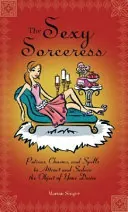
The only Wiccan spell book you'll ever need

 74
74

The only Wiccan spell book you'll ever need
Marian Singer's "The only Wiccan spell book you'll ever need" attempts a bold claim, and for the most part, delivers a serviceable compendium for the aspiring witch. Its strength lies in its organized presentation of common Wiccan practices, making it accessible to beginners. The explanations of the Sabbats, for instance, are clear and provide a good starting point for understanding the seasonal cycle of worship. However, the title's assertion of being the *only* book needed is its most significant limitation. While comprehensive for an introductory text, it cannot possibly encompass the vast and nuanced spectrum of Wiccan traditions and personal magical philosophies that have evolved. A passage detailing the casting of a circle feels somewhat generic, lacking the unique flair or deeper theoretical underpinnings found in more specialized grimoires. Ultimately, it serves as a solid foundation, but not the entire edifice.
📝 Description
74
Marian Singer's 2004 book aims to be the only Wiccan spell book a practitioner needs.
Marian Singer published "The only Wiccan spell book you'll ever need" in 2004, intending it as a comprehensive guide to Wiccan practice. The book consolidates core knowledge and practical applications for individuals engaging with Wiccan traditions. It covers a range of topics designed to equip readers with a basic understanding and tools for ritual.
This volume is suited for newcomers to Wicca or those wishing to deepen their current practice. It appeals to practitioners who prefer a structured method for learning and applying spellcraft, ritual, and the philosophy of the Craft. Readers interested in Wicca's historical and symbolic elements will also find relevant material.
Singer's work addresses fundamental Wiccan beliefs such as the Wheel of the Year, the concepts of God and Goddess, and the ethical guidelines of the Wiccan Rede. It describes different spell categories, including those for protection, prosperity, healing, and divination. The book also offers practical advice on ritual structure, altar arrangement, and the use of magical implements.
Published in 2004, this book reflects a period of growing public interest in Wicca and Neopaganism. It follows earlier popularizations of witchcraft and fits within a trend of authors codifying and presenting established Wiccan practices. Singer's work draws on traditions like Gardnerian or Alexandrian Wicca while also acknowledging more eclectic approaches that had become common. It serves as an accessible, introductory guide to the Craft.
💡 Why Read This Book?
• Learn practical spellcasting techniques grounded in the Wiccan Rede, offering a structured approach to ethical magical practice that differentiates it from more generalized occult texts. • Understand the cyclical nature of the Wheel of the Year and its associated Sabbats, a core concept in Wicca that informs seasonal rituals and magical timing. • Gain insights into the symbolism of the Wiccan God and Goddess, providing a foundational understanding of the divine duality central to many Wiccan paths.
⭐ Reader Reviews
Honest opinions from readers who have explored this book.
❓ Frequently Asked Questions
When was Marian Singer's "The only Wiccan spell book you'll ever need" first published?
Marian Singer's "The only Wiccan spell book you'll ever need" was first published in 2004, positioning it within the early 21st-century wave of accessible Wiccan literature.
What are the primary subjects covered in this Wiccan spell book?
The book covers core Wiccan practices including spellcraft, ritual structure, the Wheel of the Year, the concepts of God and Goddess, and the Wiccan Rede.
Is this book suitable for experienced Wiccans?
While it offers a comprehensive overview, experienced Wiccans might find it serves best as a foundational reference rather than a source for advanced or highly specialized techniques.
Does the book explain Wiccan ethics?
Yes, a significant aspect of the book is its explanation of the Wiccan Rede, a primary ethical guideline for practitioners.
What historical period does this book reflect in its approach to Wicca?
Published in 2004, the book reflects the growing accessibility and eclectic nature of Wiccan practice that characterized the early 2000s.
What is the 'Wheel of the Year' as discussed in the book?
The Wheel of the Year refers to the cycle of eight seasonal festivals celebrated in Wicca, marking solstices, equinoxes, and cross-quarter days, which the book details.
🔮 Key Themes & Symbolism
The Wheel of the Year
This theme explores the eight major Wiccan festivals that mark the turning of the seasons, from Samhain to Beltane. Singer details the mythological significance and common ritual practices associated with each Sabbat. Understanding this cycle is presented as fundamental to aligning magical work with natural energies, providing a framework for consistent spiritual observance throughout the year and connecting the practitioner to the earth's rhythms.
The Wiccan Rede
Central to the ethical framework of Wicca, the Wiccan Rede is presented as a guiding principle for magical and personal conduct. The book emphasizes the core tenets, notably 'An it harm none, do what ye will.' This theme explores how this directive shapes spell intentions, ritual actions, and interpersonal relationships within the Craft, promoting responsible and conscious application of magical power.
God and Goddess Archetypes
The book studies the dualistic divine, focusing on the archetypal representations of the Wiccan God and Goddess. It explains their symbolic roles in creation, nature, and human experience. This theme illuminates how practitioners invoke and honor these deities in ritual, understanding their energies as complementary forces that govern life, death, and rebirth, and influence magical workings.
Practical Spellcraft
This theme covers the 'how-to' of Wiccan magic, detailing the construction of spells for various purposes such as protection, prosperity, healing, and divination. It includes guidance on selecting ingredients, timing rituals, and focusing intent. The emphasis is on empowering the practitioner with actionable techniques, making magic an integrated part of their spiritual life.
💬 Memorable Quotes
Direct passages from the work, attributed to the author.
“The Wiccan Rede: 'An it harm none, do what ye will.'”
— This foundational ethical guideline underscores the importance of personal responsibility and non-maleficence in all magical and mundane actions undertaken by a Wiccan practitioner.
“The Sabbats mark the turning points of the Wheel of the Year.”
— This highlights the cyclical nature of Wiccan worship, linking spiritual practice directly to the observable changes and energies of the natural world throughout the annual cycle.
“Understanding the symbolism of the Horned God and the Triple Goddess is key.”
— This points to the central importance of the divine duality in Wicca, emphasizing that comprehending these archetypal energies is crucial for effective ritual and spiritual connection.
“Casting a circle creates a sacred space for ritual work.”
— This emphasizes the practical necessity of establishing a consecrated environment before undertaking magical operations, ensuring focus and protection for the ritual.
“Intent is the driving force behind every spell.”
— This underscores the psychological and energetic focus required in spellcasting, suggesting that the clarity and power of one's will are paramount to achieving magical results.
🌙 Esoteric Significance
Tradition
This work aligns broadly with the modern eclectic Wiccan tradition, drawing from established Neopagan frameworks that often synthesize elements of ceremonial magic, folk traditions, and nature worship. It departs from stricter, initiatory lineages like Gardnerian Wicca by offering a self-study guide intended for a wide audience, emphasizing accessibility over coven-based transmission.
Symbolism
Key symbols include the Pentacle, representing the five elements and protection, and the Horned God, symbolizing virility, nature, and the wild. The Triple Goddess, often depicted as Maiden, Mother, and Crone, embodies the lunar cycles and the feminine principle. These symbols are central to Wiccan cosmology and ritual, serving as focal points for energy and divine connection.
Modern Relevance
Singer's book continues to be relevant for individuals seeking introductory knowledge of Wicca in the digital age. Its structured approach to spellcraft and ritual appeals to contemporary practitioners who value clear, actionable guidance. The themes of nature-based spirituality and ethical magic are echoed in current eco-Pagan movements and the broader interest in mindfulness and personal empowerment through ritual.
👥 Who Should Read This Book
• Beginning students of Wicca seeking a foundational text that consolidates core beliefs, practices, and ethical guidelines for the Craft. • Individuals interested in exploring seasonal rituals and the mythology of the God and Goddess archetypes within a Wiccan context. • Aspiring practitioners who desire practical instruction on spellcasting, circle casting, and the use of magical tools for personal development.
📜 Historical Context
Marian Singer's "The only Wiccan spell book you'll ever need," published in 2004, arrived in a landscape significantly shaped by the writings of figures like Gerald Gardner and Doreen Valiente decades prior. The late 20th and early 21st centuries witnessed a proliferation of Wiccan and Neopagan literature, often aiming to synthesize established traditions with newer, eclectic approaches. This period saw Wicca moving further into mainstream visibility, with authors like Scott Cunningham offering gentler, nature-based paths. While Singer's work doesn't engage directly with specific academic debates or contemporary figures in the way a scholarly text might, its existence reflects the ongoing effort to codify and present Wiccan beliefs and practices to a growing audience. The book implicitly acknowledges the legacy of earlier traditions while catering to a generation seeking accessible, practical guides, a trend that contrasted with the more guarded, initiatory lineages that characterized earlier forms of the Craft.
📔 Journal Prompts
Reflect on the ethical implications of the Wiccan Rede in relation to a recent personal decision.
Consider the symbolism of the Horned God and the Triple Goddess in your own life experiences.
Map out the key dates of the Wheel of the Year and brainstorm personal connections to each Sabbat.
Describe your ideal sacred space for magical practice, drawing inspiration from the book's guidance on circle casting.
Analyze the role of intent in a spell you have previously attempted or are considering.
🗂️ Glossary
Wiccan Rede
A set of ethical principles guiding Wiccan practice, most famously encapsulated in the phrase 'An it harm none, do what ye will,' emphasizing personal responsibility and avoiding harm.
Wheel of the Year
The cycle of eight annual festivals celebrated in many Wiccan traditions, including the solstices, equinoxes, and cross-quarter days, marking the changing seasons.
Sabbat
One of the eight major festivals celebrated in Wicca, corresponding to points on the Wheel of the Year, often involving specific rituals and themes.
Coven
A group or gathering of Witches, typically numbering around thirteen members, who practice together under the guidance of a High Priestess and High Priest.
Pentacle
A five-pointed star, typically enclosed within a circle, used as a symbol of the five elements (Earth, Air, Fire, Water, Spirit) and representing protection and grounding in Wiccan practice.
God and Goddess
The dualistic divine principle central to many Wiccan traditions, representing masculine and feminine archetypal energies, often associated with nature, fertility, and the cycles of life.
Casting a Circle
The ritual act of creating a sacred, consecrated space for magical work by defining a boundary, often invoked with elemental and divine energies, which serves as both a focus and a protective shield.
🔮 Readers Also Liked
Browse all →







More by Marian Singer
All books →


More Free Witchcraft & Paganism Books
View all →