The Nix
 76
76

The Nix
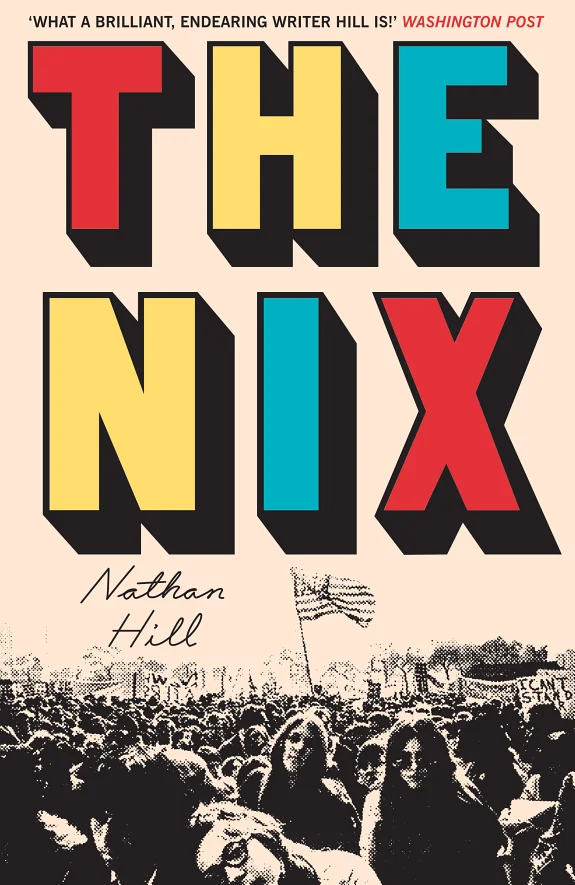
Nathan Hill’s The Nix is an ambitious, if occasionally overstuffed, exploration of familial estrangement and the seductive power of narrative. Samuel’s journey to comprehend his mother Faye’s radical past is the novel’s engine, a compelling premise that propels the reader through a series of intricately linked stories. Hill masterfully captures the disorienting effects of the digital age on public perception, particularly in Faye’s meteoric rise and fall in the news cycle. The novel's primary strength lies in its imaginative layering of myth, particularly the titular Nix, which imbues the contemporary setting with a palpable sense of ancient dread. However, the sheer scope of the narrative sometimes strains its coherence, with certain subplots feeling tangential rather than essential. A particularly striking passage involves Samuel’s childhood fascination with a local legend, a foreshadowing that gains chilling significance as Faye's story unfolds. Despite its structural challenges, The Nix offers a singular, often unsettling, perspective on the stories we tell ourselves and the forces that shape them. It is a novel that demands attention, even when it threatens to overwhelm.
📝 Description
76
Nathan Hill's 2017 novel, The Nix, weaves supernatural lore into a contemporary American story.
The Nix, published in 2017, is a substantial novel that begins with Samuel Andresen, a college professor whose life is disrupted when his mother, Faye, reappears. Faye had been absent for twenty years before she commits a public, politically charged act. Her sudden notoriety propels Samuel to investigate her past and the choices that led her away. His search uncovers a history connected to the folklore of the American Midwest.
This book appeals to readers who enjoy complex plots and well-drawn characters. It is for those who like literary fiction that includes elements of magical realism or mythic storytelling. The novel examines themes of identity, memory, and how stories shape our lives. Readers interested in a work that questions conventional narratives and explores the nature of truth will find it engaging.
The novel was released in 2017, a time of significant political division in the United States. Its depiction of a fractured America, influenced by media and online discussions, reflects the socio-political atmosphere of the mid-2010s. The book also connects to a long American literary tradition of incorporating folklore and the supernatural.
The novel draws upon the concept of the 'Nix,' a spirit from folklore that can lure individuals. This folkloric element is woven into Samuel's personal history and the broader American landscape. The book connects this specific myth to a larger American literary tradition of engaging with the supernatural and the mythic. It updates these themes for a contemporary audience, considering how ancient narratives manifest in modern life and digital culture.
💡 Why Read This Book?
• Gain insight into the modern American psyche by examining how media and online narratives, particularly concerning political radicalism as seen in Faye’s story, can shape public perception and personal lives. • Explore the enduring power of folklore and myth in contemporary life, understanding how figures like the Nix can serve as potent metaphors for destructive allure and societal anxieties. • Appreciate a layered narrative structure that interweaves personal history with broader cultural and historical currents, offering a unique perspective on identity formation and the nature of truth, as exemplified by Samuel’s quest to understand his mother.
⭐ Reader Reviews
Honest opinions from readers who have explored this book.
❓ Frequently Asked Questions
What is the significance of 'The Nix' in the book?
The 'Nix' is a folkloric water spirit that serves as a central metaphor. It represents destructive temptation, the seductive nature of radical ideologies, and the allure of narratives that can lead individuals to ruin, mirroring Faye's own trajectory.
What is Samuel's profession in The Nix?
Samuel Andresen, the protagonist, works as a college professor teaching English literature. He is also portrayed as a stalled writer and an obsessive online gamer.
When was The Nix published?
The Nix was first published in 2017, a period marked by significant political division and the pervasive influence of digital media in the United States.
What is Faye's 'absurd politically motivated crime'?
The book describes Faye's crime as an act that electrifies the news and inflames a divided America, though the specifics are revealed gradually. It's presented as a radical, attention-grabbing event tied to her political leanings.
Does The Nix have supernatural elements?
While primarily a work of literary fiction, The Nix incorporates elements of magical realism and folklore. The concept of the Nix spirit is central to its thematic exploration, blurring the lines between the literal and the mythical.
Who is the author of The Nix?
The Nix was written by Nathan Hill. It was his debut novel, published in 2017.
🔮 Key Themes & Symbolism
The Allure of the Nix
The folkloric spirit of the Nix is central, representing the dangerous seduction of ideologies, escapism, and destructive desires. It embodies the way narratives, whether personal or political, can lure individuals into perilous situations. Faye's radical actions and Samuel's obsessive gaming can be seen as modern manifestations of this ancient lure, drawing characters away from reality and towards potentially ruinous paths.
Memory and Narrative
The novel interrogates how memory functions, both individually and collectively. Samuel struggles to reconcile fragmented memories of his mother with the sensationalized public image of Faye. The book explores how stories are constructed, distorted, and inherited, suggesting that our understanding of ourselves and others is deeply intertwined with the narratives we choose to believe or create.
Digital Age Disconnect
Hill critically examines the impact of the digital age on identity and perception. The internet and mass media amplify Faye's story into a national spectacle, divorcing it from her personal history. Samuel's own detachment from reality through online gaming highlights a broader theme of modern alienation and the difficulty of forming genuine connections in an increasingly mediated world.
Generational Inheritance
The complex relationship between Samuel and Faye drives the narrative, exploring the burdens and legacies passed down through generations. Faye's past actions and choices profoundly impact Samuel's present, forcing him to confront the unresolved issues of his upbringing. The novel suggests that understanding one's heritage, however fraught, is crucial for personal growth and reconciliation.
💬 Memorable Quotes
Direct passages from the work, attributed to the author.
“The world was a story, and everyone was writing it.”
— This concept speaks to the novel's overarching theme of narrative construction. It implies that reality itself is shaped by the stories we tell and believe, both individually and collectively, and that we are all active participants in creating our perceived world.
“She had been a witch, a saint, a terrorist, a victim, a monster, and a mother, all at once.”
— This interpretation highlights the many-sided and often contradictory nature of Faye. It reflects the novel's exploration of how individuals can be perceived through various, sometimes opposing, lenses, particularly in the public sphere.
“The internet was a place where you could be anything you wanted to be, and sometimes that was the problem.”
— This idea points to the novel's commentary on online identity and escapism. It suggests that the boundless freedom of the internet can lead to a loss of self and detachment from reality, mirroring Samuel's gaming habits.
💡 Key Ideas
Editorial paraphrase of the work's core concepts — not direct quotes.
He had always been a good boy, his mother had told him, and a good boy he had remained, which was one of the reasons he’d never gotten anything.
This line captures Samuel's passive nature and his unfulfilled potential. It suggests a critique of conventional 'goodness' as a hindrance to achieving significant goals or embracing more adventurous aspects of life.
He didn’t know what he was looking for, but he was looking for it with all his might.
This paraphrased sentiment reflects Samuel's aimless yet determined pursuit of understanding his mother. It underscores his internal conflict and the nebulous nature of his quest, driven by a deep-seated need for answers.
🌙 Esoteric Significance
Tradition
While not explicitly aligned with a single esoteric tradition, The Nix draws heavily on Western folklore and archetypal psychology, particularly Jungian concepts of the collective unconscious. The figure of the Nix spirit echoes ancient animistic beliefs and water deities found across various mythologies, suggesting a connection to primal forces. The novel can be seen as a modern Gnostic exploration of hidden knowledge and the deceptive nature of the material world, with Faye's radicalism and Samuel's escapism representing different forms of seeking salvation or truth outside conventional structures.
Symbolism
The Nix itself is a potent symbol of dangerous allure, representing the seductive power of ideologies, forbidden desires, and the siren call of escapism that can lead individuals to ruin. Water, as the Nix's domain, symbolizes the unconscious, primal emotions, and the fluid, often treacherous, nature of memory and identity. The recurring motif of the 'Elf-Hill' from Scandinavian folklore suggests hidden realms and the influence of ancient, perhaps malevolent, forces on the human psyche, hinting at a world where mythic realities interpenetrate the mundane.
Modern Relevance
Contemporary thinkers and practitioners in areas like ecopsychology and depth psychology might find resonance in The Nix's exploration of humanity's relationship with nature and the unconscious. The novel's critique of media manipulation and online echo chambers aligns with current discussions in digital sociology and critical media studies. Furthermore, its engagement with archetypal figures and folkloric motifs appeals to those interested in modern myth-making and the application of Jungian archetypes in understanding contemporary psychological and societal phenomena.
👥 Who Should Read This Book
• Readers interested in contemporary American folklore and how ancient myths manifest in modern life, seeking to understand the symbolic weight of figures like the Nix. • Students of narrative theory and media studies who wish to analyze how digital platforms and sensationalism shape public perception and personal identity. • Those drawn to psychological explorations of family dynamics, estrangement, and the search for self, particularly when these themes are interwoven with elements of the uncanny and the mythic.
📜 Historical Context
Published in 2017, Nathan Hill's The Nix arrived at a moment of profound societal division in the United States, a context heavily reflected in the novel's narrative. The mid-2010s were characterized by intense political polarization and the burgeoning influence of social media and 24-hour news cycles, which the book critiques through its depiction of Faye Andresen's meteoric rise and fall in the public eye. This engagement with contemporary American life places Hill within a lineage of writers who use the present moment to explore enduring themes. While authors like Don DeLillo had previously explored media saturation and cultural fragmentation, Hill updates these concerns for the digital age, adding a layer of folkloric resonance. The novel taps into a rich vein of American literature that grapples with myth and the supernatural, akin to how Toni Morrison explored the spectral and the historical in her works. Reception of The Nix, while generally positive, often noted its ambitious scope and its blend of the mundane with the mythic, positioning it as a significant debut that captured the anxieties of its time.
📔 Journal Prompts
The Nix as a symbol of destructive allure and its manifestations in Samuel's gaming and Faye's radicalism.
Samuel's fragmented memories of Faye and the process of constructing personal history.
The role of the internet and media in shaping the public's perception of Faye Andresen.
Reflections on the Elf-Hill motif and its potential connection to hidden influences.
Samuel's journey from 'good boy' to a seeker of truth, and the cost of inaction.
🗂️ Glossary
The Nix
A folkloric water spirit, often depicted as a shapeshifter, known for luring humans, particularly children, to their deaths through enchantment or deception. In the novel, it serves as a central metaphor for dangerous allure.
Elf-Hill
A term drawn from Scandinavian folklore, referring to a mound or hill believed to be inhabited by elves or other supernatural beings. It symbolizes a hidden realm or a place where mythic forces are potent.
Faye Andresen
The estranged mother of the protagonist, Samuel. She reappears after decades, becoming a controversial public figure due to a politically motivated act, embodying themes of radicalism and mystery.
Samuel Andresen
The protagonist of the novel, a disillusioned college professor and writer who begins a quest to understand his mother's past and the reasons for her disappearance.
Magical Realism
A literary genre in which magical elements are presented in an otherwise realistic setting. The Nix incorporates this by treating supernatural or folkloric elements as part of the characters' reality.
Political Polarization
The divergence of political attitudes to ideological extremes. The novel reflects the intense divisions within American society during the mid-2010s.
Archetypal Psychology
A branch of psychology, notably developed by Carl Jung, that studies universal, archaic patterns and images that derive from the collective unconscious and are the psychic counterpart of instincts. The Nix embodies such an archetype.
This book appears in 1 collection
🔮 Readers Also Liked
Browse all →








From the “Self-Realization” Collection
View all →






More Free Occult Philosophy Books
View all →