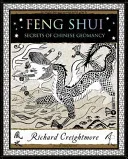
Feng Shuinge Space on Earth
 76
76

Feng Shuinge Space on Earth
Richard Creightmore’s "Feng Shuinge Space on Earth" grapples with the essential question of our environmental symbiosis. While the initial blurb promises answers to ancient secrets, the book often feels more like an academic survey than an esoteric revelation. Creightmore does well to connect Feng Shui's practical applications to its philosophical underpinnings, particularly when discussing the Five Elements and their energetic interplay. However, the narrative sometimes gets bogged down in descriptive passages without offering the clear, actionable guidance one might expect from a text aimed at improving one's living space. A notable strength is its detailed explanation of the Bagua map, presenting it not just as a tool but as a framework for self-reflection on different life aspects. The limitation lies in its occasional lack of direct, prescriptive advice for common spatial challenges. Ultimately, "Feng Shuinge Space on Earth" serves as a solid, if somewhat dry, introduction to the principles of environmental harmonization through Feng Shui.
📝 Description
76
Richard Creightmore's 2011 book demystifies Feng Shui as a structured system for harmonizing life with natural forces.
Feng Shuinge Space on Earth, published in 2011, examines the ancient Chinese art and science of Feng Shui. It unpacks the fundamental principles that connect human living spaces with their surroundings. The author presents Feng Shui not as mere decoration, but as a systematic method for aligning human existence with natural energies. This work is for individuals who want to apply Feng Shui practically, moving beyond superficial fixes. It suits beginners curious about the practice's origins and seasoned practitioners seeking a deeper philosophical understanding. Students of traditional Chinese culture and environmental harmony will also find value here. The book situates these enduring practices within their historical context, which stretches back to ancient Chinese cosmology and observations of nature. Early Feng Shui influenced settlement and architectural design, showing a respect for the natural world and its energetic currents.
Feng Shui's principles stem from ancient Chinese cosmology and observations of natural phenomena, evolving over millennia. Early applications were woven into settlement planning and architecture, reflecting a deep connection to the natural world and its energetic flows. This book engages with that long tradition, offering a modern interpretation of these time-tested practices. It connects these spatial principles to the well-being and prosperity of inhabitants, viewing the arrangement of spaces, object placement, and energy flow as critical factors.
💡 Why Read This Book?
• Gain a structured understanding of Qi, the vital life force central to Feng Shui, and learn how its flow can be influenced by spatial arrangements, as detailed in the book's exploration of energetic currents. • Discover the practical applications of the Five Elements theory, understanding how the interactions between Wood, Fire, Earth, Metal, and Water can be leveraged to create balance in your home or office environment. • Learn to interpret the Bagua map as presented by Creightmore, moving beyond its use as a simple directional tool to understand its role in analyzing and enhancing specific areas of your life.
⭐ Reader Reviews
Honest opinions from readers who have explored this book.
❓ Frequently Asked Questions
What is the primary goal of Feng Shui as explained in 'Feng Shuinge Space on Earth'?
The primary goal, as detailed in the book, is to achieve harmony between human dwellings and their natural environment, fostering balance and well-being for the inhabitants through the strategic arrangement of space and energy.
When was 'Feng Shuinge Space on Earth' first published?
'Feng Shuinge Space on Earth' by Richard Creightmore was first published on January 11, 2011.
Does the book discuss the concept of Qi?
Yes, the book explores Qi, the fundamental concept of vital life force energy in Chinese philosophy, and how its flow and balance are crucial within a living space according to Feng Shui principles.
What are the Five Elements mentioned in Feng Shui?
The book explains the Five Elements as Wood, Fire, Earth, Metal, and Water. It details their relationships, cycles of creation and destruction, and how they influence the energetic balance of a space.
Is the Bagua map a key concept in this book?
Yes, the Bagua map is a central concept. The book discusses its use as a tool for analyzing different areas of life (like wealth, health, relationships) within a specific space and how to enhance them.
What is the relationship between humans and their environment according to the book?
The book posits a deeply interconnected relationship, suggesting that human environments are not separate from nature but are energetic extensions of it, influencing and being influenced by natural forces.
🔮 Key Themes & Symbolism
Harmony with Nature
The work emphasizes that human habitations are not isolated structures but integral parts of the natural world. It explores how the ancient Chinese sages understood this connection, developing Feng Shui as a method to align living spaces with the Earth's energetic currents. The text details how environmental factors, from the placement of a building to the flow of water nearby, directly impact the inhabitants' well-being, promoting a philosophy of living in accordance with natural principles rather than against them.
The Flow of Qi
Central to the book's exploration is the concept of Qi, or vital life force energy. Creightmore explains how Qi permeates all things and how its circulation within a home or workspace is essential for health, prosperity, and harmony. The book guides readers on identifying areas where Qi may be stagnant or flowing too rapidly, offering insights into how spatial arrangements, architectural features, and even the presence of certain objects can influence this vital energy.
Symbolism of the Five Elements
The book looks at the dynamic interplay of the Five Elements: Wood, Fire, Earth, Metal, and Water. It illustrates how these elements, understood through their cyclical relationships of creation and destruction, form the energetic foundation of any environment. Readers learn how to identify the presence and balance of these elements within their surroundings and how to use this knowledge to foster specific qualities or mitigate imbalances, thereby enhancing the overall energetic quality of their space.
The Bagua as a Life Map
Creightmore presents the Bagua as more than a mere directional tool; it is depicted as a profound map that correlates specific areas of a space with different aspects of human life, such as career, relationships, health, and wealth. The work guides readers on how to apply the Bagua to their homes or offices, offering a framework for understanding energetic influences on various life pursuits and providing methods for enhancement and correction.
💬 Memorable Quotes
Direct passages from the work, attributed to the author.
“What is our relationship with the living environment?”
— This question, posed early in the book, frames the entire exploration of Feng Shui not just as an architectural discipline but as a philosophical inquiry into humanity's place within the natural order.
“How can we maintain the delicate harmony between humankind and the natural world?”
— This inquiry highlights the core objective of Feng Shui as presented by Creightmore: achieving a sustainable and balanced coexistence with the Earth's energetic systems, rather than imposing human will upon them.
“Feng Shui answers these questions and provides guidance to help us lead a more balanced live.”
— This statement, from the original blurb, underscores the practical, life-affirming purpose of Feng Shui as a system for improving daily existence through environmental alignment.
“The arrangement of space influences the flow of Qi.”
— This core principle illustrates the direct link between physical environment and energetic well-being, suggesting that conscious design and placement can actively shape the vital life force within a dwelling.
💡 Key Ideas
Editorial paraphrase of the work's core concepts — not direct quotes.
The ancient secret of Chinese sages concerned their profound attunement to natural energies.
This paraphrased concept suggests that the efficacy of ancient Chinese practices, like Feng Shui, lies not in arcane rituals but in a deep, observational understanding and integration with the subtle forces of nature.
🌙 Esoteric Significance
Tradition
Feng Shui, as presented in this work, aligns with a broad tradition of Taoist cosmology and traditional Chinese metaphysics. It is not strictly Hermetic or Kabbalistic but shares with them an emphasis on the interconnectedness of the microcosm (human environment) and the macrocosm (the universe) and the manipulation of subtle energies (Qi) to achieve balance and well-being. It represents a distinct, albeit complementary, stream of esoteric thought focused on terrestrial harmony and human habitation.
Symbolism
Key symbols explored include the Bagua, a foundational octagonal diagram representing the eight trigrams of the I Ching and correlating with life areas and natural forces. The Five Elements (Wood, Fire, Earth, Metal, Water) are central, symbolizing dynamic processes and the cyclical nature of existence. Qi itself is the ultimate symbolic representation of life force, the invisible current that animates and connects all things within an environment.
Modern Relevance
Contemporary thinkers and practitioners in fields such as sustainable design, biophilic architecture, and ecopsychology draw parallels with Feng Shui's core tenet of living in harmony with natural systems. Many modern Feng Shui consultants continue to utilize the principles outlined by Creightmore, adapting them for urban living and contemporary architectural styles, demonstrating the enduring appeal of harmonizing personal space with the broader energetic environment.
👥 Who Should Read This Book
• Aspiring practitioners of Feng Shui seeking a foundational understanding of its principles, including Qi, the Five Elements, and the Bagua, beyond superficial applications. • Individuals interested in comparative studies of environmental philosophy and traditional Chinese culture, looking to grasp how ancient societies viewed human-nature symbiosis. • Homeowners or designers aiming to create more balanced, supportive, and energetically harmonious living or working spaces by understanding the underlying principles of spatial arrangement.
📜 Historical Context
Published in 2011, Richard Creightmore's "Feng Shuinge Space on Earth" entered a landscape where Feng Shui had already seen significant popularization in the West, often stripped of its deeper philosophical context. The work sought to re-ground the practice in its classical Chinese roots, a lineage tracing back to early dynastic periods and cosmological texts like the I Ching. It emerged during a time when interest in Eastern philosophies and holistic living was burgeoning, offering an alternative to purely materialistic or Western scientific paradigms. While not directly engaging with a specific contemporary rival school of thought in the way that, for instance, Western Hermeticism might clash with alchemical traditions, Feng Shui itself occupies a space distinct from Western geomancy or the more spiritualized approaches to interior design prevalent at the time. Its reception, while generally positive among those seeking traditionalist interpretations, often navigated the challenge of bridging ancient wisdom with modern skepticism, a challenge faced by many esoteric disciplines entering the 21st century.
📔 Journal Prompts
The flow of Qi in your primary living space.
Your personal relationship with the Five Elements.
Interpreting the Bagua map for your current dwelling.
Reflecting on the harmony between your home and its surroundings.
The concept of living environments as extensions of natural forces.
🗂️ Glossary
Qi (Chi)
The fundamental concept of vital life force or energy that flows through all things in the universe. In Feng Shui, its balanced and harmonious circulation within a space is considered essential for well-being.
Five Elements
The five fundamental energies or phases: Wood, Fire, Earth, Metal, and Water. They are understood through their cycles of creation and destruction, influencing the energetic balance and characteristics of an environment.
Bagua
An octagonal map used in Feng Shui, divided into eight areas, each corresponding to a specific life aspect (e.g., wealth, health, relationships) and associated with a trigram, element, and direction.
Yin and Yang
The principle of complementary opposites, representing dualistic, interconnected forces that shape the universe. In Feng Shui, balance between Yin (passive, dark, feminine) and Yang (active, light, masculine) energies is crucial.
Shuai Qi
Stagnant or blocked Qi. This refers to areas where energy flow is impeded, potentially leading to negative effects on the inhabitants' health and fortune.
Sheng Qi
Vibrant or auspicious Qi. This refers to smooth, flowing energy that is considered beneficial for the inhabitants of a space.
Geomancy
A broader term for divination by geographic features or the interpretation of land configurations, often encompassing practices like Feng Shui.