The Mystery of Human Relationship
 80
80

The Mystery of Human Relationship
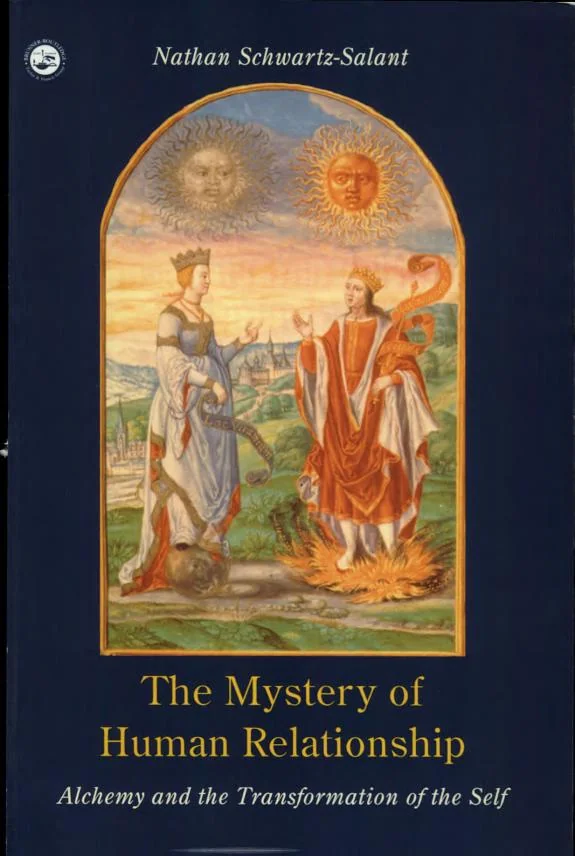
Nathan Schwartz-Salant’s *The Mystery of Human Relationship* offers a compelling, if dense, re-framing of relational difficulties through the lens of alchemy. The author, a Jungian analyst, adeptly uses the ancient transformative processes of alchemy as a metaphor for the inner work required to mend fractured connections. His argument that unconscious states act as poisons in relationships, yet can become antidotes when brought to light, is particularly striking. The section detailing how the *nigredo*, or blackening, stage of alchemy mirrors periods of despair and breakdown in relationships provides a vivid illustration of his thesis. While the depth of Jungian and alchemical concepts can make for challenging reading, the payoff for dedicated readers is a sophisticated understanding of relational patterns. The book’s limitation lies in its academic tone, which may alienate those seeking more practical, step-by-step guidance. Nonetheless, for those willing to engage with its symbolic language, Schwartz-Salant provides a unique map for psychic and relational integration.
📝 Description
80
In 1998, Jungian analyst Nathan Schwartz-Salant used alchemy to examine human relationships.
Nathan Schwartz-Salant's 1998 book, *The Mystery of Human Relationship*, applies alchemical principles to understand the dynamics of human connection. He suggests that unconscious psychological patterns, much like raw materials in alchemy, can negatively impact personal and public interactions. By recognizing and consciously working with these internal states, individuals can transform them, leading to healthier relationships and personal development. The book aims to illuminate the hidden forces that shape how people relate to one another in various contexts, from romantic partnerships to professional environments. Schwartz-Salant's work offers a symbolic interpretation of relational issues, appealing to those interested in depth psychology and the symbolic dimensions of the human psyche. It presents an alternative to purely cognitive or behavioral views on relationship dynamics.
This work is situated within the Jungian tradition, which sought to bridge spiritual and psychological understanding. Emerging in the late 20th century, it follows in the footsteps of Carl Jung and his followers, who often drew upon myth and symbolism. Schwartz-Salant's use of alchemy as a central metaphor places the book within a broader current of esoteric thought that engaged with psychological theory. It offers a symbolic lens on the inner life, contrasting with more empirical psychological approaches prevalent at the time.
💡 Why Read This Book?
• Gain a unique alchemical framework for understanding relational breakdowns, learning how the *nigredo* stage mirrors psychological despair in connections, as detailed in the book's early chapters. • Discover how unconscious psychological states, analogous to alchemical prima materia, can be transformed into positive relational forces when brought to consciousness. • Explore the application of Jungian concepts like projection and the shadow to interpersonal dynamics, providing specific insights unavailable in purely psychological texts.
⭐ Reader Reviews
Honest opinions from readers who have explored this book.
❓ Frequently Asked Questions
What is the primary psychological approach used in The Mystery of Human Relationship?
The book primarily employs Jungian psychology, with the author Nathan Schwartz-Salant being a noted Jungian analyst. He uses concepts like projection and the shadow to explain relational dynamics.
How does alchemy relate to human relationships in this book?
Schwartz-Salant uses the stages of alchemical transformation as an extended metaphor for the process of bringing unconscious psychological material related to relationships into conscious awareness.
When was The Mystery of Human Relationship first published?
The book was first published in 1998, placing it within late 20th-century psychological and esoteric literature.
What are some of the key psychological states discussed in relation to relationships?
The work explores how unconscious states, when unexamined, can create conflict. Bringing these states to consciousness is presented as the path to transforming negative relational patterns.
Is this book suitable for beginners in psychology?
While accessible, the book delves deeply into Jungian and alchemical symbolism, making it more suited for readers with some background or strong interest in these specific fields.
Who is Nathan Schwartz-Salant?
Nathan Schwartz-Salant was a prominent Jungian analyst and author known for his work integrating depth psychology with esoteric traditions, particularly alchemy.
🔮 Key Themes & Symbolism
Alchemy as Relational Process
The core of the book lies in its extended analogy between alchemical procedures and the transformation of human relationships. Schwartz-Salant maps stages like the *nigredo* (blackening) and *albedo* (whitening) onto periods of breakdown and purification within personal and public connections. This provides a symbolic language for understanding difficult relational phases, suggesting that just as alchemists worked with base materials to achieve gold, individuals can work with unconscious psychic material to achieve healthier bonds.
Unconscious States and Projection
Schwartz-Salant examines how unacknowledged psychological states, such as repressed emotions or undeveloped aspects of the personality (like the shadow or anima/animus), manifest externally through projection onto partners or colleagues. These projections distort reality and create conflict, mirroring the impurities that plague alchemical vessels. The book argues that recognizing these projected elements is crucial for relational healing and personal integration.
Consciousness and Transformation
The central aim is to elevate unconscious relational patterns into conscious awareness. This process of illumination is likened to the alchemical goal of the *lapis philosophorum* (philosopher's stone). By understanding the underlying psychic dynamics and the symbolic meaning of relationship difficulties, individuals can achieve a form of psychic integration that fosters more authentic and resilient connections. The book emphasizes that this is an active, ongoing process, not a passive outcome.
Public vs. Private Relationships
While many psychological texts focus on intimate partnerships, Schwartz-Salant extends his analysis to public and collective relationships. He suggests that the same alchemical principles of transformation apply to societal dynamics, political interactions, and group behaviors. Understanding the unconscious forces at play in personal life can offer insights into larger-scale relational issues, highlighting a universal applicability of these psychological and alchemical principles.
💬 Memorable Quotes
Direct passages from the work, attributed to the author.
“States of mind can undermine our relationships both private and public.”
— This captures the book's premise: internal psychological conditions, often unconscious, are not merely personal issues but actively shape the quality and success of our interactions with others.
“When brought to consciousness, these states can become positive factors.”
— This highlights the transformative potential central to the work. It suggests that the very elements causing relationship strife can become sources of strength and healing once understood and integrated.
“The analogy with alchemy provides a framework for understanding psychological processes.”
— This points to the book's unique methodology, using the ancient symbolic language of alchemy to interpret and explain complex dynamics within modern human psychology and relationships.
“Unconscious patterns create distortions in our perception of others.”
— This interpretation emphasizes the role of the unconscious in shaping our relational experiences, often leading to misinterpretations and conflict that stem from internal rather than external factors.
“The process of relationship repair mirrors alchemical transformation.”
— This suggests that the challenges and stages involved in healing relationships are not random but follow a discernible, symbolic pattern akin to the meticulous work of alchemical transmutation.
🌙 Esoteric Significance
Tradition
This work firmly belongs within the Jungian analytical psychology tradition, which itself has deep roots in Hermeticism and Gnosticism through Jung's own explorations. Schwartz-Salant extends this by explicitly adopting the framework of Western alchemy, treating its symbolic stages not as literal chemical processes but as metaphors for psychological transformation. It departs from literal alchemical practice by focusing exclusively on the inner, psychological correlate of the Great Work.
Symbolism
The primary symbolism revolves around alchemical stages. The *nigredo* (blackening) represents the initial breakdown and confrontation with the shadow or unconscious material in relationships, often experienced as despair or conflict. The *albedo* (whitening) signifies a purification process, where insights begin to emerge and the psyche starts to clear. The *rubedo* (reddening) symbolizes the integration of opposites and the achievement of a more conscious, unified state, leading to transformed relationships.
Modern Relevance
Schwartz-Salant's work continues to be relevant for contemporary depth psychologists, Jungian analysts, and those exploring the integration of spirituality and psychology. His alchemical approach to relationships finds echoes in modern somatic psychology and trauma-informed practices that emphasize embodied transformation. Thinkers and practitioners interested in archetypal psychology and the symbolic life find his work a valuable resource for understanding the deeper currents beneath interpersonal dynamics.
👥 Who Should Read This Book
• Jungian psychology students and practitioners seeking to apply alchemical symbolism to relational analysis. • Individuals interested in esoteric traditions who want to understand how ancient symbolic systems can illuminate modern psychological challenges. • Readers experiencing significant relationship difficulties who are drawn to symbolic interpretation and a deeper, non-conventional understanding of psychological processes.
📜 Historical Context
Published in 1998, *The Mystery of Human Relationship* arrived during a period when depth psychology continued to explore symbolic and archetypal dimensions, often in dialogue with cross-cultural spiritual traditions. Nathan Schwartz-Salant, a Jungian analyst, built upon the legacy of Carl Jung and figures like Erich Neumann, who explored the psychological significance of myths and symbols. This work can be seen as a continuation of the late 20th-century interest in integrating psychological insight with esoteric traditions, offering an alternative to the more empirically driven approaches gaining prominence in mainstream psychology. While not directly engaging with a specific contemporary competing school in this text, its alchemical framework implicitly contrasts with purely behavioral or cognitive-behavioral therapies that were influential at the time. The reception of Schwartz-Salant's work generally appealed to those within Jungian and analytical psychology circles, as well as individuals interested in the esoteric applications of psychological theory.
📔 Journal Prompts
The alchemical *nigredo* stage as a mirror to relationship breakdown.
Transforming unconscious states into positive relational factors.
Identifying projected elements in current relationships.
The symbolic meaning of *albedo* in personal growth.
Integrating shadow aspects within private and public connections.
🗂️ Glossary
Alchemy
An ancient philosophical and proto-scientific tradition concerned with the transformation of matter, often interpreted metaphorically as a process of psychological or spiritual purification and integration.
Jungian Analysis
A school of depth psychology founded by Carl Jung, focusing on the unconscious, archetypes, individuation, and the symbolic language of the psyche.
Nigredo
The first stage in alchemical transformation, often symbolized by blackening, dissolution, or putrefaction, representing a necessary breakdown or confrontation with the shadow.
Albedo
The second stage of alchemy, symbolized by whitening or purification, following the *nigredo*, representing the emergence of clarity and a cleansed state.
Rubedo
The final stage of alchemy, symbolized by reddening or the 'Great Work' achieved, representing the integration of opposites and the attainment of the philosopher's stone or psychic wholeness.
Projection
In Jungian psychology, the unconscious attribution of one's own unacceptable thoughts, feelings, or motives to another person.
Shadow
In Jungian psychology, the unconscious or repressed aspects of the personality that the conscious ego does not identify in itself.
This book appears in 1 collection
🔮 Readers Also Liked
Browse all →






From the “Jungian Psychology” Collection
View all →







More Free Occult Philosophy Books
View all →