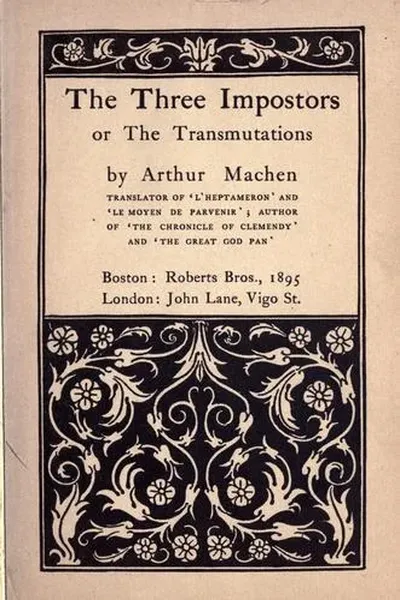
The modern alchemist

 81
81

The modern alchemist
Miller's "The Modern Alchemist" presents a compelling case for alchemy's continued relevance, framing its ancient practices within a modern psychological context. The strength of the work lies in its systematic approach, detailing alchemical stages with a clarity that few texts achieve. However, its dense prose and reliance on a specific hermeneutic can occasionally feel exclusive, demanding significant prior knowledge or focused study. A particularly striking passage is Miller's interpretation of the "nigredo" (blackening) not just as dissolution but as a necessary period of confronting the shadow self before any true work can commence. This book is a serious academic contribution for those prepared for its rigor.
📝 Description
81
Richard Alan Miller published 'The Modern Alchemist' in 1994, framing alchemy for consciousness and reality.
Richard Alan Miller's "The Modern Alchemist", first published in 1994, examines alchemical principles not as historical artifacts but as frameworks for understanding consciousness and reality. The book moves past simple interpretations, positioning alchemy as a complex psychological and spiritual discipline. It is written for dedicated students of esoteric traditions, those interested in the connections between science and mysticism, and individuals wanting to use alchemical symbolism for personal change. The work encourages readers to confront difficult ideas and to view the alchemical process as a metaphor for internal work. Miller's text entered the mid-1990s at a time when esoteric studies were seeing renewed interest. It provided an alternative to purely historical or symbolic viewpoints by stressing practical use and a psychological reading of alchemical procedures.
Miller's work positions itself within the Hermetic tradition, viewing alchemical operations as symbolic representations of inner development. It connects these ancient practices to modern psychological concepts, suggesting that the alchemist's quest mirrors an individual's path toward spiritual awareness and self-understanding. The book interprets core alchemical ideas, like the elements and the Philosopher's Stone, as allegorical stages in a process of transformation rather than literal physical changes.
💡 Why Read This Book?
• Understand the "Great Work" beyond literal metallurgy, learning its stages as psychological and spiritual transformations as detailed by Miller. • Explore the Four Elements (Fire, Water, Air, Earth) as archetypal forces within consciousness, a concept central to Miller's 1994 framework. • Grasp the symbolism of the Philosopher's Stone not as a physical object but as a state of perfected inner awareness, a core theme throughout the text.
⭐ Reader Reviews
Honest opinions from readers who have explored this book.
❓ Frequently Asked Questions
What is the primary focus of "The Modern Alchemist" by Richard Alan Miller?
The book focuses on interpreting alchemical principles and processes as a symbolic map for psychological and spiritual transformation, moving beyond literal interpretations of transmutation.
When was "The Modern Alchemist" first published?
Richard Alan Miller's "The Modern Alchemist" was first published in 1994.
Does the book offer practical alchemical exercises?
While emphasizing the psychological and symbolic application of alchemical stages, the work encourages internal practice and reflection rather than offering literal laboratory procedures.
Who is Richard Alan Miller?
Richard Alan Miller is an author and researcher known for his work on consciousness, parapsychology, and esoteric traditions, including alchemy and Hermeticism.
Is "The Modern Alchemist" suitable for beginners in esoteric studies?
The book is quite dense and assumes a certain familiarity with esoteric concepts. It's best suited for those with a foundational understanding or a dedicated interest in deeper study.
What distinguishes Miller's approach to alchemy from others?
Miller's approach is characterized by its systematic integration of alchemical stages with psychological models and a focus on the "Great Work" as a path of consciousness evolution.
🔮 Key Themes & Symbolism
The Alchemical Process
Miller frames the entire alchemical tradition as a metaphor for inner development. He systematically breaks down the Main work into stages like nigredo (blackening), albedo (whitening), citrinitas (yellowing), and rubedo (reddening), interpreting each as a distinct phase of psychological transformation. This involves confronting dissolution, purification, illumination, and ultimate integration of the self, offering a structured path for personal evolution.
Consciousness and Reality
The book posits that alchemical operations reflect fundamental processes of consciousness and the creation of reality. By understanding the symbolic language of alchemy, readers can gain insight into how subjective experience shapes perception and how the "Great Work" is a process of refining consciousness to perceive a more unified reality. It links internal alchemy to external manifestation.
Symbolism of the Elements
Miller explores the traditional Four Elements—Fire, Water, Air, and Earth—as representations of fundamental psychological states and energies. He explores their interplay and the importance of their balance and transmutation within the alchemical framework. This elemental symbolism is presented as a key to understanding both the external world and the internal field of the alchemist.
The Philosopher's Stone
Beyond the mythical substance capable of transmuting metals, Miller interprets the Philosopher's Stone as the ultimate goal of the alchemical journey: perfected consciousness, integrated selfhood, and spiritual enlightenment. Achieving the Stone is synonymous with completing the "Great Work," representing a state of profound wisdom and spiritual attainment.
💬 Memorable Quotes
Direct passages from the work, attributed to the author.
“The nigredo is not merely a stage of dissolution, but a necessary confrontation with the shadow.”
— This highlights Miller's psychological interpretation of alchemy, suggesting the initial chaotic or destructive phase is vital for integrating repressed aspects of the self before constructive work can begin.
“Alchemy offers a symbolic language for the evolution of consciousness.”
— This captures the core thesis of the book: that alchemical texts and processes are not literal but allegorical guides to inner development and spiritual maturation.
“The Four Elements represent fundamental modes of being and perception.”
— This points to the book's exploration of how Fire, Water, Air, and Earth function as archetypal forces that shape our experience and must be understood and balanced in the alchemical quest.
“The Main work is the blueprint for the perfected human.”
— This interpretation frames the alchemical "Great Work" as a comprehensive process aimed at achieving a state of wholeness, spiritual maturity, and ultimate realization for the individual.
“Transmutation begins within.”
— This short, impactful statement underscores Miller's emphasis on internal transformation as the primary locus of alchemical change, with external results being a consequence of inner work.
🌙 Esoteric Significance
Tradition
Miller's work is firmly rooted in the Western Esoteric Tradition, specifically drawing from Hermeticism and its alchemical branches. It seeks to reinterpret these ancient practices through a modern, often psychological lens, aligning with a lineage of thinkers who viewed alchemy as a path of inner development rather than literal metallurgy. It departs from purely dogmatic or ritualistic interpretations by emphasizing the symbolic and psychological dimensions.
Symbolism
Key symbols include the Philosopher's Stone, representing perfected consciousness and spiritual integration; the Four Elements (Fire, Water, Air, Earth), interpreted as fundamental psychological forces or states of being that must be balanced and transmuted; and the alchemical "Great Work" itself, symbolizing the journey of self-transformation and spiritual evolution.
Modern Relevance
Contemporary practitioners of Jungian psychology, transpersonal psychology, and various forms of modern Hermeticism often reference Miller's systematic approach. His work provides a framework for understanding consciousness evolution that continues to inform individuals seeking to integrate esoteric wisdom with personal growth and psychological well-being.
👥 Who Should Read This Book
• Students of Western Esotericism: Those seeking a structured, psychologically informed interpretation of alchemical stages and symbolism will find Miller's systematic approach valuable. • Consciousness Researchers: Individuals interested in the intersection of consciousness studies, psychology, and ancient wisdom traditions can explore Miller's mapping of alchemical processes onto internal states. • Spiritual Seekers: Those on a path of personal transformation who wish to understand the "Great Work" as a metaphor for inner development and the refinement of the self.
📜 Historical Context
Richard Alan Miller's "The Modern Alchemist," first published in 1994, emerged during a period of resurgence for esoteric studies, influenced by movements like the New Age but seeking a more rigorous, academic grounding. The 1990s saw increased scholarly attention to Hermeticism and Kabbalah, partly due to figures like Frances Yates' earlier work. Miller's approach distinguished itself by integrating alchemical symbolism with contemporary psychological theories and consciousness research, offering a distinct perspective from purely historical analyses or more mystical interpretations prevalent at the time. While not a direct engagement with a specific named contemporary author in its initial reception, it contributed to a broader discourse alongside works exploring Jungian psychology and comparative mythology, which often touched upon similar archetypal themes. The book aimed to legitimize alchemy as a serious discipline for personal transformation in an era increasingly open to such inquiries.
📔 Journal Prompts
Reflect on the "nigredo" stage of alchemical dissolution in your own life experiences.
Consider the Four Elements as they manifest in your daily emotional and mental states.
How does the concept of the "Philosopher's Stone" as perfected consciousness relate to your personal aspirations?
Map the stages of the "Great Work" onto a significant personal challenge you have faced.
Identify one aspect of yourself that requires "transmutation" according to alchemical principles.
🗂️ Glossary
Main work
Latin for "Great Work," referring to the entire process of alchemical transformation, often understood as a metaphor for spiritual development and the attainment of enlightenment.
Nigredo
The first stage of the alchemical process, often symbolized by blackness, representing dissolution, putrefaction, chaos, and the confrontation with the shadow self or unconscious material.
Albedo
The "whitening" stage, following the Nigredo. It symbolizes purification, washing away impurities, and the emergence of clarity and refined consciousness.
Citrinatas
The "yellowing" stage, sometimes considered a transition or a distinct phase between Albedo and Rubedo, often associated with dawning wisdom or the initial appearance of golden light.
Rubedo
The final "reddening" stage, symbolizing perfection, integration, the union of opposites (spirit and matter), and the achievement of the Philosopher's Stone or spiritual realization.
Philosopher's Stone
In alchemy, the legendary substance said to transmute base metals into gold and/or grant immortality. Miller interprets it primarily as a symbol of perfected consciousness and spiritual attainment.
Transmutation
The core alchemical concept of transformation, applied not only to metals but more importantly to the spiritual and psychological transformation of the alchemist, moving from a lower to a higher state of being.
🔮 Readers Also Liked
Browse all →








More by Richard Alan Miller
All books →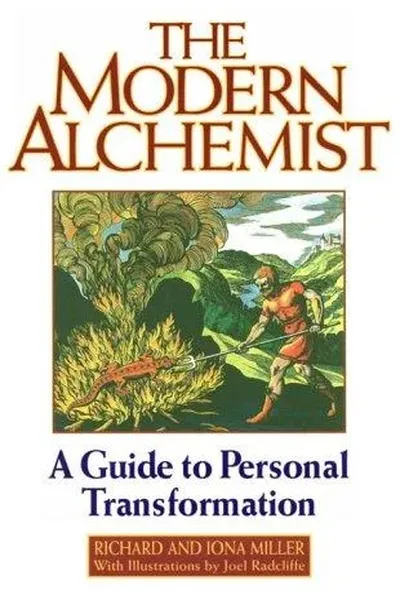

More Free Alchemy & Hermeticism Books
View all →