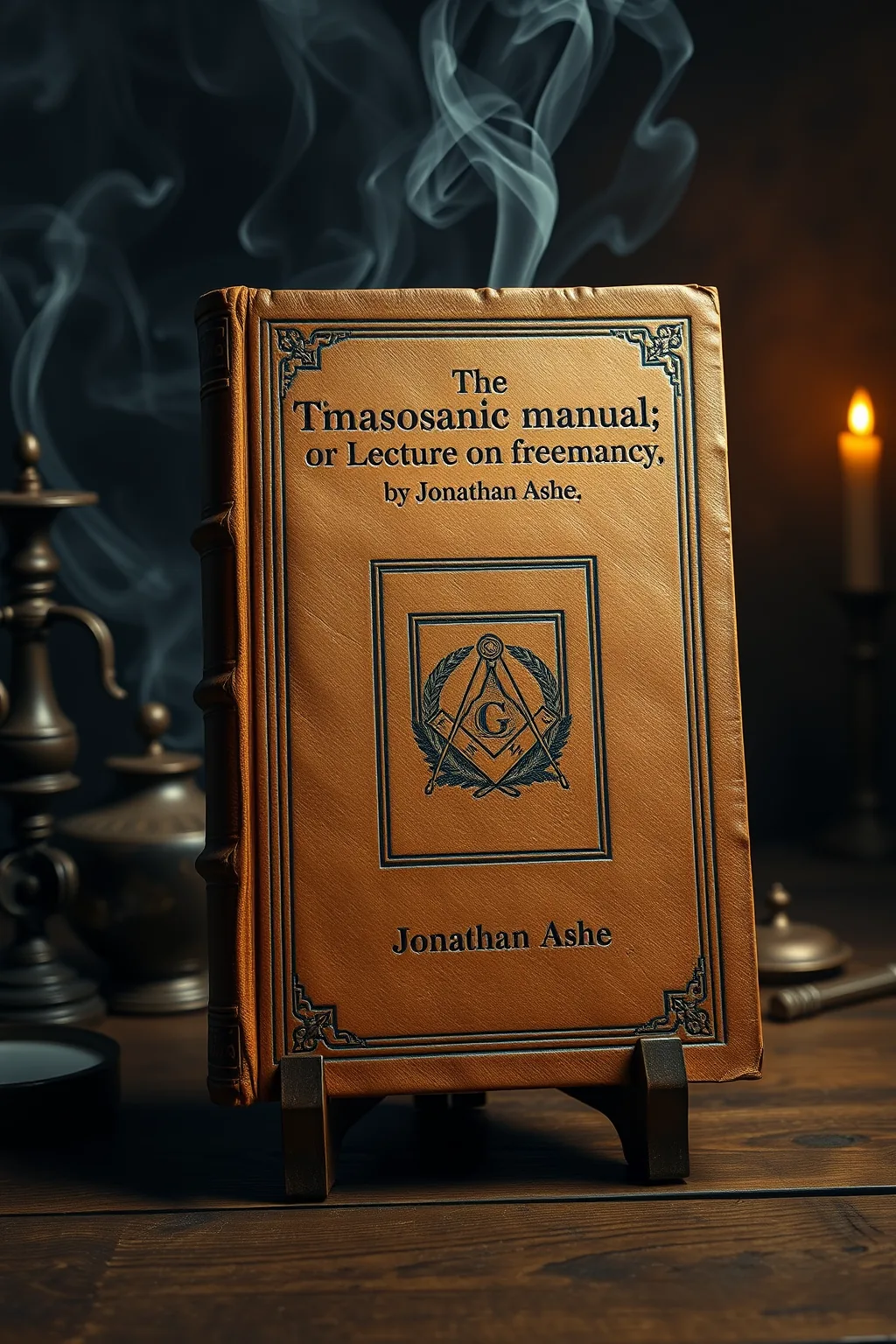
The masonic manual; or, Lecture on freemasonry
 77
77

The masonic manual; or, Lecture on freemasonry

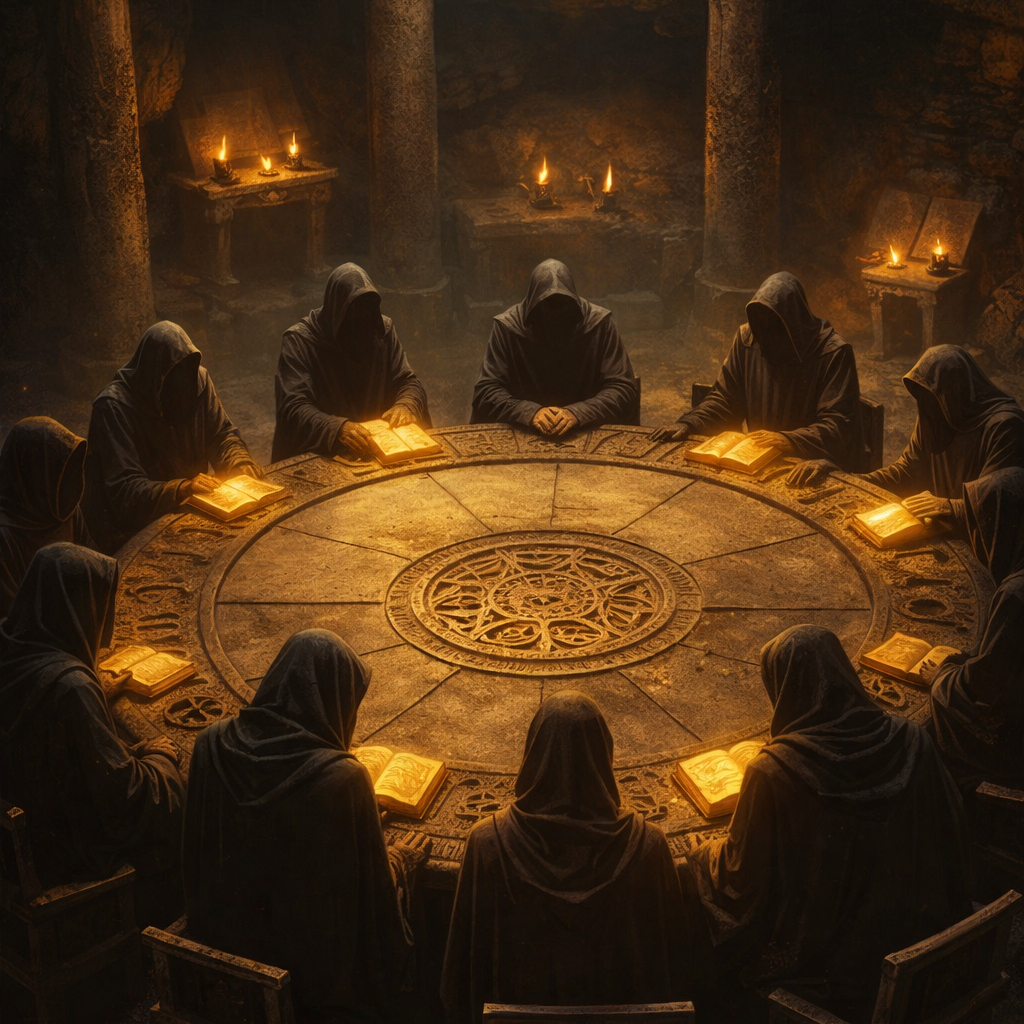

Lorelei Sage (Contemplative Literature Editor) — Jonathan Ashe’s 'The Masonic Manual' is a luminous beacon for those seeking to penetrate the veil of Freemasonry’s esoteric depths. Ashe masterfully deciphers the rich symbolism, illuminating the philosophical and spiritual currents that flow beneath the surface of Masonic practice. This isn't a superficial overview; it’s an invitation to contemplation, revealing the Craft as a potent vehicle for personal transformation. Its enduring strength lies in its ability to connect ancient wisdom with timeless human aspirations. Ideal for the dedicated student of occult traditions and the serious Freemason eager to grasp the profound significance of their initiatory journey.
📝 Description
77
Jonathan Ashe's 1882 'The Masonic Manual' explains Masonic philosophy and its symbolic system.
Jonathan Ashe's 'The Masonic Manual; or, Lecture on Freemasonry', published in 1882, examines the philosophical and symbolic aspects of Freemasonry. The book moves beyond a simple explanation of Masonic rituals, aiming to reveal the deeper mystical principles underlying the fraternity. Ashe presents each ritual and symbol not as isolated customs, but as tools for understanding universal truths and humanity's role in the cosmos.
This work functions as a guide for individuals seeking a more thorough comprehension of Masonic teachings. It aims to clarify the philosophical foundations of the organization. The lectures are written for those who look for meaning beyond the superficial, interested in the enduring principles that influence existence. The book suggests a path toward intellectual and spiritual insight by interpreting Masonic lore.
Published in 1882, Jonathan Ashe's 'The Masonic Manual' situates itself within the late 19th-century surge of interest in occult and esoteric subjects. It aligns with traditions that sought to interpret Freemasonry not merely as a fraternal order, but as a vehicle for spiritual initiation and philosophical inquiry. The book draws on a lineage of Masonic writers who viewed the Craft's rituals and symbols as keys to ancient wisdom, connecting them to broader Hermetic, alchemical, and Gnostic ideas about the cosmos and human consciousness.
💡 Why Read This Book?
Uncover the profound esoteric symbolism and philosophical underpinnings of Freemasonry. This manual serves as an essential guide for spiritual seekers, academic scholars of secret societies, and practicing Masons wishing to deepen their understanding of the Craft's hidden knowledge and transformative potential.
⭐ Reader Reviews
Honest opinions from readers who have explored this book.
❓ Frequently Asked Questions
What is the primary focus of 'The Masonic Manual'?
The primary focus is to elucidate the esoteric philosophy, rich symbolism, and spiritual teachings inherent within Freemasonry, presenting it as a system for personal growth and enlightenment.
Who is Jonathan Ashe?
Jonathan Ashe is the author of 'The Masonic Manual,' a respected figure whose work delves deeply into the philosophical and symbolic dimensions of Freemasonry.
Is this book suitable for non-Masons?
Absolutely. While it provides insights for Masons, its exploration of universal philosophical themes and symbolism makes it highly valuable for anyone interested in esoteric traditions and hidden knowledge.
What kind of knowledge can be gained from this book?
Readers can gain knowledge about Masonic rituals, allegorical interpretations, ethical teachings, and the philosophical quest for self-knowledge and universal truth.
Where was this digitized version sourced from?
This specific edition was digitized by Google from the library of Oxford University and later uploaded to the Internet Archive.
🔮 Key Themes & Symbolism
The Labyrinth of Symbolism
The Masonic Manual meticulously dissects the profound symbolic language of Freemasonry, presenting each emblem, gesture, and ritual as a key to unlocking deeper truths. It argues that the Craft's symbols are not mere decorations but potent vehicles for transmitting ancient wisdom, guiding the initiate through a metaphorical journey of self-discovery. Readers are encouraged to look beyond the literal, to perceive the allegorical and the spiritual dimensions embedded within the familiar forms, revealing a universe of interconnected principles and universal laws.
The Architect of the Soul
Fundamentally, , 'The Masonic Manual' posits Freemasonry as a spiritual discipline, a philosophical framework for constructing a virtuous and enlightened inner life. Jonathan Ashe guides the reader in understanding how Masonic teachings serve as blueprints for moral development and the cultivation of character. The emphasis is on the 'Great Architect of the Universe' not just as a supreme being, but as an internal principle of order and perfection that the Mason strives to emulate and manifest within themselves through diligent self-work and adherence to the Craft's ethical tenets.
The Unveiling of Hidden Knowledge
This manual is an invitation to a quest for hidden knowledge, a journey into the esoteric traditions that Freemasonry both preserves and transmits. Ashe's lectures offer a glimpse into a body of wisdom that has been carefully guarded and passed down through generations. The book champions the idea that true understanding comes not from superficial observation, but from diligent study, contemplation, and the willingness to engage with concepts that transcend the ordinary, thereby useful the path to higher consciousness and spiritual insight.
💬 Memorable Quotes
Direct passages from the work, attributed to the author.
“To build the temple within, one must first clear the ground without.”
— This speaks to the Masonic principle of self-improvement being intertwined with ethical conduct and societal contribution; inner transformation requires outer discipline and virtuous action.
“Light is the reward of diligent seeking.”
— This emphasizes the pursuit of knowledge and spiritual truth as a central tenet of Freemasonry, where persistence in study and contemplation leads to enlightenment.
“The square and compasses are but tools for the architect of character.”
— Illustrates that the physical tools of Freemasonry symbolize the moral and ethical principles used to shape and refine one's personality and integrity.
“Every lesson is a step upon the ascent.”
— This metaphor conveys the progressive nature of Masonic education, where each teaching or ritual learned contributes to an ongoing journey of spiritual and intellectual advancement.
💡 Key Ideas
Editorial paraphrase of the work's core concepts — not direct quotes.
The symbols speak to the soul, not just the mind.
This quote highlights the esoteric nature of Masonic teachings, suggesting that their true meaning is apprehended through intuitive understanding and spiritual perception rather than purely intellectual analysis.
🌙 Esoteric Significance
Tradition
This work is deeply rooted in the Western esoteric tradition, particularly within the lineage of Hermeticism, Neoplatonism, and Kabbalah, which have historically influenced Masonic symbolism and philosophy. It views Freemasonry not merely as a fraternal organization but as a living mystery school, offering initiatory pathways to gnosis – a direct, intuitive knowledge of the divine and the cosmos.
Symbolism
The manual meticulously decodes the body of Masonic symbols, from the rough and perfect ashlar representing the unrefined and perfected self, to the square and compasses symbolizing morality and spiritual discipline. These symbols are presented as archetypal keys, unlocking understanding of cosmic principles, human nature, and the divine order, inviting the practitioner to internalize their meaning for personal transformation.
Modern Relevance
In an age often characterized by superficiality and disconnection, 'The Masonic Manual' offers a profound antidote. Its emphasis on ethical living, self-reflection, and the pursuit of wisdom remains remarkably relevant. The symbolic language and philosophical insights provide a timeless framework for navigating life's challenges, fostering inner resilience, and seeking deeper meaning and purpose in a complex world.
👥 Who Should Read This Book
This volume is indispensable for the dedicated Freemason seeking to deepen their understanding beyond ritualistic practice, offering a rich philosophical and symbolic context. Academic scholars of esotericism, comparative religion, and secret societies will find it an invaluable primary source. Spiritual seekers curious about the nature of hidden knowledge and symbolic systems will discover a compelling introduction to Masonic thought. Practitioners of contemplative disciplines looking for frameworks of ethical development and self-mastery will also find profound resonance within its pages.
📜 Historical Context
Written during an era when Freemasonry was experiencing significant growth and intellectual engagement, 'The Masonic Manual' by Jonathan Ashe emerges from the late 18th and early 19th centuries, a period steeped in Enlightenment ideals and a burgeoning interest in esoteric philosophies. This was a time when secret societies were often seen as repositories of ancient wisdom, offering a structured path to self-improvement and moral rectitude in a rapidly changing world. The book reflects the intellectual currents of its time, blending philosophical inquiry with a structured approach to ritual and allegory, aiming to provide a comprehensive exposition for both initiates and those curious about the Craft's inner workings. Its influence lies in its accessibility and its dedication to articulating the profound philosophical underpinnings of the fraternity, contributing to the ongoing discourse on Masonic symbolism and its spiritual significance.
📔 Journal Prompts
Reflect on a personal 'temple' you are building within yourself. What are its foundations and what tools do you use?
Consider a symbol from your own life that holds deep, perhaps unspoken, meaning. What does it represent?
How does the concept of the 'Great Architect' resonate with your understanding of order and creation?
What does 'light' mean to you in the context of personal growth and understanding?
In what ways can the principles of 'clearing the ground' be applied to your external circumstances to foster internal change?
🗂️ Glossary
Ashlar
In Freemasonry, the ashlar refers to a stone, either rough or prepared, symbolizing the state of an individual's moral and spiritual development before and after Masonic instruction.
Great Architect of the Universe
A term used in Freemasonry to represent the supreme being or divine creator, emphasizing universal principles of order and design rather than a specific religious dogma.
Gnosis
A Greek term referring to spiritual knowledge or insight, often implying a direct, intuitive understanding of divine truths rather than propositional knowledge.
Initiation
The process of being formally admitted into a society or group, particularly in mystery traditions, involving symbolic rituals and teachings designed to transform the candidate.
Symbolism
The practice of using symbols to represent ideas, qualities, or concepts, a fundamental element in esoteric traditions for conveying complex meanings and facilitating deeper understanding.
This book appears in 2 collections
🔮 Readers Also Liked
Browse all →








More by Jonathan Ashe
All books →

From the “Secret Societies” Collection
View all →




More Free Freemasonry & Secret Societies Books
View all →