The Magic Books
 81
81

The Magic Books
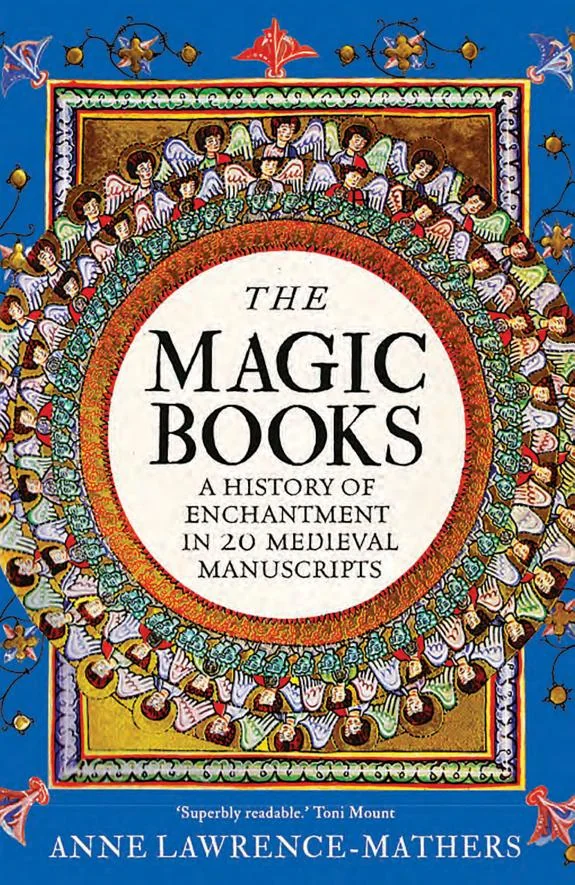
Anne Lawrence-Mathers' The Magic Books offers a meticulously researched exploration of medieval Europe's engagement with the supernatural. Its strength lies in its direct engagement with twenty key illuminated manuscripts, bringing to life a world where magic was a recognized intellectual discipline. The author effectively counters the simplistic notion of magic as mere superstition, illustrating its role alongside science and religion. A notable passage details the complex astrological calculations used by figures seeking to predict political events, underscoring the intellectual rigor involved. However, the sheer density of manuscript references, while commendable for scholars, might prove challenging for the casual reader seeking a more narrative approach. Ultimately, The Magic Books serves as an authoritative, albeit demanding, window into the magical worldview of the Middle Ages.
📝 Description
81
Anne Lawrence-Mathers' The Magic Books demonstrates magic's central role in medieval European life and thought.
This book examines the practice and perception of magic across medieval Europe, from the Carolingian era to Tudor England. Lawrence-Mathers argues against viewing magic as a marginal or purely superstitious phenomenon. Instead, she shows how rulers, clergy, and academics integrated supernatural practices into their daily lives and intellectual pursuits. The work highlights magic's connections to culture, science, and religion, revealing its sophisticated theoretical foundations and practical uses in a pre-modern context.
The book details how figures of authority sought supernatural aid for forecasting, healing, and exerting influence. It discusses concepts such as demonology, astrology, alchemy, and divination as they were understood and applied by medieval scholars. Lawrence-Mathers emphasizes the dynamic relationship between magic, official religious doctrines, and the nascent scientific inquiries of the time. The analysis extends to the visual culture of illuminated manuscripts, providing context for their historical significance.
The Magic Books situates the study of medieval magic within a broader tradition of understanding historical occult practices. It moves beyond simplistic classifications of magic as mere superstition, instead treating it as a complex system of belief and action that coexisted with, and often informed, mainstream religious and intellectual life. The book engages with the history of science and the history of religion to show how magical thought was a component of medieval cosmology and epistemology. This approach aligns with scholarship that seeks to understand the worldview of past societies without imposing modern rationalist biases.
💡 Why Read This Book?
• Understand the sophisticated intellectual framework of medieval magic, learning how figures like those in the Carolingian Empire used astrology and divination not as superstition, but as tools of governance and inquiry. • Gain insight into the visual language of magic through an examination of twenty specific illuminated manuscripts, appreciating how their illustrations conveyed complex esoteric concepts. • Discover the integral role magic played in medieval society, recognized by rulers and scholars from Renaissance Italy to Tudor England, challenging modern assumptions about its place.
⭐ Reader Reviews
Honest opinions from readers who have explored this book.
❓ Frequently Asked Questions
What is the primary focus of Anne Lawrence-Mathers' The Magic Books?
The primary focus is a historical survey of magic in medieval Europe, examining its integration into intellectual life, religion, and culture through twenty key illuminated manuscripts.
Which historical periods are covered in The Magic Books?
The book covers periods ranging from the Carolingian Empire, through Renaissance Italy, and into Tudor England, demonstrating a continuous engagement with magical practices.
What types of magic are discussed in the book?
The book discusses various forms of magic including demonology, astrology, alchemy, and divination, as understood and practiced by medieval scholars.
Who would benefit most from reading The Magic Books?
Scholars of medieval history, religious studies, and the history of science, as well as general readers interested in the occult and medieval intellectual history, will find it valuable.
What is the significance of the illuminated manuscripts mentioned?
The twenty key illuminated manuscripts serve as the primary source material, offering visual and textual evidence of medieval magical beliefs and practices.
Does the book portray magic as purely superstitious?
No, the book actively challenges this notion, presenting magic as a sophisticated intellectual discipline integrated with science and religion in medieval culture.
🔮 Key Themes & Symbolism
Magic as Intellectual Pursuit
Lawrence-Mathers argues that magic in medieval Europe was not a fringe practice but a recognized field of study, integrated with theology and nascent scientific inquiry. The book highlights how scholars and rulers engaged with concepts like astrology and divination not as mere superstition, but as sophisticated systems for understanding and influencing the world. This perspective challenges modern assumptions and reveals the complex intellectual field of the era, where harnessing supernatural power was a legitimate pursuit for extending life, predicting futures, and gaining knowledge.
Illuminated Manuscripts as Artifacts
The core of The Magic Books lies in its detailed examination of twenty key illuminated manuscripts. These manuscripts are presented not just as artistic objects but as crucial historical documents that reveal the practical and theoretical dimensions of medieval magic. The illustrations and texts within them offer direct evidence of how magical concepts were visualized, understood, and transmitted across generations, from the Carolingian period to the Renaissance. The book uses these visual artifacts to reconstruct a vibrant picture of magical practice.
The Interplay of Magic, Science, and Religion
This work emphasizes the fluid boundaries between magic, science, and religion in medieval Europe. Rather than viewing them as opposing forces, Lawrence-Mathers demonstrates how they coexisted and informed each other. Figures who practiced magic were often also respected religious authorities or scholars of natural philosophy. The book illustrates how magical techniques were employed to complement religious devotion or to investigate the natural world, reflecting a holistic worldview where the supernatural was an active component of existence.
The Authority of Supernatural Power
A central theme is the medieval preoccupation with harnessing supernatural power. Great rulers, religious figures, and scholars actively sought to summon spirits, predict the future, and prolong life, believing these abilities were attainable through specific rituals and knowledge. The Magic Books explores the motivations behind this pursuit, showing how the desire for control over destiny and the divine fueled the development and practice of various magical arts across different regions and social strata.
💬 Memorable Quotes
Direct passages from the work, attributed to the author.
“Medieval Europe was preoccupied with magic.”
— This opening statement sets the stage, asserting that magic was a pervasive and significant concern within medieval society, not a marginal phenomenon.
“From the Carolingian Empire to Renaissance Italy and Tudor England, great rulers, religious figures, and scholars sought to harness supernatural power.”
— This highlights the broad temporal and geographical scope of magic's influence, indicating its widespread acceptance across different eras and societal levels.
“Alongside science and religion, magic lay at the very heart of culture.”
— This interpretation positions magic as a fundamental pillar of medieval life, integral to the cultural and intellectual fabric, rather than something separate or opposed to established systems.
“They tried to summon spirits, predict the future, and even prolong life.”
— This concisely lists the practical aims of medieval magical endeavors, illustrating the concrete goals pursued through esoteric practices.
“In this beautifully illustrated account, Anne Lawrence-Mathers...”
— This suggests the book's visual richness, emphasizing the importance of the illuminated manuscripts in presenting the history of medieval magic.
🌙 Esoteric Significance
Tradition
This work sits within the broader tradition of Western Esotericism, specifically focusing on its medieval manifestations. It draws from Hermeticism, Neoplatonism, and folk magical practices that were synthesized during the Middle Ages. Unlike later, more systematized occult traditions like the Golden Dawn or Theosophy, Lawrence-Mathers examines magic as it was embedded within a predominantly Christian framework, often serving as a way to understand divine order or to interact with a world populated by angels and demons.
Symbolism
The illuminated manuscripts examined often feature potent symbols. For instance, celestial bodies (sun, moon, planets) are frequently depicted, representing astrological influences and divine governance. Angels and demons are also common motifs, symbolizing the forces that medieval practitioners sought to understand or command. The Tree of Life, in its nascent forms, may appear, hinting at cosmological structures. These symbols were not merely decorative but served as mnemonic devices and conceptual maps for working through the esoteric principles of the time.
Modern Relevance
Contemporary scholars of Western Esotericism and historians of magic frequently cite and build upon the foundational research presented in works like this. Practitioners of modern magical systems, particularly those interested in historical reconstruction or the roots of Hermeticism, find value in understanding the medieval context. Thinkers exploring the intersection of religion, science, and altered states of consciousness also draw parallels, recognizing the medieval approach to integrating the supernatural into everyday life as a precursor to modern esoteric thought.
👥 Who Should Read This Book
• Students of medieval history and culture: They will gain a deeper appreciation for the intellectual and spiritual field of the period, moving beyond simplistic interpretations of superstition. • Researchers in religious studies and the history of science: This book offers primary source analysis of how magical beliefs intersected with established religious doctrines and early scientific inquiry. • Enthusiasts of esoteric traditions and manuscript studies: Readers interested in the visual and textual evidence of magical practices, particularly through illuminated manuscripts, will find this volume rich with detail.
📜 Historical Context
The Magic Books arrives at a moment when scholarly understanding of medieval Europe is increasingly nuanced, moving beyond simplistic binaries of faith versus reason. Anne Lawrence-Mathers' work directly engages with a period, roughly from the 8th to the 16th centuries, where the lines between theology, natural philosophy, and what we now term magic were far more blurred. During the Carolingian Renaissance, figures like Charlemagne's court scholars were already documenting and engaging with a spectrum of practices. Later, during the Renaissance, scholars like Marsilio Ficino, while deeply entrenched in Neoplatonism, also explored astrological and Hermetic texts. Lawrence-Mathers' meticulous analysis of twenty illuminated manuscripts provides crucial primary source material, offering a counterpoint to purely theoretical or philosophical treatments of the era's intellectual currents. The reception of such works in its time often involved complex interactions within universities and courts, though direct censorship events specifically targeting these types of magical texts are less documented than for later periods, often being absorbed into broader condemnations of heresy or paganism.
📔 Journal Prompts
The role of astrology in the Carolingian Empire.
The visual representation of summoning spirits in specific illuminated manuscripts.
How medieval scholars balanced magic with religious doctrine.
The concept of prolonging life through esoteric means.
The integration of magic into the heart of medieval culture.
🗂️ Glossary
Carolingian Empire
The Frankish state ruled by Charlemagne and his successors from the late 8th to the late 9th century, a period of intellectual revival and manuscript production.
Illuminated Manuscript
A manuscript in which the text is supplemented by the addition of decoration, such as bordered pages, miniature illustrations, and initial letters in vibrant colors.
Demonology
The systematic study or belief concerning demons, their nature, hierarchy, and influence, often a component of medieval magical and theological discourse.
Astrology
The study of the movements and relative positions of celestial bodies interpreted as having an influence on human affairs and the natural world.
Alchemy
An ancient practice combining elements of chemistry, metallurgy, physics, medicine, astrology, semiotics, mysticism, and art, aimed at transmutation and the discovery of a universal elixir.
Divination
The practice of seeking knowledge of the future or the unknown by supernatural means, such as through omens, signs, or oracles.
Tudor England
The period of English history named after the House of Tudor, which reigned from 1485 to 1603, encompassing the reigns of Henry VII, Henry VIII, Edward VI, Mary I, and Elizabeth I.
This book appears in 1 collection
🔮 Readers Also Liked
Browse all →






From the “Astrology” Collection
View all →







More Free Astrology & Cosmology Books
View all →