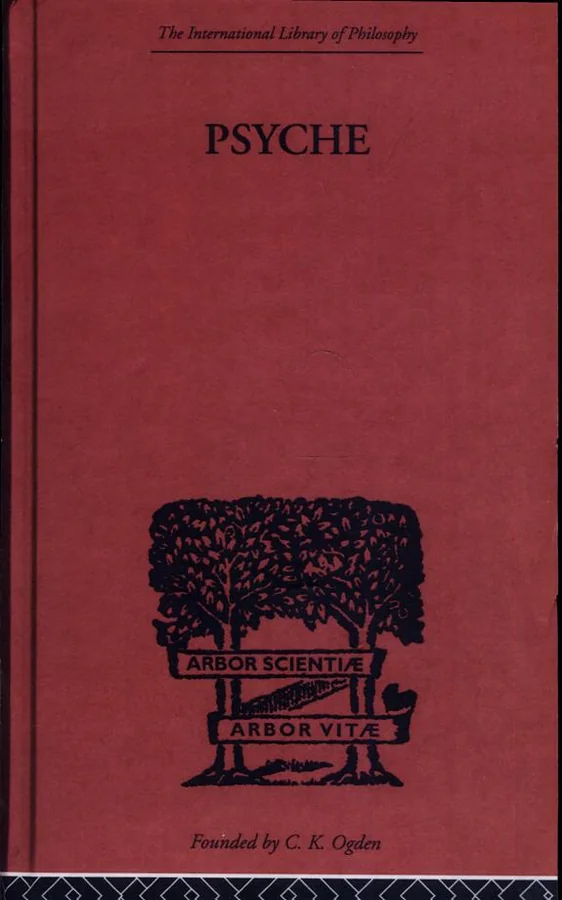
The Lost Land of Lemuria

 72
72

The Lost Land of Lemuria
Sumathi Ramaswamy's "The Lost Land of Lemuria" offers a rigorous unpacking of a persistent myth. The author meticulously charts the geographical and ideological journey of Lemuria, demonstrating how a speculative idea can embed itself into multiple disciplines. A particular strength lies in its tracing of Sclater's 1864 article, which first posited the Lemurian land bridge to explain primate distribution. However, the work occasionally suffers from an academic density that might deter the casual reader. The detailed analysis of Blavatsky's Theosophical Society, while crucial, could have benefited from more direct engagement with the broader societal impact of such movements. Ramaswamy’s careful dissection of the myth’s reception provides valuable insight into the era's anxieties and aspirations. It is a vital study for understanding the construction of esoteric narratives.
📝 Description
72
Sumathi Ramaswamy examines the myth of Lemuria, a continent supposedly linking India and Africa.
This book traces the origins and development of the Lemurian myth. Ramaswamy places the concept within late 19th and early 20th-century debates about lost continents and ancient civilizations. It appeared alongside other speculative theories on global prehistory.
The work looks at how the idea of Lemuria was built and changed over time. It follows the myth's path through different historical and intellectual trends. The book is for scholars of comparative mythology, the history of science, and esoteric traditions. It will interest anyone curious about how legends form, spread, and adapt across cultures and eras.
The myth of Lemuria fits within a late 19th century fascination with lost civilizations and alternative histories. It emerged from speculative anthropology and theosophy, often serving as a narrative to explain perceived gaps in established historical or geological records. Figures like Philip Sclater and Helena Blavatsky contributed to its popularization, linking it to theories of ancient races and spiritual evolution. This book examines how such ideas, blending scientific conjecture with occult thought, gained traction.
💡 Why Read This Book?
• Understand the specific 1864 genesis of the Lemuria myth as detailed in the book, revealing how scientific observations were reinterpreted to support continental theories. • Gain insight into the influence of figures like Philip Sclater on the popularization of lost continent narratives, beyond purely occult circles. • Explore the intersection of 19th-century biology and speculative geography, learning how Lemuria became a focal point for debates on human origins and lost civilizations.
⭐ Reader Reviews
Honest opinions from readers who have explored this book.
❓ Frequently Asked Questions
When was the concept of Lemuria first introduced in scholarly discourse?
The concept of Lemuria was notably introduced in scholarly discourse by zoologist Philip Sclater in 1864. His hypothesis aimed to explain the geographical distribution of certain species, particularly lemurs, by proposing a submerged continent.
Who were some key figures associated with the Lemuria myth?
Key figures include zoologist Philip Sclater, who first proposed the land bridge, and Helena Blavatsky, founder of the Theosophical Society, who incorporated Lemuria into her esoteric cosmology.
What scientific theories did the Lemuria myth attempt to address?
The myth of Lemuria primarily attempted to address biogeographical puzzles, such as the distribution of species across continents. It also became entangled with theories of ancient human origins and lost civilizations.
In which sea was Lemuria believed to have sunk?
Lemuria was believed to have sunk into the Indian Ocean. This geographical placement was central to its proposed connection between India and Africa.
How did occult traditions adapt the Lemuria myth?
Occult traditions, most notably Theosophy, adopted Lemuria as the original homeland of humanity, the first of a series of Root Races, predating Atlantis.
What is the main scholarly contribution of Sumathi Ramaswamy's work?
Ramaswamy's work provides a critical historical and intellectual genealogy of the Lemuria myth, tracing its path from zoological hypothesis to esoteric doctrine and popular legend.
🔮 Key Themes & Symbolism
Mythical Geography
The work meticulously traces the conceptualization of Lemuria, not as a physical place but as a geographical idea that shifted over time. It examines how this phantom continent was positioned to bridge continents and explain anomalies in both natural history and human origins. Ramaswamy shows how the myth served as a flexible framework for various speculative theories, demonstrating the power of geographical imagination in shaping belief systems.
Theosophical Cosmology
A significant portion of the book addresses Lemuria's integration into Helena Blavatsky's Theosophical system. Here, Lemuria is not merely a lost landmass but the cradle of the first Root Race. Ramaswamy analyzes how this esoteric interpretation transformed the myth into a foundational element of a new spiritual cosmology, influencing generations of occultists and seekers.
Science and Speculation
The book highlights the porous boundary between scientific inquiry and speculative fiction in the late 19th and early 20th centuries. It details how zoological observations by figures like Philip Sclater were reinterpreted and amplified, moving from biological hypothesis to a widely accepted esoteric narrative. This demonstrates how scientific ideas could be co-opted and transformed within broader cultural and mystical frameworks.
Racial Origins and Identity
Lemuria became deeply entwined with theories about ancient human races and their origins. The myth offered a narrative for humanity's distant past, often serving to reinforce or challenge prevailing ideas about racial hierarchies and evolution. Ramaswamy explores how these discussions reflected and contributed to the intellectual climate of the period concerning identity and ancestry.
💬 Memorable Quotes
Direct passages from the work, attributed to the author.
“The Lemurian myth served to explain species distribution.”
— This highlights the scientific impetus behind the initial conceptualization of Lemuria. It wasn't solely an occult invention but arose from attempts to solve biological puzzles in the 19th century.
“Helena Blavatsky placed Lemuria as the homeland of the first Root Race.”
— This points to the crucial role of Theosophy in elevating Lemuria from a geographical hypothesis to a central tenet of esoteric cosmology, defining humanity's primordial origins.
“The concept of a lost continent bridged disparate landmasses.”
— This interpretation underscores the geographical function of the Lemurian myth, illustrating its role in connecting continents like India and Africa within speculative prehistory.
“Philip Sclater's 1864 article is a key origin point.”
— This citation anchors the myth's documented history to a specific person and date, emphasizing its emergence within the scientific discourse of the era before wider adoption.
“Lemuria became a nexus for occult and scientific discussions.”
— This captures the interdisciplinary nature of the Lemurian concept, showing how it attracted interest from both scientific thinkers and those exploring mystical and esoteric ideas.
🌙 Esoteric Significance
Tradition
Lemuria is primarily associated with the Theosophical tradition, founded by Helena Blavatsky. Within Theosophy, it represents the Third Root Race, a primordial stage of human evolution preceding the Atlanteans. This work fits by tracing how Theosophical interpretations built upon earlier scientific hypotheses, transforming a zoological concept into a core component of a salvific spiritual history.
Symbolism
Lemuria symbolizes primordial origins and the ancestral past of humanity. It represents a state of being before the current material and intellectual complexities, a lost golden age. The sinking of Lemuria signifies a cosmic cycle of destruction and rebirth, a common motif in cyclical cosmologies, reflecting the impermanence of physical forms and the continuity of spiritual evolution.
Modern Relevance
Contemporary esoteric groups and New Age philosophies continue to draw upon the Lemurian narrative, often reimagining it as a highly advanced, spiritually pure civilization. Thinkers exploring ancient astronaut theories or seeking alternative historical timelines sometimes reference Lemuria. Its enduring appeal lies in offering a counter-narrative to mainstream historical accounts and a vision of a more harmonious, ancient human past.
👥 Who Should Read This Book
• Researchers of esoteric traditions: Those studying Theosophy, occultism, and the history of New Age movements will find a detailed account of Lemuria's development. • Historians of science: Scholars interested in how scientific ideas are adopted, adapted, and transformed into myth will gain insight into the Lemurian concept's origins. • Comparative mythologists: Individuals exploring global myths of lost continents and ancient civilizations will find a focused case study on Lemuria's unique trajectory.
📜 Historical Context
Published in 2004, Sumathi Ramaswamy's work revisits a myth that gained traction in the late 19th and early 20th centuries. This era was fertile ground for speculative theories about lost continents, influenced by discoveries in geology, archaeology, and evolutionary biology. The Lemurian concept emerged alongside Atlantis, often serving similar purposes: explaining unexplained phenomena and providing a mythic past for humanity. Key figures like zoologist Philip Sclater (1864) and occultist Helena Blavatsky (1888) were instrumental in its formulation and dissemination. Ramaswamy situates this within a broader intellectual current that sought to reconcile scientific findings with ancient wisdom or esoteric traditions, a trend seen in the burgeoning Theosophical Society. While not facing direct censorship, these ideas existed on the fringes of mainstream science, often debated by scholars like the geologist John William Dawson, who proposed alternative theories for land bridges.
📔 Journal Prompts
The Lemurian land bridge proposed by Sclater: What geological explanations are most compelling to you today?
Helena Blavatsky's interpretation of Lemuria: How does it contrast with scientific views of human evolution?
The sinking of Lemuria: Reflect on the symbolism of lost civilizations in myth.
The intellectual climate of the late 19th century: How did it foster the creation of Lemurian narratives?
Compare the Lemuria myth to other lost continent narratives like Atlantis.
🗂️ Glossary
Lemuria
A hypothetical lost continent, first proposed by zoologist Philip Sclater in 1864 to explain biogeographical distribution, later incorporated into esoteric cosmologies as a primordial human homeland.
Root Race
A concept within Theosophy, originating with Helena Blavatsky, referring to successive stages of humanity's evolution on Earth, with Lemuria representing the Third Root Race.
Theosophy
A spiritual movement founded by Helena Blavatsky in the late 19th century, seeking to synthesize Eastern and Western esoteric traditions and explore the hidden laws of nature and divine powers.
Biogeography
The scientific study of the past and present distribution of species and ecosystems in geographic space and through geologic time.
Phantom Continent
A term used to describe hypothetical or mythical landmasses that appear on maps or in speculative theories but lack geological or empirical evidence.
Philip Sclater
A 19th-century English zoologist who first proposed the existence of a submerged continent named Lemuria in 1864 to account for the distribution of lemurs in Madagascar and India.
Helena Blavatsky
Russian-born occultist and founder of the Theosophical Society, who integrated the concept of Lemuria into her complex cosmology of human spiritual evolution.
This book appears in 1 collection
🔮 Readers Also Liked
Browse all →









From the “Lemuria” Collection
View all →






More Free Occult Philosophy Books
View all →