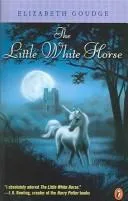
The Little White Horse
 72
72

The Little White Horse
Elizabeth Goudge's "The Little White Horse" presents a singular vision of childhood enchantment, one that feels both specific to its 1920 publication and enduringly potent. The novel’s greatest strength lies in its atmospheric prose; Goudge paints the Moortown landscape and the Moonacre estate with a delicate, almost tangible brush, imbuing the setting with a life of its own. Maria’s journey from orphaned uncertainty to confident inheritor of a magical world is handled with a tender touch. However, the narrative’s gentle pacing, while contributing to its dreamlike quality, occasionally falters, particularly in the resolution of the central feud, which can feel somewhat abrupt. The depiction of the ancient feud between the Merryweathers and the De Noailles, a core element of the plot, is rendered with a fairy-tale starkness that, while effective, lacks deeper psychological complexity. Nevertheless, the novel's inherent charm and the resonant symbolism of the white horse make it a distinctive piece of children's literature. It remains a charming exploration of inherited magic and the power of a pure heart.
📝 Description
72
Elizabeth Goudge's 1920 novel, The Little White Horse, centers on Maria Merryweather inheriting the Moonacre estate and its secrets.
Maria Merryweather, an orphan, comes to live at the Moonacre estate in the fictional West Country village of Moortown. She discovers her new home holds peculiar secrets, including a lineage of Merryweathers and a magical white horse. The narrative follows Maria as she uncovers the hidden wonders of Moonacre and confronts an ancient feud threatening the valley's peace.
The story appeals to young readers drawn to fairy tales, mystery, and magic. It also resonates with adults who value nostalgic literature, the prose of early 20th-century children's books, and narratives about courage, kindness, and imagination. Those interested in folklore and the natural world, woven into a story, will find particular enjoyment in this novel. Goudge's work offers a gentle, lyrical approach to fantasy.
Published in 1920, The Little White Horse emerged during a time when children's literature was shifting towards more lyrical and descriptive narratives. Goudge's work aligns with a tradition of pastoral fantasy prevalent in the interwar years, reflecting a broader cultural appreciation for rural settings. The novel incorporates themes of inherited legacies, both positive and negative, and uses symbols like the white horse for purity and guidance. It taps into a vein of folklore and natural magic familiar in English literature.
💡 Why Read This Book?
• Gain an appreciation for evocative, lyrical prose in children's literature, exemplified by Goudge's descriptions of the Moonacre estate and its surrounding environs. • Understand the symbolic significance of the white horse as a representation of purity, inheritance, and mystical guidance, central to Maria's journey. • Experience a narrative that explores the concept of inherited feuds and their resolution through love and courage, as seen in the ancient conflict between the Merryweather and De Noailles families.
⭐ Reader Reviews
Honest opinions from readers who have explored this book.
❓ Frequently Asked Questions
When was "The Little White Horse" first published?
"The Little White Horse" by Elizabeth Goudge was first published in 1920, marking its place in early 20th-century children's literature.
What is the main setting of "The Little White Horse"?
The story is primarily set in the fictional West Country village of Moortown and the inherited Moonacre estate, which becomes the focus of Maria Merryweather's adventures.
Who is the protagonist of "The Little White Horse"?
The protagonist is Maria Merryweather, a young orphan who moves to Moonacre and discovers its magical secrets and her family's legacy.
What is the significance of the white horse in the book?
The white horse is a central symbol in the novel, representing purity, magic, and the unique inheritance tied to the Moonacre estate and the Merryweather family.
What themes are explored in "The Little White Horse"?
The book explores themes of inheritance, family legacy, overcoming old feuds, the power of kindness, and the discovery of magic in the everyday world.
Is "The Little White Horse" considered an esoteric or mystical work?
While primarily a children's fantasy, its exploration of ancient legacies, symbolic imagery like the white horse, and the pervasive sense of hidden magic give it an esoteric undertone appreciated by readers interested in mystical literature.
🔮 Key Themes & Symbolism
Inherited Legacies and Feuds
The novel deeply explores the concept of inherited legacies, both in terms of property like the Moonacre estate and the enduring consequences of past actions, such as the ancient feud between the Merryweather and De Noailles families. Maria inherits not just a house, but a history laden with both beauty and conflict. This theme explores how present generations are shaped by the unresolved issues of their ancestors and the potential for a new generation, like Maria, to break cycles of animosity through understanding and compassion.
The Magic of the Ordinary
Goudge masterfully combines a sense of wonder into the everyday reality of Moortown and Moonacre. The extraordinary is not confined to a separate magical realm but is found within the familiar landscape, the local characters, and the natural world. The white horse itself embodies this, appearing as a creature of myth yet deeply connected to the land. This theme encourages readers to look for the hidden enchantment in their own lives, suggesting that perception and an open heart are keys to unlocking the magical.
Purity and Innocence
The character of Maria Merryweather embodies purity and innocence, qualities that are instrumental in her ability to perceive and interact with the magical elements of Moonacre. Her untainted perspective allows her to see past the superficial and understand the true nature of the ancient feud and the spiritual essence of her inheritance. The white horse also serves as a potent symbol of this purity, guiding Maria and representing the uncorrupted spirit that can overcome darkness and discord.
The Power of Love and Forgiveness
Central to the resolution of the story is the transformative power of love and forgiveness. Maria's inherent kindness and her ability to offer compassion, even to those involved in the long-standing feud, are what ultimately begin to mend the rift. The narrative suggests that genuine affection and the willingness to let go of past grievances are essential forces for healing and restoring harmony to both individuals and communities.
💬 Memorable Quotes
Direct passages from the work, attributed to the author.
“Maria Merryweather had been sent to make things right.”
— This interpretation highlights Maria's arrival at Moonacre not as a mere relocation, but as a divinely appointed mission to resolve the ancient, unresolved conflicts that plague the estate and its inhabitants.
“Love, in its purest form, has the power to heal all wounds.”
— This interpretation reflects the core message of the novel, suggesting that acts of genuine affection and selfless kindness, particularly from Maria, are the ultimate agents of reconciliation and restoration.
“The Moonacre estate held secrets that only a pure heart could unlock.”
— This concept underscores the idea that access to the deeper mysteries and magical potential of Moonacre is granted not through intellect or force, but through moral and spiritual clarity, embodied by the protagonist.
💡 Key Ideas
Editorial paraphrase of the work's core concepts — not direct quotes.
There are more things in heaven and earth than are dreamt of in your philosophy.
This quote, though often attributed to Hamlet, resonates within the book's context, suggesting that the magical and spiritual realities of Moonacre transcend ordinary understanding and rational explanation.
The white horse was the last of its kind, a creature of pure magic and ancient lineage.
This paraphrased concept emphasizes the symbolic weight of the white horse, positioning it as a rare and potent embodiment of the mystical forces tied to the Merryweather inheritance and the unique spiritual field of Moonacre.
🌙 Esoteric Significance
Tradition
While not explicitly aligned with a single esoteric school, "The Little White Horse" draws heavily from the archetypal narratives found in Western folklore and fairy tales, which often contain Gnostic and Hermetic undertones. The concept of a hidden spiritual reality accessible through a pure heart and a connection to nature echoes Gnostic ideas of divine sparks trapped in the material world. The inherited legacy of Moonacre and the symbolic white horse can be seen through a Hermetic lens as representing the transmission of esoteric knowledge and the potential for alchemical transformation within the individual and the land.
Symbolism
The most prominent symbol is the **white horse**, representing purity, divine guidance, and the untainted magical essence of the Moonacre estate. Its appearance often signals a shift towards revelation or resolution. The **Moonacre estate** itself symbolizes the inherited spiritual patrimony, a place where past and present converge, holding both burdens and blessings. The **ancient feud** between the Merryweather and De Noailles families can be interpreted as an allegory for the conflict between spiritual enlightenment (Merryweather) and material or ego-driven pursuits (De Noailles), a common theme in mystical traditions.
Modern Relevance
Contemporary readers interested in ecopsychology and nature-based spirituality find resonance in Goudge's depiction of the deep connection between the land and its inhabitants. The novel's exploration of breaking generational curses and healing ancient wounds speaks to modern therapeutic concepts and the growing interest in ancestral healing. Furthermore, its gentle introduction to symbolic storytelling and archetypal characters makes it relevant for those exploring Jungian psychology and the power of myth in personal development. The book's enduring charm continues to inspire creators in fantasy literature and film.
👥 Who Should Read This Book
• Young readers aged 8-12 who enjoy magical adventures, classic fairy tales, and stories with strong, kind protagonists. • Adults interested in nostalgic children's literature from the early 20th century, particularly those who appreciate lyrical prose and atmospheric settings. • Students of comparative mythology and folklore seeking examples of archetypal storytelling and symbolic representation in children's fiction.
📜 Historical Context
Published in 1920, Elizabeth Goudge’s "The Little White Horse" emerged in a literary landscape still influenced by the fantastical tales of authors like George MacDonald and the Edwardian era's pastoral sensibilities. The interwar period saw a strong demand for escapist literature, and Goudge’s lyrical prose and focus on childhood wonder offered a gentle counterpoint to the era's anxieties. While authors like A.A. Milne were creating enduring characters for children, Goudge’s work possessed a more overtly mystical and folkloric undercurrent. The novel received significant acclaim, winning the inaugural Carnegie Medal in 1921, a proof of its recognized quality and appeal within the burgeoning field of children's literature. Its reception highlighted a continued appreciation for classic fairy tale structures infused with a unique, atmospheric sensibility that distinguished it from more modernistic trends.
📔 Journal Prompts
Maria's arrival at Moonacre and the inherited white horse.
The nature of the ancient feud between the Merryweather and De Noailles families.
The symbolic meaning of the white horse as a mystical guide.
Reflecting on how ordinary settings can hold extraordinary magic.
The process of healing old grievances through acts of kindness.
🗂️ Glossary
Moonacre
The name of the inherited estate that Maria Merryweather comes to live in, which holds ancient secrets and a magical legacy.
Maria Merryweather
The young, orphaned protagonist of the story, who inherits Moonacre and discovers its hidden wonders and responsibilities.
The White Horse
A magical, symbolic creature associated with the Moonacre estate and the Merryweather family, representing purity and ancient power.
Moortown
The fictional village setting in the West Country where Moonacre is located, serving as the backdrop for the story's events.
The De Noailles family
The rival family to the Merryweathers, with whom they share a long-standing, ancient feud that forms a significant part of the novel's plot.
Inheritance
A central theme referring to the legacy passed down through generations, encompassing both material possessions and unresolved conflicts.
Esoteric Undertones
Subtle mystical or spiritual elements woven into the narrative, suggesting deeper meanings beyond the surface story, particularly related to magic and hidden realities.
🔮 Readers Also Liked
Browse all →








More by Elizabeth Goudge
All books →



More Free Occult Philosophy Books
View all →