The little giant encyclopedia of the zodiac

 83
83

The little giant encyclopedia of the zodiac
Diagram Group's effort, The Little Giant Encyclopedia of the Zodiac, presents a straightforward compendium of astrological lore. Its strength lies in its methodical organization, offering a clear breakdown of each sign's attributes, planetary rulers, and elemental affiliations. For instance, the concise explanation of Aries as a cardinal fire sign, ruled by Mars, is readily digestible. However, the work’s primary limitation is its encyclopedic, rather than interpretive, nature; it lists traits but offers minimal guidance on synthesizing them into a coherent astrological reading. The section on Mercury's influence, while informative, remains descriptive rather than analytical. It serves as a reliable, albeit dry, reference point for basic zodiacal information.
📝 Description
83
Published in 1997, The Little Giant Encyclopedia of the Zodiac by Diagram Group offers a clear guide to astrological signs.
This encyclopedia serves as a straightforward reference for the twelve zodiacal signs. It details each sign's characteristics, planetary rulers, elemental connections, and symbolic meanings in an easy-to-understand format. Whether you need basic knowledge or a quick check on specific astrological concepts, the book organizes this information accessibly.
Its intended audience includes those new to astrology, casual followers of the zodiac, or anyone curious about how astrological signs might relate to personality and life occurrences. The text explains astrological ideas clearly, without requiring prior study. Students of mythology and cultural studies might also find its structured approach to archetypal symbols useful.
The book systematically organizes the zodiac, covering all twelve signs from Aries to Pisces. It explains their cardinal, fixed, or mutable qualities and their associated ruling planets. Additionally, it breaks down the four elements (fire, earth, air, water) and the three modalities (cardinal, fixed, mutable) as fundamental elements for astrological interpretation.
The Little Giant Encyclopedia of the Zodiac draws on astrological traditions that span millennia, from ancient Babylonian astronomy through Hellenistic astrology and its development in medieval and Renaissance Europe. Published in 1997, its appearance coincided with a renewed interest in esoteric subjects during the late 20th century. This period saw increased access to information and a greater demand for tools of spiritual and personal insight outside mainstream thought. The volume represents a modern collection of established astrological lore.
💡 Why Read This Book?
• Learn the fundamental attributes of each of the twelve zodiac signs, including their elemental and modal classifications, providing a structured understanding of astrological archetypes as presented in the early sections. • Grasp the concept of planetary rulership within the zodiac, understanding how celestial bodies like Mars governing Aries are systematically assigned to signs, enhancing your interpretive vocabulary. • Explore the basic framework of astrological elements (fire, earth, air, water) and modalities (cardinal, fixed, mutable), which are foundational to astrological analysis and explained early in the text.
⭐ Reader Reviews
Honest opinions from readers who have explored this book.
❓ Frequently Asked Questions
When was The Little Giant Encyclopedia of the Zodiac first published?
The Little Giant Encyclopedia of the Zodiac was first published in 1997. This 1997 release positions it within a period of renewed interest in esoteric and astrological studies.
What is the primary focus of Diagram Group's zodiac encyclopedia?
The book's primary focus is on providing a comprehensive reference for the twelve zodiacal signs, detailing their characteristics, planetary rulers, elemental associations, and symbolic meanings in an accessible format.
Is this book suitable for beginners in astrology?
Yes, the encyclopedia is designed for novice astrologers and enthusiasts, offering clear explanations of astrological concepts without requiring prior specialized knowledge.
Does the book cover the historical development of astrology?
While it draws upon a long astrological tradition, the book primarily focuses on presenting established astrological lore rather than detailing its historical evolution or specific historical figures.
What are the core astrological concepts explained in the book?
The core concepts include the twelve zodiac signs, their modalities (cardinal, fixed, mutable), their ruling planets, and the four classical elements (fire, earth, air, water).
Who is the author or publisher of this encyclopedia?
The author is Diagram Group, known for producing factual and visual reference works across various subjects. The book was first published in 1997.
🔮 Key Themes & Symbolism
Zodiacal Sign Archetypes
The encyclopedia systematically profiles each of the twelve zodiac signs, from Aries to Pisces. It details their inherent qualities, assigning them to specific elements like fire, earth, air, and water, and modalities such as cardinal, fixed, or mutable. This structure allows for a deep dive into the symbolic representation of each sign, outlining personality traits, potential strengths, and challenges as perceived within astrological frameworks. The work meticulously catalogues these archetypal energies, providing a foundational understanding for interpreting astrological influences.
Planetary Rulerships
A central theme is the concept of planetary rulership, where each zodiac sign is associated with a specific planet in our solar system (e.g., Mars ruling Aries, Venus ruling Taurus). The book explains how these planetary energies are believed to imbue the signs with their particular characteristics. This framework is crucial for astrological interpretation, as it suggests a dynamic interplay between celestial bodies and earthly manifestations. The consistent application of these rulerships across the twelve signs forms a core interpretive key within the text.
Elemental and Modal Frameworks
The encyclopedia emphasizes the foundational astrological framework of the four elements (fire, earth, air, water) and the three modalities (cardinal, fixed, mutable). It explains how these categories are applied to the zodiac signs to create a nuanced understanding of their nature and function. For instance, fire signs are often described as energetic, while mutable signs are adaptable. This system provides a grid through which the complexities of individual astrological charts can be initially organized and understood.
Symbolic Representation
Underlying the encyclopedic entries is a deep engagement with the symbolic language of astrology. Each sign, planet, and element is presented not merely as data but as a potent symbol representing cosmic principles and human potentials. The book implicitly invites readers to consider these symbols as keys to understanding themselves and the world. The visual and conceptual associations with each zodiacal constellation are explored, highlighting the body of meaning woven into this ancient system.
💬 Memorable Quotes
Direct passages from the work, attributed to the author.
“Aries, the first sign, is a cardinal fire sign ruled by Mars.”
— This concise statement captures the core astrological classification of Aries, highlighting its active, initiating (cardinal) nature and its passionate, energetic (fire) quality, all under the dominion of the martial principle of action and assertion.
“Taurus is a fixed earth sign, governed by Venus.”
— This describes Taurus's stable, enduring (fixed) disposition and its connection to the material world and sensory experience (earth), with its ruling planet Venus signifying love, beauty, and material possessions.
“Gemini, a mutable air sign, is ruled by Mercury.”
— This highlights Gemini's adaptable, communicative (mutable air) nature, emphasizing its quicksilver intellect and capacity for information exchange, overseen by Mercury, the planet of communication.
“Cancer, a cardinal water sign, falls under the rulership of the Moon.”
— This defines Cancer's initiating (cardinal) approach to emotional matters and its deep connection to feelings and intuition (water), with the Moon representing nurturing, instinct, and the subconscious.
“Leo is a fixed fire sign, with the Sun as its ruler.”
— This identifies Leo's stable, self-assured (fixed) character and its vibrant, expressive (fire) energy, illuminated by the Sun, symbolizing vitality, ego, and self-expression.
🌙 Esoteric Significance
Tradition
This work is firmly rooted in the tradition of Western astrology, a lineage tracing back to Hellenistic Egypt and Mesopotamia, heavily influenced by Hermetic and Neoplatonic philosophies. It represents a modern, accessible distillation of this ancient system, focusing on the zodiacal wheel, planetary influences, and elemental correspondences. While not examining complex magical applications, it serves as a practical guide to the archetypal energies that Hermeticists and other esoteric practitioners have long used for self-understanding and divination.
Symbolism
Key symbols include the twelve zodiacal constellations, each representing a stage of cosmic and psychological development. The elemental symbolism (fire, earth, air, water) is paramount, categorizing energies into passionate, grounded, intellectual, and emotional expressions. The modalities—cardinal (initiation), fixed (stability), and mutable (adaptability)—further refine these archetypes, providing a framework for understanding how different signs manifest their core nature and interact with the world.
Modern Relevance
Contemporary practitioners of psychological astrology, self-help gurus, and even some New Age spiritualists draw upon the foundational astrological principles presented in this book. Its clear categorization of signs, planets, and elements provides a common language for discussing personality archetypes and life patterns. While more advanced traditions might layer complex techniques, this encyclopedia remains a touchstone for understanding the basic symbolic grammar that underpins much modern astrological discourse and personal growth work.
👥 Who Should Read This Book
• Aspiring astrologers seeking a clear, structured introduction to the twelve zodiac signs, their ruling planets, and elemental associations, providing a reliable first reference point. • Individuals interested in understanding the basic archetypes and symbolic language of Western astrology for personal insight or comparative study of mythologies. • Researchers of cultural history or comparative religion looking for a concise overview of how astrological concepts have been codified and presented in popular formats.
📜 Historical Context
The Little Giant Encyclopedia of the Zodiac, published in 1997, emerged during a significant period of renewed global interest in esoteric practices and alternative spiritualities. While the book itself is a modern compilation, it draws heavily from a tradition of Western astrology that coalesced during the Hellenistic period (roughly 300 BCE – 300 CE) and was further developed through the Renaissance. Key figures like Claudius Ptolemy, whose 2nd-century CE work 'Tetrabiblos' laid foundational astrological principles, influenced the enduring astrological language this book utilizes. The late 20th century saw astrology move from fringe circles into mainstream self-help culture, partly due to accessible publications like this, contrasting with earlier eras where astrological practice was sometimes viewed with suspicion or even persecuted by religious authorities. Contemporary to its release, authors like Liz Greene were exploring psychological astrology, offering a different, more depth-oriented approach than this encyclopedia's factual listing.
📔 Journal Prompts
The cardinal fire sign Aries and its Martian rulership.
The fixed earth sign Taurus and its connection to Venusian themes.
The mutable air sign Gemini and the influence of Mercury.
The elemental qualities of Cancer, the cardinal water sign.
The fixed fire energy of Leo, ruled by the Sun.
🗂️ Glossary
Cardinal Signs
The four zodiac signs (Aries, Cancer, Libra, Capricorn) that initiate each season. They are associated with starting new ventures, leadership, and taking action.
Fixed Signs
The four zodiac signs (Taurus, Leo, Scorpio, Aquarius) that fall in the middle of each season. They are known for their stability, persistence, and resistance to change.
Mutable Signs
The four zodiac signs (Gemini, Virgo, Sagittarius, Pisces) that fall at the end of each season. They are characterized by adaptability, flexibility, and a talent for communication or mediation.
Elemental Associations
The categorization of zodiac signs into four classical elements: Fire (Aries, Leo, Sagittarius), Earth (Taurus, Virgo, Capricorn), Air (Gemini, Libra, Aquarius), and Water (Cancer, Scorpio, Pisces), each representing distinct energies and modes of expression.
Planetary Rulership
The assignment of a specific planet (e.g., Mars, Venus, Mercury) to govern each zodiac sign, suggesting that the planet's energies influence the sign's characteristics and expression.
Zodiac
A belt of the heavens extending about 8 degrees on either side of the ecliptic, divided into twelve equal parts, each called a sign, through which the sun, moon, and planets appear to move.
Archetype
A universally understood symbol, character, or pattern of behavior, often drawn from mythology or psychology, which is believed to represent fundamental human experiences or energies.
🔮 Readers Also Liked
Browse all →








More by Diagram Group
All books →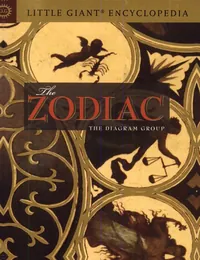


More Free Astrology & Cosmology Books
View all →