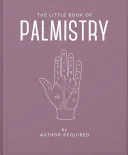
The Little Book of Palmistry
 81
81

The Little Book of Palmistry
Orange Hippo!'s contribution to the palmistry canon, *The Little Book of Palmistry*, arrives with a refreshing lack of pretension. It sidesteps the grand pronouncements often found in such guides, opting instead for clear, direct instruction. The emphasis on the hand's overall structure, beyond just the major lines, is a notable strength, aligning with more traditional interpretations of chiromancy. However, the brevity, while an asset for accessibility, sometimes feels like a missed opportunity to explore the nuanced interplay between mounts, plains, and lines in greater detail. A particularly effective passage explains how the 'Earth' hand shape, characterized by a square palm and short fingers, suggests a grounded, practical nature. While comprehensive for a beginner, seasoned practitioners might find its scope limited. It serves as a solid, uncomplicated primer for novice diviners.
📝 Description
81
Published in March 2023, The Little Book of Palmistry simplifies chiromancy for modern readers.
This book offers a clear guide to palmistry, moving beyond just the major lines. It examines the hand's overall structure, including its mounts and plains, to provide a fuller picture of an individual. The author breaks down the practice into easy-to-understand parts, making it suitable for anyone new to interpreting hands. It aims to make the ancient art of chiromancy accessible, focusing on practical interpretation.
The volume is designed for people interested in self-understanding and divination, especially through visual and tactile means. It is a good starting point for those exploring esoteric subjects and wanting a straightforward method for reading palms. The book presents the hand as a map of a person's character and potential.
Palmistry has a long history, tracing back to ancient Greece and Rome. Its presence in Western esotericism grew during the Renaissance and saw another surge in interest in the late 19th and early 20th centuries, often alongside movements like Spiritualism and Theosophy. This 2023 book connects with a continuing interest in divination methods that use the physical body, presenting a modern take on this enduring practice.
💡 Why Read This Book?
• Gain a foundational understanding of the four primary hand shapes and their associated elemental traits, allowing you to quickly categorize and interpret basic hand structures as introduced in the book's early sections. • Learn to identify and interpret the significance of the palm's mounts and plains, moving beyond simple line readings to a more holistic view of hand topography as presented in the "natural topography" chapter. • Understand the core meanings of major palmistry lines, enabling you to begin deciphering the narrative of an individual's life path and potential as outlined in the book's dedicated line interpretation sections.
⭐ Reader Reviews
Honest opinions from readers who have explored this book.
❓ Frequently Asked Questions
What are the four basic hand shapes in palmistry?
The book identifies four primary hand shapes: Earth (square palm, short fingers), Air (square palm, long fingers), Fire (oblong palm, short fingers), and Water (oblong palm, long fingers), each linked to distinct elemental characteristics and personality types.
Besides lines, what else is important in palmistry according to this book?
The book stresses the importance of the hand's overall structure, including its four basic shapes, the fleshy 'mounts' corresponding to planetary influences, and the 'plains' which form the palm's landscape.
When was 'The Little Book of Palmistry' first published?
This book was first published on March 14, 2023, making it a very recent addition to the field of esoteric literature on divination.
Is palmistry just about reading the lines on your hand?
No, 'The Little Book of Palmistry' explains that while lines are significant, the shape of the hand, the prominence of its mounts, and the plains are equally important for a comprehensive reading.
Who is the author of 'The Little Book of Palmistry'?
The author is credited as Orange Hippo!, with the first publication date noted as March 14, 2023.
What is chiromancy?
Chiromancy is the practice of divination through the examination of the palm of the hand. It is the more formal term for what is commonly known as palm reading or palmistry.
🔮 Key Themes & Symbolism
Elemental Hand Typology
The book categorizes hands into four primary shapes: Earth, Air, Fire, and Water. Each shape is linked to an element and a set of inherent personality traits, offering a foundational framework for understanding individual dispositions. For instance, the 'Earth' hand suggests practicality and groundedness, while the 'Air' hand points towards intellect and communication.
Hand Topography and Planetary Influence
Beyond basic shapes and lines, the work explores the 'mounts' – the fleshy pads on the palm associated with planets like Venus, Mars, and Jupiter – and the 'plains.' Understanding these topographical features provides deeper insight into specific energies, motivations, and life experiences influencing the individual.
The Narrative of Palm Lines
Central to palmistry are the lines that mark the palm, such as the Life Line, Head Line, and Heart Line. The book explains their common meanings, interpreting them not as fixed destinies but as indicators of tendencies, potentials, and significant life events. The interplay between these lines offers a dynamic reading.
Holistic Interpretation
A core tenet is that a complete palm reading requires examining the hand in its entirety. This includes the shape, the mounts, the plains, and the lines. The book advocates for a synthesis of these elements, arguing that a holistic approach yields a more accurate and nuanced understanding of the person.
💬 Memorable Quotes
Direct passages from the work, attributed to the author.
“Many people automatically assume that palmistry is just about the lines on the hands, but the hand as a whole is just as important.”
— This statement directly challenges a common misconception, emphasizing that a comprehensive palm reading involves more than just tracing the primary lines, highlighting the significance of the hand's physical structure.
“This book will introduce you to the four basic hand shapes within palmistry, explaining the different elements and their associated traits.”
— This highlights the book's pedagogical approach, promising a structured introduction to a fundamental concept in palmistry: the elemental classification of hand shapes and their corresponding personality characteristics.
“Of all divination practices, palm reading is one of the most highly regarded.”
— This positions palmistry favorably within the broader spectrum of divinatory arts, suggesting its long-standing respect and perceived reliability compared to other methods.
“how to observe the palm's natural topography – the mounts and plains”
— This points to a practical, observational aspect of the book's content, focusing on the physical range of the hand and the significance attributed to its raised areas (mounts) and flatter sections (plains).
“the meanings of the different lines.”
— This indicates a key component of the book's instruction, focusing on the interpretation of the various lines found on the palm, which are central to traditional palmistry readings.
🌙 Esoteric Significance
Tradition
This work fits within the Western Esoteric tradition, specifically drawing from the lineage of practical divination and physiological astrology. While not explicitly Hermetic or Kabbalistic, its focus on interpreting physical form as a map of inner disposition echoes Hermetic principles like 'As Above, So Below.' It departs from more complex symbolic systems by offering a direct, accessible method for self-understanding through the hand.
Symbolism
The primary symbols are the four elemental hand shapes (Earth, Air, Fire, Water), representing fundamental personality archetypes. The mounts, named after planets (e.g., Mount of Venus, Mount of Jupiter), act as direct symbolic conduits for planetary energies influencing character and destiny. The lines themselves, like the Heart Line or Head Line, are potent symbols of emotional life and cognitive processes.
Modern Relevance
Contemporary interest in mindfulness, self-help, and personal growth practices aligns well with palmistry's aim of self-discovery. Thinkers and practitioners in fields like somatic psychology and embodied cognition may find value in its focus on the physical body as a source of information. It also appeals to modern occultists seeking practical, non-denominational tools for personal insight.
👥 Who Should Read This Book
• Aspiring diviners and occult hobbyists seeking a straightforward, non-intimidating entry point into a classical divinatory art. • Individuals interested in personality assessment and self-exploration who prefer tangible, visual methods over abstract psychological models. • Students of esoteric history looking to understand a practice with roots in antiquity that has maintained relevance through various cultural and intellectual movements.
📜 Historical Context
While *The Little Book of Palmistry* is a contemporary work, first published in 2023, it engages with a practice deeply embedded in Western esotericism. Palmistry, or chiromancy, saw significant development during the Renaissance, a period marked by renewed interest in classical texts and occult sciences. Contemporaries like Johannes Trithemius, a German abbot and scholar, explored various esoteric arts. The late 19th century witnessed a resurgence, fueled by figures such as William Butler Yeats, who was involved with the Hermetic Order of the Golden Dawn, a prominent magical organization that incorporated palmistry into its teachings. This modern guide contributes to an ongoing fascination with embodied divination, existing alongside other practices that gained traction in the early 20th century, such as Theosophy.
📔 Journal Prompts
The four basic hand shapes and their elemental associations.
The specific characteristics of your dominant hand's mounts.
Interpreting the relationship between your Head Line and Heart Line.
The significance of the plains on your palm.
Comparing the lines on your dominant and non-dominant hands.
🗂️ Glossary
Chiromancy
The art or practice of divining fortunes or character by the examination of the hand. It is the more formal term for palmistry.
Mounts
The fleshy, raised pads on the palm of the hand, typically located at the base of the fingers and below the thumb, each associated with a celestial body and specific traits.
Plains
The relatively flat areas of the palm between the mounts, particularly the center of the palm, which are also interpreted in palmistry.
Hand Shapes
The four primary classifications of hands based on the shape of the palm and the length of the fingers: Earth, Air, Fire, and Water.
Elemental Correspondences
The association of specific personality traits and characteristics with the four classical elements (Earth, Air, Fire, Water) as applied to hand shapes in palmistry.
Dominant Hand
The hand that a person uses most often for writing or fine motor tasks, typically considered the hand that reflects current life and future potential in palmistry.
Non-Dominant Hand
The hand a person uses less frequently, often interpreted in palmistry as representing inherited traits, past influences, or potential.
This book appears in 1 collection
🔮 Readers Also Liked
Browse all →







From the “Palmistry” Collection
View all →







More Free Occult Philosophy Books
View all →