The life of Philippus Theophrastus Bombast of Hohenheim

 83
83

The life of Philippus Theophrastus Bombast of Hohenheim
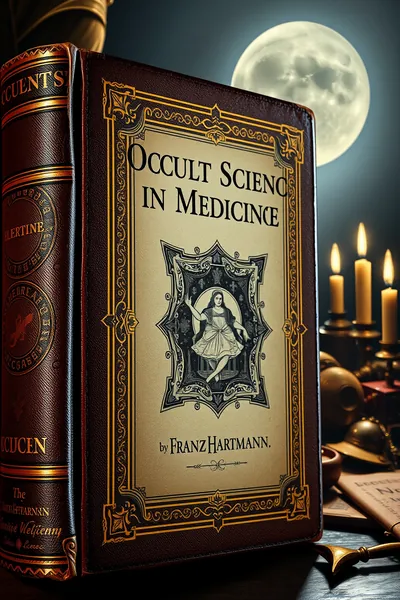
Franz Hartmann's biography of Paracelsus offers a commendable, if somewhat dated, overview of the alchemist-physician's tumultuous life and multifaceted ideas. Hartmann navigates the labyrinth of Paracelsus's thought with a clear admiration, particularly for his rejection of scholastic dogma and his innovative approach to medicine. The strength lies in its detailed tracing of Paracelsus's travels and the intellectual milieu he inhabited. However, the narrative occasionally leans towards hagiography, glossing over some of the more contentious aspects of Paracelsus's personality and teachings. A particularly illuminating section details Paracelsus's experiments with mercury as a cure for syphilis, highlighting his empirical drive amidst mystical pursuits. While not a critical dissection, it serves as a valuable primer for those unfamiliar with this enigmatic figure, offering a window into the alchemical worldview of the Renaissance.
📝 Description
83
Franz Hartmann's 1896 biography examines the life of Paracelsus, a complex figure in Renaissance medicine and alchemy.
Franz Hartmann's 1896 biography traces the life and thought of Philippus Theophrastus Bombast of Hohenheim, known as Paracelsus. The work details his challenge to established medical practices and his embrace of mystical perspectives on the natural world. Hartmann's study will appeal to those interested in the intellectual shifts of the late medieval and early modern eras, particularly figures who merged empirical inquiry with occult philosophy. It offers insight into a thinker who faced considerable opposition from both academic and religious institutions during his lifetime.
Paracelsus's approach combined natural philosophy, astrology, and Christian mysticism. The book discusses his theories on the elemental principles of Sulfur, Mercury, and Salt. It also covers his concept of the *Archeus*, a vital life force, and his promotion of remedies derived from chemical pharmacology and plants, moving away from traditional herbalism and bloodletting.
This biography is situated within a late 19th-century resurgence of interest in Hermetic traditions and alchemical studies. Paracelsus, as a subject, represents a bridge between medieval occultism and the nascent scientific revolution. His work drew upon and reinterpreted Neoplatonic, Gnostic, and Kabbalistic ideas, integrating them with his observations of nature and his unique medical theories. Hartmann's own engagement with these traditions shaped his portrayal of Paracelsus as a key figure in esoteric thought.
💡 Why Read This Book?
• Understand the alchemical worldview by examining Paracelsus's theories on Sulfur, Mercury, and Salt, which formed the basis of his chemical philosophy. • Grasp the historical shift in medicine by learning about Paracelsus's 16th-century challenges to Galenic humoral theory and his advocacy for chemical remedies. • Explore the concept of the *Archeus*, Paracelsus's term for a vital animating force, and its significance in Renaissance vitalism and occult physiology.
⭐ Reader Reviews
Honest opinions from readers who have explored this book.
❓ Frequently Asked Questions
When was Franz Hartmann's biography of Paracelsus first published?
Franz Hartmann's "The Life of Philippus Theophrastus Bombast of Hohenheim" was first published in 1896, reflecting a late 19th-century resurgence of interest in esoteric traditions and historical occult figures.
What were Paracelsus's main contributions to medicine?
Paracelsus championed chemical pharmacology, introduced new mineral-based remedies, and challenged the prevailing Galenic humoral theory. He advocated for observation and experience over ancient dogma, laying groundwork for modern medical science.
Who was Philippus Theophrastus Bombast of Hohenheim?
This is the full birth name of the famous alchemist and physician known as Paracelsus. He was a key figure in the Renaissance, known for his radical medical theories and alchemical pursuits.
What is the significance of the three principles (Sulfur, Mercury, Salt) in Paracelsus's work?
These principles represented the fundamental essences of matter in Paracelsus's alchemical system, corresponding to combustibility (Sulfur), volatility (Mercury), and solidity (Salt), rather than the Aristotelian elements.
Did Paracelsus face opposition during his lifetime?
Yes, Paracelsus was frequently at odds with the medical and academic establishment of his time. His unconventional methods and teachings led to him being dismissed from positions and forced to move frequently.
What is the 'Archeus' according to Paracelsus?
The Archeus, in Paracelsian philosophy, is the vital force or inner architect within all living things and natural substances, responsible for growth, form, and the processes of life and decay.
🔮 Key Themes & Symbolism
Alchemy and Medicine
The work examines Paracelsus's revolutionary integration of alchemical principles into medical practice. It highlights his focus on chemical remedies, derived from minerals and plants, as opposed to the bloodletting and herbalism common in 16th-century Europe. Hartmann details how Paracelsus sought the *tinctura*, or essence, of substances, believing they held potent medicinal properties beyond simple humoral balancing.
The Three Principles
A central tenet explored is Paracelsus's theory of the three principles: Sulfur, Mercury, and Salt. These were not the common elements but represented fundamental qualities of existence – the fiery, the fluid, and the solid. The biography explains how Paracelsus used this framework to understand both inorganic substances and the human body, viewing disease as an imbalance of these principles.
Vitalism and the Archeus
The concept of the *Archeus*, a vitalistic life force, is presented as crucial to Paracelsus's philosophy. This invisible power was seen as the architect of all living forms and the agent of healing. Hartmann illustrates how this belief informed Paracelsus's approach to understanding disease not merely as a physical ailment but as a disruption of this inner vital energy.
Rejection of Scholasticism
Hartmann underscores Paracelsus's fierce opposition to the rigid, dogma-bound medical education of his era. The biography emphasizes Paracelsus's insistence on direct observation, practical experience, and the study of nature itself as the true sources of knowledge, a stance that brought him into conflict with established universities and physicians.
💬 Memorable Quotes
Direct passages from the work, attributed to the author.
“He taught that medicine should be based on experience, not ancient texts alone.”
— This reflects Paracelsus's empiricism, emphasizing his challenge to the reliance on Galen and other classical authorities and his focus on practical, observable results in healing.
“The body is a microcosm reflecting the macrocosm of the universe.”
— This captures the Hermetic principle of 'As Above, So Below,' central to Paracelsus's worldview, suggesting a deep interconnectedness between the human organism and the cosmos.
“Disease is a separation from the natural order.”
— This interpretation points to Paracelsus's view of illness not as a random occurrence but as a deviation from a natural harmony, often caused by external factors or internal imbalances of principles.
“He championed the use of minerals and metals in potent doses.”
— This refers to Paracelsus's pioneering work in iatrochemistry, developing remedies from substances like antimony and mercury, which was a radical departure from traditional herbal medicine.
💡 Key Ideas
Editorial paraphrase of the work's core concepts — not direct quotes.
Paracelsus sought the quintessence of things.
This paraphrased concept highlights Paracelsus's alchemical goal of extracting the purest, most potent essence of a substance, believing it held superior healing or transformative power.
🌙 Esoteric Significance
Tradition
Paracelsus sits at the nexus of Western Esotericism, bridging late medieval Hermeticism, Christian Cabala, and early Renaissance alchemy. His work is foundational to Rosicrucianism and subsequent alchemical and vitalist traditions. Hartmann's biography frames him within this lineage, emphasizing his unique synthesis of empirical observation with spiritual and cosmological principles, departing from purely theoretical or dogmatic approaches.
Symbolism
Key symbols explored include the three principles (Sulfur, Mercury, Salt) representing the alchemical transformation of matter and spirit. The *Archeus* functions as a symbol of inherent life force and divine order within creation. The Emerald Tablet, though not directly a symbol within Paracelsus's own writings as much as a foundational text for alchemists, represents the core Hermetic axiom of correspondence and transformation that underpins his worldview.
Modern Relevance
Contemporary practitioners of traditional Western herbalism and contemporary alchemists often cite Paracelsus as a foundational figure. His emphasis on potent, specific remedies and his vitalistic perspective continue to influence alternative medicine practitioners and scholars of bio-dynamics. Thinkers in transpersonal psychology and consciousness studies sometimes reference his ideas on the interconnectedness of mind, body, and cosmos.
👥 Who Should Read This Book
• Students of Renaissance intellectual history seeking to understand the interplay of science, magic, and religion. • Aspiring alchemists and practitioners of Western Esotericism interested in the philosophical underpinnings of practical alchemy. • Medical historians examining the evolution of medical theory and the challenges to established doctrines in the early modern period.
📜 Historical Context
Franz Hartmann's 1896 biography of Paracelsus emerged during a period of intense occult revival, influenced by movements like Theosophy. Paracelsus himself, active in the early 16th century, was a radical figure in the transition from medieval alchemy to early modern chemistry and medicine. He directly challenged the authority of Galen and Avicenna, whose humoral theories dominated European medical thought. His embrace of astrological influences and mystical interpretations of nature placed him at odds with emerging mechanical philosophies but aligned him with Hermetic traditions. Contemporaries like the anatomist Andreas Vesalius were also pushing boundaries in medicine, though through different methodologies. Paracelsus's controversial life and teachings, including his use of mercury for syphilis, led to frequent expulsion from cities and universities, making his biography a narrative of intellectual rebellion against established scholasticism.
📔 Journal Prompts
The three principles (Sulfur, Mercury, Salt) as they manifest in your personal life.
Paracelsus's concept of the *Archeus* and its role in maintaining your own vitality.
Reflecting on the tension between empirical observation and mystical insight in your own pursuits.
The influence of the macrocosm (external world) on your microcosm (inner self).
Identifying areas where you challenge established norms, mirroring Paracelsus's defiance.
🗂️ Glossary
Iatrochemistry
A branch of alchemy focused on creating medicines and understanding the body through chemical processes, pioneered by Paracelsus. It sought remedies from minerals and metals.
Humoral Theory
The ancient Greek medical doctrine, prevalent in Paracelsus's time, that the body contains four basic substances (humors): blood, phlegm, yellow bile, and black bile. Disease was thought to result from an imbalance of these.
Quintessence
In alchemy, the fifth essence or the most subtle and pure spirit of a substance, believed to possess extraordinary medicinal or transformative powers.
Macrocosm
The universe considered as a complex and orderly whole. In esoteric thought, it is often seen as a reflection of the microcosm.
Microcosm
The human being, seen as a miniature model or reflection of the greater universe (macrocosm). Paracelsus heavily utilized this concept.
Hermeticism
A philosophical and religious tradition based on writings attributed to Hermes Trismegistus, emphasizing divine wisdom, alchemy, astrology, and the principle of correspondence.
Galen
A prominent Greek physician, surgeon, and philosopher in the Roman Empire. His medical theories dominated Western medicine for over a millennium, forming the basis of humoral theory.
🔮 Readers Also Liked
Browse all →









More by Franz Hartmann
All books →



More Free Alchemy & Hermeticism Books
View all →