The last barrier
 80
80

The last barrier
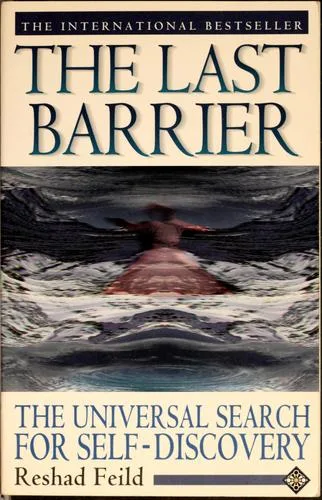
Reshad Feild’s The Last Barrier confronts the reader with the unvarnished reality of the spiritual path, eschewing comforting platitudes for a direct examination of internal resistance. Feild’s strength lies in his ability to articulate the often-unseen dynamics of the ego and its tenacious grip on our perception, particularly his descriptions of how the "Inner School" operates not as a physical place but as a state of energetic awareness. A limitation, however, is the text's density; readers accustomed to more illustrative or narrative approaches might find its abstract nature demanding. The section discussing the "veil of the senses" provides a particularly potent, albeit challenging, articulation of how our ordinary perception can obscure deeper truths. It’s a work that rewards sustained attention, offering a stark, unromanticized map for the dedicated seeker.
📝 Description
80
Reshad Feild's 1996 book, The Last Barrier, addresses the hidden obstacles in spiritual growth.
Published in 1996, The Last Barrier offers reflections on consciousness and the difficulties encountered in self-discovery. Feild writes about the subtle workings of the inner life, aiming to help readers understand themselves and their connection to the unseen.
The book is for serious spiritual seekers interested in non-dual philosophies and meditation. It encourages moving past shallow spiritual ideas and confronting the psychological and energetic blocks that hinder progress. Readers familiar with Sufism, Gnosticism, or similar paths will find connections.
Feild's work emerged in the mid-1990s, a time of growing interest in spiritual exploration outside established religions. He spoke in the tradition of teachers who combined Eastern and Western contemplation, following figures like Idries Shah.
The Last Barrier sits within a tradition of spiritual teachers who bridge Eastern and Western contemplative practices. Feild's approach draws from Sufism and Gnosticism, traditions that emphasize inner transformation and direct experience. He follows in the lineage of writers like Idries Shah, who introduced Sufi concepts to Western audiences, focusing on practical application rather than abstract theory. The book speaks to a contemporary audience interested in non-dogmatic spiritual paths.
💡 Why Read This Book?
• Understand the concept of the "Inner School" as described by Feild, gaining insight into a framework for spiritual development that transcends physical location. • Confront personal illusions through Feild’s direct examination of egoic resistance, a crucial element for anyone seeking genuine inner change. • Grasp the energetic mechanics of spiritual awakening as presented in the text, offering a distinct perspective on transformation beyond common spiritual discourse.
⭐ Reader Reviews
Honest opinions from readers who have explored this book.
❓ Frequently Asked Questions
When was Reshad Feild's "The Last Barrier" first published?
The Last Barrier by Reshad Feild was first published in 1996, marking its emergence during a period of widespread interest in esoteric and spiritual literature.
What is the primary focus of "The Last Barrier"?
The book primarily focuses on the nature of consciousness, the process of spiritual development, and the internal obstacles that individuals face on their path of self-discovery.
Does "The Last Barrier" belong to a specific esoteric tradition?
While drawing from various contemplative traditions, Feild's work is often associated with Sufi-inspired thought and non-dualistic philosophies, offering a synthesis accessible to a broad audience.
Is "The Last Barrier" suitable for beginners in spirituality?
The book can be challenging due to its depth and direct approach, making it more suitable for individuals already engaged in serious spiritual inquiry or those familiar with esoteric concepts.
What kind of "barriers" does the book discuss?
The book discusses internal barriers, such as egoic resistance, illusion, and psychological patterns, which prevent individuals from realizing deeper states of consciousness and spiritual freedom.
What is the "Inner School" concept in Reshad Feild's work?
The "Inner School" refers to a state of energetic awareness and readiness for spiritual work, distinct from any physical institution, emphasizing inner transformation over external affiliation.
🔮 Key Themes & Symbolism
The Inner School
Feild presents the "Inner School" not as a physical place but as a state of consciousness and energetic readiness cultivated through dedicated inner work. This concept challenges conventional notions of spiritual learning, emphasizing that true progress occurs within the individual. It requires a disciplined engagement with oneself, facing inner resistances and illusions that obscure spiritual truths. The Inner School is accessible only to those who have prepared themselves through rigorous self-observation and a willingness to confront the ego's defenses.
Confronting Illusion
A central theme is the necessity of recognizing and dismantling personal illusions. Feild argues that our ordinary perception is heavily filtered by the ego, societal conditioning, and ingrained psychological patterns. These create a "last barrier" that prevents direct experience of reality. The book guides the reader to identify these illusions – the false beliefs about oneself and the world – and to systematically dismantle them through conscious awareness and surrender.
Energetic Transformation
The text explores the subtle energetic shifts that accompany genuine spiritual development. Feild posits that spiritual awakening involves a transformation of one's energetic field, moving from a state of contraction and limitation to one of expansion and freedom. This transformation is not merely intellectual but deeply felt, affecting one's entire being. Understanding these energetic dynamics is crucial for reading through the path effectively and for integrating spiritual insights into daily life.
The Nature of Resistance
Feild meticulously details the various forms of resistance that arise when one attempts to move beyond the familiar confines of the ego. This resistance can manifest as doubt, fear, intellectualization, or a return to old habits. The book provides a framework for understanding this resistance not as a failure, but as an intrinsic part of the process that, when faced directly, can become a catalyst for growth. Overcoming this resistance is the key to breaking through to higher states of consciousness.
💬 Memorable Quotes
Direct passages from the work, attributed to the author.
“The barrier is not outside, but within.”
— This statement captures the core idea that the obstacles to spiritual realization are not external circumstances but internal psychological and energetic limitations created by the self.
“True learning happens when the student is ready to be undone.”
— This highlights the necessity of letting go of preconceived notions and egoic structures. Spiritual growth requires a dismantling of the old self to make space for new awareness.
“The ego’s greatest trick is to appear as reason.”
— This points to the subtle nature of egoic defense mechanisms, suggesting that the most convincing forms of resistance often masquerade as logical arguments or sensible objections.
“Silence is not the absence of sound, but the presence of awareness.”
— This redefines silence from a mere lack of external noise to an active, conscious state of inner presence, essential for perceiving deeper realities.
“To see the world as it is, one must first see oneself as one is.”
— This emphasizes the principle of self-knowledge as the prerequisite for accurate perception of external reality, linking inner clarity with outer understanding.
🌙 Esoteric Significance
Tradition
Feild's work draws heavily from Sufi teachings and non-dualistic philosophies, though it is presented in a way that transcends specific sectarian boundaries. It aligns with traditions that emphasize the direct, experiential realization of truth over dogma and ritual. The focus on inner transformation, the dismantling of the ego, and the cultivation of a higher state of consciousness places it within the broader stream of esoteric psychology and contemplative practices found across various mystical paths.
Symbolism
A key symbolic motif is the "barrier" itself, representing the internal limitations and illusions that obstruct spiritual progress. The concept of the "Inner School" functions symbolically as a state of readiness and energetic alignment, distinct from any physical institution. Feild also implicitly uses the symbolism of veils, where each layer of illusion or egoic defense must be penetrated to reveal deeper layers of reality and self.
Modern Relevance
Contemporary spiritual seekers and practitioners engaged with mindfulness, non-dual awareness, and embodied consciousness often find resonance in Feild's direct approach. His insights into egoic resistance and the mechanics of inner transformation are relevant to modern therapeutic and self-help modalities that incorporate psychological depth. Thinkers and teachers exploring the intersection of psychology and spirituality continue to reference Feild's emphasis on direct experience and the dismantling of self-imposed limitations.
👥 Who Should Read This Book
• Dedicated spiritual seekers looking for a text that challenges egoic assumptions and offers a direct path to self-realization. • Students of esoteric psychology interested in understanding the internal barriers to consciousness and the energetic dynamics of transformation. • Individuals familiar with Sufi-inspired teachings or non-dual philosophies seeking a contemporary, experiential perspective on spiritual development.
📜 Historical Context
Reshad Feild's The Last Barrier, published in 1996, emerged in a landscape increasingly fertile for esoteric and spiritual exploration beyond traditional religious confines. The 1990s saw a burgeoning interest in comparative spirituality, mindfulness, and non-dualistic philosophies, partly fueled by earlier movements like the Beat Generation's engagement with Eastern thought and the broader counterculture's explorations. Feild's work can be situated within the lineage of teachers like Idries Shah, who were instrumental in bringing Sufi-influenced psychological and spiritual teachings to the West, often presenting them in a manner accessible to a secularized audience. Unlike more academic explorations or purely devotional texts, Feild's approach prioritized direct inner experience and psychological insight, challenging readers to confront their own conditioning. His work offered a contemporary voice in a field that also included figures like Ram Dass, who explored Eastern mysticism through a Western lens, and authors engaging with Gnostic and Hermetic traditions.
📔 Journal Prompts
The concept of the "Inner School" and its implications for your current spiritual practice.
Identifying personal illusions that function as "the last barrier" to your self-understanding.
Reflecting on moments of egoic resistance encountered during periods of inner work.
The energetic shifts described by Feild: how do they manifest in your experience?
The necessity of being "undone" to truly learn, as presented in the text.
🗂️ Glossary
Inner School
A state of energetic consciousness and readiness for spiritual work, cultivated internally rather than found in a physical location. It signifies a preparedness to confront the self and engage in deep transformation.
Barrier
Refers to the internal psychological, energetic, and egoic limitations that prevent individuals from experiencing higher states of consciousness or direct reality.
Ego
In Feild's context, the ego is the false sense of self constructed from beliefs, memories, and conditioning, which acts as a primary obstacle to authentic spiritual realization.
Illusion
False perceptions or beliefs about oneself and reality, often perpetuated by the ego and societal conditioning, which obscure the true nature of existence.
Energetic Transformation
The process of shifting one's internal energetic state from one of limitation and contraction to one of expansion, freedom, and higher consciousness.
Consciousness
The state or quality of awareness, or of being aware of an external object or something within oneself. Feild explores its deeper, expanded potentials beyond ordinary perception.
Self-Observation
The practice of consciously monitoring one's thoughts, feelings, and behaviors without judgment, crucial for identifying illusions and egoic patterns.
🔮 Readers Also Liked
Browse all →








More by Reshad Feild
All books →





More Free Occult Philosophy Books
View all →