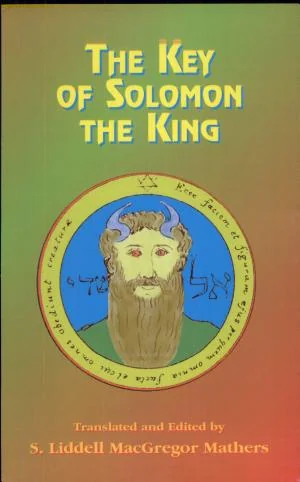
The Key of Solomon the King
 81
81

The Key of Solomon the King
Mathers' rendition of The Key of Solomon the King offers a robust, if somewhat ornate, gateway into the labyrinthine world of ceremonial magic. The strength of this edition lies in Mathers' extensive annotations and his background within the Golden Dawn, providing context that earlier, more literal translations lacked. His reconstruction of the ritual instructions, particularly concerning the construction of tools like the wand and the pentacle, is detailed and systematic. A notable passage is the intricate description of the 'Great Seal of Solomon,' a symbol intended to command spirits. However, the prose, while evocative of its late Victorian origins, can sometimes obscure the practical steps for a modern reader. The emphasis on linguistic purity and elaborate conjurations, while historically significant, may prove challenging for those seeking a more streamlined approach. Despite these hurdles, the work remains a monumental presentation of a complex magical system.
📝 Description
81
S. Liddell Macgregor Mathers published his translation of The Key of Solomon the King in 1889.
Mathers' 1889 translation of The Key of Solomon the King is a significant text for Western ceremonial magic. It functions as a practical guide, detailing the creation of ritual tools, the correct astrological timing for magical acts, and methods for summoning spiritual beings. Mathers, a leader in the Hermetic Order of the Golden Dawn, undertook this translation to restore a lost magical tradition.
This grimoire is suited for serious students of ceremonial magic and occult history. Practitioners interested in the theory and practice of Solomonic magic as interpreted by the Golden Dawn will find much to engage with. Scholars of religious studies and medieval history may also find it useful for studying the history and dissemination of magical texts.
The book operates on the idea that the cosmos follows divine laws and intelligences that rituals can access. A core element is sympathetic magic, where specific objects, symbols, and prayers are used to create connections and influence.
Mathers' edition appeared during a Victorian revival of occult interests. The Hermetic Order of the Golden Dawn, which he helped establish, aimed to bring back older magical practices rooted in Kabbalah, Hermeticism, and Rosicrucianism. This translation, intended to be more accurate and accessible than earlier versions, became a central work for the Order and influenced later occultists.
💡 Why Read This Book?
• Gain direct access to the ritualistic system codified by S. Liddell MacGregor Mathers, a principal architect of the Hermetic Order of the Golden Dawn, to understand its practical application of planetary invocations and spirit summoning. • Study the intricate astrological timing required for magical operations, as detailed in the grimoire, to grasp the necessity of celestial alignment in ceremonial practice. • Learn the precise methods for constructing magical tools and preparing ritual spaces, as prescribed within the text, to appreciate the symbolic and functional importance of each element.
⭐ Reader Reviews
Honest opinions from readers who have explored this book.
❓ Frequently Asked Questions
What is the original publication date of The Key of Solomon?
While the grimoire itself is attributed to King Solomon, S. Liddell MacGregor Mathers' influential translation and edition was first published in 1889, making it a key text of the late Victorian occult revival.
Who was S. Liddell MacGregor Mathers?
Mathers was a prominent British occultist and co-founder of the Hermetic Order of the Golden Dawn. His translation of The Key of Solomon was instrumental in disseminating ceremonial magic practices.
What kind of magic does The Key of Solomon describe?
The grimoire details ceremonial magic, including instructions for planetary invocations, angel summoning, creating magical tools, and performing purifications, all based on astrological timing and divine authority.
Is this book suitable for beginners in magic?
While comprehensive, the book's complex rituals and detailed instructions, particularly in Mathers' annotated edition, can be challenging for absolute beginners. It is best suited for those with some foundational knowledge or a serious commitment to study.
What is the 'Great Seal of Solomon' mentioned in the text?
The 'Great Seal of Solomon' is a significant pentacle or symbol described within the grimoire, believed to possess the power to command spirits and protect the magician during operations.
Does this book contain actual spells?
Yes, The Key of Solomon contains detailed instructions for magical operations, including conjurations and invocations, designed to achieve specific results, though they require significant ritual preparation and understanding.
🔮 Key Themes & Symbolism
Ceremonial Purity and Preparation
The grimoire places immense emphasis on the ritual purity of the magician and the consecration of the working space and tools. This involves specific purificatory rites, astrological timing for operations, and the use of consecrated items like the pentacle and wand, all designed to create a sacred environment conducive to invoking celestial intelligences and commanding spirits.
Planetary and Angelic Harmonics
Central to the text is the understanding that celestial bodies and their associated intelligences (angels, planetary spirits) influence earthly affairs. The book provides detailed instructions for invocations linked to specific planets and their corresponding days and hours, aiming to align the magician's will with these cosmic forces for desired outcomes.
The Divine Authority of Solomon
The attribution of this grimoire to King Solomon imbues the work with a sense of ancient, divinely sanctioned authority. The text posits that Solomon possessed unique knowledge of the spiritual world, enabling him to command spirits and influence events through divine power, a legacy Mathers sought to restore and transmit.
Construction of Magical Apparatus
A significant portion of the grimoire is dedicated to the precise instructions for crafting various magical tools, including the wand, sword, pentacle, and lamens. Each item is to be made from specific materials, inscribed with particular characters and seals, and consecrated under precise astrological conditions, reflecting their symbolic and functional importance.
💬 Memorable Quotes
Direct passages from the work, attributed to the author.
“The Pentacles of Solomon”
— These are specific magical seals or talismans detailed in the text, intended to be inscribed on metal during particular astrological timings to invoke specific powers or command certain spirits.
“The preparation of the magician”
— This refers to the extensive ritualistic and personal purification required before undertaking any magical operation described in the grimoire, underscoring the importance of the operator's state.
“The proper astrological time”
— This concept emphasizes that the success of any magical operation is critically dependent on performing it during the correct planetary hour, day, and lunar phase, as dictated by the text.
“The Conjuration of the Spirits”
— This signifies the core practical element of the grimoire: the set of prayers, invocations, and commands designed to summon and direct various spiritual entities for magical purposes.
💡 Key Ideas
Editorial paraphrase of the work's core concepts — not direct quotes.
The Book of the Sacred Magic of Abramelin the Mage
This quote references another significant grimoire, highlighting Mathers' comparative approach to magical texts and his interest in assembling a corpus of operative magical knowledge.
🌙 Esoteric Significance
Tradition
The Key of Solomon is a cornerstone text within the Western Esoteric Tradition, particularly Hermeticism and ceremonial magic. It represents a significant codification of Solomonic magic, a lineage purportedly derived from King Solomon, which heavily influenced Renaissance grimoires. Mathers' translation and the Golden Dawn's interpretation further integrated Kabbalistic principles and astrological systems, making it a vital link between medieval magical practices and modern occultism.
Symbolism
Key symbols include the Pentacle of Solomon, a five-pointed star often inscribed with divine names and symbols, used for protection and commanding spirits. The Wand symbolizes authority and the activation of will, while the Sword represents intellect and the power to cut through illusion. The Circle of Art provides a sacred, protected space for the magician, demarcating the boundary between the mundane and the divine realms.
Modern Relevance
Contemporary practitioners of ceremonial magic, particularly those within or influenced by the Golden Dawn tradition, continue to study and work with The Key of Solomon. Modern occultists and scholars of esotericism often reference Mathers' translation as a primary source for understanding the historical development and practical application of Western magical arts, including its influence on contemporary spellcraft and ritual design.
👥 Who Should Read This Book
• Students of Western Esotericism: Those seeking to understand the historical development and practical application of ceremonial magic, particularly from the late 19th century onwards. • Aspiring Ceremonial Magicians: Individuals interested in learning the foundational principles and ritual structures of Solomonic magic, as presented by a key figure of the Golden Dawn. • Scholars of Religious and Magical History: Researchers interested in the transmission of occult texts, the evolution of magical practices, and the influence of figures like King Solomon in esoteric traditions.
📜 Historical Context
Mathers' 1889 edition of The Key of Solomon the King emerged during a period of intense occult revival in late Victorian Britain, a milieu that also saw the rise of figures like Helena Blavatsky and the establishment of organizations such as the Theosophical Society and the Hermetic Order of the Golden Dawn itself. Mathers, a key figure in the Golden Dawn, aimed to present a more accurate and complete version of the grimoire than previously available, contrasting with earlier, often fragmented or less scholarly, translations. This work directly engaged with a long tradition of Solomonic magic, which had circulated in manuscript form for centuries, and sought to systematize its practices for a modern audience. The Golden Dawn's approach, heavily influenced by Kabbalah and Renaissance Hermeticism, differed from the more spiritualist or Eastern-focused movements, emphasizing a structured, ritualistic path to magical attainment.
📔 Journal Prompts
The preparation of the magician, as detailed in the grimoire, demands significant discipline. What personal rituals could one establish to cultivate the necessary purity and focus?
Reflect on the astrological timing required for specific operations. How might understanding planetary correspondences enhance daily decision-making, even outside of ritual?
Consider the symbolic weight of the tools described, such as the Wand and the Pentacle. How do these objects function as extensions of the magician's will?
The grimoire aims to command spirits. What ethical considerations arise when attempting to influence or direct non-human intelligences?
Analyze the concept of divine authority attributed to Solomon. How does this perceived source of power shape the structure and intent of the magical operations?
🗂️ Glossary
Grimoire
A textbook of magic, typically containing instructions on how to cast spells, perform rituals, and summon spirits, often with an emphasis on ceremonial magic.
Pentacle
A magical talisman, often circular or star-shaped, inscribed with symbols or names of power, used for protection, invocation, or commanding spirits.
Lamen
A magical plate or amulet, often inscribed with planetary symbols or divine names, worn by the magician for protection or to attract specific influences.
Conjuration
A formal invocation or summoning, typically involving prayers or commands directed at a spirit or divine being.
Planetary Hours
A system of dividing the day and night into twelve equal periods, each assigned to one of the seven classical planets, believed to influence the nature of activities undertaken during that hour.
Consecration
The act of dedicating an object, place, or person to a sacred purpose through ritual and prayer, often involving specific blessings and invocations.
Kabbalah
A system of Jewish mysticism that deals with the nature of God and the universe, often involving complex interpretations of scripture and symbolic diagrams like the Tree of Life.