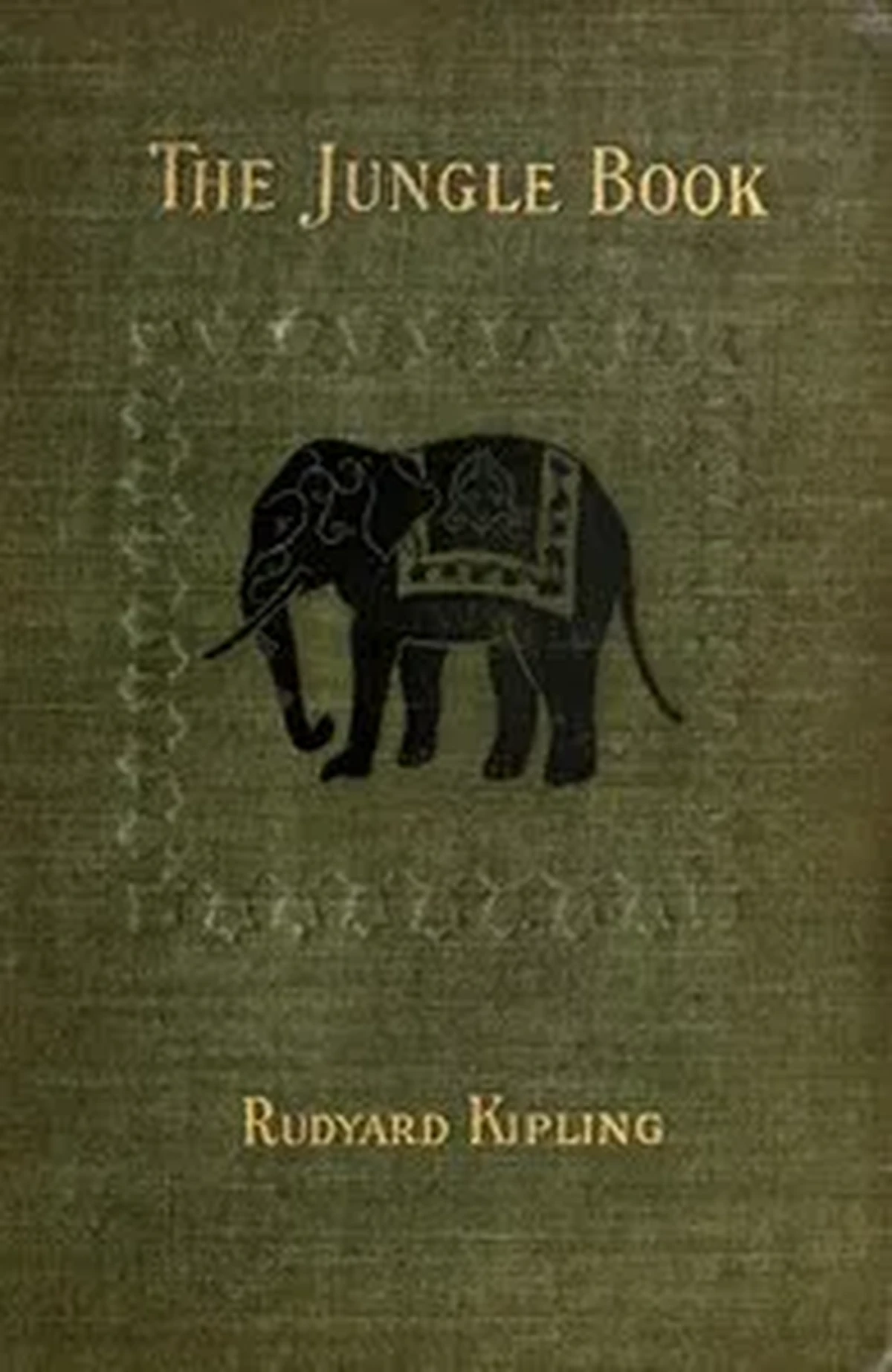
The Complete Jungle Book

 71
71

The Complete Jungle Book
Kipling's "The Complete Jungle Book" presents a surprisingly robust system of natural law, far removed from saccharine animal tales. The sheer detail in codifying the "Law of the Jungle" is its signal strength; it’s a proto-legal text for the wild, complete with consequences. One finds a peculiar resonance in the structured anarchy described, particularly in "Kaa's Hunting," where the python's hypnotic influence operates as a form of primal persuasion. Its limitation, however, lies in the inherent paternalism that colors the human perspective on the "Law," a common, albeit dated, element of the era’s imperial mindset. The work’s enduring power comes from its creation of a self-contained mythological universe, governed by rules that, while alien, feel internally consistent. It remains a singular exploration of societal formation from the ground up.
📝 Description
71
Rudyard Kipling's 1894 The Jungle Book is more than children's tales; it is a coded text on natural and social law.
Rudyard Kipling's Jungle Book, first collected in 1894, uses the story of Mowgli, a human child raised by wolves, to examine the governing principles of both the wild and human communities. The narratives, originally serialized in the 1890s, detail a structured world with specific rules and characters that go beyond simple animal stories. These tales resonate with readers interested in mythology, folklore, and the symbolic representation of social order. They address themes of belonging, justice, and the complex relationship between civilization and the natural world, offering insights for literary and cultural studies.
Published during the late Victorian and Edwardian eras, a period marked by imperial expansion and shifting scientific ideas, Kipling's work reflects the era's preoccupations. Drawing on his experiences in British India, the stories explore ideas of law, hierarchy, and interactions between different species. While the collection achieved popularity, it later faced scrutiny for its imperial undertones, a common point of discussion for works of that time, including those by authors like H. Rider Haggard.
The "Law of the Jungle" presented in Kipling's work functions as an esoteric framework, establishing order and meaning within the natural world. This codified set of rules for behavior, hunting, and inter-pack relations mirrors ancient traditions that sought to understand cosmic or social order through symbolic systems. The concept of "brotherhood," particularly Mowgli's integration into the wolf pack, speaks to primal bonds and initiation rites found in many esoteric traditions, suggesting a hidden order underlying observable reality.
💡 Why Read This Book?
• Understand the "Law of the Jungle" as an early esoteric code for natural order, distinct from romanticized wilderness narratives, as seen in "Mowgli's Brothers." • Explore Kipling's unique portrayal of animal society and hierarchy, reflecting late 19th-century societal structures through the lens of the "free people" and their interactions. • Discover the symbolic tension between primal instincts and codified order, particularly the "Law" versus the "Red Flower" (fire), offering allegorical insights into control and chaos.
⭐ Reader Reviews
Honest opinions from readers who have explored this book.
❓ Frequently Asked Questions
When did Rudyard Kipling first publish "The Jungle Book"?
Rudyard Kipling's "The Jungle Book" was first published in 1894, though "The Complete Jungle Book" encompasses subsequent related tales and editions.
What is the "Law of the Jungle" in Kipling's stories?
The "Law of the Jungle" is a complex set of rules governing the behavior, hunting, and social interactions of the animal community in Kipling's tales, most notably for Mowgli and his wolf pack.
Who is the main human character raised by wolves?
The central human character raised by wolves is Mowgli, who navigates the laws and customs of both the animal kingdom and the human world.
What does the "Red Flower" symbolize in "The Jungle Book"?
The "Red Flower" is Kipling's symbolic term for fire, representing a dangerous, untamed force that disrupts the established order of the jungle and is feared by most animals.
Did Kipling's "The Jungle Book" have any contemporary literary comparisons?
Yes, during its era, "The Jungle Book" shared thematic space with adventure novels exploring empire and exotic locales, such as those by H. Rider Haggard.
What is the esoteric interpretation of Mowgli's "lost boy" status?
Mowgli's status as a "lost boy" can be interpreted esoterically as representing the soul's journey between different planes of existence or states of consciousness, caught between the natural and the civilized.
🔮 Key Themes & Symbolism
The Law of the Jungle
This is not merely a metaphor but a detailed codex of behavioral regulations for the animal kingdom, presented as an inherent natural order. It dictates hunting practices, territorial rights, and social obligations, functioning as a foundational esoteric principle for the jungle's inhabitants. The adherence to, and occasional subversion of, this Law forms the narrative backbone, exploring themes of justice, duty, and community from an archetypal perspective. It suggests a universal, albeit wild, system of governance predating human civilization.
Civilization vs. Wilderness
The duality between the structured "Law of the Jungle" and the disruptive "Red Flower" (fire) represents the tension between ordered existence and primal chaos. Mowgli's journey embodies this conflict, as he is raised by wolves yet remains human, caught between animal instinct and the eventual call of human society. This theme explores the nature of belonging and the challenges of integrating into different social orders, questioning which "law" is truly supreme or natural.
Archetypal Animal Figures
Kipling populates his jungle with characters who embody specific archetypes: Baloo the wise, albeit stern, teacher; Bagheera the cunning protector; Shere Khan the embodiment of predatory malice; and Kaa the enigmatic, powerful serpent. These figures are not mere animals but personifications of natural forces and societal roles, operating within the established Law. Their interactions with Mowgli serve as allegorical lessons in survival, ethics, and the complex relationships within any given community.
The Collective Unconscious
The structured society and ingrained "Law" described by Kipling can be seen as manifestations of a collective unconscious, a shared psychic blueprint governing behavior and understanding within a species or group. Mowgli's innate connection to this Law, even as an outsider, suggests a deeper, instinctual knowledge that transcends individual learning. The narratives tap into universal human experiences of societal integration, justice, and the primal bond with nature.
💬 Memorable Quotes
Direct passages from the work, attributed to the author.
“"The Law runs" from "Kaa's Hunting"”
— This phrase signifies the active and immutable enforcement of the jungle's rules. It suggests that the natural order is not passive but a dynamic force, perpetually in operation and demanding compliance from all creatures within its domain.
“Mowgli's struggle to belong, as depicted in "Mowgli's Brothers"”
— This illustrates the fundamental human (or human-raised) quest for identity and acceptance, caught between two worlds. It highlights the inherent tension between nature and nurture, and the search for one's true place within a community or cosmic order.
“The fear of the "Red Flower" (fire) by the jungle animals”
— This represents the primal fear of the unknown and destructive forces that lie outside the established order. Fire acts as a potent symbol of chaos, power, and danger that challenges the stability of the "Law of the Jungle."
“Baloo's insistence on learning the "Old Laws"”
— This emphasizes the importance of tradition and accumulated wisdom for survival and social cohesion. Baloo, the teacher, understands that true mastery of the jungle lies not just in hunting, but in understanding its deep, historical principles.
“Bagheera's pronouncements on justice within the jungle”
— This reflects an early exploration of natural justice, where consequences are often swift and tied directly to actions within the framework of the jungle's Law, demonstrating a form of primal accountability.
🌙 Esoteric Significance
Tradition
Kipling's work, while not explicitly aligned with a single esoteric tradition, taps into archetypal themes found in Hermeticism and animistic philosophies. The "Law of the Jungle" can be viewed as an emergent form of natural magic, where adherence to specific principles yields predictable outcomes, akin to sympathetic magic. The anthropomorphism of animals and their codified society echoes ancient myth-making traditions that sought to understand universal laws through allegorical narratives, a practice central to Gnosticism and various nature-based spiritualities.
Symbolism
The "Law of the Jungle" itself functions as a primary symbol, representing the underlying order of the cosmos or a specific microcosm, dictating relationships and responsibilities. Mowgli, as the "man-cub," symbolizes the soul in transition, caught between instinctual existence and the potential for higher consciousness or societal integration. The "Red Flower" (fire) is a potent symbol of primal, untamed energy—both creative and destructive—that challenges established norms and represents the raw power of the unmanifested.
Modern Relevance
Contemporary ecopsychology and deep ecology movements often draw parallels with Kipling's depiction of interconnectedness and natural law, seeing value in the "Law of the Jungle" as a model for sustainable living and understanding ecological balance. Modern mythologists and storytellers continue to analyze Kipling's archetypal characters and narrative structures, finding them relevant to understanding primal human psychology and societal archetypes that persist in the collective unconscious. The work's exploration of order versus chaos remains pertinent in discussions of social structures and governance.
👥 Who Should Read This Book
• Students of comparative mythology and folklore seeking to understand archetypal narratives of law and social order. • Readers interested in the symbolic representation of natural systems and the tension between instinct and civilization. • Literary scholars analyzing the impact of Victorian imperialism on narrative and the creation of mythic worlds.
📜 Historical Context
Published in 1894, "The Jungle Book" emerged during a period of intense British imperial expansion and a flourishing of adventure literature, a milieu that also produced works by authors like H. Rider Haggard. Kipling's tales, drawing from his upbringing in British India, reflect contemporary fascinations with the "exotic" East and the perceived order (or disorder) of colonial territories. The concept of a codified "Law of the Jungle" can be seen as an allegorical mapping of British legal and social structures onto the perceived wildness of India, a common trope in imperial discourse. While celebrated for its narrative power, the work later faced scrutiny for its underlying imperialist assumptions, a critique amplified in the post-colonial era. It engaged with the prevailing intellectual currents of Social Darwinism and the idea of natural hierarchies, presenting a world where order, however primal, was paramount.
📔 Journal Prompts
The "Law of the Jungle" as a system of natural governance.
Mowgli's "lost boy" status and the journey between worlds.
The archetypal roles of Baloo, Bagheera, and Shere Khan.
Symbolism of the "Red Flower" in disrupting natural order.
Interpreting the "brotherhood" as an esoteric concept.
🗂️ Glossary
Law of the Jungle
A comprehensive set of rules governing the behavior, hunting, and social interactions of animals in Kipling's stories, presented as the natural order of the wild.
Red Flower
Kipling's symbolic term for fire, representing a dangerous, untamed, and destructive force feared by most jungle inhabitants.
Free People
A term used in "The Jungle Book" to refer to the pack of wolves who live by and uphold the "Law of the Jungle."
Man-cub
The term used for Mowgli, the human child raised by the wolf pack, highlighting his dual nature and outsider status.
Seeonee
The name of the wolf pack and the region where Mowgli is raised, serving as his primary community within the jungle.
Bandar-log
The name for the monkey-folk, characterized as a chaotic and lawless community that disregards the "Law of the Jungle."
Wolves' Council
The gathering of the wolf pack elders to make important decisions, including Mowgli's adoption and judgments under the Law.
🔮 Readers Also Liked
Browse all →








More by Rudyard Kipling
All books →





More Free Occult Philosophy Books
View all →![[ T. W. C. Moriarty], Seven Aphorisms of Creation, Seven Cosmic Principles](/img/thumb/t-w-c-moriarty-seven-aphorisms-of-creation-seven-cosmic-principles.webp)