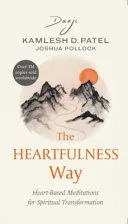
The Heartfulness Way
 78
78

The Heartfulness Way
The Heartfulness Way presents an intriguing, if somewhat austere, model for inner development. Its strength lies in its directness; it eschews ornate language for a clear, almost clinical, presentation of its methods. The concept of the "silent mind" as a gateway to deeper awareness is particularly compelling, offering a tangible goal for practitioners. However, the book's primary limitation is its relative lack of historical grounding. While it touches upon universal themes, it rarely situates itself within the rich lineage of contemplative traditions it implicitly draws upon. For instance, the emphasis on inner stillness and direct intuitive knowing echoes Sufi and certain Buddhist contemplative practices, but these connections are not explicitly explored. The book's insistence on a novel, singular path can feel isolating for those familiar with established esoteric disciplines. Despite this, the practical guidance offered for achieving a "heartful" state provides a valuable, if narrowly focused, resource for dedicated seekers.
📝 Description
78
Published September 21, 2022, The Heartfulness Way proposes a systematic method for inner change.
This book offers a structured path toward self-awareness and spiritual fulfillment. It moves beyond superficial spiritual ideas to focus on direct experience and self-discovery as the primary drivers of growth. The text is for individuals ready for dedicated inner work, especially those weary of conventional self-help or fleeting spiritual fads.
It encourages readers to cultivate a state of being fully present and aware, guided by intuition and feeling. The book outlines accessible practices for achieving this state, aiming for a more grounded, experiential foundation in spiritual development. It emphasizes consistent practice to cultivate specific inner states.
The Heartfulness Way emerged in the early 2020s, a period of widespread interest in mindfulness and contemplative practices. It builds on decades of renewed attention to esoteric traditions and psychological self-exploration, including influences from movements like the New Age and transpersonal psychology. The text seeks a more experiential foundation, distinct from abstract philosophical discussions.
💡 Why Read This Book?
• Gain a practical method for cultivating "heartfulness," a state of present-moment awareness guided by inner intuition, directly applicable to daily life. • Learn to identify and engage with your "inner guide," a concept presented as a personal compass for navigating life's decisions, distinct from external advice. • Understand the "silent mind" as a specific achievable state of consciousness, offering a concrete goal for meditation and self-inquiry practices.
⭐ Reader Reviews
Honest opinions from readers who have explored this book.
❓ Frequently Asked Questions
What is the core philosophy behind The Heartfulness Way?
The book's core philosophy centers on "heartfulness," a state of being fully present and aware, guided by one's inner intuition and feelings rather than external doctrines or intellectual analysis.
When was The Heartfulness Way first published?
The Heartfulness Way was first published on September 21, 2022, positioning it as a contemporary text within the field of esoteric and self-development literature.
Does The Heartfulness Way require specific meditation techniques?
While the book emphasizes consistent practice, it focuses on cultivating a state of "heartfulness" and a "silent mind" rather than prescribing rigid, specific meditation postures or routines.
Who is the author of The Heartfulness Way?
The author of The Heartfulness Way is unknown, with the work first appearing in print in 2022. This anonymity aligns with certain esoteric traditions that prioritize the message over the messenger.
What is the 'inner guide' as described in the book?
The "inner guide" is presented as an intuitive, internal source of wisdom and direction that can be accessed through cultivating heartfulness and a quieted mind.
Is this book related to the Heartfulness Meditation movement?
While the name "Heartfulness" suggests a connection, this particular book, published in 2022, presents its own distinct framework and is not directly attributed to the established Heartfulness Meditation organization.
🔮 Key Themes & Symbolism
Cultivating Heartfulness
This theme defines "heartfulness" not merely as emotionality, but as a state of profound presence and attentiveness rooted in intuitive feeling. The work suggests this state is accessible through dedicated practice, serving as a primary conduit for self-understanding and spiritual connection. It moves beyond intellectual apprehension to a felt sense of being, emphasizing direct experiential knowing as superior to abstract conceptualization.
The Silent Mind
Central to the book's methodology is the concept of the "silent mind." This is presented as an internal state where mental chatter and discursive thought cease, allowing for a clearer perception of reality and access to deeper levels of consciousness. Achieving this silence is framed as a crucial step in the purification process, enabling one to hear the subtle guidance of the inner self.
The Inner Guide
The text posits the existence of an "inner guide," an innate source of wisdom and direction residing within each individual. This guide is accessed not through external authorities or complex systems, but through the cultivated states of heartfulness and mental silence. The book offers practical approaches to recognizing and trusting this internal compass for navigating life's challenges and opportunities.
Inner Purification
A recurring motif is the process of "purification." This refers to the shedding of limiting beliefs, ingrained mental patterns, and emotional baggage that obscure one's true nature. The work implies that this is an ongoing, active process that accompanies the development of heartfulness and mental stillness, leading to greater clarity, authenticity, and spiritual liberation.
💬 Memorable Quotes
Direct passages from the work, attributed to the author.
“Presence is not a place you arrive at, but a way of being.”
— This aphorism highlights the active, continuous nature of cultivating awareness. It suggests that true presence isn't a final destination or a static achievement, but an ongoing practice of mindful engagement with the present moment.
“The mind's noise is a curtain drawn against the light within.”
— This metaphor emphasizes the disruptive effect of incessant thinking on inner perception. It frames mental agitation as an obstacle that obscures one's innate wisdom or "light," suggesting that quieting the mind is essential for spiritual insight.
“Intuition speaks in the quiet spaces between thoughts.”
— This statement links the concept of the "silent mind" directly to the faculty of intuition. It suggests that inner knowing or guidance becomes perceptible only when the usual stream of conscious thought is temporarily suspended.
“True guidance comes from within, not from the clamor without.”
— This underscores the book's emphasis on internal authority. It contrasts reliable, self-generated wisdom with the often distracting and misleading influences of external opinions, societal pressures, and material concerns.
“Heartfulness is the art of feeling what is true, not just thinking it.”
— This defines the central practice as an experiential rather than purely intellectual pursuit. It prioritizes authentic, felt experience as the ultimate arbiter of truth, distinguishing it from cognitive understanding alone.
🌙 Esoteric Significance
Tradition
The work draws implicitly from the Hermetic principle of "As Above, So Below," suggesting a correspondence between the inner and outer worlds, and the Gnostic emphasis on inner knowledge (gnosis) for liberation. Its focus on cultivating an "inner guide" and achieving a "silent mind" aligns with mystical traditions across various faiths, including Sufism and certain schools of Buddhist meditation, which seek direct experience of the divine or ultimate reality.
Symbolism
The "heart" serves as a central symbol, representing not just emotion but the seat of intuitive wisdom and the core of one's being. The "silence" of the mind is another key motif, symbolizing purity, clarity, and the absence of egoic interference, allowing the subtler currents of consciousness to be perceived. The "inner guide" functions symbolically as the divine spark or higher self accessible within.
Modern Relevance
Contemporary thinkers in transpersonal psychology and consciousness studies, as well as independent practitioners of secularized contemplative arts, find resonance in its emphasis on direct experience and internal authority. The book's practical, no-nonsense approach appeals to those seeking methods for self-mastery outside of dogmatic religious structures or commercialized wellness trends.
👥 Who Should Read This Book
• Individuals seeking a structured, introspective path to self-discovery and spiritual growth, particularly those who find conventional self-help literature lacking depth. • Practitioners of meditation or mindfulness who wish to deepen their practice beyond basic relaxation into a more profound exploration of consciousness. • Seekers of inner guidance and authentic self-knowledge who are ready to commit to consistent inner work and develop their intuitive faculties.
📜 Historical Context
The Heartfulness Way emerged in September 2022, a period marked by a broad cultural engagement with mindfulness and well-being, often mediated through digital platforms and commercialized wellness industries. This book arrives as a counterpoint, emphasizing a more rigorous, internal, and less commodified approach to spiritual development. Its focus on cultivating an "inner guide" and "silent mind" echoes perennial philosophies but is presented without direct lineage to specific historical movements like Transcendentalism or the New Thought movement of the late 19th century, which also explored inner guidance. While not explicitly engaging with contemporary critics of mainstream mindfulness, such as those pointing to its potential for superficiality, The Heartfulness Way implicitly addresses these concerns by demanding deeper commitment and internal transformation.
📔 Journal Prompts
Reflect on the concept of the 'silent mind' and its potential for revealing inner truth.
Explore the qualities of your 'inner guide' and how you might strengthen its influence.
Consider the state of 'heartfulness' described in the book; how does it differ from mere emotionality?
Document instances where external noise overshadowed your inner intuition.
How can the practice of 'purification' be integrated into daily routines to foster clarity?
🗂️ Glossary
Heartfulness
A state of profound presence and awareness, guided by inner intuition and feeling, cultivated through dedicated practice.
Silent Mind
An internal state characterized by the cessation of mental chatter and discursive thought, enabling clearer perception and access to deeper consciousness.
Inner Guide
An innate, internal source of wisdom and direction within each individual, accessed through cultivated states of heartfulness and mental silence.
Purification
The ongoing process of shedding limiting beliefs, mental patterns, and emotional baggage that obscure one's true nature and hinder spiritual growth.
Presence
Not a destination, but an active, continuous way of being fully engaged with the current moment, characterized by mindful awareness.
Intuition
Inner knowing or guidance that becomes perceptible in the quiet spaces between thoughts, distinct from logical reasoning.
Inner Truth
Authentic understanding and wisdom derived from one's own direct experience and inner guidance, rather than external doctrines.