The Grimoire of Armadel
 80
80

The Grimoire of Armadel
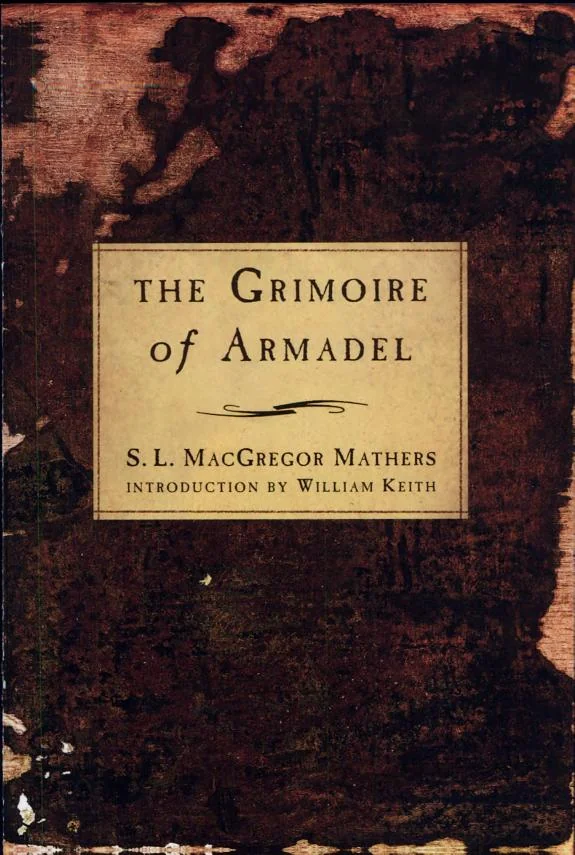
The Grimoire of Armadel, as presented by S. L. Macgregor Mathers, offers a stark glimpse into the practical, often demanding, side of ceremonial magic. Its strength lies in its directness; it eschews philosophical meandering for a systematic presentation of spirit offices and their associated seals. The detailed descriptions, particularly concerning the 'evocation of spirits' and the precise sigils required, suggest a lineage of practical occultism rather than speculative theory. However, its stark, unadorned presentation can be a double-edged sword. The absence of extensive contextualization or theoretical framework beyond the immediate ritualistic purpose might leave modern readers, accustomed to more elaborate magical systems, seeking deeper grounding. A notable passage details the specific seals required for invoking entities associated with knowledge, highlighting the book's utilitarian approach. While valuable for practitioners seeking specific operational methods, its lack of interpretive guidance makes it a challenging text for novices.
This grimoire serves as a functional, if austere, manual for experienced ritualists.
📝 Description
80
The Grimoire of Armadel is a 17th-century French manuscript detailing spirit interactions for ceremonial magic.
This text functions as a practical guide to ceremonial magic, drawn from a 17th-century manuscript in Paris. S. L. Macgregor Mathers translated and published this work, which presents practitioners with specific instructions for engaging with various spiritual entities. The book focuses on the supposed 'natures and offices' of these beings, including detailed sigils and seals meant to grant influence or control.
It guides the user in the manipulation of the astral plane, requiring a solid understanding of occult principles and a commitment to ritualistic practice. This is not an introductory text but a working tool for those already involved in or seriously studying ceremonial magic and Western esotericism. It is of particular interest to individuals seeking direct engagement with spirit hierarchies as described in grimoire traditions.
The Grimoire of Armadel belongs to the European grimoire tradition, active from the Middle Ages into the early modern period. Its 17th-century origins place it within a time of significant occult interest, often connected with early scientific pursuits. S. L. Macgregor Mathers, a prominent member of the Hermetic Order of the Golden Dawn, introduced this text to a 20th-century audience, aligning it with a broader revival of ceremonial magic.
💡 Why Read This Book?
• Gain specific operational knowledge for invoking entities, as detailed in the grimoire's descriptions of spirit offices, allowing for a targeted approach to astral work not found in generalized magical texts. • Understand the practical application of sigils and seals as keys to spiritual power, as presented in the text, offering direct methods for establishing control or influence over specific spiritual forces. • Explore a direct link to 17th-century ceremonial magic practices, as preserved in the manuscript from the Bibliothèque de l'Arsenal, providing a tangible connection to historical occult traditions.
⭐ Reader Reviews
Honest opinions from readers who have explored this book.
❓ Frequently Asked Questions
What is the origin of The Grimoire of Armadel?
The Grimoire of Armadel originates from a 17th-century manuscript discovered in the Bibliothèque de l'Arsenal in Paris. This specific edition was translated and published by S. L. Macgregor Mathers, a prominent figure in early occult revival movements.
Who was S. L. Macgregor Mathers and why is his translation important?
S. L. Macgregor Mathers was a co-founder of the Hermetic Order of the Golden Dawn. His translation brings a historical manuscript into modern circulation, making its ritualistic content accessible to contemporary practitioners of Western esotericism.
What kind of magic is described in The Grimoire of Armadel?
The book details ceremonial magic, focusing on the invocation and control of specific spirits. It provides instructions on their 'natures and offices,' along with the sigils and seals needed for practical application in the astral realm.
Is The Grimoire of Armadel suitable for beginners in magic?
While it contains practical instructions, the grimoire is generally considered advanced. It assumes prior knowledge of occult principles and ritual practice due to its direct, often uncontextualized, operational focus.
What are 'spirits' in the context of this grimoire?
Within the framework of The Grimoire of Armadel, 'spirits' refer to various entities within the astral hierarchy. The text describes their specific roles or 'offices' and provides means, through seals and invocation, to interact with them.
Where was the original manuscript kept before Mathers' translation?
The original 17th-century manuscript from which The Grimoire of Armadel is translated was housed at the Bibliothèque de l'Arsenal in Paris, a significant repository of historical documents.
🔮 Key Themes & Symbolism
Spirit Hierarchy and Offices
The grimoire meticulously details the hierarchical structure of various spiritual entities, assigning each a specific 'office' or function within the astral plane. This systematization allows practitioners to understand the precise domain of influence for each spirit, facilitating targeted magical operations. The text serves as a directory, outlining who to contact for specific purposes, reflecting a practical approach to spiritual engagement common in grimoire traditions.
Sigils and Seals as Tools of Power
Central to the grimoire's methodology are the sigils and seals, presented as direct instruments for accessing and commanding spirits. Each entity is associated with a unique visual symbol, which the practitioner must reproduce and utilize in ritual. These seals are not merely symbolic but are described as having inherent power, functioning as keys or conduits that grant the magician authority over the depicted spiritual force.
Practical Ceremonial Application
Unlike purely theoretical occult texts, The Grimoire of Armadel emphasizes 'do-it-yourself' ceremonial magic. It provides concrete instructions for evoking spirits and manipulating the astral world, focusing on the practical execution of rituals. The user is guided through the process of understanding the spiritual landscape and employing specific tools and invocations to achieve desired outcomes.
The Astral World as a Domain
The work posits the astral world as a tangible realm accessible through ritual and spiritual discipline. It describes this realm as populated by distinct spiritual forces with specific attributes and functions. The grimoire serves as a map and a set of operational guidelines for navigating and interacting with this dimension, enabling the practitioner to affect changes within it.
💬 Memorable Quotes
Direct passages from the work, attributed to the author.
“Detailed descriptions of the natures and offices of the various evil spirits.”
— This phrase expresses the grimoire's core function: providing a structured, almost bureaucratic, understanding of spiritual entities. It suggests a systematic cataloging of supernatural beings based on their specific roles and characteristics within the occult cosmology.
“The sigils-seals giving power over demons-related to the various spirits are reproduced together with their practical uses.”
— This highlights the operational aspect of the grimoire. The seals are presented not just as identification markers but as active tools, granting the magician direct authority or influence over the specified spiritual entities for concrete magical ends.
“According to the particular aspect of the astral world that the reader wants to inve[rt/st/est].”
— This points to the grimoire's focus on influencing specific facets of reality or consciousness. The text aims to provide the means to manipulate particular 'aspects' of the astral plane, implying a highly targeted and practical form of magic.
“A do-it-yourself book of ceremonial magic.”
— This description underscores the text's intention as a practical manual. It positions the grimoire not as a theoretical treatise but as a hands-on guide for individuals seeking to perform magical operations themselves.
“Translated by Mathers from a seventeenth-century manuscript kept at the Bibliotheque d'Arsenal in Paris.”
— This establishes the book's provenance and historical grounding. It emphasizes the authenticity derived from an ancient manuscript and the role of S. L. Macgregor Mathers in making this historical occult knowledge accessible.
🌙 Esoteric Significance
Tradition
This work belongs to the Western Esoteric Tradition, specifically within the lineage of ceremonial magic and grimoire magic. It aligns with Hermetic principles concerning the correspondences between the macrocosm and microcosm and the potential for human will to influence spiritual hierarchies. It departs from purely philosophical Hermeticism by offering direct operational instructions, emphasizing the practical manipulation of spiritual forces rather than solely intellectual understanding.
Symbolism
The primary symbolism lies in the sigils and seals themselves, which act as potent visual keys. These symbols are believed to embody the essence or power of the specific spirit they represent, functioning as direct links for invocation and control. The concept of 'offices' also carries symbolic weight, representing the structured order of the spiritual cosmos and the defined roles within it, mirroring hierarchical structures found in both religious and political systems.
Modern Relevance
Contemporary practitioners of Western ceremonial magic, particularly those interested in historical grimoires, continue to engage with texts like The Grimoire of Armadel. Its direct operational format appeals to those seeking practical methods for spirit invocation and astral projection. Modern occultists may use it as a source text, integrating its principles into broader magical systems or comparing its techniques with those found in other grimoires or contemporary magical practices.
👥 Who Should Read This Book
• Advanced practitioners of ceremonial magic seeking to expand their repertoire of spirit invocation techniques and explore historical grimoire methods. • Students of Western Esotericism interested in the practical application of sigils and spiritual hierarchies as described in 17th-century magical manuscripts. • Researchers of occult history and comparative religion looking for primary source material on historical magical practices and beliefs concerning spirit work.
📜 Historical Context
The Grimoire of Armadel emerges from the rich, albeit often hidden, tradition of European grimoire literature, a genre that saw significant activity during the early modern period. The 17th century, the era of the manuscript's origin, was a crucible of intellectual ferment, marked by both burgeoning scientific inquiry and persistent occult beliefs. Figures like Athanasius Kircher were attempting grand syntheses of knowledge, while clandestine magical practices continued. S. L. Macgregor Mathers' translation and publication in the early 20th century placed the Armadel within a broader revival of ceremonial magic, spearheaded by organizations like the Hermetic Order of the Golden Dawn. This revival sought to systematize and practice ancient magical arts, often drawing upon diverse sources, including Kabbalah, Hermeticism, and older grimoires. While Mathers was a central figure, contemporaries like Aleister Crowley were also exploring and publishing esoteric texts, sometimes diverging sharply in methodology and interpretation from Mathers' more traditionalist approach.
📔 Journal Prompts
The specific sigils associated with spirits of knowledge.
The assigned 'offices' of the entities described.
Personal interpretations of the astral world's structure.
The practical application of a chosen seal.
The role of the Bibliotheque d'Arsenal manuscript.
🗂️ Glossary
Grimoire
A textbook of magic, typically containing instructions on how to create magical tools, perform rituals, and invoke or command supernatural beings.
Ceremonial Magic
A complex system of ritual magic involving elaborate procedures, invocations, and the use of specific tools and symbols to achieve magical effects.
Sigil
A symbol or sign, often derived from magical texts, believed to possess occult power and used in rituals for invocation or manifestation.
Seal
In the context of grimoires, a specific sigil or emblem associated with a spirit or angelic being, used to gain authority or access.
Offices (of spirits)
The specific functions, roles, or domains of influence attributed to various spiritual entities within occult hierarchies.
Astral World
In esoteric traditions, a non-physical plane of existence considered intermediate between the material world and higher spiritual realms, often associated with consciousness and energy.
Bibliotheque d'Arsenal
A prominent library in Paris, France, known for its extensive collection of historical manuscripts, including many related to occultism and esotericism.
This book appears in 1 collection
🔮 Readers Also Liked
Browse all →









From the “Sigils” Collection
View all →







More Free Occult Philosophy Books
View all →