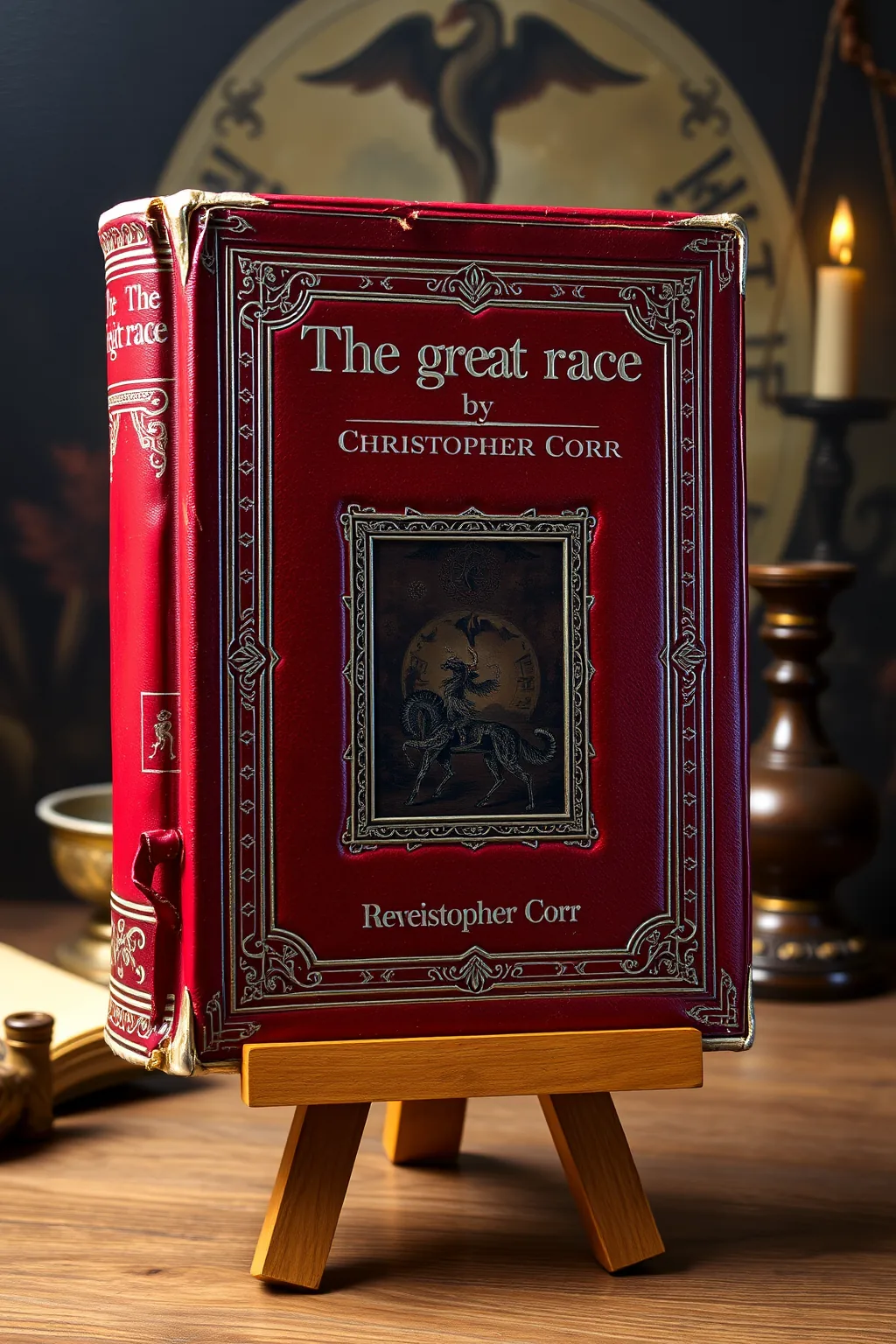
The great race
 67
67

The great race


Aurelia Blackwood, Occult Philosophy Critic: Christopher Corr's 'The Great Race' is a luminous exposition of a foundational myth within esoteric Chinese cosmology. It brilliantly translates the complex principles of the Zodiac into an accessible, yet deeply resonant, narrative. The book's strength lies in its ability to embed profound symbolic truths within a captivating story, illuminating the archetypal journeys of each animal. Corr doesn't merely recount a folktale; he offers a glimpse into the energetic currents that have guided generations. This is essential reading for young initiates into the mysteries of time and destiny, and a valuable refresher for seasoned practitioners seeking to reconnect with the primal wisdom of the celestial animals.
📝 Description
67
Christopher Corr's 'The Great Race' (1995) retells the origin of the Chinese Zodiac.
Christopher Corr's 'The Great Race' retells the legendary contest that established the Chinese Zodiac animals. The narrative details how each of the twelve animals won their place through a celestial competition. This story goes beyond a simple children's tale, offering insight into the symbolism of the Chinese calendar. Time, within this framework, is linked to animal energies and ancient myths.
Corr creates a setting rich with Eastern traditions, encouraging readers to consider the connections between all living things and the subtle forces that influence existence. The book acts as an introduction for younger readers and curious individuals to the esoteric ideas of astral influence and the archetypal stories that shape how humans perceive fate. It explains the zodiac's order and offers a reason for the cat's enduring animosity toward the rat, presenting a moral about cosmic fairness and how different species interact.
This book engages with the esoteric traditions surrounding the Chinese lunar calendar and its associated zodiac. These traditions often view the animals not merely as symbols but as forces influencing personality, destiny, and the flow of time itself. The narrative of the Great Race taps into a common motif in mythologies worldwide, where a divine or cosmic event establishes a fundamental order. Within an esoteric framework, this order is seen as reflecting deeper spiritual principles and the interconnectedness of the human and natural worlds.
💡 Why Read This Book?
Uncover the hidden origins of the Chinese Zodiac and the profound symbolism behind each animal's placement. 'The Great Race' offers an accessible entry point into ancient cosmological beliefs, revealing the allegorical wisdom embedded in time-honored myths. It's perfect for young seekers, parents, educators, and anyone fascinated by the intersection of mythology, astrology, and cultural heritage, providing a foundation for understanding one of the world's most enduring mystical systems.
⭐ Reader Reviews
Honest opinions from readers who have explored this book.
❓ Frequently Asked Questions
What is the Great Race?
The Great Race is a legendary competition orchestrated by the Jade Emperor to determine the order of the animals in the Chinese Zodiac, a foundational myth explaining their celestial placement and associated characteristics.
Who are the main characters?
The primary characters are the twelve animals of the Chinese Zodiac, each with their unique personality and role in the Great Race, most notably the clever Rat and the betrayed Cat.
What is the significance of the Chinese Zodiac?
The Chinese Zodiac is a cyclical system of twelve years, each represented by an animal, believed to influence personality, compatibility, and destiny, deeply ingrained in Chinese culture and astrology.
Is this book suitable for young readers?
Yes, 'The Great Race' is an engaging and beautifully illustrated story ideal for children, offering them an early introduction to complex astrological and mythological concepts in an enjoyable format.
What esoteric knowledge can be gained?
Readers can gain insight into the symbolic meaning of each animal's attributes, the concept of cosmic timing, and the archetypal lessons of wisdom, deception, and consequence within a mystical framework.
🔮 Key Themes & Symbolism
The Cosmic Decree and the Twelvefold Path
This theme explores the concept of a divine or cosmic ordering principle, represented by the Jade Emperor's decree. The Great Race becomes a metaphor for the inherent order and cyclical nature of the universe, as dictated by celestial forces. Each animal's journey signifies a unique path or initiation, leading them to their designated position in the twelve-year cycle. It explores how perceived fate or destiny is shaped by individual actions within a grand, predetermined framework, inviting contemplation on the balance between free will and cosmic influence in the unfolding of time.
Archetypes of Animal Wisdom and Character
The book intricately combines the distinct archetypal characteristics of each zodiac animal into the narrative of the race. Beyond mere animalistic traits, these archetypes represent profound human virtues and follies: the Rat's cunning, the Ox's diligence, the Tiger's boldness, the Cat's vanity, and so forth. Understanding these archetypes offers a symbolic lens through which to analyze personality, relationships, and life's challenges. It's an invitation to recognize these potent energies within oneself and others, fostering a deeper comprehension of the human psyche through the wisdom of the animal kingdom.
The Enigma of Betrayal and Cosmic Justice
Central to the tale is the enduring mystery of the Cat's exclusion and his subsequent animosity towards the Rat. This narrative thread explores themes of betrayal, consequence, and the subtle workings of cosmic justice. It highlights how seemingly small actions can have far-reaching and generational repercussions, imbuing the story with a moral and philosophical dimension. The unresolved tension between Rat and Cat serves as a potent symbol of karmic debts and the intricate web of cause and effect that binds all beings within the grand range of existence.
💬 Memorable Quotes
Direct passages from the work, attributed to the author.
“Every step etched a destiny.”
— This evokes the lasting impact of actions within the grand cosmic scheme, implying that each movement and decision in the race, and in life, contributes to the unfolding of one's predetermined path or fate.
“The moon watched, the stars whispered.”
— This poetic line imbues the celestial bodies with an awareness of earthly events, highlighting the mystical connection between the cosmos and the unfolding narrative, suggesting divine observation and subtle guidance.
“A promise broken, a friendship lost forever.”
— This speaks to the deep emotional and karmic consequences of deception, underscoring the theme of betrayal and its lasting impact on relationships and individual destinies within the context of the story.
“The wisdom of the ancients flows through their fur and scales.”
— This emphasizes the ancient knowledge and inherent wisdom embodied by each zodiac animal, suggesting that their very beings are conduits for primordial truths and understanding passed down through millennia.
💡 Key Ideas
Editorial paraphrase of the work's core concepts — not direct quotes.
The race was not merely of speed, but of spirit.
This quote suggests that the true measure of success in the Great Race, and by extension in life, lies not just in physical prowess but in inner qualities like determination, wit, and adherence to a higher purpose.
🌙 Esoteric Significance
Tradition
This narrative is deeply embedded within the esoteric traditions of Chinese Taoism and folk beliefs, which emphasize the interconnectedness of the universe and the influence of celestial bodies on earthly affairs. It draws upon the principles of Yin and Yang, the Five Elements, and the concept of Qi (life force), all integral to understanding the energetic dynamics of the Chinese Zodiac. The tale serves as an allegorical initiation into these complex systems, revealing how cosmic cycles and archetypal energies manifest in the human experience and shape individual destinies.
Symbolism
Each animal in the Great Race is a potent symbol representing specific archetypal energies, virtues, and potential challenges. The Rat embodies cleverness and adaptability, the Ox represents diligence and steadfastness, the Tiger signifies courage and leadership, and so forth. The race itself symbolizes the journey of life, the pursuit of one's place in the cosmic order, and the consequences of choices. The betrayal by the Rat towards the Cat highlights themes of karmic retribution and the delicate balance of relationships within the energetic framework of the cosmos.
Modern Relevance
In an era often characterized by disconnection and a search for meaning, 'The Great Race' offers a timeless reminder of our connection to nature, the cosmos, and ancient wisdom traditions. The archetypal lessons embedded within the story provide a framework for self-understanding, interpersonal dynamics, and navigating life's challenges. For modern seekers, it serves as an accessible gateway to exploring Eastern philosophies, understanding astrological influences, and appreciating the enduring power of myth to guide and illuminate the human journey.
👥 Who Should Read This Book
This captivating book is a treasure for a diverse audience. Young readers and children will delight in the engaging story and vibrant illustrations, making it an ideal introduction to the wonders of the Chinese Zodiac and mythology. Parents and educators will find it an invaluable tool for fostering cultural awareness and teaching foundational concepts of astrology and folklore. For budding mystics and spiritual seekers, 'The Great Race' offers an accessible yet profound entry point into the esoteric wisdom of Chinese cosmology, providing symbolic insights into time, destiny, and the archetypal forces that shape our lives. Scholars of mythology and comparative religion will appreciate its faithful representation of ancient traditions.
📜 Historical Context
The myth of the Great Race, while presented in a contemporary narrative, is deeply rooted in ancient Chinese folklore and cosmological beliefs that have evolved over millennia. Its origins can be traced to the Han Dynasty (206 BCE – 220 CE), a period of significant cultural and intellectual development in China, where concepts of astrology, cosmology, and calendrical systems were meticulously studied and integrated into societal structures. The development of the twelve-year animal cycle, intrinsically linked to the lunar calendar and astronomical observations, served practical purposes for timekeeping and agricultural planning. However, its philosophical and spiritual dimensions, explored through tales like the Great Race, became integral to understanding human character, destiny, and the harmonious relationship between humanity and the natural world. This enduring narrative reflects a worldview that sees the cosmos as a living entity, with celestial cycles mirroring earthly occurrences and influencing individual lives, a perspective that has profoundly shaped East Asian cultures.
📔 Journal Prompts
Reflect on the animal that best represents your core strengths and explain why, drawing parallels to the Great Race narrative.
Consider a time you felt unfairly treated or betrayed; how does the story of the Cat and Rat resonate with your experience?
If you could advise one animal in the Great Race, which would it be and what wisdom would you impart?
Explore the concept of 'cosmic justice' as depicted in the tale. Does it align with your understanding of fairness and consequence?
How can understanding the archetypal traits of the zodiac animals help you better understand yourself and others in your daily life?
🗂️ Glossary
Chinese Zodiac
A cyclical system of twelve animals representing years, each believed to influence personality, relationships, and destiny, originating from ancient Chinese astrology and folklore.
Jade Emperor
A prominent deity in Chinese mythology, often depicted as the supreme ruler of Heaven and Earth, who orchestrated the Great Race to establish the zodiac order.
Archetype
A recurring symbol or motif in literature, art, or mythology that represents universal patterns of human nature and experience, such as the cunning trickster or the diligent worker.
Cosmology
The study of the origin, evolution, and structure of the universe, often encompassing philosophical and mystical interpretations of celestial phenomena and their influence on life.
Mythology
A collection of myths, especially one belonging to a particular religious or cultural tradition, often explaining natural phenomena, historical events, or the origins of customs.
This book appears in 2 collections
🔮 Readers Also Liked
Browse all →








From the “Astrology” Collection
View all →







More Free Astrology & Cosmology Books
View all →