The Great Arcanum
 73
73

The Great Arcanum
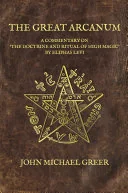
Greer's "The Great Arcanum" performs a vital service by dissecting Eliphas Lévi's "Doctrine and Ritual of High Magic" with a critic's eye. Rather than rehashing Lévi's pronouncements, Greer interrogates the historical context and intellectual lineage of Lévi's system. The strength lies in its scholarly rigor, particularly in tracing how Lévi’s 1854 work became a cornerstone for subsequent magical traditions. A notable limitation is that the book occasionally presumes a level of familiarity with Lévi's dense prose, potentially leaving newcomers to the subject somewhat adrift. However, Greer's lucid explanation of Lévi's integration of Kabbalistic principles offers a particularly illuminating passage. The work ultimately provides a necessary academic perspective on a pivotal occult text.
📝 Description
73
John Michael Greer's 2018 book dissects Eliphas Lévi's seminal work on high magic.
In "The Great Arcanum," John Michael Greer examines Eliphas Lévi's "The Doctrine and Ritual of High Magic." Greer meticulously analyzes Lévi's synthesis of magical theory and practice, tracing its impact on modern occultism. He offers a scholarly perspective on Lévi's system, moving beyond common interpretations to address the philosophical foundations of ceremonial magic.
This book is for serious students of Western esotericism, occult history, and comparative religion. Readers interested in the intellectual currents shaping modern magical movements will find Greer's analysis especially useful. It appeals to those who value rigorous scholarship applied to mystical traditions, seeking to understand the origins and development of occult thought.
"The Great Arcanum" situates Eliphas Lévi's "The Doctrine and Ritual of High Magic," first published in 1854, within the intellectual atmosphere of 19th-century France. This period saw a renewed interest in spiritualism and occult philosophies. Lévi's work emerged during a significant occult revival, influencing groups like the Hermetic Order of the Golden Dawn. Greer discusses how Lévi's systematic approach to magic reshaped its perception and affected later occultists and scholars.
💡 Why Read This Book?
• Gain a precise understanding of the Kabbalistic frameworks Eliphas Lévi integrated into his magical system, as explored in "The Great Arcanum," which offers a deeper appreciation beyond surface-level symbolism. • Grasp the specific historical impact of Lévi's "Doctrine and Ritual of High Magic" (1854) on the 19th-century occult revival, a crucial period for modern esotericism, as detailed by Greer. • Learn to analyze ceremonial magic not just as ritual, but as a philosophical discipline through Greer's scholarly dissection of Lévi's "magical philosophy."
⭐ Reader Reviews
Honest opinions from readers who have explored this book.
❓ Frequently Asked Questions
What is the 'Great Arcanum' as discussed by John Michael Greer?
Greer explains the 'Great Arcanum' as Lévi's term for the profound, hidden knowledge at the heart of magic, often interpreted as the supreme secret or the fundamental principles governing the universe and its magical manipulation.
When was Eliphas Lévi's 'The Doctrine and Ritual of High Magic' first published?
Eliphas Lévi's seminal work, 'The Doctrine and Ritual of High Magic,' was first published in 1854, a pivotal moment in the 19th-century occult revival.
How did Eliphas Lévi influence modern occultism?
Lévi systematized magical theory and practice, integrating Kabbalah, Hermeticism, and other esoteric traditions. His work provided a framework that re-situated occultism as a subject worthy of study, influencing many later magical orders and thinkers.
What is the relationship between Greer's book and Lévi's original work?
Greer's 'The Great Arcanum' is an analytical study and critical commentary on Lévi's 'The Doctrine and Ritual of High Magic,' providing historical context, conceptual explanations, and an evaluation of its significance.
Is this book suitable for someone new to occult literature?
While it offers valuable insights, the book assumes some familiarity with esoteric concepts. Readers new to the occult might benefit from reading Lévi's original work first or concurrently to fully appreciate Greer's scholarly analysis.
What specific esoteric traditions does Lévi's work, as analyzed by Greer, draw upon?
Lévi's work, and thus Greer's analysis, draws heavily on Kabbalah, Hermeticism, ceremonial magic, and aspects of alchemy and divination, synthesizing them into a coherent system of magical philosophy.
🔮 Key Themes & Symbolism
Lévi's Magical Synthesis
Greer meticulously details how Eliphas Lévi, in his 1854 "Doctrine and Ritual of High Magic," synthesized disparate esoteric traditions. This synthesis aimed to create a unified system of magical philosophy and practice. The book highlights Lévi's unique ability to draw from Kabbalah, Hermeticism, and ceremonial magic, presenting them not as isolated curiosities but as interconnected elements of a grand cosmic design, thereby elevating occultism's intellectual standing.
The Doctrine and Ritual
Central to Greer's analysis is the structure and content of Lévi's "Doctrine and Ritual of High Magic." The work emphasizes Lévi's attempt to codify both the theoretical principles (doctrine) and the practical applications (ritual) of magic. Greer explores how this dual focus provided a comprehensive approach, allowing practitioners to understand the underlying philosophy while engaging in specific magical operations, a key aspect of its influence on subsequent occult movements.
Occultism as Academic Study
A significant theme is Lévi's role in positioning occultism as a legitimate field for intellectual inquiry. Greer examines how Lévi's systematic presentation and scholarly tone, particularly in his major work, encouraged a more serious engagement with magical traditions. This aspect allowed occultism to move from the fringes toward academic consideration, challenging prevailing rationalist viewpoints of the 19th century.
Symbolism and Correspondences
Greer looks at the rich symbolic language employed by Lévi, particularly his use of Kabbalistic correspondences and Hermetic principles. The book illuminates how Lévi interpreted symbols as keys to understanding the hidden laws of nature and the universe. This focus on symbolic interpretation is presented as a core element of Lévi's method, providing practitioners with a framework for deciphering magical operations and spiritual insights.
💬 Memorable Quotes
Direct passages from the work, attributed to the author.
“Lévi's work re-situated occultism as a serious field of academic study.”
— This statement captures the book's core argument about Eliphas Lévi's impact, highlighting his success in lending intellectual legitimacy to magical traditions during the 19th century.
“Ceremonial magic was presented by Lévi as a system of divine science.”
— This interpretation points to Lévi's elevated view of ritual practice, framing it not as mere superstition but as a structured, intelligent method for interacting with spiritual forces.
“The 19th century saw a significant revival of interest in occult literature.”
— This highlights the historical backdrop against which Lévi's influential work emerged, underscoring the societal and intellectual climate that made his writings particularly impactful.
💡 Key Ideas
Editorial paraphrase of the work's core concepts — not direct quotes.
The synthesis of Kabala and Hermeticism was central to Lévi's magical philosophy.
This paraphrase emphasizes the foundational role of these specific esoteric systems in Lévi's broader theoretical framework for magic, as explored in Greer's analysis.
Greer examines the practical application of magical theory in Lévi's doctrine.
This paraphrase focuses on the 'Ritual' aspect of Lévi's work, indicating that Greer's analysis covers not just theory but also the actionable steps and practices outlined by Lévi.
🌙 Esoteric Significance
Tradition
The work deeply roots itself in the Western Esoteric Tradition, specifically drawing from Hermeticism and Kabbalah. Lévi's ambition was to create a universal science of magic, unifying disparate threads of ancient wisdom. He reinterpreted traditional symbols and rituals through a lens that sought to reveal an underlying, rational order to the cosmos, making his approach distinct from purely religious or folk magical practices of his time.
Symbolism
Key symbols analyzed include the Caduceus of Hermes, representing the balance of opposing forces and the flow of cosmic energy, and the pentagram, which Lévi intricately detailed as a microcosm of divine creation and a potent tool in ceremonial magic. The Tarot, too, is presented not just as a divination tool but as a symbolic representation of the Kabbalistic Tree of Life, offering a visual map of spiritual ascent.
Modern Relevance
Contemporary practitioners of Western ceremonial magic, Golden Dawn initiates, and students of esoteric philosophy frequently reference Lévi's work. Thinkers like Israel Regardie and authors exploring modern magical orders often engage with Lévi's foundational texts. His synthesis of Kabbalah and magic continues to inform contemporary discussions on ritual efficacy, occult psychology, and the theoretical underpinnings of magical practice.
👥 Who Should Read This Book
• Students of Western Esotericism seeking to understand the foundational texts that shaped modern occultism, particularly those interested in the lineage of ceremonial magic. • Scholars of comparative religion and intellectual history who wish to explore the intersection of mysticism, philosophy, and societal trends in the 19th century. • Aspiring practitioners of ceremonial magic who require a rigorous theoretical framework to complement their practical studies, offering context for ritual work.
📜 Historical Context
Eliphas Lévi's "The Doctrine and Ritual of High Magic," first published in 1854, emerged during a fervent period of occult revival in 19th-century France. This era witnessed a widespread fascination with spiritualism, mesmerism, and esoteric philosophies, often as a counter-movement to the Enlightenment's rationalism and materialism. Lévi, born Alphonse Louis Constant, played a central role in synthesizing various traditions, including Kabbalah, Hermeticism, and ceremonial magic, into a coherent system. His work gained significant traction, influencing subsequent occultists and organizations such as the Hermetic Order of the Golden Dawn, which was founded in the late 19th century. While figures like Éliphas Lévi were central, competing esoteric ideas also circulated, though Lévi's systematic approach is often credited with providing a more structured and intellectually defensible foundation for modern occultism, distinguishing it from more purely folkloric or ecstatic practices.
📔 Journal Prompts
The integration of Kabbalah and Hermeticism in Lévi's system.
Lévi's concept of the 'Great Arcanum' as a supreme secret.
The historical reception of "The Doctrine and Ritual of High Magic" upon its 1854 publication.
Analysis of the pentagram's symbolism as presented by Lévi.
How Lévi's "magical philosophy" differs from contemporary rationalist viewpoints.
🗂️ Glossary
Eliphas Lévi
The pseudonym of Alphonse Louis Constant (1810-1875), a French occultist, ceremonial magician, and author whose works significantly influenced modern Western esotericism, particularly his "The Doctrine and Ritual of High Magic."
The Doctrine and Ritual of High Magic
Eliphas Lévi's most famous work, first published in 1854, which systematically presented his theories on magic, drawing from Kabbalah, Hermeticism, and ceremonial practices.
Kabbalah
A complex system of Jewish mysticism and esoteric interpretation of scripture, which Lévi heavily integrated into his magical philosophy, particularly through the Tree of Life.
Hermeticism
A philosophical and religious tradition based on the writings attributed to Hermes Trismegistus, emphasizing concepts like "as above, so below" and the interconnectedness of the cosmos.
Ceremonial Magic
A formalized system of ritual magic that involves specific incantations, gestures, tools, and symbolic representations, aiming to achieve specific magical effects or spiritual states.
Magical Philosophy
As conceived by Lévi, a comprehensive system of thought that explains the principles and workings of magic, integrating metaphysics, cosmology, and practical application.
The Great Arcanum
A term used by Lévi to refer to the profound, hidden knowledge or secret of magic, often interpreted as the divine power or fundamental truth that governs the universe.
This book appears in 1 collection
🔮 Readers Also Liked
Browse all →







From the “High Magic” Collection
View all →








More Free Magic & Ritual Books
View all →