The Fire Witness
 82
82

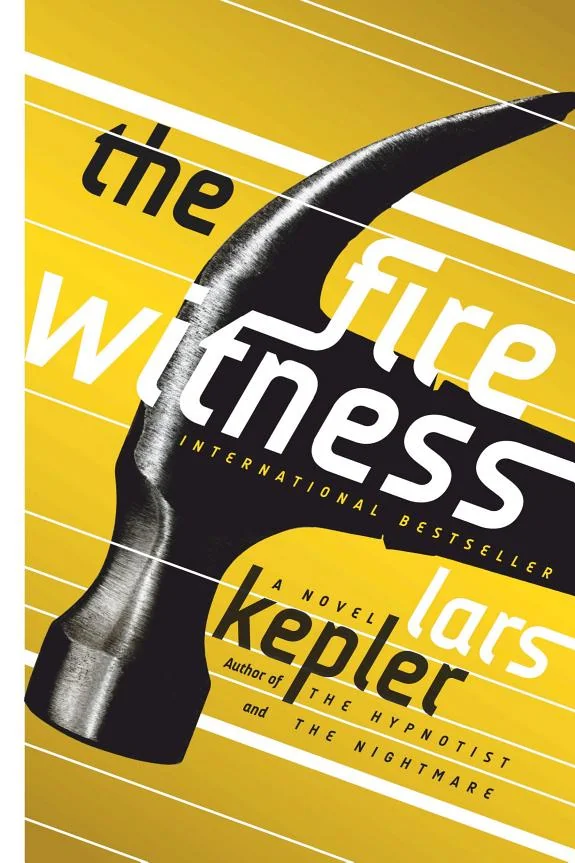
The Fire Witness
Lars Kepler’s "The Fire Witness" offers a grimly atmospheric descent into the supernatural, anchored by the unsettling premise of a fake medium confronting terrifying reality. The strength of the novel lies in its relentless pacing and the psychological tension it builds, particularly through Detective Joona Linna’s reluctant engagement with Flora Hansen’s claims. However, the book occasionally falters in its handling of the supernatural elements, sometimes leaning too heavily on established tropes rather than forging a truly unique path. A particularly effective passage details Linna’s initial skepticism clashing with the disturbing details presented by Hansen, highlighting the core conflict. The narrative’s commitment to a dark, often brutal, realism makes the intrusion of the uncanny all the more jarring. Ultimately, "The Fire Witness" is a suspenseful, if not always perfectly balanced, thriller that effectively explores the blurred lines of reality.
📝 Description
82
In 2013, Lars Kepler's The Fire Witness investigated a medium's encounter with true supernatural events.
The Fire Witness, published in 2013, follows Flora Hansen, a woman who claims to be a medium. Her life takes a dark turn when she confronts genuine supernatural phenomena following a violent murder. Detective Joona Linna becomes entangled in the case, facing the clash between his rational investigative methods and the inexplicable events surrounding Flora.
The novel delves into the psychological underpinnings of belief and skepticism. It examines how trauma can influence perception and the challenges faced by law enforcement when confronted with events that defy conventional explanation. The narrative questions the boundaries of reality and the nature of psychic experience.
Published in 2013, The Fire Witness taps into a tradition of occult thrillers that blend police procedurals with the uncanny. It reflects a contemporary fascination with the supernatural, particularly themes of mediumship and psychic phenomena, examined through a lens of psychological realism. The book engages with ideas of how personal trauma and belief systems intersect with inexplicable events, placing it within a lineage of fiction that questions the perceived boundaries of reality.
💡 Why Read This Book?
• Gain insight into the psychological toll of confronting perceived supernatural events, as explored through Flora Hansen's character arc. • Experience the tension of a police procedural challenged by unexplained phenomena, specifically Joona Linna's investigation in the rural home for wayward girls. • Examine the blurred boundary between genuine psychic ability and psychological distress, a central theme amplified by the gruesome murder described.
⭐ Reader Reviews
Honest opinions from readers who have explored this book.
❓ Frequently Asked Questions
What is the original publication year of The Fire Witness?
The Fire Witness was originally published on July 2, 2013, by the acclaimed Swedish writing duo Lars Kepler.
Who are the main characters in The Fire Witness?
The central characters are Flora Hansen, a woman who claims to be a medium, and Detective Joona Linna, who investigates a murder linked to Hansen's visions.
What genre does The Fire Witness belong to?
The Fire Witness is primarily a crime thriller and psychological suspense novel, with significant supernatural or uncanny elements.
What is the core premise of The Fire Witness?
The book follows a woman who pretends to be a medium but begins experiencing genuine, terrifying visions after a murder occurs at a home for wayward girls.
Is The Fire Witness part of a series?
Yes, The Fire Witness is part of the Joona Linna series, which began with "The Hypnotist" in 2009.
Where does the story of The Fire Witness take place?
The novel features a gruesome murder at a rural home for wayward girls, serving as the central crime scene and catalyst for the supernatural events.
🔮 Key Themes & Symbolism
The Nature of Mediumship
The work explores the dichotomy of perceived versus actual psychic abilities. Flora Hansen’s initial charade as a medium is shattered when she experiences genuine, disturbing visions following a violent crime. This theme questions the authenticity of spiritual communication, contrasting fraudulent practices with potentially real, albeit terrifying, supernatural contact. It studies how societal skepticism interacts with personal experiences that defy rational explanation, particularly within the context of a police investigation.
Trauma and Perception
Following the murder at the rural home for wayward girls, the narrative suggests that intense trauma can blur the lines between psychological distress and genuine paranormal phenomena. The book examines how horrific events can trigger profound psychological shifts, leading characters to question their own sanity and perception of reality. This theme is central to understanding Flora Hansen's evolving state and Joona Linna's struggle to interpret her increasingly disturbing claims.
Skepticism vs. Belief
Detective Joona Linna embodies the conflict between rational investigation and the inexplicable. His willingness to listen to Flora Hansen, despite her dubious background, highlights the challenge of maintaining strict skepticism when faced with evidence that defies conventional understanding. The novel probes the boundaries of forensic investigation and the human capacity to accept phenomena that lie outside the field of scientific proof, particularly when confronted by alleged ghostly sightings.
The Unseen World
The narrative posits the existence of an unseen world that intrudes upon the mundane. The 'fire witness' itself is a manifestation of this intrusion, a spectral presence linked to a violent death. The book uses this concept to explore the idea that certain individuals can perceive or be affected by forces beyond ordinary human senses, raising questions about fate, residual energy, and the lingering impact of intense human emotion on a physical space.
💬 Memorable Quotes
Direct passages from the work, attributed to the author.
“Flora Hansen calls herself a medium and makes a living by pretending to commune with the dead.”
— This establishes the central irony: a character who fakes spiritual connection is suddenly thrust into confronting authentic, terrifying phenomena, forcing a re-evaluation of her own abilities and the nature of reality.
“But after a gruesome murder at a rural home for wayward girls, Hansen begins to suffer visions that are all too real.”
— This marks the turning point where pretense gives way to genuine, disturbing experiences. The stark setting of the murder amplifies the impact of these unsolicited, frightening visions.
“She calls the police, claiming to have seen a ghost, but only one detective puts aside his skepticism long enough to listen: Joona Linna.”
— This highlights the core conflict of the narrative: the clash between rational investigation and the seemingly supernatural, with Joona Linna serving as the bridge between these opposing viewpoints.
“Linna has spent more time at the scene of the crime than any other detective.”
— This emphasizes Joona Linna's dedication and meticulous approach, suggesting his deep immersion in the case is what allows him to perceive subtle clues or accept unconventional testimonies.
“The authors of The Hypnotist and The Nightmare deliver their most thrilling novel yet.”
— This promotional statement from the original blurb sets high expectations for the book's suspense and plot complexity, positioning it as a significant work within Lars Kepler's oeuvre.
🌙 Esoteric Significance
Tradition
While "The Fire Witness" is primarily a crime thriller, its exploration of genuine supernatural phenomena and psychic experiences touches upon themes present in parapsychology and spiritualism. It doesn't adhere to a specific esoteric lineage like Hermeticism or Kabbalah but rather engages with the popular, often sensationalized, perception of ghosts and mediums. The narrative reflects a modern, secularized approach to the supernatural, where such events are filtered through the lens of crime investigation and psychological interpretation rather than established mystical frameworks.
Symbolism
The 'fire witness' itself functions as a potent symbol of lingering trauma and unresolved energy, an echo of a violent event imprinted on the environment. The rural home for wayward girls can symbolize innocence corrupted or a place of hidden suffering, making it a fertile ground for spectral manifestations. Flora Hansen's unreliable mediumship symbolizes the blurred lines between genuine spiritual insight and psychological projection, representing the human struggle to interpret the unknown.
Modern Relevance
Contemporary interest in "The Fire Witness" stems from its blend of procedural investigation with the paranormal. It speaks to readers exploring the boundaries of consciousness, the psychology of trauma, and the possibility of phenomena beyond scientific explanation. Thinkers and practitioners in fields like forensic psychology and parapsychology might find its exploration of witness testimony and unexplained events compelling, reflecting ongoing debates about perception and reality in the 21st century.
👥 Who Should Read This Book
• Readers of psychological thrillers who enjoy a supernatural twist, particularly those intrigued by the intersection of crime investigation and the uncanny. • Fans of the Joona Linna series looking to follow Detective Linna's challenging cases, especially his encounters with phenomena that defy logical explanation. • Individuals interested in exploring fictional narratives that question the nature of reality, perception, and the potential for unexplained events to impact real-world investigations.
📜 Historical Context
Published in 2013, "The Fire Witness" arrived amidst a thriving market for dark, Scandinavian crime fiction, a genre popularized by authors like Stieg Larsson. Lars Kepler, the pseudonym for Alexander Ahndoril and Alexandra Coelho Ahndoril, had already carved out a niche with their gritty Joona Linna series, starting with "The Hypnotist" in 2009. This period saw a strong public appetite for psychologically complex thrillers that often incorporated darker themes, including violence and mental disturbance. While not directly engaging with esoteric traditions in an academic sense, the novel tapped into a broader cultural fascination with the uncanny and the unexplained, a counterpoint to the era's emphasis on forensic realism. The reception of Lars Kepler's work generally highlighted their narrative drive and grim atmosphere, positioning them as successors to the tradition of hard-boiled detective fiction but with a modern, often brutal, edge. Their success stood alongside other contemporary crime writers like Camilla Läckberg and Jo Nesbø.
📔 Journal Prompts
Flora Hansen's initial pretense as a medium contrasted with her later genuine visions.
Detective Joona Linna's struggle to reconcile skepticism with the evidence presented.
The atmosphere of the rural home for wayward girls and its connection to the crime.
The concept of the 'fire witness' as a manifestation of trauma.
The blurred line between psychological distress and paranormal experience after the murder.
🗂️ Glossary
Medium
In the context of the book, a person who claims to communicate with spirits of the dead, either as a genuine ability or, initially, as a fraudulent practice.
Joona Linna
The lead detective in Lars Kepler's crime series, known for his persistent and often unconventional investigative methods.
Wayward girls
Refers to young women who are considered disobedient, unruly, or difficult to control, often residing in specialized institutions.
Visions
In this novel, visions are experiences of seeing things that are not physically present, initially attributed to pretense but later becoming disturbingly real.
Rural home
A setting located outside of cities or towns, often associated with isolation and a different pace of life, serving as the crime scene.
Skepticism
An attitude of doubt or disbelief towards claims that lack empirical evidence or are not supported by scientific reasoning.
The Hypnotist
The first novel in the Joona Linna series by Lars Kepler, published prior to 'The Fire Witness'.
This book appears in 1 collection
🔮 Readers Also Liked
Browse all →








From the “Visions” Collection
View all →


More Free Occult Philosophy Books
View all →