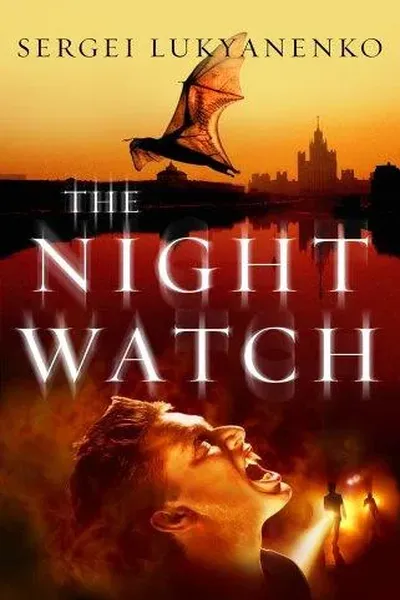
The Night Watch

 72
72

The Night Watch
Sergei Lukyanenko’s *The Night Watch* does more than just introduce a world of magic hidden in plain sight; it immediately plunges the reader into a morally gray battlefield where the lines between good and evil are blurred by necessity and pacts. Anton Gorodetsky's initial foray into the Night Watch is handled with a grounded, almost procedural tone, making the extraordinary feel remarkably ordinary. The novel excels in its depiction of the Twilight, the liminal space where Light and Dark Others interact, and the rigid rules governing their eternal conflict. However, the narrative occasionally falters under the weight of exposition, particularly in detailing the complex magical system and its history, which can slow the pacing. A particularly strong sequence involves Anton’s struggle with a curse from a Dark Sorcerer, showcasing the tangible, often brutal, consequences of magic. Despite some expositional challenges, the book effectively establishes a compelling universe and a protagonist whose reluctant heroism is its strongest asset. It is a foundational text for modern urban fantasy, offering a gritty, Russian perspective on the supernatural.
📝 Description
72
Sergei Lukyanenko's 1999 novel, The Night Watch, introduced a hidden world of magical beings in Moscow.
The Night Watch, published in Russia in 1999, begins a series about supernatural beings living alongside humans. These beings, called 'Others,' possess magical abilities and are divided into Light and Dark factions. They operate under a truce known as the 'Twilight Pact,' which prevents either side from upsetting the balance between good and evil. The story follows Anton Gorodetsky, a new member of the Night Watch, an organization dedicated to upholding this pact and monitoring the Dark Others.
This book appeals to readers of urban fantasy that mixes magic with everyday life. It examines moral complexity, the nature of power, and the results of following strict rules. Readers who enjoy detailed world building, with magical systems and societies that have clear limits, will appreciate the depiction of the Other world existing just beyond human sight. The novel is especially suited for those who like stories featuring characters who face difficult ethical choices.
Published in 1999, The Night Watch emerged as Russian fantasy literature experienced a revival after the Soviet Union's dissolution. Lukyanenko's work tapped into a renewed public interest in speculative and supernatural themes. Its exploration of a secret magical society within modern Moscow reflects a broader trend in contemporary fantasy, where hidden worlds and ancient powers are often depicted as coexisting with contemporary urban environments. The narrative's focus on a delicate balance between opposing forces echoes occult traditions concerned with equilibrium and the unseen.
💡 Why Read This Book?
• You will learn about the 'Twilight Pact,' a unique magical treaty that governs the interaction between Light and Dark supernatural beings, providing a framework for exploring moral ambiguity beyond simple good-versus-evil narratives, as seen in Anton's early investigations in Moscow. • You will encounter the concept of 'Izvor' (Source), the origin of magical power, and understand how its manipulation or control is central to the ongoing conflict between factions, a key element in the escalating magical duels described. • You will experience the gritty realism of urban fantasy, where magical abilities are not just flashy powers but come with strict rules, consequences, and the constant threat of 'Gesheft' (Deal) or magical retribution, exemplified by the consequences Anton faces after breaking protocol.
⭐ Reader Reviews
Honest opinions from readers who have explored this book.
❓ Frequently Asked Questions
What is the 'Twilight Pact' in The Night Watch?
The Twilight Pact is a supernatural agreement that divides the world into two factions: the Light Others and the Dark Others. It dictates that neither side can fundamentally alter the balance of power between good and evil, creating a tense, ongoing struggle enforced by organizations like the Night Watch.
Who is Anton Gorodetsky?
Anton Gorodetsky is the protagonist of The Night Watch. He is a human who discovers he is an 'Other' with magical potential and becomes a recruit for the Night Watch, an organization of Light Others tasked with policing the Dark Others and enforcing the Twilight Pact in Moscow.
What are the main factions in The Night Watch?
The main factions are the Light Others, who generally align with good and seek to protect humanity, and the Dark Others, who are more self-serving and often exploit humans. Their actions are strictly regulated by the Twilight Pact.
What is the significance of 'Izvor' in the book?
'Izvor' refers to the Source, the fundamental wellspring of magical power in the world of The Night Watch. Controlling or accessing Izvor is a critical aspect of magical power and a major point of contention between the Light and Dark factions.
When was The Night Watch originally published?
The Night Watch was originally published in Russia in 1999 by Sergei Lukyanenko.
Does The Night Watch have sequels?
Yes, The Night Watch is the first novel in a popular series by Sergei Lukyanenko, followed by books like 'Day Watch' (Dnevnoy Dozor) and others that continue the story of Anton Gorodetsky and the world of the Others.
🔮 Key Themes & Symbolism
The Twilight Pact
The central tenet of this world is the Twilight Pact, an ancient agreement that maintains a precarious balance between the forces of Light and Dark. This pact isn't about outright victory but about regulated conflict, preventing either side from annihilating the other or fundamentally altering humanity's destiny. It creates a constant state of tension and necessitates organizations like the Night Watch and Day Watch to police the supernatural world operating within human society. The pact's intricacies and the constant threat of its violation drive much of the narrative, forcing characters to make difficult choices with far-reaching consequences, often blurring the lines between hero and villain.
Moral Ambiguity and Balance
Unlike simpler fantasy narratives, The Night Watch presents a world where 'good' and 'evil' are not absolute. The Light Others, while ostensibly protectors, can be ruthless and dogmatic, while the Dark Others possess their own codes and motivations that are not purely malevolent. The enforcement of the Twilight Pact itself requires morally questionable actions from both sides. This theme explores the idea that maintaining balance often necessitates compromise and that true heroism lies not in adhering to rigid dogma but in navigating complex ethical landscapes, a struggle personified by Anton Gorodetsky's evolving role.
The Hidden World
The novel excels at portraying a hidden supernatural reality coexisting with our own mundane world. Magic, ancient beings, and powerful artifacts operate just beyond the perception of ordinary humans, primarily within the 'Twilight,' a liminal space where the two worlds intersect. This concept of a secret society of 'Others' living among us, with their own laws, hierarchies, and conflicts, taps into a deep fascination with the unseen. The urban setting of Moscow becomes a character in itself, imbued with mystical significance and serving as the backdrop for clandestine magical battles and intrigue.
Power and Consequence
Magic in The Night Watch is not without its price. The novel emphasizes that wielding supernatural abilities, whether Light or Dark, carries significant risks and consequences. Concepts like 'Izvor' (Source) and the 'Gesheft' (Deal) highlight that power is often transactional and can lead to corruption or personal sacrifice. Characters are constantly aware that their actions, especially those involving magic, can have unforeseen repercussions, affecting not only themselves but also the delicate balance of the world. This grounded approach to magic adds a layer of realism and weight to the fantastical elements.
💬 Memorable Quotes
Direct passages from the work, attributed to the author.
“The Night Watch maintains the balance. The Day Watch maintains the balance. We maintain the balance.”
— This repeated phrase underscores the core function of the opposing supernatural enforcement agencies. It highlights that their primary role isn't about victory for their respective sides but about ensuring the precarious equilibrium dictated by the Twilight Pact remains intact.
“We are all but pawns in a game of power. The question is, do we play to win, or merely to survive?”
— This reflects the existential struggle faced by characters like Anton. It speaks to the overarching conflict between the Light and Dark, and the individual choices characters must make within that grander, often unforgiving, cosmic game.
“The Twilight is the place where the worlds meet. It is dangerous, but it is also where true power can be found.”
— This highlights the significance of the liminal space where humans and 'Others' interact. The Twilight is presented as a nexus of supernatural activity, a place of both peril and potent magical potential, crucial for the narrative's unfolding events.
“Every deal has a price. Every magical act leaves a mark.”
— This concept, often referred to as 'Gesheft' or similar terms, emphasizes that magic in this universe is not free. There are always consequences, be they moral, physical, or metaphysical, for using supernatural powers or entering into magical pacts.
💡 Key Ideas
Editorial paraphrase of the work's core concepts — not direct quotes.
Do you know what the main difference between Light and Dark magic is? The Dark magic is stronger. But the Light magic is more honest.
This quote, or a similar sentiment, captures the nuanced morality of the series. It acknowledges the inherent power disparity while suggesting that the 'goodness' of Light magic lies in its principles and perhaps its transparency, even if it's less potent in direct confrontation.
🌙 Esoteric Significance
Tradition
While not strictly adhering to a single historical esoteric tradition, *The Night Watch* draws heavily on dualistic frameworks reminiscent of Gnosticism and Manichaeism, with its clear delineation of Light and Dark forces. It also incorporates elements of modern occultism's fascination with hidden societies and the supernatural existing alongside the mundane. The concept of a fragile 'Pact' governing these opposing forces can be loosely linked to hermetic principles of balance and correspondence, though applied within a distinctly contemporary, urban fantasy context rather than ancient mystical texts.
Symbolism
The most prominent symbolism lies in the division between 'Light' and 'Dark' Others, representing fundamental cosmic dualities. The 'Twilight' itself serves as a powerful symbol of liminality, the space between worlds where true power and conflict manifest. Celestial bodies, such as the 'Great Bear' constellation, are also imbued with significance, acting as markers of destiny or power for certain individuals. The very act of the 'Gesheft' (Deal) symbolizes the Faustian bargain, where power is obtained at a significant, often unseen, cost.
Modern Relevance
Contemporary urban fantasy authors often cite *The Night Watch* as an influence for its sophisticated world-building and its willingness to explore moral complexity within a supernatural framework. Its depiction of magical societies with strict rules and bureaucratic enforcement has found echoes in numerous subsequent works. Thinkers interested in modern myth-making and the evolution of folklore in digital age also find value in its portrayal of ancient conflicts playing out in a recognizable, contemporary urban landscape.
👥 Who Should Read This Book
• Fans of urban fantasy seeking a darker, more morally complex narrative: Readers who enjoy books like *American Gods* or *Neverwhere* will appreciate the blend of the supernatural with gritty, real-world settings and characters. • Students of comparative mythology and folklore: Those interested in how ancient concepts of good versus evil, magical pacts, and hidden worlds are reinterpreted in modern fiction will find rich material here. • Readers intrigued by the occult and hidden societies: Individuals fascinated by the idea of secret magical orders operating just beyond human awareness will be drawn into the intricate lore of the Night Watch and its adversaries.
📜 Historical Context
Sergei Lukyanenko's *The Night Watch*, first published in Russia in 1999, emerged during a vibrant period for post-Soviet speculative fiction. Following decades of state-controlled literary output, Russian authors began exploring themes and genres with renewed freedom. Lukyanenko's novel tapped into a burgeoning interest in urban fantasy and the occult, themes that were gaining global traction with works like Neil Gaiman's *Neverwhere* (1996). The book’s depiction of a hidden supernatural society operating within modern Moscow resonated with a generation seeking new narratives after the ideological shifts of the 1990s. While it gained significant domestic popularity, its international breakthrough largely occurred after the release of Timur Bekmambetov's visually striking film adaptations in 2004 and 2006, which brought global attention to the novel's mix of Eastern European folklore and Western urban fantasy tropes. The series' success demonstrated a powerful new voice in international fantasy, distinct from the more established Western European or American traditions.
📔 Journal Prompts
The nature of the Twilight Pact and its enforcement.
Anton Gorodetsky's evolving understanding of 'Light' and 'Dark'.
The role of Moscow as a setting for supernatural conflict.
Consequences of wielding magic, particularly the concept of 'Gesheft'.
Reflections on the balance between opposing forces in personal life.
🗂️ Glossary
Others
Individuals possessing supernatural abilities, divided into Light and Dark factions. They exist alongside ordinary humans, often unseen.
Night Watch
An organization of Light Others responsible for policing the Dark Others and enforcing the Twilight Pact during the night.
Day Watch
The counterpart to the Night Watch, composed of Dark Others who enforce the pact during the day.
Twilight
The liminal space or time where the human world and the world of the Others intersect, a place of both danger and magical potential.
Twilight Pact
An ancient agreement that forbids either the Light or Dark Others from fundamentally altering the balance of power between good and evil.
Izvor
The Source; the fundamental wellspring of magical energy in the world.
Gesheft
A deal or bargain, often magical in nature, implying a transaction with inherent costs or consequences.
🔮 Readers Also Liked
Browse all →







More by Sergeĭ Lukʹi͡anenko
All books →

More Free Occult Philosophy Books
View all →