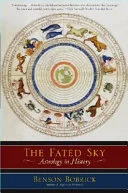
The Fated Sky
 83
83

The Fated Sky
Benson Bobrick’s 'The Fated Sky' offers a compelling survey of astrology's historical influence, moving beyond the sensational to detail its practical application in past societies. The book excels in presenting concrete examples, such as the astrological considerations reportedly involved in the military strategies of figures like Wallenstein, demonstrating how celestial interpretations were woven into the fabric of power. Bobrick’s strength lies in his rigorous historical research, grounding esoteric beliefs in documented actions. However, the sheer breadth of historical periods covered can sometimes lead to a less focused exploration of any single era or astrological system. The narrative occasionally feels more like a historical account of belief than a deep dive into the philosophical underpinnings of astrological thought. Nevertheless, 'The Fated Sky' provides a valuable perspective on how cosmic interpretations shaped human endeavors.
📝 Description
83
Benson Bobrick's 2009 book traces astrology's influence on history's pivotal moments.
The Fated Sky chronicles how astrological beliefs and predictions shaped significant historical events and the actions of influential figures. Bobrick examines the complex relationship between celestial interpretations and earthly decisions, moving beyond simple ideas of fate. The book scrutinizes documented instances where constellations and planetary alignments informed leaders' actions, battle outcomes, and the direction of empires.
Bobrick grounds his analysis in historical records. He presents astrology not as mere superstition, but as a potent cultural force that influenced thought and action across centuries. The work addresses a period where astrology held considerable sway in intellectual and political circles, from ancient Babylon to Renaissance Europe. Celestial prognostication was an integrated part of statecraft and personal ambition.
The book will appeal to readers interested in the historical impact of belief systems on decision-making. It is particularly relevant for those studying the history of science, the evolution of cultural practices, and the psychology of leadership. Individuals seeking to understand how seemingly irrational forces have historically guided rational actors will find substantial material here.
This work situates astrological practice within its historical role as a serious intellectual and political tool, rather than dismissing it as mere superstition. It illustrates how celestial prognostication was integrated into the fabric of governance and personal ambition in various historical epochs. By examining figures like Johannes Kepler and events where astrological considerations were reportedly paramount, Bobrick highlights a time when understanding the cosmos was seen as directly tied to earthly power and success. This contrasts with later periods where such practices became marginalized.
💡 Why Read This Book?
• Understand how figures like Albrecht von Wallenstein utilized astrological forecasts for military planning, offering a concrete example of celestial beliefs influencing battlefield strategy. • Explore the historical integration of horoscopes into statecraft and personal ambition during periods like the Renaissance, revealing how rulers consulted the stars for guidance. • Grasp the concept of 'celestial influence' as a driving force in historical decision-making, moving beyond mere superstition to see its role in shaping political and military actions.
⭐ Reader Reviews
Honest opinions from readers who have explored this book.
❓ Frequently Asked Questions
Which historical figures are prominently featured in 'The Fated Sky' regarding astrological influence?
Benson Bobrick prominently features figures like Albrecht von Wallenstein, a key military commander during the Thirty Years' War, whose reliance on astrological advice is explored. The work also touches upon other rulers and advisors who consulted celestial charts for significant decisions.
What specific historical periods does 'The Fated Sky' cover?
The book spans a wide historical range, from ancient civilizations like Babylon and Egypt, through the Renaissance and into the early modern period, illustrating the enduring presence of astrological thought across different eras.
Does 'The Fated Sky' present astrology as factual or as a belief system?
Bobrick presents astrology as a significant historical belief system and cultural force that demonstrably influenced the actions and decisions of individuals and societies, rather than arguing for its objective truth.
What is the primary argument of 'The Fated Sky' concerning astrology and history?
The central argument is that astrological beliefs were not merely fringe superstitions but were actively integrated into the practical decision-making processes of powerful historical figures, impacting major events.
Is 'The Fated Sky' a book about modern astrology or historical astrology?
The book focuses exclusively on historical astrology, examining its role and impact in past societies and cultures. It does not delve into contemporary astrological practices or theories.
What kind of evidence does Benson Bobrick use to support his claims?
Bobrick relies on historical documents, personal correspondence, biographies, and accounts of the periods he discusses to demonstrate the influence of astrological beliefs on historical events and figures.
🔮 Key Themes & Symbolism
Astrology in Warfare
The work meticulously details instances where astrological calculations directly informed military strategy and the timing of campaigns. It highlights how commanders, particularly during the tumultuous 17th century, consulted horoscopes and planetary positions to gain a perceived advantage or to understand potential outcomes of battles. Figures like Albrecht von Wallenstein exemplify this, where celestial prognostication was treated as a vital component of military planning, influencing decisions on troop movements and engagement, thereby integrating esoteric beliefs into the pragmatic realities of warfare.
Celestial Influence on Rulership
Bobrick examines how rulers and political advisors throughout history have incorporated astrological advice into governance and statecraft. From ancient monarchies to Renaissance courts, the belief in celestial influence on earthly affairs was widespread, affecting decisions ranging from royal marriages and succession to pronouncements of policy. The book illustrates how astrology served as a framework for understanding divine will and predicting political fortunes, thereby shaping the very exercise of power and the legitimacy of rulers.
The Evolution of Cosmological Beliefs
The book traces the historical trajectory of how humans have viewed the cosmos and their relationship to it. It showcases the transition from ancient astrological systems to more formalized methods of celestial interpretation, and how these beliefs coexisted with, and sometimes clashed against, emerging rational and scientific worldviews. This theme underscores how our understanding of the universe has evolved, and how deeply ingrained astrological perspectives were in shaping historical consciousness before the dominance of modern scientific paradigms.
Fate vs. Free Will in History
A significant undercurrent in 'The Fated Sky' is the tension between determinism (fate dictated by the stars) and human agency (free will). Bobrick explores how historical figures grappled with this, using astrology as a tool to navigate perceived destiny. The book questions whether individuals were merely puppets of celestial forces or if they actively used astrological interpretations to empower their own ambitions and decisions, thereby shaping their own fated paths.
💬 Memorable Quotes
Direct passages from the work, attributed to the author.
“Horoscopes were consulted not just for personal fortune, but for the fate of nations.”
— This highlights the grand scale of astrological application historically, showing its integration into statecraft and collective destiny, far beyond individual concerns.
“Astrology offered a language to understand the divine order of the universe.”
— This points to the philosophical and spiritual role of astrology in past eras, serving as a method to interpret cosmic patterns and connect with a perceived higher order.
“The alignment of planets was seen as directly impacting earthly events.”
— This emphasizes the core belief in celestial mechanics influencing terrestrial occurrences, a foundational concept for historical astrological practices.
“Decision-making in courts often factored in astrological predictions.”
— This illustrates the practical integration of astrology into political life, showing how advisors and rulers used celestial forecasts as a component of strategic thinking.
💡 Key Ideas
Editorial paraphrase of the work's core concepts — not direct quotes.
The stars incline, they do not compel.
This paraphrased concept captures a common astrological tenet, suggesting that celestial influences offer tendencies or potentials rather than absolute decrees, allowing for human choice within a cosmically influenced framework.
🌙 Esoteric Significance
Tradition
While not strictly adhering to a single esoteric lineage, 'The Fated Sky' deeply engages with the Hermetic and Neoplatonic traditions that underpinned Western astrology for centuries. These traditions view the cosmos as a living, interconnected entity where celestial bodies hold symbolic and causal significance for terrestrial affairs. Bobrick's work fits within this by exploring how these philosophical underpinnings translated into practical applications, demonstrating the historical continuity of the idea that the macrocosm reflects and influences the microcosm.
Symbolism
The book implicitly discusses the symbolism of planetary archetypes (e.g., Mars signifying war, Venus signifying harmony) as understood in historical astrological systems. It also touches upon the symbolism of celestial events like conjunctions and oppositions, which were interpreted as potent indicators of fortune or misfortune. The very concept of a 'fated sky' symbolizes a universe governed by discernible, albeit complex, cosmic laws that influence human destiny.
Modern Relevance
Contemporary thinkers in fields like cultural history and the history of ideas continue to draw upon works like 'The Fated Sky' to understand the persistence of archetypal thinking and symbolic reasoning. Modern psychological astrology, while distinct from historical predictive astrology, often references the historical weight and archetypal depth explored in Bobrick's work. It also informs discussions on the intersection of belief, power, and decision-making in various contemporary contexts.
👥 Who Should Read This Book
• Students of Western Esotericism seeking to understand the historical application of astrological principles in real-world governance and conflict. • Historians of science and intellectual history interested in how cosmological beliefs shaped decision-making processes before the Enlightenment. • Readers curious about the psychological and cultural drivers behind major historical events and the role of perceived fate.
📜 Historical Context
Published in 2006, Benson Bobrick's 'The Fated Sky' emerged during a period of renewed academic interest in the history of science and belief systems. The book situates itself within intellectual currents that re-examine the role of astrology, alchemy, and other pre-modern sciences not as mere precursors to modern science, but as integral parts of the historical worldview. Bobrick's work engages with scholarship that moved beyond simplistic dismissal of these practices, acknowledging their lasting impact on decision-making. The era saw contemporaries like Nicholas Clulee publishing on Renaissance astrology, and scholars like Allen G. Debus exploring the scientific milieu. While not a direct engagement, Bobrick's detailed accounts of figures like Kepler and Wallenstein implicitly discuss the intellectual landscape where rationalism began to challenge, yet did not entirely supplant, older cosmologies. The reception of such works generally acknowledged their contribution to understanding historical psychology and the cultural significance of astrology.
📔 Journal Prompts
Albrecht von Wallenstein's reliance on astrological advice for military strategy.
The integration of horoscopes into statecraft during the Renaissance.
The concept of 'celestial influence' on human decisions.
Historical rulers consulting the stars for governance.
The transition from astrological to rational worldviews.
🗂️ Glossary
Horoscope
A diagram or chart representing the positions of the Sun, Moon, and planets at the moment of a person's birth or at a specific time, used in astrology for divination or character analysis.
Celestial Prognostication
The practice of predicting future events or outcomes based on the positions and movements of celestial bodies, a key aspect of historical astrology.
Planetary Archetypes
In astrology, the symbolic qualities and energies attributed to each planet (e.g., Mars for action/aggression, Venus for love/harmony), believed to influence human affairs.
Statecraft
The skill and art of managing a state or government, often involving political strategy, diplomacy, and administration.
Renaissance
A period in European history, roughly from the 14th to the 17th century, marked by a revival of classical art, architecture, literature, and learning.
Thirty Years' War
A major European conflict fought primarily in Central Europe between 1618 and 1648, initially a war of religion but evolving into a general political struggle.
Cosmological Beliefs
Beliefs concerning the origin, structure, and nature of the universe, often encompassing philosophical, religious, and scientific ideas.