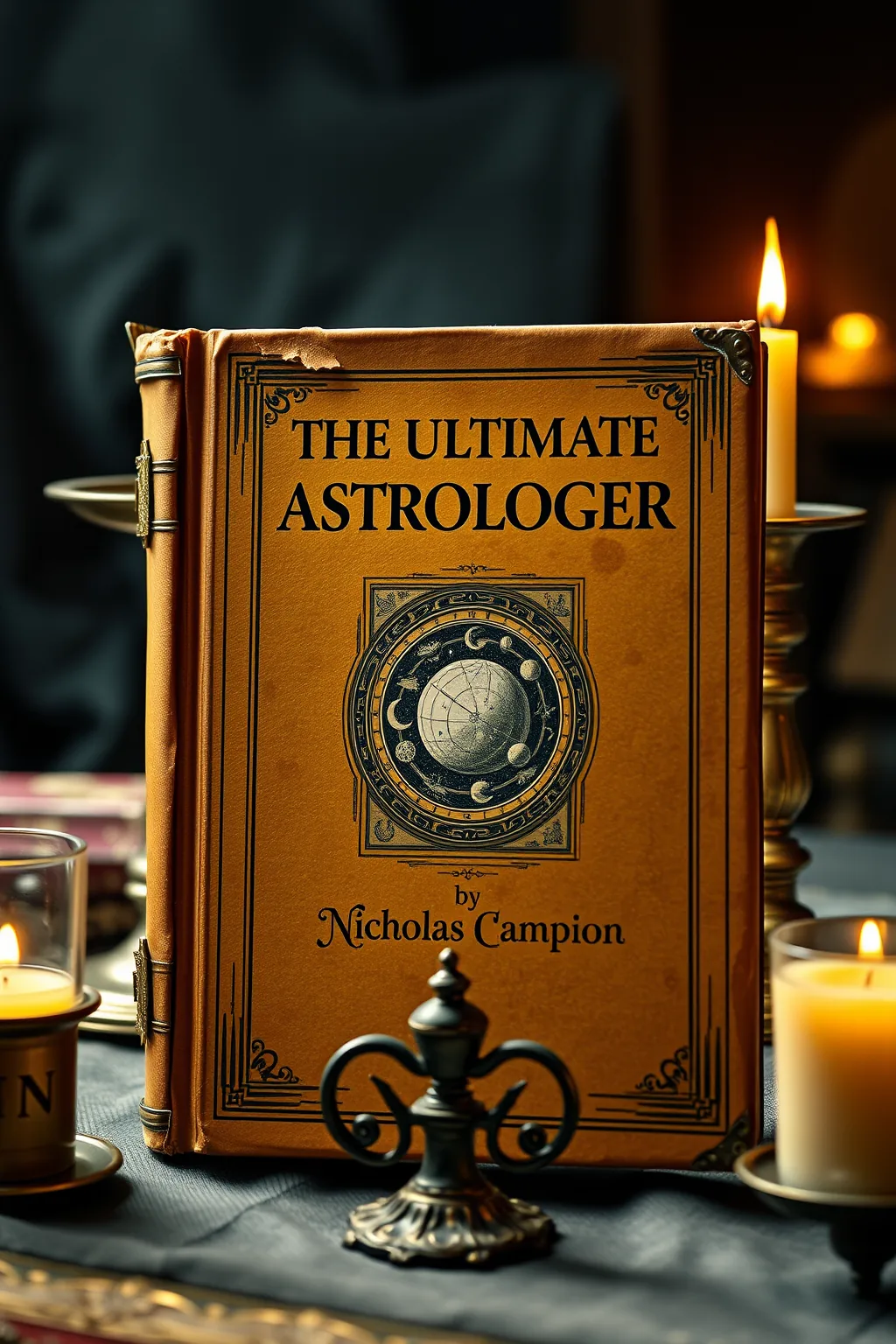
Secrets of Chinese astrology

 78
78

Secrets of Chinese astrology
Lau Kwan’s Secrets of Chinese Astrology presents a structured approach to a subject often clouded by simplification. The book’s strength lies in its methodical exposition of the sixty-year cycle, detailing the interplay between the twelve animal signs and the five elemental forces. It avoids the common pitfall of merely listing traits for each animal, instead focusing on the underlying cosmological principles. A notable limitation, however, is the prose, which, while informative, can become somewhat dry, particularly in its extended explanations of elemental interactions. The section detailing the compatibility of the Dragon and the Monkey, for instance, offers a clear, albeit dense, example of how the book applies its principles. The work serves as a solid reference for those prioritizing systematic learning over evocative narrative.
📝 Description
78
Kwan and Lau's 2011 book, Secrets of Chinese Astrology, moves beyond personality archetypes to explore the zodiac's cosmic order.
Secrets of Chinese Astrology examines the twelve animal signs not just as personality types, but as components of a cosmic order that influences human destiny. The book details the cyclical nature of time in Chinese cosmology, including the sixty-year cycle formed by the combination of the twelve zodiac animals and the five elements: Wood, Fire, Earth, Metal, and Water. It traces the historical roots of Chinese astrology, from ancient agricultural calendars and divination practices during dynasties like the Han (206 BCE – 220 CE). The text situates the zodiac within the broader framework of Chinese cosmology, influenced by Taoism and Confucianism. It shows how astrological principles were integrated into daily life, imperial court practices, and folk traditions for fortune-telling, marriage compatibility, and understanding natural phenomena. The work also touches on the concept of Yin and Yang duality.
This book is for anyone seeking a thorough understanding of Chinese astrology, whether a newcomer or an experienced practitioner. It will interest readers of comparative mythology, cultural studies, and Eastern philosophy. Students of Eastern thought and those curious about the connection between celestial cycles and human lives will find valuable material. The book favors a systematic and historically grounded approach to astrological studies.
This work engages with the long tradition of Chinese cosmology, where celestial observations were deeply interwoven with understanding the human condition and the natural world. It connects the familiar twelve zodiac animals to the philosophical underpinnings of Taoism and Confucianism, demonstrating their role beyond simple divination. The book highlights how these astrological systems were not separate from daily life or governance but were integrated into practices ranging from personal compatibility to understanding seasonal changes, reflecting a worldview where the human and cosmic realms are in constant dialogue.
💡 Why Read This Book?
• Gain a concrete understanding of the sixty-year cycle, a core component of Chinese astrological calculations, allowing you to move beyond simple twelve-animal year interpretations and grasp the nuanced influences of the Five Elements (Wu Xing). • Learn to analyze compatibility between individuals by referencing the specific interaction patterns between the twelve zodiac animals, such as the harmonious relationship between the Rabbit and the Goat, as detailed in the text. • Discover the practical application of Chinese astrology for personal insight and fortune-telling, as the book illustrates how the Heavenly Stems (Tian Gan) and Earthly Branches (Di Zhi) are traditionally used in divination.
⭐ Reader Reviews
Honest opinions from readers who have explored this book.
❓ Frequently Asked Questions
When was Secrets of Chinese Astrology first published?
Secrets of Chinese Astrology by Lau Kwan was first published in 1994. This edition provides foundational knowledge on the subject.
What are the twelve animals of the Chinese zodiac?
The twelve animals are the Rat, Ox, Tiger, Rabbit, Dragon, Snake, Horse, Goat, Monkey, Rooster, Dog, and Pig. Each animal represents a year in a twelve-year cycle.
How do the Five Elements relate to the Chinese zodiac animals?
The Five Elements (Wood, Fire, Earth, Metal, Water) combine with the twelve animals to create a sixty-year cycle. Each element has a two-year period associated with it, influencing the traits of the animal sign during those years.
Is this book suitable for beginners in astrology?
Yes, the book offers a comprehensive introduction and explanation of the core concepts, making it accessible for beginners while also providing depth for those with prior knowledge.
What is the sixty-year cycle in Chinese astrology?
The sixty-year cycle is a fundamental concept formed by the combination of the twelve Earthly Branches (representing the animals) and the ten Heavenly Stems (representing the Five Elements in their Yin and Yang forms).
Does the book discuss personality traits based on the zodiac?
Yes, the book explores the personality characteristics, strengths, and weaknesses associated with each of the twelve animal signs, offering insights into how they manifest.
🔮 Key Themes & Symbolism
The Twelve Animal Signs
The work meticulously details each of the twelve zodiac animals, presenting them not as mere labels but as archetypal energies influencing human nature and destiny. It explains how each animal's inherent characteristics, governed by its position in the cycle and its elemental association, manifest in personality, relationships, and life paths. The book offers specific insights into the strengths and potential challenges associated with being born under a particular sign, grounded in centuries of observation and tradition.
The Five Element Theory (Wu Xing)
Central to the book's cosmological framework is the theory of the Five Elements: Wood, Fire, Earth, Metal, and Water. This section elucidates how these elements interact cyclically, generating and overcoming each other, and how their influence modifies the characteristics of the zodiac animals. Understanding these elemental dynamics is presented as crucial for a nuanced astrological reading, affecting compatibility, fortune, and health, thereby offering a deeper layer of interpretation beyond the animal signs alone.
The Sixty-Year Cycle
Secrets of Chinese Astrology elaborates on the complex sixty-year cycle, a sophisticated system combining the twelve animal signs with the ten Heavenly Stems. This cycle provides a more intricate astrological framework than the simple twelve-year animal year. The book explains how this longer cycle allows for a more detailed prediction of fortune and life events, offering a comprehensive view of cosmic influences over extended periods and highlighting the cyclical nature of time in Chinese philosophy.
Yin and Yang Dynamics
The fundamental principle of Yin and Yang is explored within the context of Chinese astrology. The book illustrates how each animal sign and element can possess Yin or Yang characteristics, influencing their interactions and compatibility. This duality is presented as key to understanding balance, harmony, and conflict within astrological charts and relationships, providing a foundational understanding of the energetic interplay that governs the cosmic order described in the text.
💬 Memorable Quotes
Direct passages from the work, attributed to the author.
“The Dragon and the Monkey are considered highly compatible.”
— This statement highlights a core aspect of Chinese astrological analysis: the intricate compatibility patterns between the zodiac animals. It suggests that specific pairings are naturally harmonious, likely due to shared elemental influences or complementary Yin/Yang energies.
“Each element has a two-year period within the sixty-year cycle.”
— This points to the structural complexity of the sixty-year cycle, where the Five Elements are not static but rotate, influencing the animal signs during their respective two-year phases and adding layers of meaning.
“Wood fuels Fire, and Fire creates Earth.”
— This is a direct reference to the 'generating cycle' of the Five Elements (Wu Xing). It illustrates the fundamental principle of how these forces interact constructively within the cosmology, forming a basis for understanding astrological influences.
“The Rat is known for its intelligence and adaptability.”
— This captures the essence of describing individual animal sign characteristics. It suggests that the Rat's innate traits are intelligence and flexibility, likely influenced by its position and elemental association within the zodiac system.
“Yin and Yang govern the relationships between signs.”
— This emphasizes the pervasive influence of the Yin and Yang principle in Chinese astrology, indicating that the balance or imbalance of these opposing forces is critical in determining the nature of interactions between different astrological energies.
🌙 Esoteric Significance
Tradition
Secrets of Chinese Astrology is rooted in the cosmological and divination traditions of China, which predate and run parallel to Taoism and Buddhism. It draws heavily on the principles of Yin and Yang and the Five Elements (Wu Xing), foundational concepts in Chinese metaphysics. While not strictly Hermetic or Kabbalistic, it shares the universal esoteric aim of understanding the macrocosm (cosmos) as reflected in the microcosm (human individual), offering a distinct Eastern perspective on celestial influence and destiny.
Symbolism
Key symbols include the twelve animals of the zodiac, each representing specific archetypal energies and life cycles, and the Five Elements (Wood, Fire, Earth, Metal, Water), which symbolize fundamental forces of creation and transformation. The sixty-year cycle itself is a powerful symbol of cosmic order and temporal progression, integrating the animal and elemental forces into a grand, recurring pattern that governs the ebb and flow of fortune and influence.
Modern Relevance
Contemporary practitioners of Eastern spirituality, feng shui consultants, and those interested in comparative divination systems often reference the principles detailed in works like Kwan's. The book's structured approach to elemental interactions and animal sign compatibilities remains a valuable resource for modern interpreters seeking to apply these ancient systems to contemporary life, relationships, and personal development.
👥 Who Should Read This Book
• Students of comparative astrology seeking to understand the mechanics and philosophy behind the Chinese zodiac, moving beyond superficial sign descriptions. • Individuals interested in Chinese culture and philosophy who wish to explore how cosmology historically influenced daily life, fortune-telling, and interpersonal dynamics. • Practitioners of esoteric arts looking to expand their knowledge base with a systematic approach to divination rooted in Eastern metaphysical principles.
📜 Historical Context
Published in 1994, Lau Kwan's Secrets of Chinese Astrology emerged during a period of renewed global interest in Eastern philosophies and esoteric systems, following the counter-cultural movements of the 1960s and 70s. While Western astrology was well-established in popular culture, Chinese astrology was gaining more focused academic and practitioner attention. This work contributed to that growing body of literature, offering a structured exposition of a system deeply embedded in Chinese cosmology and dating back millennia, likely originating with early astronomical observations and agricultural calendars during the Han Dynasty (206 BCE – 220 CE). It engaged with a tradition that had long been integrated into Chinese imperial court life and folk practices. Contemporaries like Martin Palmer were also exploring Chinese cosmology, though often from a Taoist philosophical perspective. Kwan's work, however, focused specifically on the astrological mechanics, providing a technical counterpoint to more philosophical or spiritual interpretations.
📔 Journal Prompts
The inherent traits of the Monkey and its elemental associations.
The relationship between the Wood element and the Horse sign.
How the Yin aspect of your birth animal influences your character.
The cyclical progression within the sixty-year calendar.
The concept of harmony between opposing elemental forces.
🗂️ Glossary
Di Zhi (Earthly Branches)
The twelve terrestrial symbols that form the basis of the twelve-year cycle in Chinese astrology, commonly represented by the twelve animals (Rat, Ox, etc.).
Tian Gan (Heavenly Stems)
The ten celestial symbols, derived from the Five Elements in their Yin and Yang forms, which combine with the Earthly Branches to create the sixty-year cycle.
Wu Xing
The Chinese concept of the Five Phases or Five Elements: Wood, Fire, Earth, Metal, and Water, which are fundamental forces in Chinese philosophy and cosmology.
Yin and Yang
The fundamental principle of dualism in Chinese philosophy, representing complementary opposites such as dark/light, female/male, passive/active, which are believed to govern the natural world.
Qi
The vital life force or energy that flows through all things in the universe, according to Chinese philosophy. Astrological configurations are believed to influence its flow.
Animal Year
A year in the twelve-year cycle, named after one of the twelve zodiac animals, each believed to impart specific characteristics to those born during that year.
Sixty-Year Cycle
A complete cycle in the traditional Chinese calendar, formed by the combination of the twelve Earthly Branches and the ten Heavenly Stems, representing a sophisticated system of timekeeping and divination.
🔮 Readers Also Liked
Browse all →









More by Kwan, Lau.
All books →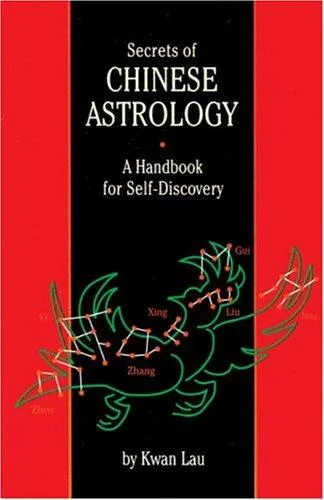
More Free Astrology & Cosmology Books
View all →