ALCHEMY
 67
67

ALCHEMY



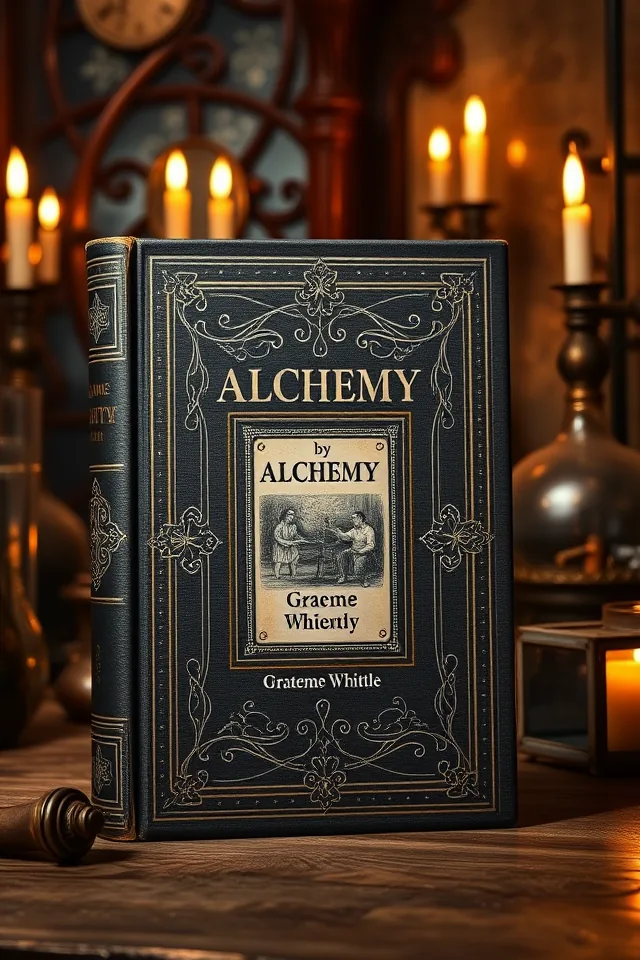
Graeme Whittle's 'Alchemy' is a beacon of esoteric wisdom in a world often blinded by materialism. This book is a treasure trove of Hermetic insights, offering a deep dive into the symbolism and practices that have defined alchemy for centuries. Whittle's authoritative tone and meticulous research make this an essential read for anyone serious about the occult sciences. The strengths of this book lie in its ability to demystify complex alchemical concepts while maintaining a sense of awe and mystery. Whether you are a seasoned practitioner or a curious seeker, 'Alchemy' will expand your understanding of the hidden forces that govern our world.
📝 Description
67
Graeme Whittle's 'Alchemy' was published in 2016 to illuminate the symbolic language of the Hermetic tradition.
Graeme Whittle's 'Alchemy' examines the historical and philosophical underpinnings of the alchemical arts. The book details the symbolic language used in alchemical texts, connecting it to broader Hermetic principles. Whittle discusses concepts of transformation and transmutation as they appear in alchemical writings, bridging historical practice with philosophical interpretation.
The author aims to clarify the esoteric meaning behind alchemical processes, moving beyond purely material interpretations. The text considers how alchemical symbolism relates to spiritual development and the pursuit of knowledge. It presents a structured look at the tradition for those interested in its deeper currents.
This book situens itself within the Hermetic tradition, a lineage of thought that draws from the writings attributed to Hermes Trismegistus. Alchemy is a central practice within Hermeticism, concerned with the transformation of matter and spirit. Whittle's work engages with this tradition by analyzing its symbolic lexicon and philosophical aims. It considers alchemy not just as proto-chemistry, but as a system for understanding cosmic order and human potential.
💡 Why Read This Book?
Why read this book? Graeme Whittle's 'Alchemy' is a gateway to the hidden knowledge of the Hermetic tradition. Ideal for seekers of spiritual enlightenment, scholars of esoteric sciences, and practitioners of the occult, this book offers a comprehensive guide to the symbolism and philosophy of alchemy. It provides a rich understanding of the transformative power of alchemical practices, making it an indispensable resource for anyone on a journey of self-discovery and spiritual growth.
⭐ Reader Reviews
Honest opinions from readers who have explored this book.
❓ Frequently Asked Questions
What is the primary focus of 'Alchemy' by Graeme Whittle?
The primary focus of 'Alchemy' is the exploration of the symbolic and philosophical dimensions of alchemy, providing readers with a deep understanding of its esoteric traditions and practices.
Who is the intended audience for this book?
This book is intended for scholars, practitioners, and spiritual seekers interested in the Hermetic tradition and the occult sciences.
What makes 'Alchemy' unique compared to other books on the subject?
'Alchemy' stands out due to its rich historical context, authoritative tone, and meticulous research, making it a comprehensive and enlightening read.
Can beginners benefit from reading this book?
While 'Alchemy' is deeply informative, it is best suited for those with some prior knowledge of esoteric subjects, as it delves into complex concepts and symbolism.
What are some of the key themes explored in 'Alchemy'?
Key themes include the transformative power of alchemy, the symbolism of Hermetic practices, and the philosophical significance of spiritual enlightenment.
🔮 Key Themes & Symbolism
The Transformative Power of Alchemy
Alchemy is not just a historical practice but a profound symbol of spiritual transformation. Whittle looks at the alchemical process, revealing how it mirrors the soul's journey towards enlightenment. Themes of purification, transmutation, and the unification of opposites are explored, providing readers with a deeper understanding of the alchemical path.
Symbolism and the Hermetic Tradition
The Hermetic tradition is rich in symbolism, and 'Alchemy' uncovers the hidden meanings behind alchemical symbols. Whittle examines the significance of the philosopher's stone, the four elements, and other key symbols, offering insights into their esoteric and philosophical implications.
Philosophical Significance of Alchemy
Alchemy is more than just a set of practices; it is a philosophical system that seeks to bridge the gap between the material and the spiritual. Whittle explores the philosophical underpinnings of alchemy, discussing its role in the quest for knowledge, wisdom, and spiritual enlightenment.
💬 Memorable Quotes
Direct passages from the work, attributed to the author.
“Alchemy is the art of transmutation, both of matter and of the soul.”
— Whittle highlights the dual nature of alchemy, which seeks to transform both the physical and the spiritual realms.
“The four elements are the building blocks of both the physical and the spiritual worlds.”
— Whittle's exploration of the elements reveals their deep significance in alchemical symbolism.
💡 Key Ideas
Editorial paraphrase of the work's core concepts — not direct quotes.
The philosopher's stone is not a physical object but a symbol of spiritual attainment.
This quote underscores the esoteric nature of alchemy, emphasizing its focus on inner transformation.
The journey of alchemy is a journey of self-discovery and enlightenment.
This quote emphasizes the personal and spiritual growth that comes from engaging with alchemical practices.
The true alchemist seeks not gold, but the gold within.
This quote underscores the inner focus of alchemy, which is concerned with spiritual enrichment rather than material gain.
🌙 Esoteric Significance
Tradition
Graeme Whittle's 'Alchemy' belongs firmly within the Hermetic tradition, which emphasizes the unity of all things and the transformative power of knowledge. This tradition, rooted in the writings of Hermes Trismegistus, seeks to bridge the gap between the material and the spiritual, offering seekers a path to enlightenment through the study of esoteric sciences.
Symbolism
Key symbols in 'Alchemy' include the philosopher's stone, the four elements, and the ouroboros. The philosopher's stone represents the ultimate goal of alchemical transformation, while the four elements—earth, air, fire, and water—symbolize the fundamental building blocks of the universe. The ouroboros, a serpent swallowing its own tail, signifies the cyclical nature of life and the eternal quest for self-knowledge.
Modern Relevance
Today, , 'Alchemy' remains relevant for its insights into the transformative power of spiritual practices. Modern practitioners of the occult and seekers of spiritual enlightenment continue to draw on the Hermetic tradition, using its principles to guide their own journeys of self-discovery and transformation.
👥 Who Should Read This Book
Beginners may find 'Alchemy' challenging due to its deep esoteric content, but it is an invaluable resource for those with some prior knowledge. Scholars of esoteric sciences will appreciate Whittle's meticulous research and authoritative tone. Spiritual seekers will find inspiration in the book's exploration of the transformative power of alchemy. Practitioners of the occult will benefit from the insights into alchemical symbolism and practices, making this book a must-read for anyone serious about the Hermetic tradition.
📜 Historical Context
Written in an era when the boundaries between science and mysticism were blurred, Graeme Whittle's 'Alchemy' captures the essence of a tradition that has fascinated seekers for centuries. Alchemy emerged in the medieval period as a blend of early scientific inquiry and esoteric philosophy, aiming to understand the fundamental nature of matter and the universe. Whittle's book is important for its ability to contextualize alchemy within its historical milieu, revealing how it influenced both scientific and spiritual thought. Its influence can be seen in the works of early scientists like Isaac Newton, who dabbled in alchemy, and in the development of modern chemistry.
📔 Journal Prompts
Reflect on a personal experience of transformation and how it relates to alchemical principles.
What symbols from alchemy resonate with you, and why?
How does the Hermetic tradition influence your understanding of the universe?
Consider the role of the philosopher's stone in your spiritual journey.
What insights from 'Alchemy' can you apply to your daily life?
🗂️ Glossary
Philosopher's Stone
A legendary alchemical substance said to be capable of turning base metals into gold and granting immortality. Symbolically, it represents spiritual enlightenment.
Hermetic Tradition
A philosophical and spiritual tradition based on the writings of Hermes Trismegistus, emphasizing the unity of all things and the transformative power of knowledge.
Transmutation
The alchemical process of transforming one substance into another, often symbolizing spiritual transformation.
Ouroboros
A serpent swallowing its own tail, symbolizing the cyclical nature of life and the eternal quest for self-knowledge.
Four Elements
Earth, air, fire, and water, representing the fundamental building blocks of the universe in alchemical symbolism.
This book appears in 3 collections
🔮 Readers Also Liked
Browse all →









From the “Hermeticism” Collection
View all →








More Free Alchemy & Hermeticism Books
View all →