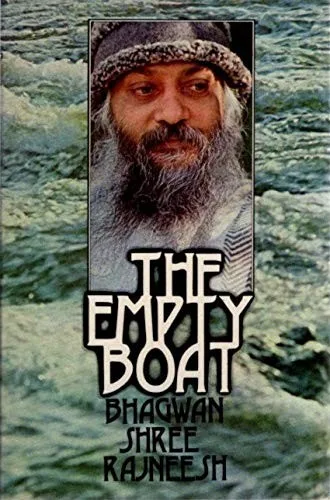
The empty boat
 76
76

The empty boat
Bhagwan Rajneesh’s "The Empty Boat" is a stark, almost brutal, examination of the ego’s grip on human perception. Unlike many spiritual texts that coddle the reader, Rajneesh’s discourses here cut through pretense with a surgeon’s precision. The strength lies in his relentless dismantling of the "self" as a fabricated entity. He doesn’t offer comfort; he offers clarity, often through sharp, memorable aphorisms that demand introspection. For instance, his assertion that "The moment you become aware, the ego disappears" is not a gentle suggestion but a direct challenge to the reader’s identity. A limitation, however, is the inherent repetition in discourse format; while each talk might offer a unique angle, the core message, by necessity, circles back. The book’s power is undeniable, but it requires a reader prepared for an uncompromising confrontation with their own assumed reality. It’s a text that does not aim to please, but to awaken.
📝 Description
76
Bhagwan Rajneesh's 1976 discourses, The Empty Boat, confront consciousness and ego.
The Empty Boat is a compilation of talks Bhagwan Rajneesh delivered, first published in 1976. It is not a narrative but a series of transcribed discourses that examine consciousness, the ego, and spiritual liberation. Rajneesh's approach is direct and often provocative, intended to challenge readers' perceptions of reality and their ingrained assumptions. The book aims to move beyond intellectual understanding, presenting a path to inner freedom that sidesteps dogma and established norms.
This work is for those dissatisfied with conventional spiritual or philosophical systems. It appeals to individuals looking for a more experiential and immediate approach to self-discovery. Readers open to questioning their own deeply held beliefs and embracing unconventional teachings will find value here. Those interested in Eastern mysticism, meditation, and the deconstruction of the ego will likely connect with Rajneesh's message.
Published in 1976, The Empty Boat reflects a surge of interest in Eastern spirituality within Western counter-cultural movements. Bhagwan Rajneesh synthesized Eastern meditation techniques with Western psychology, drawing from traditions like Vedanta and Zen Buddhism. His teachings during this period emphasized direct experience and the transcendence of the conditioned mind, aligning with mystical paths that seek liberation through inner realization rather than adherence to external doctrines.
💡 Why Read This Book?
• Understand the illusion of the ego: Learn how Rajneesh deconstructs the "I" as a social and psychological construct, moving beyond superficial self-help to challenge your very sense of identity. • Experience the "empty boat" state: Discover Rajneesh's teachings on achieving a state of egoless presence through direct observation, not dogma, as presented in the discourses from 1976. • Embrace radical freedom: Gain insight into Rajneesh's concept of sannyas as an active, celebratory engagement with life, a core tenet he explored extensively in this period.
⭐ Reader Reviews
Honest opinions from readers who have explored this book.
❓ Frequently Asked Questions
What is the central metaphor of the 'empty boat' in Bhagwan Rajneesh's work?
The 'empty boat' symbolizes a state of pure consciousness and egolessness. It represents a mind free from personal history, desires, and the illusion of a fixed self, allowing one to simply be present without attachment or identification.
When was 'The Empty Boat' by Bhagwan Rajneesh first published?
The book 'The Empty Boat' was first published in 1976. This places it within a significant period of Rajneesh's prolific output and growing international influence in the realm of Eastern spirituality.
Does 'The Empty Boat' require prior knowledge of Eastern philosophy?
While prior knowledge can enhance understanding, Rajneesh’s direct style in 'The Empty Boat' aims for immediate impact. He often explains complex concepts in accessible, albeit provocative, terms, making it approachable for newcomers willing to engage openly.
What is Rajneesh's perspective on meditation in 'The Empty Boat'?
In 'The Empty Boat,' Rajneesh presents meditation not as a technique to achieve a state, but as a continuous awareness of one's inner processes. The goal is to observe the mind's activity without judgment, leading to spontaneous stillness.
How does 'The Empty Boat' differ from conventional spiritual texts?
Unlike many conventional texts, 'The Empty Boat' avoids prescriptive doctrines and focuses on deconstructing the reader's conditioned mind. Rajneesh's approach is confrontational, challenging established notions of self and reality rather than offering comforting platitudes.
What is the significance of the year 1976 in relation to this book?
The year 1976 marks the initial publication of 'The Empty Boat,' placing it during a peak period of Bhagwan Rajneesh's global outreach. His ashram in Poona was flourishing, attracting a diverse international following interested in his unique blend of Eastern mysticism and Western psychology.
🔮 Key Themes & Symbolism
Ego Dissolution
The book relentlessly targets the ego, presenting it not as a core aspect of identity but as a learned construct, a persistent illusion that generates suffering. Rajneesh argues that our identification with thoughts, memories, and roles creates a false self. He encourages readers to observe this ego-construct directly, recognizing its ephemeral nature. The path to liberation, as outlined in 'The Empty Boat,' involves seeing through this fabricated self until it dissolves, revealing a vaster, unconditioned awareness. This process is not about strengthening the ego but about understanding its non-existence as a solid entity.
The Nature of Awareness
Central to the work is the exploration of pure awareness, distinct from the content of consciousness. Rajneesh distinguishes between 'knowing' and 'being aware.' True awareness, he suggests, is a passive, non-judgmental witnessing of all phenomena—thoughts, emotions, sensations—without identifying with them. This state is often described metaphorically as the 'empty boat,' signifying a vessel devoid of passengers (egoic content) but fully capable of observing the river of existence. Cultivating this detached observation is presented as the key to spiritual awakening and inner peace.
Meditation as Observation
Rajneesh reframes meditation in 'The Empty Boat' away from traditional, often effortful, techniques. Instead, he champions a spontaneous, natural awareness that can be cultivated through constant, alert observation of one's inner and outer world. This practice involves watching the mind's ceaseless chatter, the ebb and flow of emotions, and sensory experiences without interference or analysis. The goal is not to stop the mind but to become so aware of its workings that the mind naturally settles, leading to moments of profound stillness and clarity, as discussed in the 1976 discourses.
Freedom from Conditioning
A recurring theme is liberation from societal, religious, and personal conditioning. Rajneesh posits that we are largely programmed by external influences, creating limiting beliefs and behaviors that prevent us from experiencing true freedom. 'The Empty Boat' urges readers to question these ingrained patterns and to break free from the mental prisons they inhabit. This involves a conscious effort to observe the conditioning without judgment and to choose authentic responses over conditioned reactions, leading to a life lived with genuine autonomy and spontaneity.
💬 Memorable Quotes
Direct passages from the work, attributed to the author.
“The moment you become aware, the ego disappears.”
— This concise statement captures Rajneesh's core teaching: awareness is the antidote to ego. It implies that the ego cannot coexist with genuine, unadulterated consciousness, suggesting that direct observation is the most potent tool for self-realization.
“Your mind is a dark room; bring the light of awareness into it.”
— This metaphor highlights the perceived obscurity of the unexamined mind. Rajneesh uses 'light of awareness' to signify clarity, understanding, and presence, suggesting that the act of conscious observation illuminates and transforms the mind's limitations.
“To be is to be empty.”
— This paradoxical statement captures the 'empty boat' concept. It suggests that true existence or being is realized not through accumulation or assertion of self, but through a state of emptiness, free from the burden of the ego.
“Don't try to change yourself; just watch yourself.”
— This challenges the common desire for self-improvement through effort. Rajneesh advocates for passive observation as the transformative force, implying that understanding arises naturally from witnessing without the intervention of will or judgment.
“The past is a dream, the future is a dream; only the present moment is real.”
— This emphasizes the primacy of the present moment, a frequent theme in spiritual teachings. Rajneesh frames the past and future as mental constructs, urging a focus on the immediate reality of 'now' as the sole ground for authentic experience.
🌙 Esoteric Significance
Tradition
Rajneesh's work, including "The Empty Boat," draws heavily from the Advaita Vedanta tradition of non-dualism, emphasizing the ultimate oneness of existence and the illusory nature of the individual self. However, he uniquely synthesizes this with insights from Western psychology, existentialism, and a practical, often radical, approach to meditation and daily life. While rooted in Indic spiritual thought, his departure lies in his confrontational style and his rejection of organized religion and dogma in favor of direct, personal experience and conscious rebellion against conditioning.
Symbolism
The central symbol is the "empty boat," representing a mind free from the ego’s passengers—thoughts, memories, desires. It signifies pure consciousness, a receptive vessel that observes the flow of life without being carried away by it. Another recurring motif is light, often associated with awareness or consciousness itself, contrasting with the 'darkness' of ignorance or the unexamined mind. The dissolution of the 'self' is also a symbolic act, representing the shedding of accumulated identities and roles to reveal a more fundamental, unconditioned existence.
Modern Relevance
The contemporary relevance of "The Empty Boat" lies in its continued challenge to the pervasive influence of the ego in modern life, particularly in the age of social media and curated identities. Thinkers and practitioners in mindfulness, transpersonal psychology, and even secularized forms of meditation draw on Rajneesh’s emphasis on present-moment awareness and ego-deconstruction. His critique of societal conditioning remains pertinent for those seeking authenticity and freedom from external validation in a hyper-connected world.
👥 Who Should Read This Book
• Seekers disillusioned with traditional dogma: Individuals searching for a spiritual path that prioritizes direct experience over established doctrines and is willing to challenge their core beliefs. • Students of consciousness studies: Those interested in exploring radical perspectives on the nature of the ego, awareness, and the mind, particularly from the influential figure of Bhagwan Rajneesh. • Individuals exploring ego-deconstruction: Readers actively engaged in practices or philosophies aimed at understanding and transcending the limitations imposed by the ego and societal conditioning.
📜 Historical Context
First published in 1976, "The Empty Boat" arrived during a vibrant period of global spiritual seeking and counter-cultural expansion. Bhagwan Rajneesh, already a figure of considerable international renown, was actively disseminating his teachings from his ashram in Poona, India. The mid-1970s witnessed a significant Western appetite for Eastern philosophies and practices, often as a reaction against the perceived materialism and rigidity of Western societal norms. Rajneesh’s unique synthesis of meditation, psychology, and provocative social commentary resonated with many disillusioned seekers. His approach, emphasizing direct experience and the deconstruction of the ego, stood in contrast to more established esoteric traditions like Theosophy or Integral Yoga, offering a distinctly modern, often controversial, path. The era was also marked by intellectual currents questioning established authorities, making Rajneesh’s critiques of societal conditioning particularly timely.
📔 Journal Prompts
The concept of the ego as a construct; how does this idea challenge your sense of self?
Observing the 'empty boat' state: What arises when you witness your thoughts without judgment?
Conditioning's grip: Identify one societal expectation you can observe rather than automatically follow.
The present moment's reality: How does focusing solely on 'now' alter your perception of past regrets or future anxieties?
Awareness as light: Describe a moment when conscious observation illuminated a previously unnoticed aspect of your experience.
🗂️ Glossary
Ego
In Rajneesh's context, the ego is not the healthy sense of self but the accumulated collection of thoughts, memories, identifications, and conditionings that create a false sense of a separate, permanent 'I'.
Awareness
A state of pure, non-judgmental witnessing. It is the fundamental consciousness that observes thoughts, feelings, and sensations without identification or reaction, distinct from the content of the mind.
Empty Boat
A metaphor for the state of egolessness and pure presence. It represents a consciousness that is open, receptive, and free from the burden of personal history and identity.
Conditioning
The process by which individuals internalize beliefs, values, and behaviors from society, family, religion, and culture, often leading to a lack of authentic freedom and spontaneity.
Sannyas
Reinterpreted by Rajneesh not as renunciation but as an inner state of celebration, totality, and embracing life fully, often marked by outward symbols of freedom and awareness.
Observation
The practice of watching one's inner and outer world with alertness and without judgment. It is presented as the primary tool for understanding the mind and dissolving the ego.
Non-duality
The philosophical or spiritual concept that reality is ultimately a single, indivisible whole, and the perceived separation between self and other, or subject and object, is an illusion.
🔮 Readers Also Liked
Browse all →









More by Bhagwan Rajneesh
All books →





More Free Occult Philosophy Books
View all →