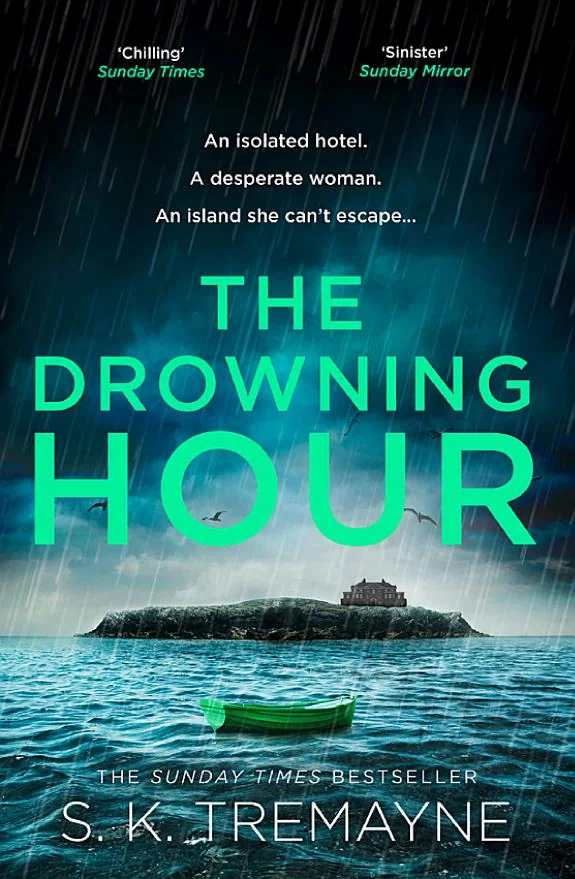
The Drowning Hour
 74
74

The Drowning Hour
S. K. Tremayne’s "The Drowning Hour" excels in its creation of an oppressive atmosphere, a hallmark of her previous psychological thrillers. The novel’s strength lies in its uncanny ability to evoke a sense of unease from the very first page, effectively trapping the reader within the protagonist’s increasingly unstable world. The isolated island setting is not merely a backdrop but a crucial element in amplifying the claustrophobia and paranoia. However, the plot, while intricate, occasionally strains credulity with its series of coincidences necessary to drive the narrative forward. A particularly compelling passage involves the protagonist’s fragmented memories of a childhood event near the lighthouse, where the visual details are so sharp they feel more real than her present circumstances. This disorientation is effective, though the resolution feels somewhat rushed after such a carefully constructed build-up. "The Drowning Hour" delivers a chilling psychological experience, albeit one that falters slightly in its concluding act.
📝 Description
74
S. K. Tremayne's 2022 novel, The Drowning Hour, situates a woman's return to her island home within a chilling supernatural mystery.
The Drowning Hour begins with a woman returning to her isolated childhood home on an island, a place steeped in familial secrets. As she confronts buried memories, the community's silence becomes a palpable force, determined to keep the past submerged. Tremayne weaves together present events and past recollections, creating a narrative that disorients the reader while drawing them into the protagonist's struggle. The island's isolation mirrors her own emotional distance, amplifying the tension. The novel questions the very nature of memory and perception, leaving the reader to discern reality from the fractured minds of the characters.
This story examines the corrosive power of unspoken truths and their generational impact. The protagonist's search for answers is contrasted with the community's collective suppression of history. Themes of belonging and alienation emerge as she tries to reconcile her past self with her present identity. The plot unfolds with layers of deception, suggesting that some secrets hold a dangerous weight, and their revelation is a necessary, albeit perilous, undertaking. Tremayne's non-linear structure further immerses the reader in this descent into suspicion.
While not overtly occult, The Drowning Hour taps into esoteric traditions that concern the persistence of the past within a place and its inhabitants. The novel evokes a sense of the uncanny, where the environment itself seems to hold a psychic residue of past events. This resonates with concepts found in folk magic and certain branches of psychological astrology, where ancestral patterns and unresolved emotional energies can manifest as a palpable, often oppressive, atmosphere. The island community's collective silence and the protagonist's intuitive, yet fragmented, understanding of hidden truths echo themes of psychic inheritance and the subconscious influence of ancestral burdens.
💡 Why Read This Book?
• Understand the impact of intergenerational trauma through the protagonist's struggle to uncover her family's secrets, echoing themes found in Tremayne's earlier work, "The Ice Twins" (2015). • Experience the unsettling power of setting as the remote island amplifies psychological tension, similar to how isolation functions in Gothic literature. • Explore the unreliability of memory and perception, a key narrative device in "The Drowning Hour" that challenges your assumptions about truth.
⭐ Reader Reviews
Honest opinions from readers who have explored this book.
❓ Frequently Asked Questions
What is the primary setting of S. K. Tremayne's "The Drowning Hour"?
The novel is primarily set on a remote, isolated island community, which significantly contributes to the claustrophobic and suspenseful atmosphere of the story.
When was "The Drowning Hour" by S. K. Tremayne first published?
The book was first published on June 23, 2022.
What genre does "The Drowning Hour" fall into?
It is classified as a psychological thriller, focusing on suspense, mystery, and the inner workings of the characters' minds.
Does "The Drowning Hour" connect to S. K. Tremayne's previous books like "The Ice Twins"?
While "The Drowning Hour" is a standalone novel, it shares thematic similarities with "The Ice Twins" (2015), particularly in its exploration of trauma and family secrets.
Who is the author of "The Drowning Hour"?
The author is S. K. Tremayne, known for her bestselling psychological thrillers.
What are the main themes explored in "The Drowning Hour"?
The book explores themes of trauma, memory, guilt, family secrets, isolation, and the unreliability of perception.
🔮 Key Themes & Symbolism
Fractured Memory and Reality
The narrative of "The Drowning Hour" hinges on the protagonist's unreliable memories, which are fragmented and often contradicted by present events. This theme explores how trauma can warp an individual's perception of reality, making it difficult to distinguish between past trauma and current threats. The island setting, with its isolated atmosphere, further blurs the lines, creating a psychological landscape where the past actively intrudes upon the present, forcing both the character and the reader to question what is truly happening.
The Weight of Familial Secrets
Tremayne explores the destructive power of secrets passed down through generations. In "The Drowning Hour," the protagonist returns to her family home to confront a buried truth that has cast a long shadow over her life and the community. The novel illustrates how suppressed information can fester, leading to profound guilt, alienation, and a distorted sense of identity for those involved. The collective silence of the islanders underscores the difficulty and danger inherent in unearthing long-held familial conspiracies.
Isolation and Psychological Confinement
The island setting serves as a potent symbol of psychological confinement in "The Drowning Hour." Its geographical isolation mirrors the emotional and mental isolation experienced by the protagonist as she grapples with her past. This enforced proximity to repressed memories and a suspicious community amplifies the suspense and dread. The novel uses this confined space to intensify the psychological pressure, demonstrating how external isolation can exacerbate internal turmoil and paranoia.
The Search for Truth Amidst Deception
Fundamentally, , "The Drowning Hour" is a narrative about the perilous quest for truth in an environment steeped in deception. The protagonist's journey is one of piecing together fragmented clues and working through the obfuscations of those around her. The novel suggests that while the pursuit of truth can be dangerous, the consequences of remaining ignorant of vital information can be even more devastating. This theme highlights the courage required to confront uncomfortable realities and dismantle carefully constructed falsehoods.
💬 Memorable Quotes
Direct passages from the work, attributed to the author.
“Some memories are anchors, dragging you down.”
— This metaphor illustrates how traumatic or painful recollections can immobilize individuals, preventing them from moving forward and keeping them tethered to past suffering.
“On an island, everyone knows your name, and your sins.”
— This highlights the suffocating nature of small, isolated communities where privacy is scarce, and past transgressions are difficult to escape or forget.
“She looked at the house, and saw not wood and stone, but years of silence.”
— This emphasizes how a physical space can become imbued with emotional weight and the history of unspoken events, representing the protagonist's confrontation with her past.
“The tide always comes back, but it never brings back what you've lost.”
— This poignant observation speaks to the cyclical nature of time and the permanence of loss, contrasting the natural rhythms of the sea with the irretrievable nature of personal tragedy.
💡 Key Ideas
Editorial paraphrase of the work's core concepts — not direct quotes.
The sea doesn't give up its dead easily.
This line captures the novel's atmosphere of secrets and unresolved pasts, suggesting that the island and its waters hold onto their mysteries, much like the characters hold onto their hidden truths.
🌙 Esoteric Significance
Tradition
While "The Drowning Hour" is primarily a psychological thriller, its exploration of memory, trauma, and the deeper meaning of the human psyche can be viewed through an esoteric lens, particularly those traditions focusing on the subconscious and the impact of ancestral imprints. It shares thematic resonance with certain aspects of Jungian psychology, which posits the existence of a collective unconscious and archetypal patterns that influence individual experience, though it does not explicitly reference Jung. The novel’s focus on uncovering buried truths and the oppressive atmosphere of a secluded community also echoes elements found in darker, more introspective strands of modern occultism that examine shadow work and the persistent influence of the past.
Symbolism
The island in "The Drowning Hour" functions as a powerful symbol of isolation, both geographical and psychological. It represents a contained space where repressed memories and secrets are forced to the surface. The sea itself is a recurring motif, symbolizing the subconscious, the unknown, and the ever-present force of the past that can both sustain and destroy. The lighthouse, a clear source of guidance, becomes a place of potential revelation or danger, hinting at the dual nature of truth – it can illuminate but also expose.
Modern Relevance
Contemporary practitioners of shadow work and those interested in depth psychology might find "The Drowning Hour" relevant. The novel's depiction of how unresolved trauma can manifest in destructive ways and how confronting these internal 'shadows' is crucial for healing aligns with modern therapeutic and self-discovery practices. Thinkers and writers exploring the psychological impact of inherited trauma or the persistent influence of past events on present-day lives can draw parallels to the novel’s narrative arc. The book's exploration of how seemingly idyllic settings can mask deep psychological disturbance also appeals to current discussions about hidden societal anxieties.
👥 Who Should Read This Book
• Readers who appreciate psychological thrillers that prioritize atmosphere and character depth over overt action. • Fans of S. K. Tremayne's previous works, particularly "The Ice Twins" (2015), seeking similar explorations of family secrets and trauma. • Those interested in narratives that examine the unreliability of memory and the impact of isolation on the human psyche.
📜 Historical Context
Published in 2022, "The Drowning Hour" emerged in a literary landscape saturated with psychological thrillers, a genre that gained significant traction following the success of Gillian Flynn's "Gone Girl" in 2012. S. K. Tremayne herself achieved bestseller status with "The Ice Twins" in 2015, establishing a niche for domestic suspense with dark undercurrents. The early 2020s saw a continued public appetite for intricate plots exploring trauma, unreliable narrators, and the dark side of seemingly ordinary lives. Contemporary authors like Ruth Ware and Paula Hawkins were also prominent, often utilizing atmospheric settings and complex female protagonists. "The Drowning Hour" fits within this lineage, offering a modern take on gothic suspense, where isolation and psychological turmoil are amplified by contemporary anxieties about truth and deception. The novel benefited from established reader interest in the genre, building on the momentum of its predecessors without necessarily introducing radical new elements, but refining the established formula.
📔 Journal Prompts
The island's suffocating silence and its effect on the protagonist.
Fragmented memories and their role in shaping current perceptions.
The corrosive nature of secrets within the island community.
The symbolism of the sea and its connection to buried truths.
Confronting the 'shadow' aspects of one's own past.
🗂️ Glossary
Psychological Thriller
A genre of fiction that uses suspense, tension, and psychological conflict to drive the narrative, often focusing on the mental states of characters and blurring lines between reality and delusion.
Unreliable Narrator
A character whose telling of the story is compromised by their mental state, memory, or bias, leading the reader to question the veracity of their account.
Gothic Suspense
A subgenre characterized by atmospheric settings (often isolated or decaying), elements of horror or dread, psychological tension, and a focus on dark secrets or curses.
Trauma
A deeply distressing or disturbing experience that has a lasting psychological impact on an individual, often affecting memory, perception, and emotional regulation.
Foreshadowing
A literary device in which a writer gives an advance hint of what is to come later in the story, often through subtle clues or imagery.
Atmosphere
The pervading tone or mood of a place, scene, or work of literature, created through descriptive details, setting, and the author's style.
Domestic Noir
A subgenre of crime fiction that focuses on the dark secrets and psychological tensions within domestic settings and relationships.
This book appears in 1 collection
🔮 Readers Also Liked
Browse all →








From the “Rune Reading” Collection
View all →








More Free Occult Philosophy Books
View all →