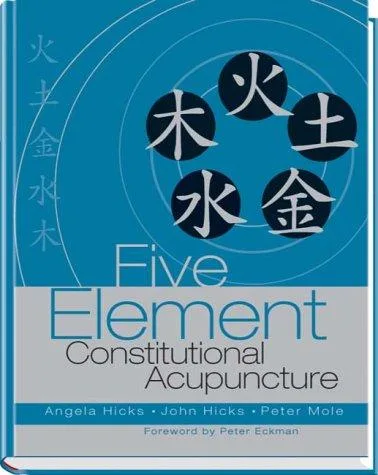
Five Element Constitutional Acupuncture
 76
76

Five Element Constitutional Acupuncture
The Hicks and Mole text offers a welcome, systematic exposition of Five Element Constitutional Acupuncture, moving beyond mere symptom management to address the root constitutional patterns. Its strength lies in its clarity, particularly in outlining the diagnostic process, which is often a stumbling block for practitioners new to this paradigm. The exploration of the "causative factor" is particularly well-articulated, providing a tangible entry point for understanding constitutional diagnosis. However, the book could benefit from more case studies to illustrate the application of these principles in complex clinical scenarios. A limitation is the occasional density of the theoretical sections, which may require prior knowledge of TCM to fully absorb. The discussion on "blocks to treatment" offers a practical, though perhaps not exhaustive, perspective on common therapeutic challenges. Ultimately, this work serves as a solid, instructive manual for those dedicated to mastering the Five Element constitutional approach.
📝 Description
76
Published in 2016, Five Element Constitutional Acupuncture by Hicks, Hicks, and Mole details a specific approach to Chinese medicine.
This book offers a thorough look at the constitutional Five Element approach to acupuncture, a system that relies on classical Chinese medical principles. The text clarifies the core theories, historical background, and practical methods for diagnosing and treating people according to their elemental makeup. It moves from general theory to specific diagnostic tools and treatment plans.
The volume is intended for acupuncturists and Traditional Chinese Medicine practitioners who want a deeper grasp of the Five Element constitutional model. It will also be useful for students of Chinese medicine, those interested in the philosophical ideas behind the Elements, and individuals looking into health practices that take a holistic view. The book places Five Element Constitutional Acupuncture within the larger history of Chinese medicine. It tracks its development and differentiates it from other diagnostic and treatment systems, acknowledging the evolution of these practices.
The Five Element system, as presented in this work, connects to a long tradition of understanding human health and the cosmos through elemental correspondences. This approach views the human body as a microcosm reflecting the macrocosm, with imbalances in the elements leading to illness. The text engages with the philosophical underpinnings of these relationships, aiming to restore harmony not just physically, but also energetically, aligning the individual with natural cycles. This perspective is common in many traditional medical systems that see health as a state of balance within a larger energetic framework.
💡 Why Read This Book?
• You will learn to identify the "causative factor" in diagnosis, a core concept in Five Element Constitutional Acupuncture, enabling a more precise constitutional assessment than general TCM texts might offer. • You will gain an understanding of the historical development of Five Element Constitutional Acupuncture, appreciating its lineage and distinct position within Chinese medicine theory since its early articulations. • You will explore specific diagnostic strategies and treatment protocols tailored to constitutional imbalances, allowing for a personalized approach to patient care beyond generalized treatments.
⭐ Reader Reviews
Honest opinions from readers who have explored this book.
❓ Frequently Asked Questions
What is the core principle of Five Element Constitutional Acupuncture?
The core principle is diagnosing and treating based on an individual's inherent elemental constitution (Wood, Fire, Earth, Metal, Water), rather than solely on presenting symptoms, aiming to rebalance the underlying elemental and organ systems.
How does this approach differ from other forms of acupuncture?
Unlike symptom-based or meridian-focused acupuncture, Five Element Constitutional Acupuncture prioritizes identifying the "causative factor" of disease, which is linked to an individual's elemental constitution and specific organ imbalances.
Who are the primary authors of Five Element Constitutional Acupuncture?
The primary authors are Angela Hicks, John Hicks, and Peter Mole. The first edition was published in October 2010.
What are the main components of the Five Elements in this system?
The five elements are Wood, Fire, Earth, Metal, and Water. Each is associated with specific organs, emotions, seasons, and physiological functions within the body.
Does the book discuss the history of Five Element theory?
Yes, the book covers the context and history of this specific form of acupuncture, providing background on its theoretical underpinnings and development.
What is a "block to treatment" in this context?
A block to treatment refers to a condition or factor that prevents the acupuncture treatment from achieving its intended therapeutic effect, often related to underlying constitutional issues or external influences.
🔮 Key Themes & Symbolism
Elemental Constitution
The central theme is the individual's innate elemental constitution, a unique blueprint derived from the interplay of Wood, Fire, Earth, Metal, and Water. This constitution dictates predispositions to certain ailments and influences how one perceives and interacts with the world. Understanding this elemental makeup is paramount for accurate diagnosis and effective treatment in Five Element Constitutional Acupuncture, moving beyond superficial symptoms to address the root cause of imbalance within the patient's energetic system.
Causative Factor Diagnosis
This approach hinges on identifying the "causative factor," the primary element or organ system that has become unbalanced and is driving the illness. The book meticulously details how to ascertain this factor through careful questioning and observation. It's not just about recognizing symptoms, but about understanding which elemental energy is fundamentally out of sync, thereby guiding the practitioner to the most potent points of intervention.
Organ Function and Imbalance
Integral to the system is the detailed exploration of the Zang-Fu organs and their functions as understood through the lens of the Five Elements. Each element is linked to specific organ pairs (e.g., Wood with Liver and Gallbladder). The text explains how imbalances within these organs, whether excess or deficiency, manifest physically, emotionally, and spiritually, and how these manifestations serve as diagnostic clues.
Treatment Strategies
The book outlines systematic treatment strategies designed to restore balance to the constitutional elemental and organ systems. This involves selecting specific acupuncture points that correspond to the identified causative factor and element. It addresses potential "blocks" to treatment, offering guidance on overcoming obstacles to healing and achieving lasting well-being through constitutional rebalancing.
💬 Memorable Quotes
Direct passages from the work, attributed to the author.
“The diagnosis of the 'causative factor' is the key to Five Element Constitutional Acupuncture.”
— This highlights the fundamental diagnostic principle of the system, emphasizing that identifying the primary elemental imbalance is the a reference for effective treatment and achieving constitutional harmony.
“Understanding the functions of the Organs is essential for constitutional diagnosis.”
— This emphasizes that the Zang-Fu organ systems, viewed through the Five Element framework, are not merely anatomical structures but functional energetic entities whose states reveal the patient's constitutional health.
“Blocks to treatment can arise from various systemic or external influences.”
— This points to the practical clinical reality that achieving therapeutic success requires recognizing and addressing impediments, suggesting a holistic view of healing that extends beyond simple point selection.
“The Elements themselves possess distinct qualities and relationships.”
— This refers to the core philosophical concept of the Five Elements (Wood, Fire, Earth, Metal, Water) and their inherent characteristics and dynamic interactions that form the basis of the entire diagnostic and therapeutic system.
“Constitutional diagnosis addresses the root of the imbalance.”
— This contrasts the Five Element approach with symptom-focused treatments, underscoring its aim to resolve illness by treating the fundamental energetic constitution rather than merely alleviating superficial signs.
🌙 Esoteric Significance
Tradition
This work draws heavily from the Daoist philosophical underpinnings of classical Chinese medicine, particularly the Five Element theory. While not strictly Hermetic or Kabbalistic, it shares with these traditions a focus on a macrocosm-microcosm correspondence – the idea that universal principles (the Elements) are reflected within the human body. It represents an esoteric lineage within medicine, concerned with vital energy (Qi) and energetic patterns, aiming for holistic balance and alignment with natural laws.
Symbolism
The Five Elements (Wood, Fire, Earth, Metal, Water) are the primary symbolic motifs. Each represents not just a physical state but a complex energetic quality, a stage of transformation, and a set of correspondences relating to emotions, seasons, colors, and organ functions. The cyclical relationship between these elements (generating and controlling cycles) symbolizes the dynamic balance and interdependence inherent in both the universe and the human body.
Modern Relevance
Contemporary practitioners of acupuncture and integrative medicine who seek personalized treatment protocols often turn to Five Element Constitutional Acupuncture. Thinkers exploring somatic psychology and mind-body connections also find resonance in its holistic framework. It informs current discussions on constitutional typing and individualized wellness plans, bridging ancient wisdom with modern health paradigms.
👥 Who Should Read This Book
• Acupuncturists and TCM practitioners seeking to deepen their diagnostic skills beyond symptom-based approaches, particularly those interested in the constitutional model outlined by Hicks and Mole. • Students of Chinese medicine who wish to understand the historical and theoretical foundations of the Five Element system as a distinct lineage within the broader field. • Holistic health enthusiasts and practitioners of complementary therapies interested in the philosophical underpinnings of energetic medicine and personalized approaches to well-being.
📜 Historical Context
Published in 2010, Five Element Constitutional Acupuncture by Hicks, Hicks, and Mole emerged at a time when Traditional Chinese Medicine (TCM) was increasingly integrated into Western healthcare, yet often presented in simplified or decontextualized forms. This work sought to re-center the practice on its classical constitutional roots, distinguishing itself from the more commonly taught "TCM model" which developed later in China. While competing schools of thought, such as the "Six Conformation" system or the contemporary "TCM" curriculum, focused on different theoretical frameworks, this book championed the distinct diagnostic and therapeutic approach originating from figures like J.R. Worsley. The reception in the West was one of academic interest and clinical adoption by practitioners seeking a deeper, more individualized approach to acupuncture, moving away from a one-size-fits-all methodology.
📔 Journal Prompts
The concept of the 'causative factor' in Five Element diagnosis.
Reflecting on the qualities of the Five Elements and their personal resonance.
The relationship between Zang-Fu organ functions and constitutional health.
Identifying potential 'blocks to treatment' in personal health or clinical practice.
The cyclical interactions of Wood, Fire, Earth, Metal, and Water.
🗂️ Glossary
Five Elements
The foundational concepts of Wood, Fire, Earth, Metal, and Water, used in Chinese philosophy and medicine to explain phenomena, including the constitution and health of the human body.
Constitutional Acupuncture
A form of acupuncture that diagnoses and treats based on an individual's innate elemental constitution, aiming to rebalance underlying energetic patterns rather than solely addressing symptoms.
Causative Factor
The primary elemental imbalance identified during diagnosis that is considered the root cause of a person's constitutional condition or disease.
Zang-Fu Organs
The paired organ systems in Chinese medicine (e.g., Liver/Gallbladder, Heart/Small Intestine) whose functions and energetic states are analyzed within the Five Element framework.
Qi (Chi)
The vital life force or energy that circulates within the body, essential for health and well-being. Imbalances in Qi flow are central to many Chinese medicine theories.
Blocks to Treatment
Factors or conditions that impede the effectiveness of acupuncture treatment, often related to constitutional issues, lifestyle, or other concurrent health problems.
Homeostasis
A state of internal balance and stability within the body's systems, which Five Element Constitutional Acupuncture seeks to restore and maintain.