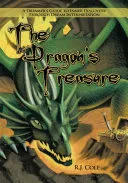
The Dragon's Treasure
 74
74

The Dragon's Treasure
R. J. Cole's The Dragon's Treasure offers a compelling, if occasionally meandering, exploration of personal genesis through the prism of global mythology. Cole's strength lies in his ability to connect seemingly disparate cosmological narratives—from Aboriginal Dreamtime to Celtic lore—to the intimate process of self-discovery. The book excels when it grounds its wide-ranging inquiries in concrete personal reflection, making the abstract concepts of creation and unconscious exploration feel tangible. A particularly striking passage involves the author's interpretation of a dream sequence, which he masterfully links to the archetypal descent into the underworld, revealing the personal significance of this universal motif.
However, the book's associative structure, while reflecting the nature of consciousness itself, can sometimes lead to a diffusion of focus. The sheer breadth of references, though impressive, occasionally feels less like a unified argument and more like a series of intriguing tangents. For readers seeking a linear, step-by-step guide, this approach might prove challenging. Despite this, Cole provides a valuable framework for understanding how ancient myths inform our modern psychological landscapes. The Dragon's Treasure is a rich, introspective work for those willing to follow its winding, mythic paths.
📝 Description
74
R. J. Cole's 2009 book, The Dragon's Treasure, maps a lifelong quest to understand self and cosmos.
The Dragon's Treasure, published in 2009 by R. J. Cole, is a spiritual autobiography tracing the author's lifelong pursuit of cosmic and personal origins. Cole weaves together diverse cosmologies, including Aboriginal Dreamtime, Native American traditions, and Asian, Christian, and Celtic perspectives. The book unfolds as a series of reflections, dream analyses, historical investigations, and philosophical thought experiments. It invites readers to consider their own inner lives through the lens of ancient narratives and universal archetypes.
This work is for individuals interested in comparative mythology, depth psychology, and personal spiritual inquiry. It suits those who appreciate a non-linear, associative path to knowledge, blending personal stories with scholarly references. The book asks readers to examine their own unconscious, connecting their personal narratives to fundamental creation stories.
Published in 2009, The Dragon's Treasure appeared during a time of renewed interest in Jungian psychology and comparative mythology. Cole's method of synthesizing disparate cultural narratives into a personal quest resembles the work of mythologists like Joseph Campbell. However, Cole's focus is more introspective. The book fits within a tradition of esoteric writing that connects academic study with lived spiritual experience. Its release predated the widespread online availability of esoteric material, marking it as a deliberate exploration for dedicated readers.
💡 Why Read This Book?
• Gain a framework for understanding your personal "creation story" by examining specific references to Aboriginal Dreamtime narratives and their connection to individual genesis, a concept explored throughout the book. • Uncover the symbolic language of the unconscious by exploring R. J. Cole's interpretation of dream imagery, particularly how these personal visions connect to the "underworld of the unconscious." • Connect with a lineage of esoteric thought by tracing the book's engagement with diverse cosmologies, including specific mentions of Native American and Celtic traditions, first published in 2009.
⭐ Reader Reviews
Honest opinions from readers who have explored this book.
❓ Frequently Asked Questions
What is the central metaphor of "The Dragon's Treasure"?
The "Dragon's Treasure" represents the hidden potential, wisdom, and authentic self residing within the unconscious mind. The book suggests this treasure is uncovered by exploring one's personal creation story and delving into the symbolic landscapes of myth and dreams.
Which ancient traditions does R. J. Cole reference in the book?
R. J. Cole draws upon a wide array of traditions, including Aboriginal Dreamtime, Native American cosmology, Asian philosophies, Christian narratives, and Celtic mythology, to illustrate the universal themes of creation and genesis.
How does the book approach the concept of the unconscious?
The book views the "underworld of the unconscious" as a vital source of self-knowledge. It uses personal reflections, dreams, and mythological parallels to illustrate how one can access and integrate this profound inner realm.
What is the primary goal for a reader engaging with The Dragon's Treasure?
The primary goal is to facilitate a deeper understanding of one's own origins and identity by examining how universal creation myths are mirrored in personal experience and the unconscious mind.
When was The Dragon's Treasure first published?
The Dragon's Treasure by R. J. Cole was first published in October 2009.
What kind of writing style can I expect from R. J. Cole?
Expect a style that blends personal narrative, poetic reflection, philosophical inquiry, and mythological exploration. It is associative and introspective, rather than strictly academic or didactic.
🔮 Key Themes & Symbolism
Personal Genesis and Creation Myths
The core of The Dragon's Treasure lies in the exploration of individual "creation stories." Cole posits that understanding our genesis, much like the Aboriginal dreaming into being, is fundamental to self-knowledge. The book examines how global myths—from Native American traditions to Celtic cosmology—serve as archetypal frameworks for our personal narratives. It suggests that by tracing the threads of these ancient cosmologies, readers can illuminate the origins of their own identity and purpose.
The Unconscious as a Sacred Landscape
Cole treats the "underworld of the unconscious" not as a void, but as a rich repository of personal and collective wisdom. Through dream analysis, thought experiments, and poetic reflection, he guides the reader to perceive this inner realm as a source of clear insights. The "Dragon's Treasure" itself symbolizes the hidden potential and authentic self that resides within this unconscious space, accessible through conscious exploration and integration.
Mythological Synthesis for Self-Discovery
The book's unique contribution is its synthesis of diverse mythological traditions—including Asian, Christian, and Celtic—as tools for personal inquiry. Rather than treating these as academic subjects, Cole uses them as lenses through which to view the journey of self-creation. This comparative approach highlights universal patterns in human consciousness and offers readers a broader context for understanding their own inner world and spiritual path.
The Interplay of History, Myth, and Dreams
The Dragon's Treasure operates at the intersection of history, myth, and personal dreams. Cole demonstrates how collective histories and ancient myths inform individual dreamscapes, and how personal reflections can illuminate these larger narratives. This combining of personal experience with historical and mythological threads creates a dynamic exploration of how our understanding of creation shapes our present reality.
💬 Memorable Quotes
Direct passages from the work, attributed to the author.
“The journey begins with the story of the Aborigine dreaming into being.”
— This opening sets the stage for a cosmogonic exploration, grounding the book's inquiry into personal creation stories within the ancient, foundational myths of the Aboriginal peoples and their concept of the Dreamtime.
“What is The Dragon's Treasure?”
— This central question frames the book's quest. It signifies the hidden potential, inner wisdom, and authentic self that the author seeks to uncover through exploring myth, dreams, and personal history.
“Walk with the author along a lifetime of twisting paths that tie a story through myth, poetry, dreams, thought experiments, personal reflection, and history.”
— This phrase describes the book's structure and method. It highlights the associative, multi-faceted approach Cole takes, inviting the reader on a personal journey that integrates various forms of inquiry to understand the self.
“Bring to light the underworld of the unconscious.”
— This points to the book's psychological and esoteric aim: to explore the depths of the subconscious mind. It suggests that what lies hidden within can be brought into conscious awareness, offering profound self-understanding.
“The author tries to put the individual's creation story into perspective.”
— This interpretation suggests the book's goal is to contextualize personal experience within the grander narratives of creation found across cultures, helping readers see their own lives as part of a larger, universal story.
🌙 Esoteric Significance
Tradition
The Dragon's Treasure aligns with the Hermetic and Jungian psychological traditions, focusing on the inner alchemical process of self-transformation through understanding the unconscious. It draws parallels to Gnostic quests for hidden knowledge and the Theosophical interest in universal wisdom found across cultures. Cole's work departs from strict adherence to any single lineage, instead creating a personal synthesis that emphasizes the archetypal unity of creation narratives and the subjective experience of uncovering one's inner "treasure."
Symbolism
Key symbols include the "Dragon," often representing primal energy, the unconscious, or the guardian of hidden wisdom, whose "Treasure" is self-knowledge. The "underworld" symbolizes the deep unconscious, a necessary descent for transformation, mirroring myths like Orpheus or the Harrowing of Hell. "Creation stories" themselves function symbolically, representing the fundamental narratives that structure individual identity and consciousness, linking personal genesis to cosmic origins.
Modern Relevance
Contemporary thinkers and practitioners in depth psychology, archetypal astrology, and personal mythology continue to find value in Cole's approach. His emphasis on integrating personal experience with universal mythic patterns appeals to modern therapeutic modalities that utilize storytelling and symbolism. Practices focusing on individuation, dream analysis, and the exploration of the psyche's deeper layers can draw inspiration from the book's framework for understanding the unconscious as a source of transformative power.
👥 Who Should Read This Book
• Individuals interested in Jungian psychology and archetypal symbolism: You will gain insights into how universal myths, like those referencing Aboriginal Dreamtime or Celtic cosmology, manifest in the personal unconscious and shape psychological development. • Seekers of personal meaning and spiritual autobiography: You will find a model for integrating diverse cultural narratives and personal experiences into a cohesive understanding of your own "creation story." • Comparative mythology enthusiasts: You will appreciate the book's synthesis of various global cosmologies, examining their shared themes and their application to understanding the genesis of self, as explored in R. J. Cole's unique narrative.
📜 Historical Context
Published in 2009, R. J. Cole's *The Dragon's Treasure* arrived during a period marked by a resurgence of interest in Jungian psychology and comparative mythology, particularly concerning archetypal patterns. The work engages with a tradition of esoteric writing that seeks personal meaning through mythological frameworks, echoing figures like Joseph Campbell, though Cole's emphasis is more introspective and autobiographical. The book's publication predates the explosion of easily accessible online esoteric content, positioning it as a deliberate, text-based exploration for a dedicated readership. While not engaging directly with academic debates, its approach implicitly challenges purely materialistic interpretations of consciousness by grounding psychological exploration in ancient cosmologies. The intellectual currents it tapped into included depth psychology, perennial philosophy, and cross-cultural studies, making it relevant to readers seeking synthesis beyond specialized disciplines.
📔 Journal Prompts
The Dragon's Treasure as a symbol of inner potential: What forgotten or suppressed aspects of yourself might this treasure represent?
Reflect on a significant dream: How might its imagery connect to the concept of the "underworld of the unconscious"?
Consider your earliest memories of understanding where you came from: How do these personal "creation stories" align with or differ from larger cultural myths?
Trace the "twisting paths" of your own life narrative: Identify moments where mythic or archetypal patterns seemed to emerge.
Explore the "genesis of your own creation story": What core beliefs or experiences shaped your fundamental understanding of yourself and the world?
🗂️ Glossary
Aborigine dreaming
Refers to the foundational concept in Australian Aboriginal cultures of the Dreamtime or The Dreaming, a foundational era when ancestral beings shaped the land and created all life, which continues to influence the present.
Creation Story
A narrative, often mythological or religious, that describes the origins of the universe, the world, and humanity. In this book, it extends to the personal narrative of an individual's genesis.
Dragon's Treasure
A central metaphor in the book, symbolizing the hidden potential, inner wisdom, and authentic self residing within the unconscious, accessible through self-exploration.
Underworld of the Unconscious
Represents the deep, often hidden, layers of the psyche. It is portrayed not as a place of negativity, but as a source of profound psychological material and transformative power.
Genesis
The origin or mode of formation of something. In the context of the book, it refers to the beginning or source of an individual's existence and identity.
Cosmology
A system of belief that deals with the origin and structure of the universe. The book examines various cultural cosmologies to understand universal patterns of creation.
Personal Reflection
The act of looking inward and examining one's own thoughts, feelings, and experiences. This is a key method used by the author to explore the book's themes.