Yoga-Anatomie
 79
79

Yoga-Anatomie
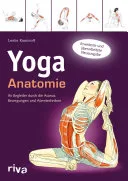
Leslie Kaminoff and Amy Matthews’ ‘Yoga-Anatomie’ presents a necessary, if somewhat dry, dissection of the physical body in yoga practice. The book’s strength lies in its meticulous detail, offering clear, labeled diagrams that illustrate the precise muscular engagement and joint articulation for numerous asanas. For instance, the explanation of how the quadriceps and hamstrings work in tandem during Trikonasana (Triangle Pose) is exceptionally illuminating, moving beyond vague instructions to concrete biomechanical action. However, the sheer volume of anatomical data can sometimes overshadow the embodied experience of yoga, occasionally reading more like an advanced physiology textbook than a guide for practitioners seeking deeper connection. A limitation is its infrequent discussion of the nervous system's role, a crucial element in both relaxation and mindful movement. Still, for anyone seeking to understand the 'how' and 'why' of their physical form during practice, this work provides an unparalleled, fact-driven resource.
📝 Description
79
Leslie Kaminoff and Amy Matthews published Yoga-Anatomie in 2013, detailing the physical mechanics behind yoga postures.
Yoga-Anatomie, by Leslie Kaminoff and Amy Matthews, examines the physical mechanics of yoga postures. The book focuses on how the body responds to specific asanas, detailing muscle engagement, joint movement, and organ interaction. It uses clear diagrams and precise language to explain the biomechanics of yoga practice. This resource is for practitioners and instructors who want a deeper understanding of the physical body in motion. It helps individuals refine their personal practice by showing the precise muscular and skeletal actions for safe and effective poses. Teachers can use it to give more specific alignment cues and explain the physiological benefits of postures, leading to a more informed approach to yoga.
The book's publication in 2013 coincided with a period of growth in the yoga community. While many texts focused on philosophy or spirituality, Yoga-Anatomie prioritized a rigorous anatomical perspective. This emerged as a demand grew for scientific validation and detailed physiological explanations of yoga practices. It moved beyond traditional interpretations to include modern scientific inquiry into movement and the human body, establishing a niche for evidence-based anatomical study within yoga.
While Yoga-Anatomie focuses on anatomy, its placement within the broader spiritual development category suggests a connection to the yogic tradition's long history of self-inquiry. For centuries, yogic texts have explored the body as a vehicle for consciousness, linking physical discipline to spiritual progress. This book adds a layer of modern scientific understanding to that ancient pursuit, demonstrating how a detailed awareness of physical structure can inform and deepen the practice of yoga, a path traditionally understood as a means to union and liberation.
💡 Why Read This Book?
• Understand the precise muscular and skeletal actions in poses like the Downward-Facing Dog, moving beyond general alignment cues to specific anatomical engagement as detailed in the book’s biomechanical breakdowns. • Learn how different joint articulations, such as hip flexion and extension, influence your ability to achieve and maintain poses like the Warrior II, gaining insight from the detailed joint analysis. • Discover the interconnectedness of the body’s kinetic chains and fascial lines during complex sequences, as explored in the book’s visual representations, enhancing your awareness of how movement flows through your entire structure.
⭐ Reader Reviews
Honest opinions from readers who have explored this book.
❓ Frequently Asked Questions
What is the primary focus of Yoga-Anatomie by Leslie Kaminoff and Amy Matthews?
The book's primary focus is the detailed anatomical and biomechanical explanation of yoga postures (asanas). It dissects what happens within the muscles, joints, and organs during specific poses, offering a scientific perspective on the physical practice of yoga.
When was Yoga-Anatomie first published?
'Yoga-Anatomie' by Leslie Kaminoff and Amy Matthews was first published on September 6, 2013. This publication date places it within a period of increased scientific interest in yoga.
Who are the authors of Yoga-Anatomie?
The authors are Leslie Kaminoff and Amy Matthews. Kaminoff is a recognized yoga expert, and Matthews is also a respected figure in the field of anatomy and yoga education.
What kind of diagrams does Yoga-Anatomie use?
The book utilizes detailed, labeled anatomical illustrations. These diagrams visually represent muscle engagement, skeletal alignment, and joint movement, providing a clear, graphical understanding of the biomechanics of yoga poses.
Is Yoga-Anatomie suitable for beginner yoga practitioners?
While beneficial for all levels, its detailed anatomical focus might be more suited for dedicated practitioners or instructors. Beginners might find it a valuable reference, but it's not a step-by-step guide to starting yoga.
What is a 'kinetic chain' as discussed in Yoga-Anatomie?
A kinetic chain, in the context of the book, refers to the interconnected series of joints and muscles that work together to create movement. Understanding these chains helps explain how actions in one part of the body affect others during an asana.
🔮 Key Themes & Symbolism
Skeletal Alignment
The work meticulously details the alignment of the skeletal structure during various yoga postures. It moves beyond mere aesthetic form to explain the biomechanical necessity of precise bone positioning for safety and efficacy. This includes how spinal curves, pelvic tilt, and limb angles interact. The authors emphasize that understanding skeletal frameworks is foundational to experiencing the full benefits of an asana, preventing strain, and fostering optimal energy flow within the body's structure.
Muscular Engagement
A central theme is the precise identification and function of muscle groups engaged in each pose. The book illustrates which muscles are meant to be activated (agonist), stabilized (stabilizer), or stretched (antagonist) in different asanas. This detailed mapping allows practitioners to cultivate a more conscious and targeted approach to their physical practice, ensuring that the intended muscular benefits are realized and that imbalances are addressed through informed movement.
Joint Mechanics
The book provides in-depth analysis of joint articulation during yoga. It explores the range of motion, potential stress points, and synergistic movements within joints such as the hips, shoulders, and spine. By detailing how joints function under load and during movement in various asanas, practitioners can develop a deeper awareness of their own physical capabilities and limitations, promoting safer practices and a more nuanced understanding of bodily mechanics.
Breath and Movement Coordination
While primarily anatomical, the work implicitly highlights the crucial role of breath in coordinating movement. Although not always explicitly stated as a spiritual concept, the book's diagrams and explanations show how diaphragmatic action and breath control are biomechanically linked to postural stability and dynamic transitions between poses. The understanding of how breath supports muscular effort and joint stability is a key takeaway for practitioners aiming for integrated practice.
💬 Memorable Quotes
Direct passages from the work, attributed to the author.
“The body is not a static object, but a dynamic system of interconnected parts.”
— This concept underscores the book's approach, emphasizing that yoga postures are not isolated positions but involve complex, coordinated actions across multiple muscle groups and joints, highlighting the dynamic nature of the physical practice.
“Alignment is not about forcing the body into a preconceived shape, but about finding the optimal relationship between the body's parts.”
— This interpretation suggests that true alignment in yoga, as presented in the book, is less about rigid rules and more about understanding the individual's unique biomechanics to achieve a balanced and functional posture.
“Each joint has a specific range of motion that must be respected.”
— This highlights the book's emphasis on safe practice by detailing the biomechanics of various joints, encouraging practitioners to work within their anatomical limits rather than pushing into potentially injurious positions.
“The interconnectedness of muscles creates functional movement patterns.”
— This idea points to the book's exploration of kinetic chains and synergistic muscle action, showing how coordinated effort across different body parts is essential for stable and effective yoga postures.
💡 Key Ideas
Editorial paraphrase of the work's core concepts — not direct quotes.
Understanding the 'why' behind the 'how' of a posture deepens the practice.
This paraphrased concept highlights the book's value in providing the anatomical rationale for specific instructions, enabling practitioners to engage with their poses on a more informed and conscious level.
🌙 Esoteric Significance
Tradition
While 'Yoga-Anatomie' is primarily a scientific text, its deep dive into the body's mechanics can be seen as an esoteric exploration of the physical vessel as a microcosm of universal laws. Within certain esoteric traditions, understanding the body's intricate workings is a prerequisite for comprehending subtle energy flows (prana) and achieving higher states of consciousness. This work can be viewed as a modern interpretation of the 'body as temple' concept, providing the foundational knowledge needed to consciously direct energy through physical form.
Symbolism
The primary 'symbolism' in this work is the body itself, treated as a complex, interconnected machine governed by precise principles. Muscles are symbolic of force and action, bones of structure and support, and joints of movement and transition. The detailed anatomical diagrams can be interpreted as maps of the physical self, revealing the intricate design that allows for both stability and dynamic expression, reflecting an underlying order within the manifest world.
Modern Relevance
Contemporary practitioners and educators in fields like somatic therapy, physical therapy, and advanced yoga teacher training programs frequently reference 'Yoga-Anatomie'. Its detailed anatomical maps and biomechanical explanations are useful for understanding movement dysfunctions and for developing precise therapeutic interventions. Thinkers and practitioners focused on embodied cognition and the mind-body connection also find its rigorous approach highly relevant for grounding abstract concepts in tangible physical reality.
👥 Who Should Read This Book
['• Dedicated yoga practitioners seeking to deepen their understanding of alignment and injury prevention, gaining precise knowledge of muscular engagement and joint function.', '• Certified yoga instructors aiming to enhance their teaching by offering more accurate cues and detailed explanations of asana mechanics to their students.', '• Students of anatomy and kinesiology interested in the practical application of biomechanical principles within a specific movement discipline.']
📜 Historical Context
Published in 2013, 'Yoga-Anatomie' emerged during a period when the global yoga landscape was increasingly bifurcated. On one side, traditional lineages and spiritual interpretations held strong. On the other, a growing movement sought to integrate yoga with Western scientific understanding, particularly in areas like exercise physiology and biomechanics. Kaminoff and Matthews' work firmly planted itself in this latter camp. It stood in contrast to many popular yoga books of the time that focused more on philosophical discourse or general wellness. While scholars like William J. Broad were beginning to publish works like 'The Science of Yoga' (2012) examining yoga's effects through a scientific lens, 'Yoga-Anatomie' offered a practical, detailed anatomical manual for practitioners themselves. Its reception was largely positive within the instructor community, praised for its clarity and depth, though some traditionalists may have viewed its intense focus on mechanics as a departure from yoga's spiritual core.
📔 Journal Prompts
The specific engagement of the gluteus maximus and medius in Virabhadrasana II.
How the psoas muscle's length affects pelvic tilt in seated postures.
The biomechanics of spinal flexion versus extension in poses like Cat-Cow.
The role of the rotator cuff muscles in stabilizing the shoulder joint during inversions.
Variations in hip joint articulation and their impact on Padmasana (Lotus Pose).
🗂️ Glossary
Asana
A posture or position in yoga, typically referring to the physical postures practiced during a yoga session. The book details the anatomical mechanics behind various asanas.
Kinetic Chain
A series of interconnected joints and muscles that work together to create movement. The book illustrates how these chains function during yoga postures, showing the relationship between different body parts.
Agonist Muscle
The primary muscle or muscle group responsible for a particular movement. The book identifies the agonist muscles engaged in specific yoga poses.
Antagonist Muscle
A muscle that opposes the action of the agonist. These muscles relax or lengthen to allow movement to occur, and the book explains their role in yoga postures.
Stabilizer Muscle
Muscles that hold a bone in place or help to stabilize a joint, allowing other muscles to perform more complex movements. The book highlights their importance in maintaining postural integrity.
Fascial Lines
Continuities of the body's fascial tissues, which connect muscles and bones in specific pathways. The book touches upon these lines as they relate to the body's integrated movement.
Joint Articulation
The way in which joints move and connect. The book provides detailed explanations and diagrams of the articulation of various joints, such as the shoulder, hip, and knee, during yoga poses.