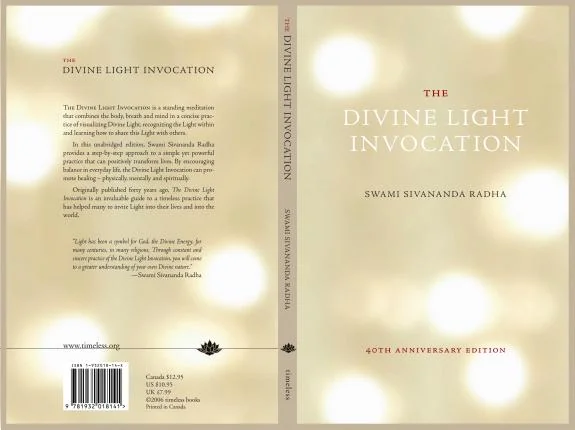
The Divine Light Invocation
 82
82

The Divine Light Invocation
Swami Sivananda Radha’s The Divine Light Invocation offers a refreshing departure from the often-vague pronouncements found in much contemporary spiritual literature. The strength of this 2006 publication lies in its disciplined, step-by-step methodology for self-awareness. Radha doesn’t merely suggest introspection; she provides a blueprint. The section detailing the "Inner Witness" is particularly compelling, offering a clear articulation of how to cultivate detached observation. However, the book’s systematic nature, while a strength, can also feel somewhat austere. For readers accustomed to more narrative or emotionally effusive spiritual texts, the directness of the instructions might require adjustment. One passage that exemplifies its practical approach discusses the subtle shifts in perception when one consistently practices observing thoughts without identification. The Divine Light Invocation is a valuable manual for the dedicated practitioner seeking concrete methods for inner work.
📝 Description
82
Swami Sivananda Radha published The Divine Light Invocation in 2006.
The Divine Light Invocation provides a structured method for spiritual growth, based on the teachings of Swami Sivananda Radha. It is less a narrative and more a practical manual with exercises and contemplative practices. The book focuses on direct engagement with inner consciousness and subtle energies. Its aim is to give readers tools for self-discovery and personal evolution. It guides individuals toward a conscious connection with their inner divine potential.
This text is for serious students of spiritual development. It suits those who prefer systematic approaches and disciplined self-examination. Readers familiar with contemplative practices or yoga philosophy will find its methods accessible. It is also useful for those studying esoteric psychology or interested in applying spiritual ideas in daily life. The book encourages active participation in one's own spiritual awakening.
Published in 2006, The Divine Light Invocation reflects a period of renewed interest in both Eastern spirituality and Western esoteric thought. Swami Sivananda Radha, founder of the Yasodhara Ashram, developed her teachings over many years, blending aspects of classical yoga, Vedanta, and Western psychology. Her approach offered a distinct experiential path, differentiating it from other spiritual movements of the mid-20th century onward.
💡 Why Read This Book?
• You will learn a structured technique for cultivating the "Inner Witness," a state of detached observation that can be applied to daily challenges, as detailed in the book's meditative exercises. • You will gain practical methods for "Invocation," understood as the internal process of activating your own spiritual potential, a concept central to Radha's teachings since the mid-20th century. • You will discover how to integrate "Conscious Living" by applying the principles of spiritual awareness to everyday actions, moving beyond theoretical understanding to embodied practice as outlined in the text.
⭐ Reader Reviews
Honest opinions from readers who have explored this book.
❓ Frequently Asked Questions
What is the primary focus of The Divine Light Invocation?
The book centers on practical, systematic techniques for spiritual self-discovery and inner transformation, emphasizing the cultivation of inner awareness and the activation of one's inherent divine potential through focused practice.
Who is Swami Sivananda Radha?
Swami Sivananda Radha was an influential spiritual teacher and author, known for founding the Yasodhara Ashram in Canada and synthesizing Eastern spiritual traditions with Western psychological insights.
When was The Divine Light Invocation first published?
The book was first published in 2006, presenting a culmination of decades of her teachings and practical methods.
What does 'Invocation' mean in the context of this book?
In this work, 'Invocation' refers to an internal, active process of drawing forth and realizing one's own innate spiritual qualities and divine light, rather than petitioning an external entity.
Are there specific exercises or practices recommended?
Yes, the book provides structured contemplative techniques and exercises designed to develop the 'Inner Witness' and foster conscious living.
Is this book suitable for beginners in spiritual study?
It is best suited for those committed to disciplined self-exploration and practice. While accessible, its systematic approach requires earnest engagement from the reader.
🔮 Key Themes & Symbolism
The Inner Witness
This theme explores the cultivation of a detached, observant consciousness. The book posits that by developing the 'Inner Witness,' individuals can observe their thoughts, emotions, and reactions without immediate identification, leading to greater self-understanding and freedom from habitual patterns. This state is presented as a crucial tool for reading through the complexities of the mind and ego, fostering a more stable and centered presence in daily life. The practice involves consistent, focused attention on the act of observing itself, distinguishing the seer from the seen.
Conscious Living
The ultimate aim presented is 'Conscious Living,' a state where one's actions are guided by awakened awareness rather than unconscious reactivity. This theme emphasizes the integration of spiritual insights into every facet of existence, from mundane tasks to significant decisions. It suggests that true spiritual progress is measured not only by meditative states but by the quality of one's engagement with the world. The book outlines how the practices of Divine Light Invocation and cultivating the Inner Witness directly support the realization of this conscious way of being.
Divine Light
Central to the work is the concept of 'Divine Light' as an intrinsic, pervasive spiritual energy within all beings. This theme posits that accessing and consciously working with this inner light is a key aspect of spiritual evolution. The 'Invocation' practices are designed to draw forth this light, useful the inner landscape and fostering spiritual growth. It is depicted not as an external force, but as an inherent potential waiting to be realized through dedicated practice and focused intention.
Systematic Practice
A defining characteristic of this book is its emphasis on methodical, disciplined spiritual practice. Unlike more intuitive or devotional paths, The Divine Light Invocation offers a structured curriculum for self-transformation. This theme underscores the belief that consistent, applied effort using specific techniques is essential for profound inner change. The book details sequential steps and exercises designed to progressively deepen awareness and integrate spiritual principles, advocating for a diligent and sustained approach to the spiritual journey.
💬 Memorable Quotes
Direct passages from the work, attributed to the author.
“The light within is always present, awaiting your attention.”
— This highlights the book's core tenet: spiritual potential is inherent, not external. It suggests that the 'Divine Light' is an internal resource accessible through focused awareness and specific practices described in the text.
“Observe the mind without becoming the mind.”
— This captures the practice of cultivating the 'Inner Witness.' It's an instruction to maintain a state of detached awareness, recognizing thoughts as transient phenomena rather than one's fundamental identity.
“Invocation is the drawing forth of your own divine nature.”
— This clarifies the concept of 'Invocation' as an active, internal process of realizing one's inherent spiritual qualities, emphasizing self-empowerment rather than external petition.
“Conscious action arises from conscious awareness.”
— This links the practice of inner work directly to outward behavior, defining 'Conscious Living' as actions guided by an awakened, observant state of mind.
“The path requires discipline, not just desire.”
— This statement addresses the book's emphasis on systematic practice. It contrasts passive wishing with the active, diligent effort needed for genuine spiritual progress, as detailed in the methodology.
🌙 Esoteric Significance
Tradition
The work draws heavily from the yogic and Vedantic traditions of India, particularly Raja Yoga's emphasis on mental discipline and control. However, Swami Sivananda Radha's unique contribution lies in her integration of Western psychological concepts and a pragmatic, step-by-step approach to self-realization. It departs from strict adherence to classical texts by focusing on experiential application and the development of the 'Inner Witness,' a concept resonant with Gnostic ideas of gnosis (direct knowing) and certain Buddhist mindfulness practices, though framed within a distinct yogic lineage.
Symbolism
The 'Divine Light' itself is a primary symbol, representing the inherent spiritual essence, consciousness, and divine nature within every individual. It signifies illumination, wisdom, and the ultimate reality. The concept of the 'Inner Witness' functions symbolically as a stable point of observation, a silent watcher that transcends the flux of thoughts and emotions, acting as a gateway to deeper self-understanding. The act of 'Invocation' symbolizes the active drawing forth of this inner potential, an internal summoning of one's spiritual power and presence.
Modern Relevance
Contemporary practitioners of mindfulness, meditation, and contemplative psychology find resonance with Radha's emphasis on the 'Inner Witness' and conscious observation. Thinkers and groups focusing on integral spirituality and embodied consciousness can utilize her systematic methods for self-awareness. Her work is relevant to modern seekers looking for practical, non-dogmatic approaches to personal growth that bridge Eastern wisdom with contemporary psychological understanding, offering tools applicable in secular contexts as well as traditional spiritual frameworks.
👥 Who Should Read This Book
• Individuals seeking a structured, practice-oriented approach to spiritual development, particularly those interested in yogic philosophy and meditation. • Students of comparative religion and esoteric studies looking to understand synthesized spiritual methodologies that blend Eastern traditions with Western psychological insights. • Dedicated practitioners aiming to deepen their self-awareness and cultivate a more centered, observant state of consciousness for everyday life.
📜 Historical Context
The Divine Light Invocation, published in 2006, emerged from the pedagogical work of Swami Sivananda Radha, who established the Yasodhara Ashram in British Columbia in the 1960s. Her teachings represent a synthesis of traditional Indian spiritual disciplines, particularly Raja Yoga and Vedanta, blended with Western psychological principles. This occurred during a period of significant global interest in Eastern spirituality, following the influence of figures like Paramahansa Yogananda and the Theosophical Society earlier in the 20th century. Radha's approach, however, often emphasized a unique, experiential path focused on self-observation and the cultivation of inner awareness, differentiating it from purely devotional or academic studies of religion. While contemporary movements like Integral Yoga or the teachings of Maharishi Mahesh Yogi also gained traction, Radha's work offered a distinct methodology for inner transformation accessible through systematic practice, building upon but also diverging from established traditions.
📔 Journal Prompts
The Inner Witness: How does observing your thoughts without judgment change their power over you?
Divine Light Invocation: What qualities do you feel are most present when you consciously 'invoke' your inner light?
Conscious Living: Identify one daily action where you can consciously apply awareness gained from your practice.
The role of discipline versus desire in your spiritual path.
Reflect on the difference between identifying with thoughts and observing them.
🗂️ Glossary
Divine Light
An intrinsic, pervasive spiritual energy or consciousness within all beings, representing inherent divinity, wisdom, and illumination. Accessing it is a primary goal of the practices outlined.
Invocation
An internal, active process of drawing forth and realizing one's own innate spiritual qualities and divine potential, rather than a petition to an external force.
Inner Witness
A state of detached, objective awareness that observes thoughts, emotions, and sensations without identification, fostering self-understanding and equanimity.
Conscious Living
A state of being where actions and responses are guided by awakened awareness and inner principles, integrating spiritual understanding into all aspects of life.
Ego
In this context, the sense of self constructed from thoughts, beliefs, and experiences; the limited identity that the Inner Witness observes and seeks to transcend.
Raja Yoga
A classical system of yoga focused on mental discipline, meditation, and control of the mind, often referred to as the 'royal path' to spiritual realization.
Vedanta
A school of Hindu philosophy focusing on the Upanishads, exploring concepts such as Brahman (ultimate reality) and Atman (the self), often emphasizing non-duality.
This book appears in 1 collection
🔮 Readers Also Liked
Browse all →









From the “Invocation” Collection
View all →





More Free Occult Philosophy Books
View all →