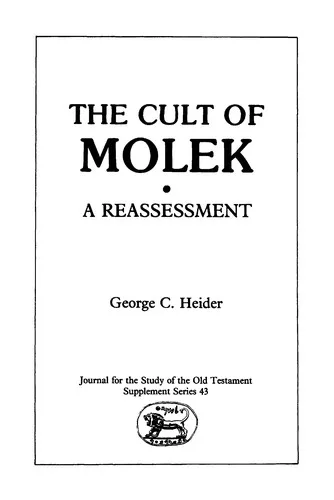
The Cult of Molek
 78
78

The Cult of Molek
George C. Heider’s *The Cult of Molek* offers a sober, academic dissection of a subject rife with sensationalism and theological condemnation. The book’s primary strength lies in its meticulous sifting of textual evidence, particularly its close readings of Leviticus 18:21 and 2 Kings 23:10, where the prohibition against passing children through fire to Molek is most starkly stated. Heider carefully unpacks the linguistic nuances and historical context of these passages, presenting them not as straightforward historical reporting but as theological pronouncements within their own time. A notable limitation, however, is the scant attention paid to archaeological evidence beyond what directly supports or refutes specific biblical claims; a broader engagement with Canaanite religious practices, for instance, might have offered a more rounded perspective. The section discussing the possible identification of Molek with the Punic deity Baal Hammon, while brief, is particularly illustrative of Heider's cautious approach to connecting disparate cultural phenomena. Ultimately, *The Cult of Molek* serves as a valuable, if dry, resource for understanding the biblical polemic against this deity.
📝 Description
78
George C. Heider's 2009 book examines the ancient Near Eastern deity Molek, using biblical and archaeological evidence.
George C. Heider's 2009 work, The Cult of Molek, offers a scholarly investigation into the ancient Near Eastern deity. The book scrutinizes biblical texts, archaeological findings, and extrabiblical sources to reconstruct the worship practices and perceptions surrounding Molek. It is an academic inquiry, not a ritual guide or contemporary occult text, focusing on a complex figure from antiquity. Heider's research engages with scholarly debates on the nature and prevalence of Molek cult practices. The work considers the period when biblical texts were written, often as polemics against foreign religious influences. It also acknowledges archaeological evidence that has shaped understanding of Canaanite and Israelite religious life, particularly findings from sites like Ugarit and interpretations of inscriptions that might reference Molek.
The book is intended for students of ancient religions, biblical scholars, archaeologists, and anyone with a serious academic interest in the religious history of the Levant and biblical narratives concerning child sacrifice. It appeals to readers who prefer rigorous historical analysis over speculative interpretations and who seek to understand the historical context of religious practices found in ancient texts. Key concepts include the etymology of 'Molek,' interpretation of biblical passages condemning its worship, and archaeological evidence that may support or challenge textual accounts. Heider examines whether Molek was a title or a deity, and potential cult regions like the Valley of Hinnom.
While not an esoteric text itself, The Cult of Molek engages with historical religious practices that have later been incorporated into or influenced esoteric traditions. Its examination of child sacrifice, ancient Near Eastern deities, and the interpretation of controversial biblical passages touches on themes that are often revisited in occult and esoteric scholarship. The book provides a factual basis for understanding the historical roots of concepts that appear in various occult systems, offering a scholarly perspective on figures and practices often shrouded in myth and speculation.
💡 Why Read This Book?
• Understand the specific biblical condemnations of Molek worship, examining passages like Leviticus 18:21 and 2 Kings 23:10 to grasp their theological and historical intent. • Explore the scholarly debate surrounding the identification of Molek, distinguishing between a deity, a title, or a ritual act, based on Heider's analysis of textual and potential archaeological data. • Gain insight into the historical context of religious polemics in ancient Israel, recognizing how the depiction of Molek cult served to define Israelite identity against perceived foreign practices.
⭐ Reader Reviews
Honest opinions from readers who have explored this book.
❓ Frequently Asked Questions
What is the primary focus of George C. Heider's The Cult of Molek?
The book's primary focus is a scholarly examination of the historical evidence and interpretations surrounding the ancient Near Eastern deity known as Molek, scrutinizing biblical texts and archaeological findings.
Is The Cult of Molek a guide to performing rituals?
No, it is an academic inquiry into the historical practices and perceptions of Molek worship, not a manual for contemporary occult practices or rituals.
Which ancient Near Eastern texts are analyzed in the book?
The book analyzes key biblical texts, including passages from Leviticus and Kings, as well as extrabiblical sources and archaeological findings relevant to the Levant.
What is the significance of the Valley of Hinnom in relation to Molek?
The Valley of Hinnom, located near Jerusalem, is discussed as a potential geographical site where the cult of Molek may have been practiced, as mentioned in biblical accounts.
When was The Cult of Molek first published?
George C. Heider's The Cult of Molek was first published in 2009.
Who would benefit most from reading this book?
Students of ancient religions, biblical scholars, archaeologists, and readers interested in rigorous historical analysis of ancient religious practices would find this book most beneficial.
🔮 Key Themes & Symbolism
Biblical Polemics Against Molek
A central theme is the analysis of biblical passages that condemn the worship of Molek, particularly Leviticus 18:21 and 2 Kings 23:10. Heider investigates how these texts function as polemics, aiming to define Israelite religious identity by castigating practices perceived as foreign or abhorrent. The work explores the theological motivations behind these condemnations and the historical context in which they were likely written or compiled, offering a critical perspective on the narratives of child sacrifice associated with the deity.
Etymology and Identification
The book examines the linguistic origins and potential meanings of the name 'Molek.' Heider examines scholarly debates regarding whether Molek refers to a specific deity, a title applied to various gods, or a particular type of ritual. This exploration considers comparative Semitic linguistics and the interpretation of obscure terms in ancient Near Eastern inscriptions, seeking to clarify the identity and nature of the entity or practice being denounced in biblical and other ancient sources.
Archaeological and Extrabiblical Evidence
Heider critically assesses archaeological findings and extrabiblical texts that might shed light on the cult of Molek. This includes examining evidence from sites in the Levant and potentially from Punic contexts, such as Carthage, where a deity identified by some scholars as Molek (or Baal Hammon) was worshipped. The work evaluates the strengths and weaknesses of correlating archaeological data with textual accounts, acknowledging the challenges in definitively linking specific artifacts or inscriptions to the Molek cult as described in the Bible.
Ritual Practice and Sacrifice
Central to the discussion is the nature of the ritual associated with Molek, specifically the act of passing children through fire. The book explores the interpretations of this practice, considering whether it involved actual sacrifice, symbolic dedication, or other forms of ritual action. Heider weighs the evidence from different sources to understand the significance and context of such rites within the broader religious field of the ancient Near East, while acknowledging the controversial and often horrific implications.
💬 Memorable Quotes
Direct passages from the work, attributed to the author.
“The precise nature of the deity or ritual designated by the name Molek remains a subject of considerable scholarly debate.”
— This statement expresses the book's core methodological approach: acknowledging the ambiguity and contested nature of the evidence surrounding Molek, rather than presenting definitive conclusions. It highlights the reliance on interpretation when dealing with ancient religious phenomena.
“Biblical prohibitions against Molek worship often appear within broader legal or historical narratives aimed at reinforcing Israelite religious distinctiveness.”
— This interpretation emphasizes the polemical function of biblical texts. It suggests that condemnations of Molek were not solely about historical accuracy but served a theological and social purpose: distinguishing 'true' Israelite religion from perceived foreign contaminants.
“Archaeological finds, while clear, do not always offer clear-cut correlations with specific biblical descriptions of cultic practices.”
— This highlights the challenge of integrating archaeological data with textual evidence. It suggests that findings from sites like Ugarit or Punic settlements require careful interpretation and cannot always be directly mapped onto biblical accounts of Molek.
“The Valley of Hinnom outside Jerusalem is frequently cited in connection with the practice of child immolation.”
— This points to a specific geographical location associated with the cult. The mention of the Valley of Hinnom serves as a concrete anchor for the biblical narratives and the perceived locus of these controversial rites.
💡 Key Ideas
Editorial paraphrase of the work's core concepts — not direct quotes.
Scholarly consensus has not been reached on whether Molek was a distinct god, a title, or a generic term for sacrifice.
This paraphrased concept underscores the lack of definitive answers regarding Molek's identity. It reflects Heider's engagement with the ongoing scholarly discussion and the inherent difficulties in reconstructing ancient religious beliefs from fragmented evidence.
🌙 Esoteric Significance
Tradition
While *The Cult of Molek* is primarily a work of academic history and textual criticism, its subject matter touches upon themes that have been reinterpreted within various esoteric traditions. The book itself does not belong to a specific esoteric lineage but provides foundational research that occult scholars might engage with. Its examination of child sacrifice and deities associated with difficult or forbidden practices can be seen as resonating with darker currents found in some Gnostic or Kabbalistic explorations of Qliphoth, or in historical debates about ancient fertility cults that some esotericists seek to understand or even revive.
Symbolism
The core symbolism explored is that of fire and sacrifice, particularly the immolation of children. In many esoteric traditions, fire symbolizes transformation, purification, or destructive power. The act of sacrifice, especially of innocents, carries profound symbolic weight, often representing the ultimate offering or a pact with powerful, potentially chthonic forces. The Valley of Hinnom itself, Gehenna, has become a potent symbol of damnation and the underworld in Judeo-Christian traditions, making any association with Molek deeply significant.
Modern Relevance
Contemporary esoteric thinkers and practitioners often engage with historical texts and figures that were once condemned or obscured by mainstream religious narratives. Works like Heider's, which offer scholarly deconstructions of figures like Molek, provide source material for those seeking to understand the historical roots of practices or deities that have been demonized. While Heider's work is objective, it can inform modern occultists interested in exploring the historical context of 'dark' deities or the symbolic meaning of extreme sacrificial rites within comparative religion.
👥 Who Should Read This Book
• Academic researchers in biblical studies and ancient Near Eastern religions seeking a rigorous analysis of the Molek cult based on textual and archaeological evidence. • Students of comparative religion interested in understanding the historical context of child sacrifice and religious polemics in the ancient world. • Skeptical readers who prefer evidence-based historical inquiry over speculative or devotional approaches to ancient deities and rituals.
📜 Historical Context
George C. Heider's *The Cult of Molek*, published in 2009, entered a long-standing scholarly conversation about ancient Near Eastern religions. The book engages with the era of biblical scholarship that grappled with the historical reliability of the Old Testament, particularly concerning religious practices in ancient Israel and Canaan. It situates itself within debates that intensified following archaeological discoveries in the early to mid-20th century, such as those at Ugarit, which provided crucial insights into Canaanite mythology and religious vocabulary. Heider's work implicitly contrasts with earlier, more literalistic interpretations of biblical condemnations. While not engaging directly with specific contemporary esoteric interpretations of Molek, the book provides the historical and textual foundation that such later analyses would draw upon or react against. Its meticulous examination of texts like Leviticus and Kings places it within the tradition of critical biblical studies, aiming to reconstruct historical realities rather than theological assertions, though it acknowledges the latter's significance.
📔 Journal Prompts
The biblical condemnation of passing children through fire to Molek: What are the historical and theological implications of this prohibition?
Analyze the linguistic challenges in identifying Molek: Was it a deity, a title, or a ritual?
Reflect on the role of archaeological evidence in corroborating or challenging biblical accounts of ancient religious practices.
Consider the function of religious polemics in defining group identity in ancient societies.
Explore the symbolic meanings of fire and sacrifice in ancient Near Eastern cultures as presented in the work.
🗂️ Glossary
Molek
An ancient Near Eastern deity or title mentioned in biblical texts, associated with practices such as child sacrifice, particularly in the Valley of Hinnom.
Leviticus 18:21
A biblical verse that explicitly prohibits 'giving any of your children to Molek,' considered a key textual source for understanding the condemnation of this practice.
Valley of Hinnom
A valley located outside ancient Jerusalem, identified in biblical tradition as a site associated with the worship of Molek and later associated with the concept of Gehenna.
Ugarit
An ancient city in Syria whose extensive archives provided crucial information about Canaanite religion and language, influencing scholarly understanding of the biblical world.
Punic Religion
The religious beliefs and practices of the Phoenician colonies in the western Mediterranean, notably Carthage, where the deity Baal Hammon has been controversially linked to Molek.
Biblical Polemic
Rhetorical or argumentative writing within the Bible, often used to criticize or condemn practices and beliefs of opposing groups or foreign cultures.
Extrabiblical Sources
Ancient texts or inscriptions originating from outside the Hebrew Bible that relate to the history, culture, or religion of the biblical world.
🔮 Readers Also Liked
Browse all →


![Cruels effets de la vengeance du Cardinal de Richelieu, ou Histoire des diables de Loudun, de la possession des religieuses ursulines, et de la condamnation et du suplice [sic] d'Urbain Grandier, curé de la même ville. 1716: Iss 53](/img/thumb/cruels-effets-de-la-vengeance-du-cardinal-de-richelieu-ou-histoire-des-diables-de-loudun-de-la-possession-des-religieuses-ursulines-et-de-la-condamnation-et-du-suplice-sic-d-urbain-grandier-cur-de-la-.webp)



More by George C. Heider
All books →
More Free Witchcraft & Paganism Books
View all →


![The old colony town [Plymouth, Mass.], and other sketches. 1893: Iss 118](/img/thumb/the-old-colony-town-plymouth-mass-and-other-sketches-1893-iss-118-bliss-william-root-1825-1906.webp)