The complete idiot's guide to Kabbalah

 62
62

The complete idiot's guide to Kabbalah


Lorelei Sage (Contemplative Literature Editor) — Rav. Michael Laitman’s "The Complete Idiot's Guide to Kabbalah" is a remarkable achievement, demystifying an often-misunderstood spiritual tradition. Laitman masterfully navigates the esoteric complexities of Kabbalah, presenting its core tenets with clarity and profound insight. This guide is an invaluable resource for anyone drawn to the hidden dimensions of existence, offering practical pathways to understanding the spiritual architecture of reality. It skillfully separates authentic Kabbalistic wisdom from popular misconceptions, making its transformative power accessible to a wide audience.
📝 Description
62
First published in 2003, this guide aims to demystify Kabbalah for a general audience.
Written by Rav. Michael Laitman, Ph.D., this book serves as an introduction to Kabbalah. It aims to present the core concepts of Jewish mysticism in a way that is accessible to readers unfamiliar with the subject. The text covers the symbolic language and philosophical ideas central to Kabbalistic thought. It also discusses how to apply these principles to understand religious texts like the Torah and the Bible. The book intends to offer a clear explanation of Kabbalistic insights for those seeking spiritual understanding and personal peace in their daily lives.
Laitman's approach here is to break down complex ideas into simpler terms. He connects the esoteric teachings of Kabbalah to practical application and spiritual goals. The book addresses the desire many have to integrate deeper spiritual meaning into their ordinary routines.
Kabbalah is a tradition of Jewish mysticism that seeks to understand the divine nature and the creation of the universe. It employs symbolic interpretation of religious texts and explores concepts like the Sefirot (divine emanations), the nature of the soul, and the purpose of human existence. This book fits within the broader category of esoteric studies by attempting to reveal hidden meanings and spiritual truths not immediately apparent in exoteric religious practice. It draws from a long lineage of Kabbalistic texts and teachings, aiming to make them comprehensible to those outside of traditional rabbinic scholarship.
💡 Why Read This Book?
Embark on a transformative journey into the heart of Kabbalah, demystifying its ancient secrets. This guide is essential for seekers yearning for deeper meaning, scholars wishing to explore its philosophical nuances, and practitioners seeking to integrate its profound teachings into daily life. Discover the practical application of this esoteric wisdom for personal growth and spiritual enlightenment.
⭐ Reader Reviews
Honest opinions from readers who have explored this book.
❓ Frequently Asked Questions
Is Kabbalah only for Jewish people?
While originating within Jewish tradition, the core principles of Kabbalah, focusing on spiritual growth and understanding the universe, are universal and accessible to all sincere seekers regardless of their background.
What is the primary goal of studying Kabbalah?
The primary goal is to achieve spiritual attainment, to connect with the Divine force that governs reality, and to understand one's purpose within the grand cosmic design, leading to personal transformation and altruism.
How does Kabbalah interpret the Bible or Torah?
Kabbalah interprets sacred texts not just on a literal level, but through a symbolic and allegorical lens, revealing hidden spiritual meanings and divine intentions behind the narrative, guiding one towards spiritual understanding.
Can Kabbalah help with everyday life challenges?
Yes, by providing a framework for understanding one's inner world and the forces at play in life, Kabbalah offers practical wisdom and spiritual insights that can help navigate challenges, foster resilience, and enhance well-being.
What are the essential elements of Kabbalistic study?
Essential elements include understanding the Tree of Life, the nature of the soul, the concept of emanations (Sefirot), the importance of intention, and the practice of spiritual ascent through study and ethical conduct.
🔮 Key Themes & Symbolism
The Tree of Life: A Cosmic Blueprint
The Tree of Life, or Etz Chaim, is the central diagram in Kabbalistic cosmology, representing the divine emanation of creation from the unknowable Ein Sof (Infinite). It comprises ten interconnected Sefirot (divine attributes or emanations) that form the structure of all existence, from the spiritual realms to the material world. Understanding its pathways and connections offers a useful insights into the nature of God, the soul, and the intricate relationships that bind the universe together. This symbolic map is crucial for reading through the spiritual landscape and comprehending the divine intention behind all phenomena.
The Nature of the Soul and Spiritual Ascent
Kabbalah posits that the human soul is a divine spark, a fragment of the Infinite, possessing a hidden potential for spiritual perfection. The journey of the soul is one of returning to its source, a process of purification, elevation, and ultimately, unification with the Divine. This ascent is achieved through conscious effort, intellectual understanding, and the cultivation of altruistic love and connection with others. The book explores the different levels of the soul and the practical steps one can take to awaken this inner divinity and realize one's true spiritual essence.
Revealing the Hidden Light: Purpose and Connection
Fundamentally, Kabbalah seeks to reveal the 'Hidden Light' of the Creator, the underlying divine consciousness that animates all of existence. It teaches that the ultimate purpose of creation is for the created beings to perceive and connect with this light, thereby achieving a state of spiritual fulfillment and oneness. This involves understanding the inherent unity of all things and actively working to break down the egoistic barriers that obscure this connection. The book guides the reader toward recognizing their role in this grand cosmic unfolding and finding profound meaning in life.
💬 Memorable Quotes
Direct passages from the work, attributed to the author.
“Wisdom is the light that illuminates the soul.”
— Kabbalah views wisdom not merely as intellectual knowledge, but as a spiritual force that purifies and elevates the soul, guiding it towards understanding and connection with the Divine.
“Every moment is an opportunity for spiritual growth.”
— This emphasizes the practical and accessible nature of Kabbalistic practice, suggesting that transformation is not a distant goal, but an ongoing process achievable through conscious intention and effort in daily life.
“The universe is a mirror of the soul.”
— This profound statement highlights the interconnectedness of the inner and outer worlds, suggesting that our internal state and spiritual development directly influence our perception and experience of reality.
“To love is to connect.”
— In Kabbalistic thought, love is the ultimate force of connection, the driving principle behind creation and the path to spiritual unity. To truly love is to transcend self and experience oneness with the Divine and all beings.
💡 Key Ideas
Editorial paraphrase of the work's core concepts — not direct quotes.
Beyond the tangible lies the truth.
This quote expresses the fundamental principle of Kabbalah: that true reality and ultimate purpose are not found in the physical world, but in the spiritual dimensions that underpin it.
🌙 Esoteric Significance
Tradition
This work studies the profound esoteric tradition of Kabbalah, a mystical path within Judaism that seeks to understand the hidden nature of God, creation, and the human soul. It explores the Kabbalistic worldview, which posits a complex hierarchy of divine emanations and the interconnectedness of all things, offering a framework for spiritual contemplation and personal transformation.
Symbolism
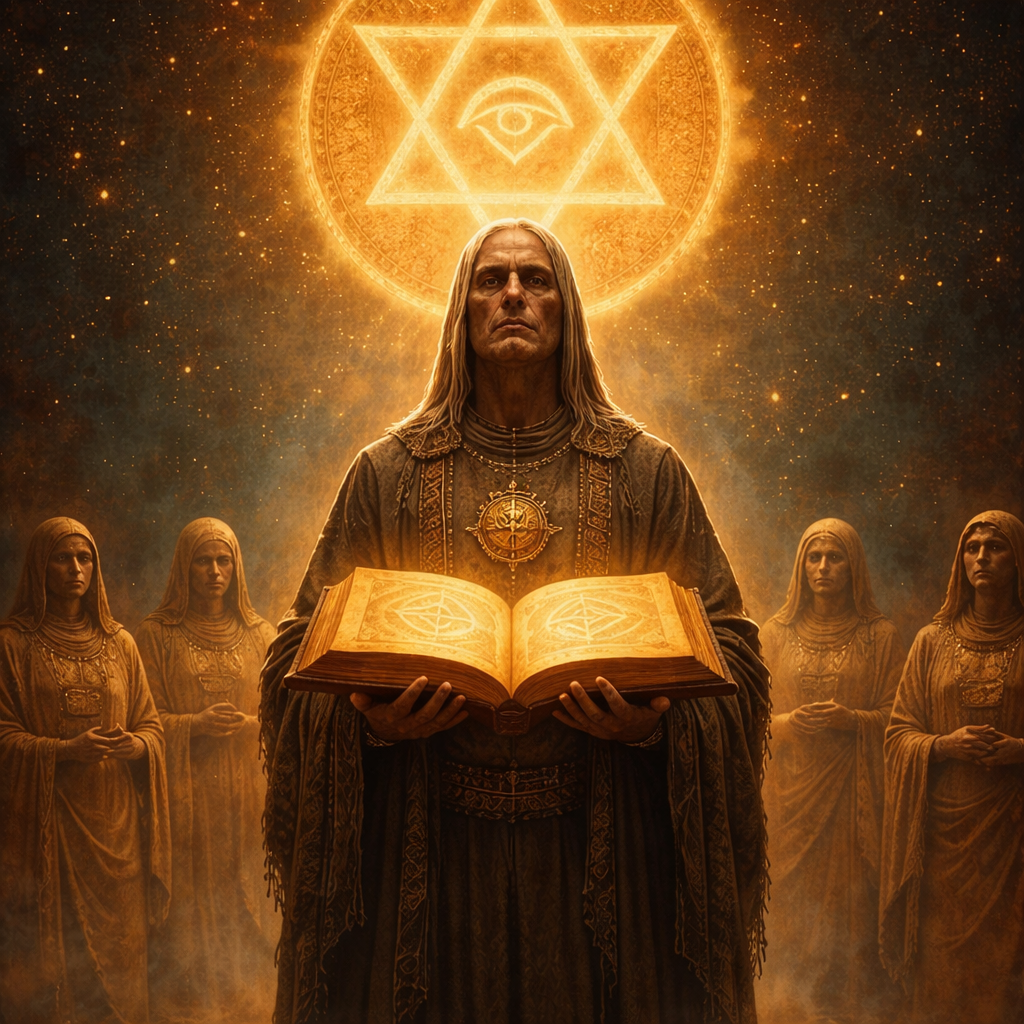
Kabbalah is rich in symbolism, with key elements including the Tree of Life, the ten Sefirot (divine attributes), Hebrew letters, and various sacred texts. These symbols are not merely decorative but represent profound spiritual concepts and pathways. The book elucidates the meaning behind these esoteric symbols, revealing how they serve as a language of the divine, guiding the practitioner towards deeper insight and spiritual awareness.
Modern Relevance
In an age often characterized by materialism and existential searching, Kabbalah offers a timeless wisdom that resonates deeply. It provides a framework for understanding one's purpose, fostering inner peace, and cultivating meaningful connections. The book bridges the gap between ancient esoteric knowledge and contemporary life, demonstrating how Kabbalistic principles can illuminate the human condition and guide individuals towards a more profound and fulfilling existence.
👥 Who Should Read This Book
This guide is an indispensable resource for a diverse audience. Beginners curious about the spiritual dimensions of Judaism and the universe will find a clear and accessible entry point. Scholars seeking to deepen their understanding of Jewish mysticism will appreciate the nuanced explanations and authoritative voice. Spiritual seekers of all backgrounds drawn to profound questions about life's purpose and the nature of reality will discover valuable insights. Practitioners looking to integrate ancient wisdom into their daily lives will find practical guidance for personal growth and spiritual evolution.
📜 Historical Context
Kabbalah, a mystical tradition within Judaism, emerged in its earliest forms in the ancient Near East, reaching significant development during the medieval period, particularly in Provence and Spain (12th-13th centuries) with works like the Zohar. Its philosophical underpinnings drew from Neoplatonism and Gnosticism, while its unique theological framework centered on divine emanations and the spiritual structure of the cosmos. The tradition continued to evolve through figures like Isaac Luria in 16th-century Safed, who introduced concepts like Tzimtzum (contraction) and Tikkun (rectification), profoundly influencing subsequent Kabbalistic thought. Despite periods of persecution and secrecy, Kabbalah has consistently offered a path for deeper spiritual understanding and a connection to the divine, influencing Jewish philosophy, prayer, and daily practice.
📔 Journal Prompts
Reflect on a moment when you felt a connection to something larger than yourself. What did it feel like?
How does the concept of 'hidden light' resonate with your understanding of purpose in life?
Consider the Sefirot as aspects of your own personality. Which Sefirah do you feel most connected to, and why?
In what ways can you actively 'connect' with others in your daily life to foster a sense of unity?
How does the idea of spiritual ascent change your perspective on challenges and setbacks?
🗂️ Glossary
Ein Sof
The Kabbalistic term for the Infinite, the unknowable, absolute divine essence that precedes all creation and is beyond human comprehension.
Sefirot
Ten divine emanations or attributes through which the Infinite reveals itself and from which all creation arises. They form the structure of the Tree of Life.
Tzimtzum
The Kabbalistic concept of divine contraction, a primordial act of self-limitation by the Infinite to create a space for creation to exist.
Tikkun
The Kabbalistic concept of spiritual rectification or repair, referring to the process of restoring the harmony and divine order disrupted by creation or one's own actions.
Zohar
The foundational text of Kabbalah, a complex and symbolic commentary on the Torah, believed to contain profound mystical insights into the nature of God and reality.
This book appears in 1 collection
🔮 Readers Also Liked
Browse all →








From the “Kabbalah” Collection
View all →







More Free Kabbalah & Jewish Mysticism Books
View all →