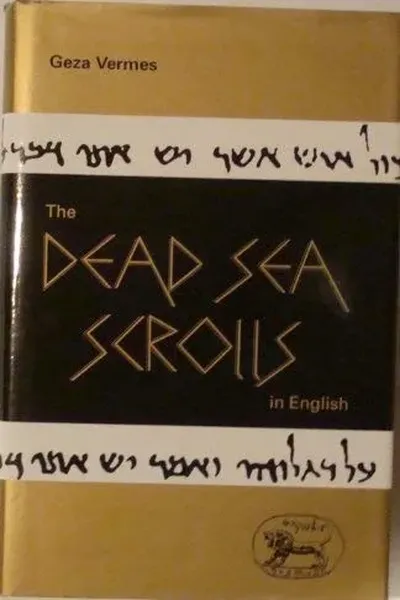
The Complete Dead Sea Scrolls in English

 75
75

The Complete Dead Sea Scrolls in English
Géza Vermès’s translation of the Dead Sea Scrolls is less an academic exercise and more a pragmatic retrieval of foundational texts. The sheer volume of material demands a careful approach, and Vermès provides a clear, accessible English rendering that allows the original voices to emerge. The value here lies in the direct confrontation with primary sources, bypassing centuries of interpretation. A particular strength is the inclusion of sectarian documents, such as the Community Rule, which illuminate the distinct practices of groups like the Essenes. However, the sheer density of the material can be daunting for the uninitiated; a more robust introductory essay contextualizing the various manuscript types might have been beneficial. The translation of the War Scroll, for instance, offers vivid, if disturbing, imagery of eschatological conflict. For those seeking an unvarnished look at ancient Jewish life and belief, this is an authoritative compilation.
📝 Description
75
Géza Vermès's 1997 translation of the Dead Sea Scrolls offers a complete English rendering of these ancient Jewish manuscripts.
Discovered between 1947 and 1956 in caves near the Dead Sea, these ancient Jewish manuscripts primarily written in Hebrew and Aramaic offer a direct look into Judea during the Second Temple period. This era was critical for the development of both Judaism and early Christianity. The collection includes biblical texts, writings from specific groups, and community regulations, allowing readers to engage with the varied ideas and practices of that time. The scrolls provide concrete evidence of groups like the Essenes, whose way of life and beliefs are described in texts such as the Community Rule. Their discovery challenged earlier ideas about early Jewish sects and their connection to the beginnings of Christianity.
Scholars of ancient religion, biblical studies, and early Christian history will find this volume particularly valuable. It also holds significant interest for general readers curious about the roots of Western religious traditions and the historical setting for figures like John the Baptist and Jesus. Anyone interested in the intellectual currents that shaped the ancient world, especially the period just before the Common Era and the first century CE, will benefit from this collection.
The Dead Sea Scrolls are central to understanding a period of intense spiritual activity that preceded and influenced both Rabbinic Judaism and early Christianity. Texts like the Community Rule reveal a community focused on ritual purity and the anticipation of divine intervention, often involving messianic figures. Their interpretation of biblical prophecy and their communal structure offer insight into a particular strand of ancient Hebraic mysticism and apocalyptic thought. The scrolls illuminate a time when diverse interpretations of scripture and eschatological expectations were prevalent, shaping the religious landscape of the ancient Near East.
💡 Why Read This Book?
• Gain direct access to the foundational texts of Second Temple Judaism, including early biblical manuscripts and unique sectarian documents like the Community Rule, offering an unparalleled look at religious diversity before 70 CE. • Understand the historical milieu that shaped early Christianity by examining texts contemporary with the rise of Jesus and John the Baptist, revealing shared concepts and distinct theological divergences. • Explore the complex ideas of purity, messianism, and eschatology prevalent in ancient Jewish sects, providing concrete examples of beliefs that influenced later religious movements.
⭐ Reader Reviews
Honest opinions from readers who have explored this book.
❓ Frequently Asked Questions
When were the Dead Sea Scrolls discovered?
The initial discovery of the Dead Sea Scrolls occurred in 1947 by a Bedouin shepherd in caves near Qumran. Subsequent discoveries continued until 1956, yielding thousands of fragments and over 900 manuscripts.
What languages are the Dead Sea Scrolls written in?
The majority of the Dead Sea Scrolls are written in Hebrew. Significant portions are also in Aramaic, with a smaller number in Greek. This linguistic variety reflects the cultural landscape of ancient Judea.
What is the significance of the Community Rule (Serekh Hayahad)?
The Community Rule is a key sectarian document found among the Dead Sea Scrolls, likely belonging to the Essenes. It outlines the communal life, initiation rites, and strict regulations for members of this particular Jewish group.
Do the Dead Sea Scrolls contain New Testament texts?
No, the Dead Sea Scrolls do not contain any New Testament texts. They predate or are contemporary with the New Testament period and represent Jewish religious thought of that era, providing context for early Christianity.
Who was Géza Vermès and why is his translation important?
Géza Vermès was a prominent scholar of Jewish studies and early Christianity. His translation, first published in 2010, is valued for its scholarly rigor and accessibility, making these ancient texts available to a wider audience.
What is the historical period covered by the Dead Sea Scrolls?
The Dead Sea Scrolls primarily date from the 3rd century BCE to the 1st century CE, covering the Second Temple period of Jewish history. This era is crucial for understanding the development of Judaism and the origins of Christianity.
🔮 Key Themes & Symbolism
Sectarian Life and Law
The scrolls provide outstanding insight into the lives and legal frameworks of specific Jewish groups during the Second Temple period, most notably the Essenes. Texts like the Community Rule (Serekh Hayahad) meticulously detail initiation processes, communal property, dietary laws, and disciplinary procedures. These documents reveal a desire for ritual purity and adherence to a distinct interpretation of Mosaic law, often setting these communities apart from mainstream Pharisaic or Sadducean Judaism. The emphasis on communal living and strict adherence to rules offers a tangible example of religious separatism and the creation of distinct religious identities in antiquity.
Messianism and Eschatology
A pervasive theme throughout many Dead Sea Scrolls is the expectation of messianic figures and the imminent end times. Various texts discuss the coming of one or more anointed figures—sometimes priestly, sometimes royal—who would usher in a new era of divine rule. Eschatological visions are common, detailing cosmic battles between forces of good and evil, the judgment of the wicked, and the establishment of a renewed covenant people. This fervent anticipation of divine intervention and a coming kingdom provides crucial context for understanding the religious hopes and anxieties of the period leading up to and during the time of Jesus.
Biblical Interpretation and Canon
The collection includes the oldest known manuscripts of books later included in the Hebrew Bible (Tanakh), alongside texts that were not ultimately canonized. This demonstrates the fluidity of the biblical canon during the Second Temple period and the active process of scriptural interpretation. Commentaries (pesharim) on prophetic and legal books reveal how ancient Jews understood their scriptures, applying them to their own historical circumstances and community concerns. The presence of both canonical and non-canonical works highlights the diverse literary and theological field of ancient Judaism.
Purity and Ritual Practice
Concerns about ritual purity are central to many Dead Sea Scrolls, particularly those associated with sectarian communities. These texts describe elaborate purification rites, strict guidelines for maintaining bodily and spiritual cleanness, and the segregation of those deemed impure. This focus reflects a desire to be in a state of readiness for divine encounter or to establish a holy community separate from perceived corruptions in Jerusalem. The emphasis on purity underscores the practical application of religious law and belief in daily life.
💬 Memorable Quotes
Direct passages from the work, attributed to the author.
“Interpretations of Scripture applied to the community's present circumstances.”
— This reflects the 'pesharim' genre, where ancient commentators saw prophetic texts as directly relevant to their own time and community, often identifying contemporary figures or events within the prophecies.
“The rule for the Community: to do what is right and just.”
— This expresses the ethical and legalistic core of sectarian documents like the Community Rule, emphasizing righteous action and adherence to divine law as central to communal identity and practice.
“A time of wickedness and transgression before the appointed end.”
— This highlights the dualistic and eschatological worldview present in many scrolls, viewing their current era as one of profound moral decay preceding a divinely ordained conclusion and renewal.
“The separation of the Sons of Light from the Sons of Darkness.”
— This phrase points to the stark dualism found in texts like the War Scroll, depicting a cosmic and ethical struggle between opposing forces, with the community identifying itself as part of the righteous 'Sons of Light'.
“Vows of poverty and communal sharing of resources.”
— This concept, evident in texts describing communal living, reflects an ascetic tendency and a radical interpretation of sharing and mutual support, reminiscent of early Christian communal ideals.
🌙 Esoteric Significance
Tradition
While not originating from a singular esoteric tradition like Kabbalah or Gnosticism, the Dead Sea Scrolls hold profound significance for esoteric studies due to their exploration of hidden knowledge, apocalyptic visions, and communal practices set apart from the mainstream. They represent a fertile ground for understanding early Jewish mysticism and the development of concepts that would later influence Gnostic and Hermetic thought, particularly concerning dualism, cosmic battles, and the pursuit of spiritual purity as a means of divine communion.
Symbolism
Key symbolic motifs include light and darkness, representing the fundamental dualism of good versus evil, the divine versus the demonic, and the community versus the outside world. Water and ritual immersion symbolize purification, both physical and spiritual, essential for approaching the divine or participating in sacred community life. The concept of the 'New Covenant' signifies a renewed relationship with God, often involving a distinct community set apart, holding a unique understanding of divine will and prophecy.
Modern Relevance
Contemporary esoteric practitioners and scholars of mysticism often turn to the Dead Sea Scrolls for insights into ancient purity rituals, messianic expectations, and early forms of Jewish contemplative practice. The emphasis on communal structure, strict adherence to divine law as revealed through scripture, and the pursuit of spiritual enlightenment appeals to modern groups seeking disciplined spiritual paths. Thinkers exploring the historical roots of Western esotericism find in the scrolls crucial precursors to later Gnostic and Hermetic ideas about hidden knowledge and cosmic order.
👥 Who Should Read This Book
• Scholars and students of Second Temple Judaism and early Christianity seeking direct engagement with primary source material concerning religious beliefs and practices. • Individuals interested in the historical context of figures like John the Baptist and Jesus, offering a deeper understanding of the religious landscape they inhabited. • Those exploring the development of biblical texts, concepts of messianism, and early forms of Jewish communal organization and law.
📜 Historical Context
The Dead Sea Scrolls emerged from the turbulent milieu of the Second Temple period (c. 516 BCE – 70 CE), an era marked by Persian, Hellenistic, and finally Roman domination of Judea. This was a time of intense religious innovation and diversity within Judaism, with various movements like the Pharisees, Sadducees, Zealots, and the Essenes vying for influence and interpreting religious law and tradition differently. The discovery of the scrolls, beginning in 1947, coincided with the re-establishment of Jewish sovereignty in Israel, adding a layer of national significance to their study. Scholars like Yigael Yadin and Eleazar Sukenik were instrumental in recognizing and acquiring many of the early finds, facing skepticism and competition. The scrolls challenged prevailing scholarly assumptions about the origins of Rabbinic Judaism and early Christianity, particularly regarding the nature of Jewish sects and beliefs in the centuries immediately preceding and during the Common Era.
📔 Journal Prompts
The Community Rule's emphasis on ritual purity.
Interpretations of prophecy within the pesharim.
The concept of the 'Sons of Light' versus 'Sons of Darkness'.
The varied messianic expectations presented in the scrolls.
The structure and regulations of communal life described in sectarian texts.
🗂️ Glossary
Second Temple Period
The era of Jewish history from the rebuilding of the Second Temple in Jerusalem (c. 516 BCE) until its destruction by the Romans in 70 CE. This period saw significant religious, social, and political developments.
Essenes
A Jewish sect or movement prominent during the Second Temple period, known for its asceticism, communal living, and adherence to strict interpretations of Jewish law. Many scholars associate them with the Qumran community.
Pesher
A specific genre of commentary found in the Dead Sea Scrolls, where biblical texts, particularly prophetic ones, are interpreted as directly relating to the contemporary historical circumstances and community of the interpreters.
Apocalyptic Literature
Writings that reveal divine mysteries, often concerning the end of the world, cosmic battles between good and evil, and the establishment of God's kingdom. Many Dead Sea Scrolls exhibit apocalyptic themes.
Messiah
In Jewish tradition, an anointed king or leader chosen by God. The Dead Sea Scrolls show diverse expectations regarding one or more messianic figures who would bring salvation or usher in a new era.
Qumran
An archaeological site on the northwest shore of the Dead Sea, where many of the Dead Sea Scrolls were discovered in nearby caves. It is believed to have been a center for a Jewish sect, likely the Essenes.
Eschatology
The study of final events or the end of the world. Many scrolls deal with eschatological beliefs, including divine judgment, the coming of the Messiah, and the establishment of a new age.
🔮 Readers Also Liked
Browse all →






More by Géza Vermès
All books →




More Free Occult Philosophy Books
View all →