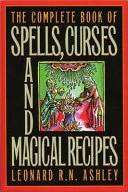
The Complete Book of Spells, Curses and Magical Recipes
 71
71

The Complete Book of Spells, Curses and Magical Recipes
Leonard R. N. Ashley’s expansive collection, The Complete Book of Spells, Curses and Magical Recipes, sidesteps the usual hagiography of magical practice to present a more dispassionate survey. Ashley meticulously details a wide array of spells, from ancient Mesopotamian incantations to more modern, folk-derived charms. The strength of this work lies in its sheer breadth, offering a comparative glimpse into humanity’s enduring engagement with the supernatural to manage life’s difficulties. However, the volume’s encyclopedic approach occasionally sacrifices depth; the section on curses, while extensive, could benefit from a more critical examination of the social contexts that foster such practices, rather than simply listing them. A particularly striking example is the detailed description of sympathetic magic rituals, illustrating the profound belief in interconnectedness that underpins many magical systems. Ashley’s contribution is its organized cataloging of a vast, often fragmented, body of knowledge. It serves as a valuable, if sometimes dry, reference for understanding the persistent human impulse towards magical solutions.
📝 Description
71
Leonard R. N. Ashley's 1997 book catalogs spells, curses, and recipes from diverse cultures.
Published in 1997, The Complete Book of Spells, Curses and Magical Recipes serves as a thorough compilation of magical practices gathered across various eras and societies. Ashley systematically records incantations, hexes, and remedies, presenting them as both historical artifacts and potential instruments for personal empowerment. The work seeks to illuminate the motivations behind magical thinking and its use in addressing different human challenges.
This volume is intended for folklorists, cultural historians, and students of comparative religion. It also holds interest for folk magic practitioners, ceremonialists, and anyone curious about humanity's persistent drive to shape events through ritual and supernatural belief. Readers looking for historical background on current occult interests will find considerable value here. The book contrasts with more specialized studies by offering a wide survey of magical traditions.
Ashley's compilation appeared during a time of renewed interest in occultism and alternative spiritualities, a trend that was gaining momentum with the rise of the internet. Academic approaches to magic were beginning to shift, moving beyond solely dismissive viewpoints to engage more seriously with the social and psychological roles magic played. This book provides a broad overview, differing from studies focused on specific magical traditions.
💡 Why Read This Book?
• Understand the diverse historical applications of magic, from ancient protective wards documented in early chapters to the folk remedies of the 20th century, providing concrete examples of humanity's attempts to control specific outcomes. • Gain insight into the psychological motivations driving magical belief and practice, as Ashley analyzes why individuals turn to the supernatural for personal agency, a perspective illuminated by his discussion of spells for attraction and healing. • Explore the practicalities of historical magical recipes, learning about the specific ingredients and ritualistic steps involved in practices dating back centuries, such as the detailed curatives presented in the latter sections of the book.
⭐ Reader Reviews
Honest opinions from readers who have explored this book.
❓ Frequently Asked Questions
What historical periods does The Complete Book of Spells, Curses and Magical Recipes cover?
The book spans a vast historical range, documenting magical practices from ancient civilizations like Mesopotamia and Egypt up to more contemporary folk traditions observed in the 20th century.
Are the spells in this book safe to perform?
The book presents spells as historical and cultural phenomena. While it details various practices, including those intended for harm, it functions as an academic and ethnographic survey rather than a practical grimoire for immediate use.
What kind of magical recipes are included?
Recipes range widely, encompassing incantations for protection, rituals for attracting love or fortune, methods for healing, and even curses or hexes, reflecting the broad spectrum of human needs addressed by magic.
Does the book explain the theory behind magic?
Yes, Ashley explores the underlying reasons why people turn to magic, discussing concepts like belief, intention, symbolic action, and the desire to exert control over circumstances beyond ordinary means.
Is this book suitable for beginners in occult studies?
It is highly suitable for beginners seeking a broad overview of magical history and practice. However, its academic tone and encyclopedic nature may be less engaging for those seeking immediate, practical spellcasting instruction.
What is the primary focus of the book's analysis of magic?
The primary focus is on understanding magic as a response to specific human problems and desires, examining its historical prevalence and the psychological underpinnings that lead people to seek supernatural solutions.
🔮 Key Themes & Symbolism
The Human Impulse for Control
This work investigates the persistent human drive to influence circumstances, particularly those perceived as uncontrollable. Ashley details how spells, curses, and magical recipes serve as mechanisms for individuals across history to assert agency in matters of health, fortune, relationships, and protection. The book systematically categorizes these magical attempts, illustrating a fundamental aspect of human psychology: the need to find solutions, even supernatural ones, when conventional methods fail.
Historical and Cultural Spectrum of Magic
Ashley's compilation offers a panoramic view of magical practices as they have manifested across diverse cultures and eras. From ancient Mesopotamian incantations to European folk magic, the book documents the evolution and variety of spellcraft. It highlights how societal structures, beliefs, and specific historical contexts shaped the forms and functions of magic, presenting it not as a monolithic entity but as a fluid, culturally-inflected phenomenon.
Categorization of Magical Intent
A core theme is the classification of magical acts based on their intended outcomes. The book meticulously separates spells and recipes into functional categories: those aimed at protection, attraction (love, wealth), healing, and retribution (curses). This categorization allows for a structured analysis of how different needs and desires have historically been addressed through ritualistic and symbolic means, revealing patterns in human aspiration and fear.
The Nature of Supernatural Efficacy
While not advocating for magical practice, the book implicitly explores the concept of efficacy through documented historical accounts and anthropological observations. It examines what constitutes a 'successful' magical act from the perspective of the practitioner, touching upon the roles of belief, ritual precision, symbolic resonance, and the subjective experience of power. This exploration explores why these practices endured despite often lacking empirical validation.
💬 Memorable Quotes
Direct passages from the work, attributed to the author.
“People turn to magic when they face problems that seem beyond their control.”
— This statement expresses the book's central thesis regarding the psychological impetus for magical practice. It suggests that magic arises from a fundamental human need for agency in the face of uncertainty, helplessness, or overwhelming circumstances.
“Ancient spells often involved elaborate rituals and specific symbolic actions.”
— This points to the structured nature of early magical practices. It implies that the efficacy of magic, from a historical perspective, was often believed to be tied to precise execution of prescribed actions and the potent symbolism embedded within them.
“Curses represent a darker, retaliatory aspect of magical intent.”
— This highlights the dual nature of magic as documented in the book. It acknowledges that beyond benevolent intentions, magic has also been employed as a tool for harm or vengeance, reflecting complex human emotions like anger and spite.
“Magical recipes often utilized common, symbolically charged ingredients.”
— This observation underscores the practical, yet symbolic, dimension of folk magic. It suggests that the materials chosen for spells were not arbitrary but were imbued with cultural meanings believed to enhance their potency.
“The desire for love and prosperity are perennial themes in magical applications.”
— This interpretation points to the enduring human desires that magic has historically sought to fulfill. It suggests that fundamental aspirations for connection and abundance are deeply rooted in the impulse to engage with supernatural forces.
🌙 Esoteric Significance
Tradition
While not strictly aligned with a single esoteric lineage like Hermeticism or Kabbalah, Ashley's work functions as a comparative ethnography of magical practices that draws from a broad spectrum of historical traditions. It implicitly acknowledges the universality of certain magical impulses found across diverse cultures, from ancient Babylonian rituals to European folk practices. The book serves as a neutral archive, presenting these disparate elements without imposing a singular esoteric doctrine, making it a foundational text for understanding the cross-cultural manifestations of magical thinking.
Symbolism
The work implicitly engages with symbolism through its cataloging of spell components and ritual actions. For instance, the use of specific herbs (like rosemary for remembrance or vervain for protection) or the symbolism of numbers in incantations reflects ancient belief systems where natural objects and mathematical patterns held intrinsic magical power. The repetition of phrases or gestures in spells also points to the symbolic weight placed on ritualistic form, believed to channel supernatural energies effectively.
Modern Relevance
Contemporary practitioners of eclectic witchcraft, neo-paganism, and even those exploring psychological approaches to magic often reference such comprehensive historical surveys. Ashley's work provides a valuable historical and comparative database, allowing modern practitioners to draw inspiration from a vast array of traditional spells and rituals. It informs current discussions on the efficacy of intention, the role of folklore in modern spiritual practice, and the psychological underpinnings of belief in the supernatural.
👥 Who Should Read This Book
• Folklore and cultural history students: To gain a broad, comparative overview of magical practices across different societies and time periods, understanding their social functions. • Researchers of comparative religion: To examine the universal human impulse towards supernatural intervention and its diverse manifestations outside of organized religious structures. • Enthusiasts of esoteric history: For a comprehensive catalog of spells, curses, and magical recipes from antiquity to the near-present, providing context for modern occult interests.
📜 Historical Context
Published in 1997, Leonard R. N. Ashley's The Complete Book of Spells, Curses and Magical Recipes arrived during a period of significant resurgence in occult and esoteric interests, partly fueled by the growing accessibility of the internet. This era saw a shift in academic discourse, moving away from purely dismissive attitudes towards magic and folklore towards more nuanced anthropological and sociological analyses. Works like Ashley's contributed to this by providing comprehensive catalogs that treated magical practices as legitimate subjects of study, reflecting their historical and cultural significance. It offered a broad survey, contrasting with more specialized academic works on specific traditions like Western Hermeticism or Gnosticism that were also gaining traction. The book’s accessible cataloging style positioned it as a valuable resource for both curious lay readers and emerging scholars in folklore and religious studies, documenting a vast array of practices without necessarily adhering to a single theoretical framework.
📔 Journal Prompts
The impulse to control specific outcomes through ritualistic action.
The historical categorization of spells by intent (protection, attraction, retribution).
The symbolic significance of ingredients in ancient magical recipes.
The psychological drivers behind turning to supernatural solutions.
The distinction between benevolent and malevolent magical practices.
🗂️ Glossary
Incantation
A spoken charm or spell, often recited rhythmically or chanted, believed to produce a magical effect through the power of the words themselves.
Curse
A magical formula or ritual intended to invoke harm, misfortune, or suffering upon a person or entity.
Sympathetic Magic
A form of magic based on the principle that like produces like, or that a cause affects its effect instantaneously and at any distance. It often involves using an effigy or object that resembles the target.
Folk Magic
Magical practices and beliefs passed down through oral tradition within a community or culture, often distinct from formal magical systems or organized religion.
Ritual
A set sequence of actions, words, or gestures performed in a specific order, often with symbolic meaning, used to achieve a magical or religious purpose.
Esoteric
Intended for or likely to be understood by only a small number of people with a specialized knowledge or interest.
Supernatural
Attributed to forces or causes beyond the scientific explanation of the natural world; relating to phenomena that are attributed to divine agency or spiritual forces.
This book appears in 1 collection
🔮 Readers Also Liked
Browse all →









From the “Incantations” Collection
View all →





More Free Occult Philosophy Books
View all →