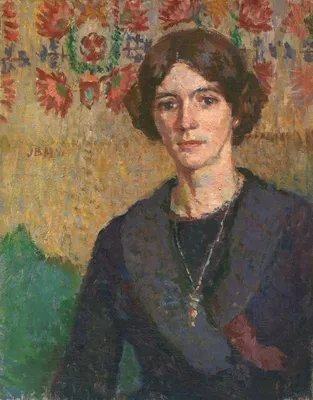
Margery Williams Bianco
Margery Williams Bianco was an English-American author best known for "The Velveteen Rabbit," exploring themes of love, reality, and transformation.
Born in London in 1881, Margery Williams Bianco was the daughter of a barrister and a classical scholar, who instilled in her a love of reading and imagination. Her father's death in childhood introduced themes of loss and sadness that would later appear in her work. After moving to the United States, she pursued a writing career, publishing her first adult novel at nineteen. She married Francesco Bianco, with whom she had two children, Pamela and Cecco. Her writing was influenced by her children and the poet Walter de la Mare.
Bianco achieved widespread recognition with the 1922 publication of "The Velveteen Rabbit," a beloved children's classic that delves into the nature of reality and the power of love. Throughout her prolific career, she authored numerous other children's books, often featuring toys that come to life and explore human emotions. These works frequently blended melancholy with an ultimately uplifting spirit. She also wrote novels for young adults, exploring themes of isolation and responsibility. Bianco received a Newbery Honor for "Winterbound." She passed away in 1944 in New York City.
Early Life and Literary Beginnings
Margery Williams Bianco was born in London in 1881 into a family that valued intellectual pursuits. Her father, a barrister, and her mother, a classical scholar, encouraged her imagination and reading from a young age. This early exposure to literature, and the vivid way her father shared stories, fostered in her a lifelong passion for writing. The premature death of her father when she was seven introduced themes of sadness and loss, which she later reflected upon, suggesting that adversity can foster greater humanity. The family relocated to the United States, and Bianco pursued her literary ambitions early, publishing her first adult novel, "The Late Returning," in London at the age of nineteen. However, this and subsequent adult novels did not achieve significant commercial success.
The Influence of Family and Mentors
Following her marriage to Francesco Bianco, an Italian book professional, and the birth of their children, Pamela and Cecco, Margery Williams Bianco's writing shifted. While she initially focused on motherhood, her creative output was later influenced by her children's perspectives and the writings of poet Walter de la Mare, whom she considered a spiritual mentor. De la Mare's ability to capture the child's mindset resonated deeply with her. During World War I, while her husband served in the Italian Army, Bianco found inspiration in de la Mare's work. Her daughter, Pamela, who became a notable artist, illustrated some of her mother's books, including "The Skin Horse" and "The Little Wooden Doll."
The Enduring Magic of 'The Velveteen Rabbit'
Upon returning to the United States and settling in Greenwich Village in 1921, Bianco resumed her writing career with renewed vigor. Her most celebrated work, "The Velveteen Rabbit; or, How Toys Become Real," was published in 1922. This timeless story explores profound themes of love, reality, and the transformation that occurs through genuine affection. The narrative follows a toy rabbit's journey to becoming 'real' through a child's love, touching upon loss and magical rebirth. The book's enduring appeal has led to numerous adaptations across various media, cementing its status as a classic. This work, deeply rooted in the imaginative world of childhood, brought Bianco widespread acclaim.
Later Works and Thematic Exploration
In the decades following the success of "The Velveteen Rabbit," Bianco continued to produce a prolific body of work, including children's books and novels for young adults. Many of her children's stories, such as "Poor Cecco" and "The Little Wooden Doll," continued to explore the emotional lives of toys and inanimate objects, often imbuing them with human feelings and experiences. While her narratives frequently contained an element of melancholy, they typically concluded with a sense of spiritual uplift for the reader. Her later novels for young adults often focused on young protagonists who felt alienated or isolated from their peers, facing significant responsibilities. "Winterbound" earned her a Newbery Honor, recognizing its excellence in children's literature.
Key Ideas
- The nature of reality and how it is achieved through love and deep connection.
- The transformative power of love and affection, particularly in the context of toys and inanimate objects.
- The exploration of loss, sadness, and adversity as catalysts for developing humanity and resilience.
- The inner emotional lives of toys and animals, capable of expressing human feelings.
- Themes of isolation and alienation experienced by young people.
Books by Margery Williams Bianco
2 free public domain books · Read online or download