The Chinese horoscope
 61
61

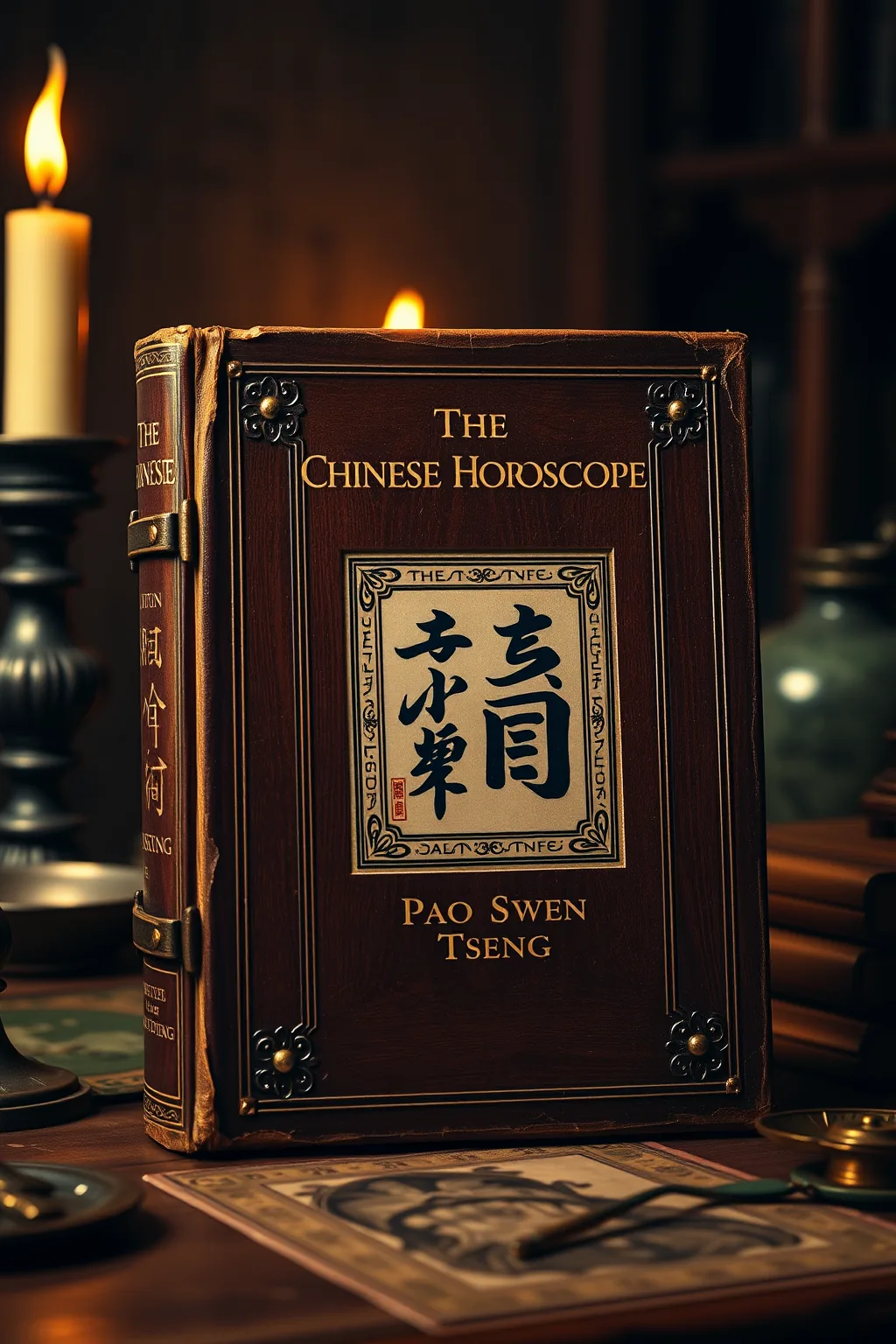
The Chinese horoscope


Pao Swen Tseng's The Chinese Horoscope is a masterful distillation of an ancient and profound astrological system. Esoteric Library is proud to present this text, which transcends superficial interpretations to reveal the deep philosophical and spiritual currents within Chinese cosmology. Tseng expertly navigates the complex interplay of Yin and Yang, the Five Elements, and the twelve Earthly Branches, offering readers not just an understanding of their birth sign, but a framework for comprehending universal energies. This is essential reading for serious students of comparative astrology and anyone seeking a more holistic understanding of destiny and human potential, offering genuine esoteric insights.
📝 Description
61
Pao Swen Tseng's 1979 book, The Chinese Horoscope, explains the mechanics of the Chinese zodiac.
This 1979 book by Pao Swen Tseng provides a detailed look at Chinese astrology. It goes beyond simple horoscopes to explain the underlying principles connecting celestial movements, time cycles, and human life. Tseng links these astrological concepts to Taoist philosophy and universal laws. The text examines the symbolic meaning of each animal sign, element, and planetary influence within the Chinese system. It presents these as tools for understanding subtle energies that affect individuals and the wider world.
The author aims to guide readers toward aligning their personal lives with the broader cosmic order. The book serves as a resource for those interested in the esoteric knowledge associated with Chinese astrological traditions. It encourages a path of self-understanding through observation of celestial patterns. The work is structured to reveal the symbolic language of the stars and their impact on human destiny.
The Chinese Horoscope is situated within the long tradition of Chinese cosmology and divination, which dates back millennia. This system views the cosmos as an interconnected web of energies, with celestial bodies and earthly phenomena influencing one another. The Chinese zodiac, a core component, uses a 12-year cycle of animals, each associated with specific characteristics and destinies. This book connects these elements to broader philosophical concepts found in Taoism, such as balance and natural flow. It presents astrology not merely as prediction but as a framework for understanding life's patterns and one's place within the universe.
💡 Why Read This Book?
Unlock the ancient secrets of the East and gain profound insights into your life's path. This book offers more than just zodiac predictions; it provides a framework for understanding your inherent strengths, challenges, and potential for growth through the lens of a rich, symbolic cosmology. Ideal for seekers of spiritual knowledge, students of comparative mysticism, and practitioners of esoteric arts looking to broaden their understanding of celestial influences.
⭐ Reader Reviews
Honest opinions from readers who have explored this book.
❓ Frequently Asked Questions
What is the core philosophy behind Chinese astrology?
The core philosophy is rooted in Taoist principles, emphasizing balance, harmony, and the interconnectedness of all things. It views human life as a reflection of cosmic cycles and energies, guided by the interplay of Yin and Yang and the Five Elements.
How does the Chinese zodiac differ from Western astrology?
While Western astrology focuses on planetary positions and zodiac constellations, Chinese astrology is based on a 12-year cycle of animal signs, each associated with specific elemental influences and characteristics, emphasizing a cyclical and elemental approach to destiny.
Can this book help me understand my relationships?
Absolutely. By understanding the inherent traits and compatibilities of different animal signs and elements, you can gain profound insights into interpersonal dynamics, fostering greater understanding and harmony in your relationships.
Is this book suitable for beginners?
Yes, while it delves into profound esoteric concepts, Pao Swen Tseng's writing is accessible, making it an excellent starting point for those new to Chinese astrology and a valuable resource for experienced practitioners.
What is the significance of the Five Elements in Chinese astrology?
The Five Elements (Wood, Fire, Earth, Metal, Water) are fundamental, representing dynamic forces that interact and influence the animal signs, personality traits, and life events, creating a complex web of cosmic energies.
🔮 Key Themes & Symbolism
The Cycle of Time and Destiny
This work unveils the profound concept of cyclical time as central to Chinese cosmology. It meticulously details the 12-year animal cycle, the 60-year Sexagenary Cycle, and their inherent connection to the ebb and flow of destiny. Understanding these rhythms is presented not as a deterministic fate, but as a cosmic blueprint offering opportunities for alignment and spiritual evolution. The book suggests that by recognizing these cyclical patterns, individuals can navigate life's currents with greater wisdom and foresight, attuning themselves to the universal forces that shape existence.
The Five Elements: The Building Blocks of Reality
At the heart of The Chinese Horoscope lies the intricate doctrine of the Five Elements (Wu Xing): Wood, Fire, Earth, Metal, and Water. Tseng elucidates how these elemental forces are not static entities but dynamic principles that perpetually interact, generating, controlling, and even overcoming one another. Their interplay profoundly influences personality, relationships, health, and fortune. This section provides a deep dive into the symbolic language of the elements, revealing their esoteric significance as the fundamental constituents of the manifest universe and the keys to understanding cosmic harmony.
Animal Archetypes and Human Nature
Each of the twelve animal signs in the Chinese zodiac represents a unique archetypal energy, embodying specific characteristics, strengths, and challenges. Pao Swen Tseng masterfully deciphers these archetypes, illustrating how they manifest in human temperament, behavior, and life paths. The book explores the subtle nuances of each animal, their inherent virtues, and their potential shadow aspects, offering readers a profound lens through which to understand themselves and others. This exploration goes beyond simple categorization, revealing the deep symbolic connections between animal spirits and the human soul.
💬 Memorable Quotes
Direct passages from the work, attributed to the author.
“Harmony is not the absence of conflict, but the balance of forces.”
— This profound statement expresses the essence of Taoist philosophy and its application in Chinese astrology, emphasizing dynamic equilibrium over static peace.
“The element within reflects the element without.”
— This emphasizes the microcosmic-macrocosmic principle, suggesting that the energies present in the universe are mirrored within the individual.
“Wisdom lies in aligning one's path with the celestial stream.”
— This points to the practical application of astrological knowledge, advocating for conscious adaptation and cooperation with cosmic energies for a fulfilling life.
💡 Key Ideas
Editorial paraphrase of the work's core concepts — not direct quotes.
The stars do not dictate, they illuminate.
This quote highlights the guiding rather than commanding nature of celestial influences, suggesting that astrology offers insight and awareness, not predestination.
Know the cycle, and you know the dance of life.
This quote underscores the importance of understanding temporal rhythms and cosmic patterns as the fundamental choreography of existence.
🌙 Esoteric Significance
Tradition
This work is deeply rooted in the Taoist tradition and its cosmological interpretations. It draws heavily on the principles of Yin and Yang, the Five Elements (Wu Xing), and the cyclical nature of time as understood within ancient Chinese philosophy. The esoteric significance lies in its presentation of astrology not as a deterministic science, but as a symbolic language revealing the energetic patterns and karmic influences that shape existence, offering a path towards spiritual cultivation and cosmic harmony.
Symbolism
The symbolism in The Chinese Horoscope is rich and multi-layered. The twelve animal signs represent archetypal energies and human characteristics, while the Five Elements symbolize dynamic forces and their interactions. The cyclical nature of the calendar itself is a powerful symbol of renewal and cosmic order. Understanding these symbols allows for a deeper appreciation of the interconnectedness of the universe and the individual's place within it, offering a sacred map of the soul's journey.
Modern Relevance
In our fast-paced, often disconnected world, The Chinese Horoscope offers a profound reminder of our inherent connection to natural cycles and cosmic energies. Its emphasis on balance, harmony, and understanding inherent tendencies provides invaluable tools for self-awareness, stress management, and fostering more authentic relationships. The esoteric wisdom contained within transcends mere prediction, offering a timeless framework for personal growth and spiritual alignment in the modern era.
👥 Who Should Read This Book
This informative text is essential for anyone seeking a deeper understanding of the human condition through an ancient celestial lens. Beginners to astrology will find a clear, yet profound, introduction to the foundational principles of Chinese cosmology. Scholars of comparative mysticism and Eastern philosophies will appreciate its scholarly depth and nuanced interpretations. Dedicated seekers of spiritual wisdom will discover a potent tool for self-discovery and attunement to universal energies. Practitioners of esoteric arts, from Feng Shui to traditional medicine, will find it an indispensable resource for understanding the energetic underpinnings of life.
📜 Historical Context
Written during a period of intense global interest in Eastern philosophies and esoteric traditions, Pao Swen Tseng's "The Chinese Horoscope" emerged as a vital bridge between Western seekers and the rich, millennia-old astrological heritage of China. The mid-to-late 20th century saw a significant cultural exchange, where concepts like karma, reincarnation, and ancient wisdom systems gained traction in the West. Tseng's work arrived at a moment when many were looking beyond conventional frameworks for spiritual understanding and self-discovery. It offered a sophisticated, yet accessible, entry point into a system deeply interwoven with Chinese cosmology, philosophy, and medicine, providing a counterpoint to the more individually-focused Western astrological traditions and contributing to a broader, more inclusive global esoteric discourse.
📔 Journal Prompts
Reflect on the animal sign you were born under. What core traits resonate with you, and which challenge you the most?
Consider the Five Elements associated with your birth year and day. How do these elemental energies manifest in your personality and life experiences?
How does the concept of cyclical time, as presented in Chinese astrology, influence your perception of your own life's journey and future aspirations?
Explore the relationship between your dominant animal sign and another sign you frequently interact with. What dynamics emerge from this comparison?
In what ways can embracing the principles of Yin and Yang, as outlined in this book, bring greater balance to your daily life and decision-making?
🗂️ Glossary
Wu Xing
The Five Elements (Wood, Fire, Earth, Metal, Water) that form the basis of Chinese cosmology and are seen as dynamic forces influencing all aspects of existence and interaction.
Yin and Yang
The fundamental Taoist concept of complementary, interconnected opposites that represent the dualistic nature of reality, crucial for understanding balance and harmony in Chinese astrology.
Earthly Branches (Di Zhi)
The twelve animal signs of the Chinese zodiac (Rat, Ox, Tiger, etc.), each representing a specific period of time and associated with unique characteristics and elemental influences.
Heavenly Stems (Tian Gan)
A set of ten cyclical signs that, when combined with the Earthly Branches, form the 60-year Sexagenary Cycle, adding another layer of influence to astrological calculations.
Sexagenary Cycle
A sixty-year cycle derived from the combination of the Ten Heavenly Stems and Twelve Earthly Branches, representing a complete cosmic cycle of influence and transformation.
This book appears in 3 collections
🔮 Readers Also Liked
Browse all →








From the “Astrology” Collection
View all →






More Free Astrology & Cosmology Books
View all →