The Channels of Acupuncture

 80
80

The Channels of Acupuncture
Maciocia's "The Channels of Acupuncture" is a dense, yet remarkably clear, exposition of the theoretical architecture of Traditional Chinese Medicine. The strength of this book lies in its systematic dissection of channel theory, moving beyond rote memorization of points to a deep understanding of Qi and Blood dynamics. Maciocia's explanation of the Eight Extraordinary Vessels, for instance, is particularly illuminating, offering a sophisticated perspective on their clinical relevance. However, the sheer depth of the material can be overwhelming for the novice; this is not a beginner's guide. A reader might find the section on the "Three Treasures" (Jing, Qi, Shen) to be a pivotal, albeit challenging, integration of physiology and metaphysics. Despite its academic rigor, the book occasionally feels like a meticulously constructed edifice of theory, where the immediate, visceral experience of treatment might be secondary. Nonetheless, it remains an indispensable reference for serious practitioners.
This is a foundational text for understanding the energetic pathways of the body in TCM.
📝 Description
80
Giovanni Maciocia's The Channels of Acupuncture, published in 2006, analyzes acupuncture theory and practice beyond symptom relief.
This 2006 book by Giovanni Maciocia examines the theoretical foundations and clinical applications of acupuncture. It moves past a focus on symptoms to link physical illness with the energetic pathways and diagnostic principles of Classical Chinese Medicine (CCM). The text systematically discusses Qi, Blood, and Body Fluids, detailing their interactions within the meridian system. It offers a structured way to understand how imbalances in these vital substances create disease and how specific acupuncture channels can restore equilibrium. The book is intended for practitioners and advanced students of acupuncture and Traditional Chinese Medicine (TCM) who want a deeper theoretical grasp. It is particularly useful for those past introductory studies, aiming to improve diagnostic skills and treatment plans. Acupuncturists seeking to incorporate a more thorough understanding of CCM theory into their work will find considerable benefit. Researchers of acupuncture's historical and philosophical roots, and practitioners of similar energetic medicine systems, may also find its detailed explanations valuable.
Published in 2006, Maciocia's work situates itself within the long tradition of Classical Chinese Medicine, which views the body as a complex energetic system. Unlike purely biomedical approaches, CCM posits that vital substances like Qi and Blood flow through specific channels, or meridians. Illness arises from disruptions in this flow. This book connects these ancient concepts to the practice of acupuncture, suggesting that manipulating points along these channels can correct imbalances. It is part of a lineage of thought that sees health as a state of energetic harmony, a perspective shared by various esoteric traditions that look to subtle energies for understanding and healing.
💡 Why Read This Book?
• Gain a profound understanding of the Eight Extraordinary Vessels, a complex system Maciocia elucidates with clinical examples, offering treatment strategies not found in basic texts. • Grasp the intricate relationship between Qi, Blood, and Body Fluids according to Classical Chinese Medicine, enabling a more nuanced diagnostic approach than symptom-based methods. • Explore the connection between Shen (Spirit) and the Heart channel, providing insight into the psychosomatic aspects of illness that Maciocia addresses with CCM principles.
⭐ Reader Reviews
Honest opinions from readers who have explored this book.
❓ Frequently Asked Questions
What is the primary focus of Giovanni Maciocia's "The Channels of Acupuncture"?
The book's primary focus is the theoretical framework of acupuncture and Classical Chinese Medicine (CCM), particularly the functions and clinical applications of the meridian system, Qi, Blood, and Body Fluids, as first published in 2006.
Who would benefit most from reading "The Channels of Acupuncture"?
Practitioners and advanced students of acupuncture and TCM seeking a deeper theoretical understanding of diagnostic principles and treatment strategies derived from CCM will benefit most.
Does the book cover diagnostic techniques like pulse and tongue diagnosis?
Yes, the work dedicates significant attention to the theoretical basis and practical interpretation of diagnostic methods like pulse and tongue diagnosis within the context of channel theory.
What distinguishes Maciocia's approach to acupuncture theory?
Maciocia's approach emphasizes a deep integration of CCM theory, moving beyond surface-level symptom treatment to understand underlying energetic imbalances of Qi and Blood, including the functions of the Eight Extraordinary Vessels.
Is "The Channels of Acupuncture" suitable for beginners in acupuncture?
While comprehensive, the book's depth and theoretical rigor make it more suitable for advanced students and practitioners who have already established a foundational understanding of acupuncture.
When was "The Channels of Acupuncture" first published?
Giovanni Maciocia's "The Channels of Acupuncture" was first published in 2006, offering a mature synthesis of his extensive knowledge.
🔮 Key Themes & Symbolism
Meridian System Dynamics
The book meticulously details the twelve primary meridians and the Eight Extraordinary Vessels, conceptualized as highways for Qi and Blood. It explores how blockages or deficiencies in these channels lead to specific pathologies, a core tenet of Classical Chinese Medicine. Maciocia explains the interconnectedness of these pathways, illustrating how an imbalance in one channel can affect seemingly unrelated areas of the body, thereby providing a holistic view of energetic flow and its disruption.
Qi, Blood, and Body Fluids
Central to Maciocia's exploration is the profound theory of Qi (vital energy), Blood, and Body Fluids as the fundamental substances animating the body. The work elaborates on their production, circulation, and functions, explaining how their harmonious interplay maintains health, and how their disharmony results in disease. The text provides detailed explanations of various Qi deficiencies and Blood stasis patterns, crucial for accurate diagnosis and effective treatment within the TCM framework.
Shen and the Psychosomatic Connection
Beyond the purely physical, "The Channels of Acupuncture" addresses the crucial concept of Shen (Spirit), particularly its relationship with the Heart. Maciocia articulates how the energetic state of the Heart channel profoundly influences mental-emotional well-being and consciousness. This perspective highlights the psychosomatic nature of illness in TCM, demonstrating how acupuncture can address not only physical symptoms but also underlying emotional and spiritual imbalances.
Diagnostic Principles
The book explores the sophisticated diagnostic methods of Classical Chinese Medicine, including pulse and tongue diagnosis, as extensions of channel theory. Maciocia guides the reader through interpreting subtle nuances in pulse quality and tongue presentation, correlating these findings with specific meridian and organ imbalances. This emphasis on detailed observation and theoretical correlation is presented as essential for formulating effective acupuncture treatments.
💬 Memorable Quotes
Direct passages from the work, attributed to the author.
“The channels are the rivers through which Qi and Blood flow.”
— This concise statement captures the fundamental metaphor in Traditional Chinese Medicine where meridians are viewed as conduits, essential for the unimpeded circulation of vital substances that sustain life and health.
“Imbalance in the channels leads to disharmony of the Zang-Fu organs.”
— This highlights the integral connection between the energetic pathways (channels) and the physiological systems (Zang-Fu organs) in TCM, suggesting that a primary site of pathology can be the channels themselves, impacting organ function.
“The Eight Extraordinary Vessels have unique roles in storing and regulating Qi and Blood.”
— This points to a sophisticated aspect of acupuncture theory, distinguishing the special functions of these deeper, more ancestral energetic pathways from the superficial twelve primary meridians.
“Shen is the root of consciousness and is housed by the Heart.”
— This emphasizes the TCM understanding of the Heart's role not just as a physical pump, but as the seat of the mind and spirit, linking emotional and mental states directly to energetic health.
“Accurate diagnosis is paramount for effective treatment.”
— This underscores the principle in Classical Chinese Medicine that a deep and precise understanding of the root cause of an illness, derived from specific diagnostic methods, is a prerequisite for successful therapeutic intervention.
🌙 Esoteric Significance
Tradition
While not overtly aligned with a single esoteric lineage like Hermeticism or Kabbalah, Maciocia's work deeply engages with the energetic and philosophical underpinnings of Classical Chinese Medicine, which possesses its own rich, ancient esoteric traditions. It explores concepts of vital force (Qi), the energetic body, and the interconnectedness of mind, body, and spirit, aligning with universal esoteric principles found across diverse spiritual philosophies that posit subtle energy systems influencing physical reality.
Symbolism
Key symbols include the 'channels' themselves, representing energetic pathways akin to nadis in yogic traditions or the astral body. Qi, the vital force, functions as the animating principle, analogous to the 'Breath of Life' in Western esotericism. The concept of Shen (Spirit) residing in the Heart points to the 'inner sun' or spiritual core within human beings, a recurring motif in mystical thought across cultures.
Modern Relevance
Contemporary practitioners of energy medicine, integrative health coaches, and even some somatic therapists draw on Maciocia's detailed channel theory to understand and address subtle energetic imbalances. His work provides a robust theoretical model for those seeking to explore the non-physical dimensions of health, influencing modern acupuncture practice and research into the psychosomatic aspects of well-being.
👥 Who Should Read This Book
• Advanced acupuncture students and licensed practitioners seeking to deepen their theoretical understanding of meridian pathways and energetic diagnosis. • Students of comparative medicine and esoteric healing systems interested in the philosophical and energetic models of Traditional Chinese Medicine. • Practitioners of other energetic modalities who wish to explore the detailed framework of Qi, Blood, and channel theory as presented in Classical Chinese Medicine.
📜 Historical Context
Giovanni Maciocia's "The Channels of Acupuncture," published in 2006, arrived at a mature stage of Western understanding and integration of Traditional Chinese Medicine (TCM). Maciocia, a key educator in the field since the 1970s, sought to present a comprehensive theoretical framework grounded in Classical Chinese Medicine (CCM) principles, moving beyond more superficial explanations prevalent in earlier TCM literature. This work emerged as Western biomedicine continued its dominance, yet also saw increasing academic interest in comparative medicine and the history of healing traditions. Maciocia's scholarship offered a robust counterpoint to purely mechanistic interpretations of acupuncture, engaging with the philosophical depth of CCM. While figures like Ted Kaptchuk were also bridging the gap between East and West with works like "The Web That Has No Weaver" (1983), Maciocia's text provided a more in-depth dive into the intricate channel system itself, solidifying its place in advanced TCM education.
📔 Journal Prompts
The flow of Qi through the Lung channel and its connection to breath.
The diagnostic significance of the Heart channel in relation to Shen.
How the concept of the Eight Extraordinary Vessels informs your understanding of deep energetic patterns.
The relationship between the Spleen channel and the transformation of Qi.
Reflecting on the practical application of channel theory in clinical scenarios.
🗂️ Glossary
Qi
The fundamental vital energy or life force in Traditional Chinese Medicine, responsible for all physiological functions and the animating principle of the body.
Meridians (Channels)
Specific pathways throughout the body through which Qi and Blood circulate, connecting the Zang-Fu organs and the surface of the body.
Blood (Xue)
In TCM, Blood is considered a denser form of Qi, responsible for nourishing the body and housing the Shen (Spirit). It circulates within the channels and vessels.
Eight Extraordinary Vessels
A group of eight special meridians that do not have a direct relationship with the Zang-Fu organs but play crucial roles in storing and regulating Qi and Blood.
Shen
Often translated as Spirit or Consciousness, Shen is considered to reside in the Heart and governs mental activity, emotions, and spiritual awareness in TCM.
Zang-Fu Organs
The five Yin (Zang) organs (Liver, Heart, Spleen, Lung, Kidney) and six Yang (Fu) organs (Gallbladder, Small Intestine, Stomach, Large Intestine, Bladder, San Jiao) that form the functional system of the body in TCM.
Jing
Essence; a fundamental substance in TCM representing inherited constitution, reproductive energy, and the basis for growth and development. Often considered one of the 'Three Treasures'.
🔮 Readers Also Liked
Browse all →







More by Giovanni Maciocia
All books →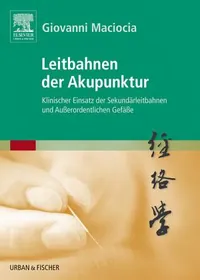





More Free Occult Philosophy Books
View all →