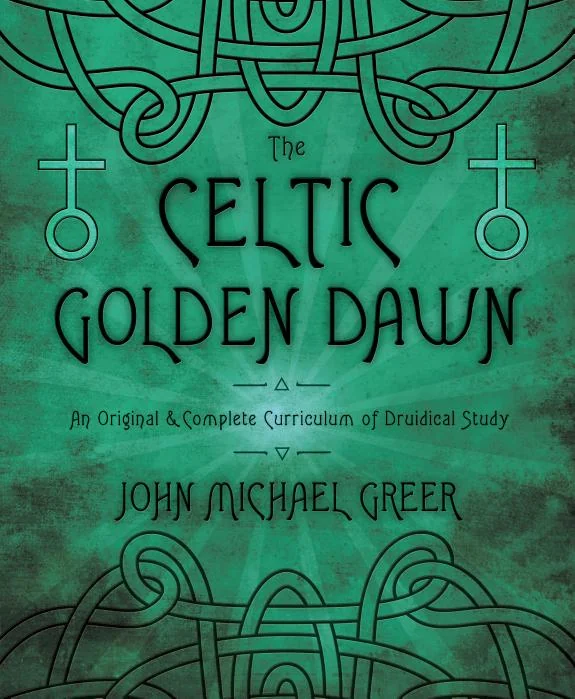
The Celtic Golden Dawn
 80
80

The Celtic Golden Dawn
John Michael Greer's *The Celtic Golden Dawn* offers a compelling recovery project, piecing together a distinct magical tradition that diverged from its Hermetic namesake. The strength of this work lies in its meticulous reconstruction and presentation of a practical system, grounding esoteric theory in a tangible, ritualistic framework. Greer’s deep familiarity with both Celtic lore and ceremonial magic is evident. A limitation, however, is that the reconstruction, by necessity, involves significant interpretation; while Greer clearly outlines his methodology, the reader must engage with the understanding that this is a modern revival, not a direct transmission of an unbroken lineage. The discussion of the "Three Rays" of Celtic magic, for instance, provides a clear structural element for practice but also highlights the interpretive leap from fragmented historical evidence to a complete system. The book serves as a valuable resource for those specifically seeking a Celtic-infused ceremonial path, but it demands critical engagement with its reconstructive nature.
📝 Description
80
John Michael Greer's 2010 book reconstructs a lost system of Celtic ceremonial magic.
John Michael Greer's *The Celtic Golden Dawn* reconstructs a forgotten system of ceremonial magic. This is not just a historical survey; it functions as a practical manual, reviving the techniques of Celtic magical orders that branched away from the main Hermetic Golden Dawn. These groups, active around a century ago, blended Celtic Pagan spiritual forces with established ritual structures. This approach differed from the Judeo-Christian framework common in other Western esoteric traditions of that era. Greer assembled fragments of their teachings to create a workable magical path for modern practitioners.
This work is aimed at dedicated students of Western esotericism, particularly those interested in the overlap between Celtic Paganism and ceremonial magic. It offers an alternative to magical systems rooted in Judeo-Christian beliefs, featuring distinct deities, symbols, and elemental associations. Occult historians and scholars of comparative religion will also find value in its detailed reconstruction of a unique magical movement.
In the early 20th century, several groups emerged from the Hermetic Order of the Golden Dawn's lineage. Some, influenced by a renewed interest in Celtic culture and Paganism, started developing their own distinct magical systems. These 'Celtic Golden Dawn' branches aimed to channel indigenous European powers, moving away from the Hebrew and Christian symbolism common in mainstream Hermeticism. The specific teachings of these early Celtic orders were largely lost, making Greer's effort significant in recovering and reinterpreting this esoteric current.
💡 Why Read This Book?
• Gain practical techniques for ceremonial magic rooted in Pagan Celtic energies, distinct from Judeo-Christian frameworks, as detailed in Greer's reconstruction of the "Celtic Golden Dawn" orders. • Understand the historical divergence of early 20th-century esoteric groups from mainstream Hermeticism, specifically examining their synthesis of Celtic spirituality and ritual, as opposed to earlier Judeo-Christian occultism. • Learn to work with specific Celtic deities, symbols, and the elemental correspondences derived from Celtic cosmology, as outlined within the reconstructed magical system presented by Greer.
⭐ Reader Reviews
Honest opinions from readers who have explored this book.
❓ Frequently Asked Questions
What is the primary difference between the Celtic Golden Dawn and the original Hermetic Order of the Golden Dawn?
The primary difference lies in their spiritual and symbolic foundations. While the Hermetic Golden Dawn heavily utilized Judeo-Christian and Kabbalistic symbolism, the "Celtic Golden Dawn" groups, as reconstructed by Greer, focused on invoking Pagan Celtic deities, symbols, and powers.
Is *The Celtic Golden Dawn* a historical document or a practical guide?
It functions as both. It meticulously reconstructs a historical magical tradition that was largely lost, drawing on fragmented sources. Simultaneously, it serves as a practical guide, outlining a complete magical system for contemporary practitioners to follow.
Who was John Michael Greer and what is his background in occultism?
John Michael Greer is a respected author on occultism, magic, and Druidry, known for his extensive work in Western esotericism. He holds the title of Grand Archdruid and has written numerous books exploring various magical traditions and their historical development.
When were the original "Celtic Golden Dawn" groups active?
These groups, descending from the lineage of the Hermetic Order of the Golden Dawn, were primarily active about a century ago, meaning roughly in the early to mid-20th century, before their teachings were largely lost.
What kind of magical system does Greer present in this book?
Greer presents a system of ceremonial magic that synthesizes Pagan Celtic spiritual forces with structured ritual. This includes unique correspondences, invocations of Celtic deities, and a framework for magical practice distinct from more common esoteric paths.
Does this book require prior knowledge of the Hermetic Order of the Golden Dawn?
While prior knowledge is helpful for understanding the context, it is not strictly required. Greer provides sufficient background on the "Celtic Golden Dawn" to allow practitioners new to the Hermetic tradition to engage with the material.
🔮 Key Themes & Symbolism
Reconstruction of Lost Magic
The core of *The Celtic Golden Dawn* lies in its ambitious project of reconstructing a defunct magical system. John Michael Greer meticulously gathers scattered historical evidence and esoteric principles to rebuild the practices of early 20th-century Celtic magical orders. This is not merely an academic exercise but an attempt to resurrect a viable magical tradition, offering practitioners a complete ritualistic framework that synthesizes Pagan Celtic spirituality with ceremonial structures, filling a void left by the disappearance of these original groups.
Celtic Paganism in Ceremony
This work uniquely integrates Celtic Pagan deities, myths, and cosmology into the framework of Western ceremonial magic. It moves away from the prevalent Judeo-Christian lexicon of magic, instead employing Celtic figures, sacred landscapes, and animistic principles. The book details how these elements are applied in ritual, offering a distinct path for those drawn to the indigenous spiritual heritage of the British Isles, applied through structured magical operations.
Alternative Esoteric Lineage
Greer's book highlights a lesser-known branch of Western esotericism that diverged significantly from the mainstream Hermetic tradition. It explores how groups descended from the Hermetic Order of the Golden Dawn sought to establish a distinctly Pagan Celtic magical path. This offers a critical perspective on the development of occultism in the early 20th century, showcasing a less documented but potent strand of magical inquiry.
Practical Magical System
Beyond historical inquiry, *The Celtic Golden Dawn* is designed as a functional magical system. It provides readers with the necessary components for practice, including ritual structures, elemental correspondences derived from Celtic lore, and guidance on invoking specific powers. The emphasis is on actionable knowledge, enabling contemporary students of magic to engage directly with the reconstructed tradition.
💬 Memorable Quotes
Direct passages from the work, attributed to the author.
“The teachings were lost.”
— This concise statement captures the book's central premise: the recovery of a specific, practical magical tradition that had fallen into obscurity. It underscores the significance of Greer's reconstructive efforts in bringing these lost arts back into potential practice.
“Pagan Celtic powers instead of relying on the more commonly used Judeo-Christian names and symbols.”
— This highlights the core innovation of the 'Celtic Golden Dawn' groups. It marks a deliberate shift away from established Western esoteric paradigms, seeking a more indigenous and nature-based spiritual force for their magical work.
“Respected occult author and Grand Archdruid John Michael Greer has re-created a complete magical system.”
— This emphasizes Greer's authority and the practical outcome of his research. It positions the book not just as an historical study but as a functional manual for modern practitioners, built upon a recognized expertise in esoteric traditions.
“A century ago, Celtic groups descending from the famed Hermetic Order of the Golden Dawn pioneered a fascinating form of ceremonial magic.”
— This sets the historical stage, placing the 'Celtic Golden Dawn' within a specific lineage and timeframe. It frames their work as an early, unique exploration of blending Celtic spirituality with structured ceremonial practices.
“Those groups disappeared many decades ago, and their teachings were lost.”
— This statement explains the necessity and challenge of Greer's project. It establishes the historical gap that the book aims to bridge, emphasizing the difficulty in accessing and understanding these specific magical teachings prior to its publication.
🌙 Esoteric Significance
Tradition
This work fits within the broader Western Esoteric Tradition, specifically the lineage of ceremonial magic stemming from the Hermetic Order of the Golden Dawn. However, it represents a significant departure by deliberately shifting the symbolic and theological framework from its Judeo-Christian and Kabbalistic roots to a Pagan Celtic foundation. It demonstrates a syncretic impulse, blending structured ritual magic with indigenous European polytheism, a less common but potent development within early 20th-century occultism.
Symbolism
Key symbols include Celtic deities such as the Morrigan or Lugh, invoked as sources of power and wisdom. The reconstruction emphasizes the use of Celtic sacred geography, the cyclical nature of the Wheel of the Year as understood through Celtic traditions, and a unique system of elemental and planetary correspondences derived from Celtic cosmology, distinct from the classical elements or Hebrew Sephiroth.
Modern Relevance
Contemporary practitioners interested in Celtic Reconstructionist Paganism, Druidry, and eclectic ceremonial magic find significant value in Greer's work. Modern occultists seeking to decolonize their magical practice from Abrahamic influences, or those specifically drawn to the spiritual currents of ancient Europe, often reference *The Celtic Golden Dawn* as a foundational text for a reconstructed magical path.
👥 Who Should Read This Book
• Practitioners of ceremonial magic seeking to expand their repertoire beyond Judeo-Christian frameworks, offering a complete system based on Pagan Celtic energies. • Students of Western Esotericism and comparative religion interested in the historical divergence of occult groups and the synthesis of different spiritual traditions. • Individuals drawn to Celtic Paganism and mythology who wish to explore practical applications of these beliefs within a structured magical system.
📜 Historical Context
The early 20th century saw a proliferation of esoteric orders and a renewed interest in national spiritual heritages, particularly in the wake of figures like Aleister Crowley and the broader Hermetic revival. Groups descending from the Hermetic Order of the Golden Dawn, founded in 1888, began to explore diverse paths. While many remained within a broadly Kabbalistic and Judeo-Christian framework, others, influenced by the burgeoning Neo-Pagan movements and Celtic Revivalism, sought to synthesize these traditions with indigenous European spiritualities. The specific "Celtic Golden Dawn" branches represent a fascinating, albeit less documented, divergence. Their efforts to create a magical system based on Celtic deities and powers stood in contrast to established movements like Theosophy or the more strictly Hermetic factions, demonstrating a desire to connect with pre-Christian European magical paradigms. Contemporaries like Dion Fortune were exploring similar themes of national spiritual roots, though often through different ritualistic lenses.
📔 Journal Prompts
The reconstruction of the "Celtic Golden Dawn" system: what core elements were preserved and what were reinterpreted from historical sources?
Reflect on the significance of invoking "Pagan Celtic powers" in contrast to Judeo-Christian figures within ceremonial magic.
Consider the role of specific Celtic deities mentioned in the text within a modern magical practice.
Analyze the concept of "elemental correspondences" as presented through a Celtic lens in this work.
Explore how the "Wheel of the Year" as observed in Celtic traditions might inform personal ritual practice.
🗂️ Glossary
Hermetic Order of the Golden Dawn
A secret society founded in 1888, influential in the development of Western Esotericism and ceremonial magic. It established a complex system of magical training based on Kabbalah, Tarot, astrology, and Qabalah, which served as a foundation for many later occult orders.
Ceremonial Magic
A form of Western magic that uses elaborate rituals, invocations, and symbolic tools to achieve magical effects. It often involves structured invocations of deities, spirits, or elemental forces within a defined magical framework or temple.
Pagan Celtic Powers
Refers to the spiritual forces, deities, and energies associated with the indigenous polytheistic religions of ancient Celtic peoples. In this context, it signifies a departure from Abrahamic spiritual sources in magical practice.
Elemental Correspondences
In magical systems, the assignment of specific elements (earth, air, fire, water, spirit) and sometimes planets or other forces to various entities, symbols, rituals, or practices. The book outlines a unique set derived from Celtic cosmology.
Grand Archdruid
A title within some modern Druid orders, indicating a high-ranking leader or chief representative of the Druidic tradition. John Michael Greer holds this title within a prominent Druid organization.
Judeo-Christian Symbols
Refers to the religious and mystical symbols, names, and concepts derived from the Abrahamic traditions of Judaism and Christianity, which have historically been a significant influence on Western esoteric systems.
Wheel of the Year
An annual cycle of eight festivals observed in many modern Pagan traditions, marking the solstices, equinoxes, and cross-quarter days. The book discusses its observance within a Celtic magical context.
This book appears in 1 collection
🔮 Readers Also Liked
Browse all →









From the “Golden Dawn” Collection
View all →


More Free Occult Philosophy Books
View all →