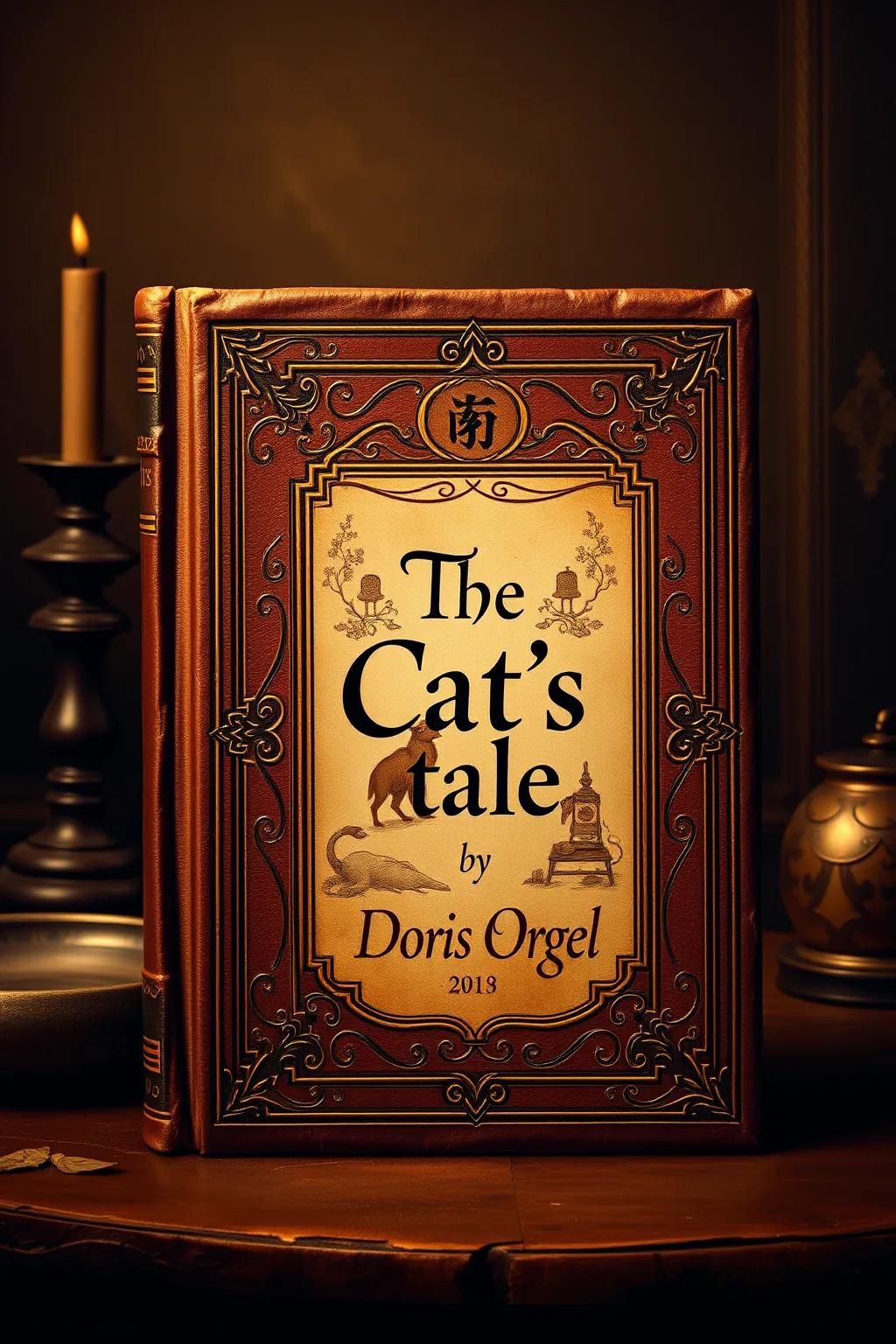
The cat's tale
 61
61

The cat's tale


Aurelia Blackwood, Occult Philosophy Critic: Doris Orgel's 'The Cat's Tale' is a jewel of esoteric storytelling, artfully distilling complex cosmological concepts into an accessible narrative. Through the charming voice of a cat, the book illuminates the foundational myths of the Chinese zodiac, revealing the subtle machinations of the Jade Emperor's cosmic selection. It masterfully explores themes of fate, divine ordering, and the symbolic power of animals within a spiritual framework. The inclusion of end notes on the lunar cycle and zodiac animals elevates this from mere fiction to a valuable primer for understanding ancient astrological systems. An essential read for young initiates into metaphysical thought and seasoned practitioners alike.
📝 Description
61
Doris Orgel's 'The Cat's Tale' explains why cats aren't part of the Chinese zodiac.
In Doris Orgel's 'The Cat's Tale,' the narrative is told from the perspective of Mao, a feline companion to Willow. Mao recounts the mythical event where the Jade Emperor established the twelve animal guardians for the cyclical passage of time. The story details the legendary gathering of these animals and how the cat, due to a twist of fate or perhaps an oversight, failed to be included in the twelve-year lunar cycle. This children's book invites contemplation on the hidden wisdom within the flow of time, the symbolic meaning of animal archetypes, and the lasting impact of folklore. It touches upon celestial councils and the subtle forces that influence our perception of the universe, suggesting deep connections between the animal kingdom and the cosmic order.
This book engages with the esoteric tradition of Chinese cosmology, specifically the creation myth behind the twelve animals of the zodiac. It presents a narrative that explains a fundamental aspect of this system, framing it within a story of celestial decrees and animal participation. The tale touches upon concepts of cosmic order, the passage of time, and the symbolic significance attributed to animals within a spiritual or mythical framework. It offers a gentle introduction to these ideas, suitable for younger readers, by personifying the myth through a relatable character.
💡 Why Read This Book?
Uncover the whispered secrets behind the Chinese zodiac's formation, told from a unique feline perspective. This book offers a captivating glimpse into celestial decision-making and the symbolic significance of animals in ancient cosmology. Ideal for young minds eager for mystical tales and adults seeking an accessible entry into Eastern astrological lore and folklore.
⭐ Reader Reviews
Honest opinions from readers who have explored this book.
❓ Frequently Asked Questions
What is the Jade Emperor's role in Chinese mythology?
The Jade Emperor is the supreme deity in Chinese folk religion and Taoism, often depicted as the ruler of Heaven and the overseer of the cosmos, including the selection of the zodiac animals.
Why isn't there a Year of the Cat in the Chinese Zodiac?
The tale explains that the cat missed its opportunity to be included in the Jade Emperor's race to determine the zodiac animals, often due to a trick or misunderstanding.
What is the significance of the twelve animals in the Chinese Zodiac?
Each animal represents a year in a twelve-year cycle, believed to influence personality traits, compatibility, and fortune for those born in that year.
What is the lunar cycle mentioned in the book?
The lunar cycle refers to the phases of the moon, which form the basis of the traditional lunisolar Chinese calendar and its twelve-year zodiacal progression.
Is this book suitable for very young children?
Yes, while rich in symbolism and esoteric undertones, the narrative is presented in a child-friendly manner, making it engaging for younger readers and stimulating for adults.
🔮 Key Themes & Symbolism
Celestial Decree and Cosmic Order
This theme examines the concept of a divine or cosmic intelligence, represented by the Jade Emperor, orchestrating the fundamental structures of the universe, such as the zodiac. It explores how seemingly arbitrary choices can lead to enduring systems of order and influence, prompting reflection on fate, destiny, and the unseen forces that govern existence. The narrative invites readers to ponder the nature of cosmic law and the symbolic representations that embody it.
The Symbolism of Animal Archetypes
The heart of the story lies in the symbolic representation of the twelve zodiac animals. Each creature embodies specific qualities, energies, and wisdom passed down through millennia of observation and spiritual understanding. The book uses these archetypes to illustrate the interconnectedness of the natural and spiritual worlds, suggesting that animals carry profound lessons and insights relevant to human lives and the passage of time.
The Unseen Currents of Fate
The absence of the cat from the zodiac is a poignant illustration of how chance, circumstance, or perhaps subtle missteps can alter one's destined path. This theme encourages contemplation on the unpredictable nature of life and the subtle influences that shape our journeys. It highlights the idea that even in a seemingly ordered universe, elements of surprise and the 'what ifs' of fate play a significant role in the unfolding narrative of existence.
💬 Memorable Quotes
Direct passages from the work, attributed to the author.
“The Jade Emperor surveyed the world, his gaze like the first dawn.”
— This evokes the immense power and ancient wisdom of the celestial ruler, framing the story's beginning with a sense of cosmic creation and divine oversight.
“Each creature was chosen for a whisper of its soul.”
— Suggests that the zodiac animals were selected not just for their physical attributes, but for the inherent spiritual qualities and archetypal energies they embody.
“The river flowed, and time, like water, carried all away.”
— A poetic metaphor for the relentless passage of time and the fleeting nature of opportunities, directly relating to the cat's missed chance.
“Some paths are missed, yet their echoes remain.”
— Acknowledges the cat's absence from the zodiac while hinting at the lingering significance of its potential presence and the lessons learned from its omission.
“The stars do not forget, even if the calendar does.”
— Implies a deeper, celestial memory that transcends the human-created zodiac, suggesting that the cat's essence is still recognized in the cosmic range.
🌙 Esoteric Significance
Tradition
This work is deeply rooted in the esoteric traditions of Chinese Taoism and its associated folk religions, which incorporate elements of astrology, cosmology, and animism. The concept of a supreme celestial ruler (the Jade Emperor) and the cyclical nature of time governed by animal spirits aligns with Taoist principles of natural order (Tao) and the interconnectedness of all things. It offers a glimpse into how these ancient traditions perceived the universe as a living, breathing entity where celestial events and animal energies hold profound significance.
Symbolism
The primary symbolism revolves around the twelve zodiac animals, each representing distinct personality traits, elemental associations, and karmic influences. The cat, in its absence, symbolizes missed opportunities, the unpredictable nature of fate, and the subtle nuances that can alter destiny. The Jade Emperor embodies cosmic authority and the power of divine decree, while the lunar cycle represents the fundamental rhythm of the universe. The narrative uses these symbols to tie a tale of cosmic law and earthly consequence.
Modern Relevance
In a world increasingly disconnected from natural cycles and ancient wisdom, 'The Cat's Tale' offers a valuable bridge. It provides an accessible entry point into understanding the philosophical underpinnings of the Chinese Zodiac, encouraging readers to explore themes of fate, symbolism, and the interconnectedness of life. For modern seekers, it serves as a gentle reminder of the profound wisdom embedded in cultural narratives and the enduring power of stories to illuminate our place in the cosmos.
👥 Who Should Read This Book
This enchanting tale is a treasure for a diverse audience. Young readers, from inquisitive children to early teens, will be captivated by the charming narrative and the anthropomorphic characters, sparking an early interest in mythology and different cultures. Aspiring scholars of Eastern philosophy and comparative mythology will find it a delightful yet informative primer on the origins and symbolism of the Chinese Zodiac. For spiritual seekers and practitioners, it offers a foundational understanding of astrological principles and the energetic significance of animal archetypes within a cosmic framework. Even casual readers seeking a beautifully told story with a touch of magic will find themselves enchanted.
📜 Historical Context
Doris Orgel's 'The Cat's Tale' emerges from a collection of global storytelling traditions, particularly drawing from the wellspring of Chinese folklore and its deeply embedded astrological system. The Chinese Zodiac, with its twelve animal signs, has been a central to East Asian culture for over two millennia, influencing everything from personal identity and relationships to agricultural cycles and philosophical thought. This narrative, however, is not merely a recounting of established lore but a reinterpretation through a child-friendly lens, accessible to Western audiences. It taps into the enduring human fascination with origins, the desire to understand the cosmic order, and the universal appeal of animal symbolism, placing it within a literary tradition that seeks to clarify ancient beliefs for contemporary readers.
📔 Journal Prompts
If you could ask the Jade Emperor one question about the zodiac, what would it be?
What animal archetype do you feel most connected to, and why?
Reflect on a time you felt you 'missed out' on an opportunity. How did it shape your path?
Imagine a new animal sign for the zodiac. What qualities would it represent and why?
How do you see the influence of animals in your own life and understanding of the world?
🗂️ Glossary
Jade Emperor
The supreme deity in Chinese mythology, often depicted as the ruler of Heaven and the ultimate authority over celestial affairs, including the selection of the zodiac animals.
Chinese Zodiac
A cyclical system of twelve animals representing twelve years, each associated with unique personality traits, fortunes, and compatibilities.
Lunar Cycle
The period of approximately 29.5 days it takes for the Moon to orbit the Earth, forming the basis of the traditional Chinese lunisolar calendar.
Archetype
A universal, archaic symbol or motif that recurs in literature and mythology, representing a primal image or concept, such as the zodiac animals.
Cosmic Order
The inherent structure, harmony, and principles believed to govern the universe, often seen as established by divine or natural law.
This book appears in 2 collections
🔮 Readers Also Liked
Browse all →








From the “Astrology” Collection
View all →







More Free Astrology & Cosmology Books
View all →