The builders
 75
75

The builders
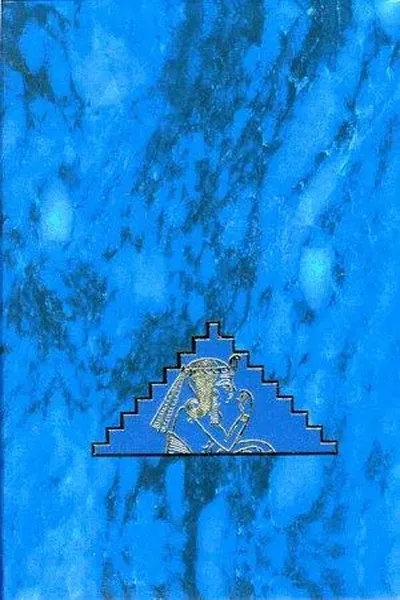
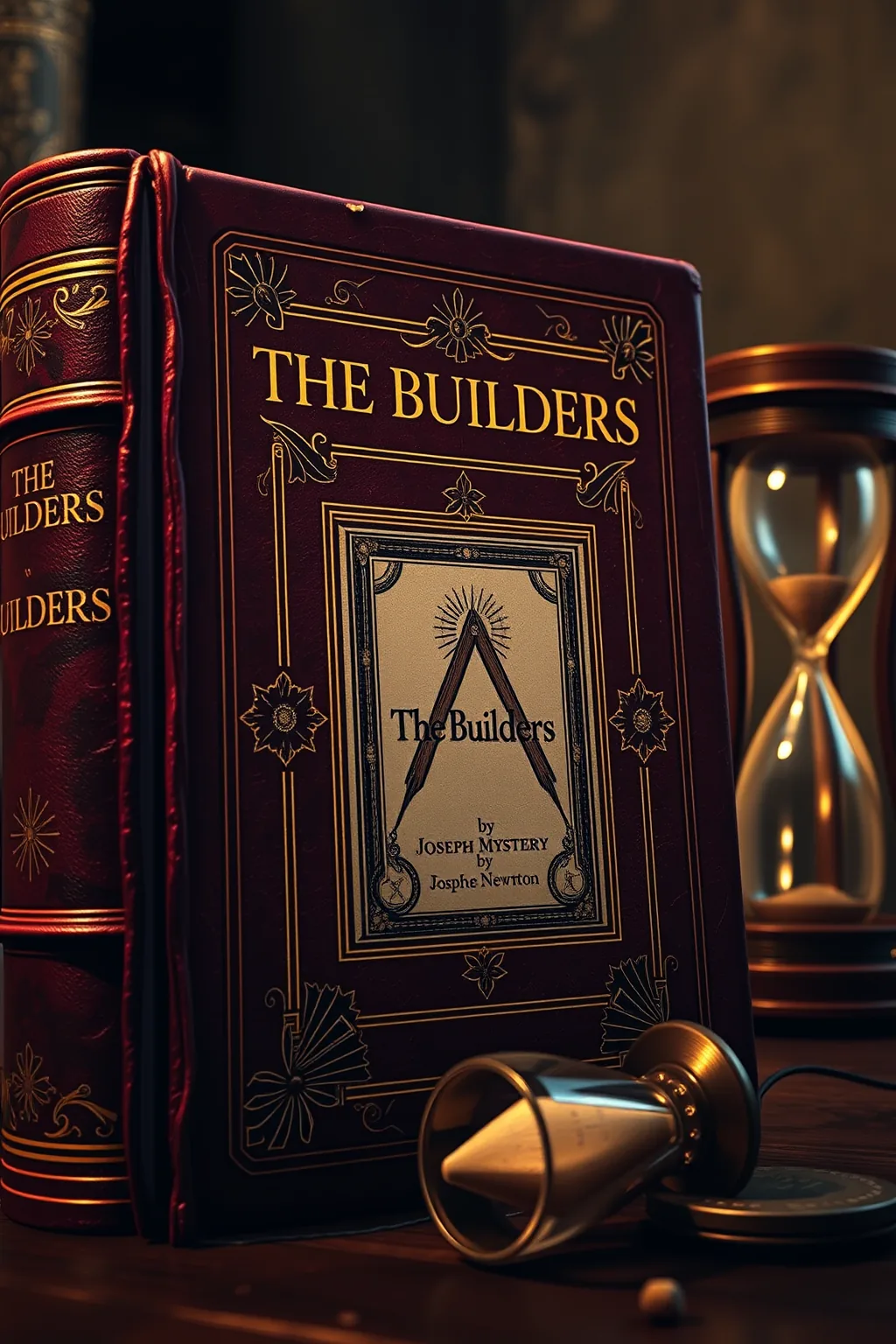
Joseph Fort Newton's 'The Builders' offers a thoughtful, if somewhat dated, exploration of the symbolic language inherent in ancient building traditions and fraternal orders. Its strength lies in Newton’s ability to connect abstract philosophical concepts to the tangible symbolism of tools and architectural principles, presenting a coherent vision of humanity as active participants in a grand cosmic design. He skillfully bridges the gap between the physical act of construction and its spiritual implications. However, the work occasionally leans into an earnestness that can feel overly didactic by modern standards, and its perspective is firmly rooted in the early 20th century, with less engagement with the broader spectrum of global esoteric thought that has since come to light. A particularly resonant passage is his interpretation of the square and compasses not merely as tools, but as moral imperatives for ethical living. 'The Builders' remains a valuable, albeit specialized, glimpse into the esoteric mindset of its era.
📝 Description
75
Joseph Fort Newton's 'The Builders,' published in 1922, interprets the symbolism of fraternal orders.
Originally published in 1922, Joseph Fort Newton's 'The Builders' examines the symbolic language and enduring principles found in ancient mystery schools and fraternal organizations. Newton focuses on the universal human impulse to build, both in the material world and in personal spiritual development, using these traditions as his framework. The work investigates the philosophical foundations and ethical systems that have guided individuals seeking knowledge and self-improvement over centuries.
The book addresses individuals interested in the historical and symbolic dimensions of esoteric traditions, particularly those connected to ancient rites and the evolution of Western esoteric thought. It speaks to students of comparative religion, Masonic philosophy, and anyone wanting to grasp the deeper meanings within symbolic systems that have influenced culture and spirituality. Those interested in esoteric writings from the early 20th century will find particular value here.
Published in 1922, 'The Builders' emerged during a period of renewed interest in spiritualism and esoteric philosophy, following World War I. This era saw continued influence from movements like Theosophy, Hermeticism, and Rosicrucianism. Newton’s work engaged with these intellectual currents, offering a structured interpretation of symbolic traditions that was accessible to a wider audience, serving as a contrast to purely materialistic viewpoints.
💡 Why Read This Book?
• Gain an understanding of the 'Great Architect' concept as presented in early 20th-century esoteric thought, offering a unique perspective on universal creative principles beyond specific religious doctrines. • Learn the symbolic meanings of architectural tools like the plumb, level, and square, as interpreted by Newton, to apply their ethical guidance to personal development and life construction. • Explore the historical context of fraternal organizations and mystery schools as Newton understood them in 1922, revealing how these groups served as vehicles for transmitting esoteric wisdom.
⭐ Reader Reviews
Honest opinions from readers who have explored this book.
❓ Frequently Asked Questions
What is the central theme of Joseph Fort Newton's 'The Builders'?
The central theme is humanity's role as 'builders'—both of physical structures and of spiritual or moral edifices—guided by the symbolic language and principles found in ancient mystery schools and fraternal organizations.
When was 'The Builders' first published?
'The Builders' was first published in 1922, a period marked by significant interest in esoteric philosophies and the reinterpretation of ancient wisdom traditions.
What are some key symbols discussed in 'The Builders'?
Key symbols include architectural tools like the plumb, level, and square, which Newton interprets as moral and spiritual guides for ethical conduct and personal construction.
Does 'The Builders' focus on a specific religion?
No, while it draws from various traditions, it focuses on universal principles, particularly the concept of a 'Great Architect' as a creative force, aiming for a broader, more philosophical interpretation.
Is 'The Builders' still relevant for modern esoteric study?
Yes, it offers valuable insight into the historical development of esoteric thought in the early 20th century and provides a foundational understanding of symbolic interpretations prevalent at that time.
Who was Joseph Fort Newton?
Joseph Fort Newton was an American Masonic scholar and clergyman, known for his writings on Freemasonry and esoteric philosophy, particularly his works that explored the spiritual dimensions of fraternal traditions.
🔮 Key Themes & Symbolism
The Cosmic Builder
Newton presents the concept of the 'Great Architect' as a unifying principle behind all creation. This is not necessarily a anthropomorphic deity but the underlying intelligence and order that governs the universe. The book suggests that humanity, in its endeavors to build, participates in this cosmic act of creation. This theme draws from Hermetic and Masonic traditions that emphasize the divine artisan or the intelligent force that shapes existence, urging readers to see their own constructive efforts as reflections of this universal process.
Symbolism of Tools
Central to 'The Builders' is the interpretation of common architectural and construction tools as potent symbols for moral and spiritual development. The plumb line represents rectitude and integrity, the level signifies equality and balance, and the square denotes justice and proportion. Newton uses these tools to illustrate how practical wisdom from building crafts can be applied to construct a virtuous character and a well-ordered life, transforming mundane objects into profound ethical lessons.
The Path of Initiation
The work implicitly explores the nature of initiation, a core element in mystery schools. Through the symbolic language and rituals, individuals are guided through stages of understanding and self-improvement. The act of 'building' becomes a metaphor for the gradual construction of the self, an inner temple refined through knowledge and practice. This theme highlights the transformative potential inherent in engaging with symbolic systems, suggesting a process of personal evolution akin to the ancient rites.
Universal Principles
Newton's aim is to reveal the universal truths that underpin various esoteric and fraternal traditions. He suggests that despite differing external forms, many ancient orders share fundamental insights into human nature, ethics, and the structure of reality. By focusing on 'The Builders,' he emphasizes the common human impulse to create, to seek order, and to connect with something greater than oneself, transcending specific doctrines to find shared spiritual ground.
💬 Memorable Quotes
Direct passages from the work, attributed to the author.
“The oldest and noblest of all arts is the art of building.”
— This statement frames construction not just as a craft but as a fundamental human endeavor with deep historical and spiritual significance, setting the stage for the book's exploration of symbolic meaning in building.
“We are all builders, each in his own way.”
— This highlights the inclusive nature of Newton's thesis, suggesting that the principles discussed are applicable to everyone, regardless of their profession or background, emphasizing the universal aspect of creation and self-improvement.
“The tools of the mason are symbols of a higher morality.”
— This captures the core idea that the physical implements used in building carry profound ethical and spiritual lessons, serving as guides for constructing a virtuous life and understanding cosmic order.
“The temple is built within as well as without.”
— This metaphor emphasizes the dual nature of construction – the external manifestation and the internal, spiritual development. It suggests that true building involves both physical creation and the cultivation of the inner self.
“There is a secret to the craft, an inner meaning.”
— This points to the esoteric dimension of the building arts and fraternal orders, suggesting that beyond the practical application lies a deeper, symbolic knowledge meant for those who seek it.
🌙 Esoteric Significance
Tradition
Newton's work is deeply rooted in the Western Esoteric Tradition, particularly drawing from Masonic philosophy, Hermeticism, and a general interest in ancient mystery schools. It aligns with the symbolic interpretations found within fraternal orders that view their rituals and teachings as continuations of ancient wisdom lineages. While not strictly Gnostic or Kabbalistic, it shares the Hermetic principle of 'as above, so below,' applying cosmic principles to human life and society through the metaphor of building.
Symbolism
Key symbols in 'The Builders' include architectural tools like the plumb, level, and square, representing moral uprightness, equality, and justice, respectively. The concept of the 'Great Architect' serves as a central, unifying symbol for divine intelligence and creative order, adaptable across various spiritual interpretations. The act of building a temple, both literal and metaphorical, symbolizes the process of self-transformation and the creation of a perfected inner and outer reality.
Modern Relevance
Contemporary practitioners of Freemasonry continue to draw on Newton's interpretations of their symbolism and philosophy. His work also finds relevance among modern students of Western Esotericism, comparative religion, and those interested in the philosophical underpinnings of symbolic systems. Thinkers exploring the intersection of psychology, spirituality, and archetypal symbolism may also find value in his exploration of universal building principles and their application to personal growth.
👥 Who Should Read This Book
• Students of Masonic philosophy and symbolism seeking to understand the ethical and spiritual dimensions of fraternal traditions as interpreted in the early 20th century. • Individuals interested in comparative religion and esoteric history who wish to explore the concept of universal wisdom transmitted through symbolic systems and ancient rites. • Seekers of personal development who are drawn to metaphorical approaches to self-improvement, particularly those who find value in applying principles of order, justice, and construction to their own lives.
📜 Historical Context
Joseph Fort Newton's 'The Builders,' released in 1922, emerged during a vibrant period for esoteric thought in the Western world. The early 20th century saw a proliferation of interest in spiritualism, Theosophy, and the revival of older traditions like Hermeticism and Rosicrucianism, partly as a reaction against rapid industrialization and the perceived spiritual void after World War I. Newton, a prominent Masonic author and clergyman, tapped into this milieu, offering a philosophical interpretation of fraternal orders that emphasized their role as vehicles for ancient wisdom. His work engaged with the intellectual currents of the time, seeking to articulate a universal spiritual philosophy rooted in symbolism and ethical practice. He was writing in a landscape where figures like Rudolf Steiner were also developing complex symbolic systems, and where comparative mythology was gaining academic traction. While not directly censored, such works often navigated a path between mainstream religious acceptance and esoteric circles, with Newton aiming for a broad, inspirational appeal.
📔 Journal Prompts
The symbolism of the plumb line as a guide for rectitude in your daily actions.
The concept of the 'Great Architect' and its personal meaning for you.
How the tools of the builder—square, level, compass—can inform your ethical framework.
Reflecting on the 'temple built within' as a metaphor for personal growth.
The role of 'building' in your own life, both materially and spiritually.
🗂️ Glossary
Great Architect
A symbolic term for the divine principle of order, intelligence, and creative force that underlies the universe, often used in Masonic and esoteric contexts, transcending specific religious doctrines.
Plumb
An architectural tool consisting of a weight on a string, used to establish a vertical line. Symbolically, it represents uprightness, integrity, and adherence to moral principles.
Level
A tool used to establish a horizontal plane or determine verticality. Symbolically, it represents equality, balance, and the principle that all individuals stand on the same level.
Square
An L-shaped tool used to draw right angles and test the accuracy of corners. Symbolically, it represents justice, truth, morality, and the need for proportion and harmony in actions.
Mystery Schools
Ancient organizations, such as those in Greece or Egypt, that taught esoteric doctrines and rituals to initiates, often involving symbolic allegories and philosophical instruction.
Fraternal Organizations
Societies that offer fellowship, mutual aid, and often impart moral and philosophical teachings through rituals and symbols, with Freemasonry being a prominent example.
Initiation
A process of formal admission into a group or a society, often involving symbolic rites and teachings designed to impart knowledge and facilitate personal transformation.
🔮 Readers Also Liked
Browse all →





More by Joseph Fort Newton
All books →


More Free Freemasonry & Secret Societies Books
View all →