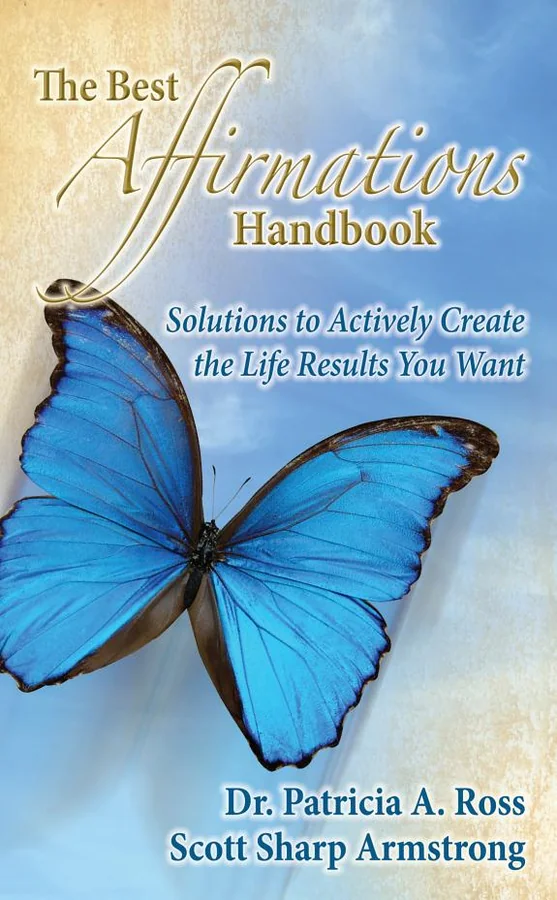
The Best Affirmations Handbook
 71
71

The Best Affirmations Handbook
Patricia A. Ross and Scott Sharp Armstrong's handbook offers a commendably direct antidote to the often vague or ineffectual application of affirmations. It bypasses platitudes, presenting a structured, almost procedural, method for integrating affirmations into daily life. The strength lies in its no-nonsense approach, which acknowledges the skepticism many feel towards self-affirmation techniques. A notable limitation, however, is the occasional didactic tone that might feel overly prescriptive to some readers. The chapter detailing the specific cadence and timing for repeating affirmations provides a concrete, actionable strategy, moving beyond mere suggestion. While it may not offer the poetic depth found in some metaphysical texts, its utility as a practical guide for those seeking demonstrable change is clear. This handbook serves as a functional toolkit for the affirmation practitioner.
📝 Description
71
Published in 2009, this handbook offers a structured method for affirmations.
Patricia A. Ross and Scott Sharp Armstrong's handbook presents a systematic approach to creating and using affirmations. It moves beyond simple positive thinking to explain how affirmations can reprogram subconscious beliefs and help bring about desired outcomes. The book details a practical, step-by-step methodology for daily practice, emphasizing consistent and intentional application.
This guide is for individuals seeking concrete results from self-help practices, especially those who have found traditional affirmation methods lacking or superficial. It suits people ready for consistent, structured self-work to reach personal goals, overcome limiting beliefs, and actively shape their life circumstances. Readers interested in the psychological aspects of manifestation will also find value in its approach.
Emerging in 2009 amidst popular interest in New Thought, *The Best Affirmations Handbook* refines early 20th-century concepts like those of Émile Coué. It addresses a common critique that affirmations can feel disconnected from reality or fail to address underlying negative thought patterns. The book offers a more actionable framework, focusing on the psychological mechanisms behind positive statements and their influence on behavior and perception.
💡 Why Read This Book?
• Learn a concrete, step-by-step methodology for creating and implementing affirmations, detailed in the handbook's structured approach, that moves beyond generic positive thinking. • Understand the psychological principles behind effective affirmation, as explained by the authors' focus on countering specific limiting beliefs identified in the 2009 publication. • Gain a practical framework for daily practice that emphasizes consistency, addressing the common critique that affirmations are merely superficial glosses, as outlined by the book's core concepts.
⭐ Reader Reviews
Honest opinions from readers who have explored this book.
❓ Frequently Asked Questions
How does *The Best Affirmations Handbook* differ from other affirmation guides?
This handbook distinguishes itself by offering a step-by-step methodology specifically designed to address the common problem of affirmations feeling ineffective. It focuses on the practical 'how-to,' providing a structured approach to crafting and implementing them daily, unlike more general guides.
When was *The Best Affirmations Handbook* first published?
The book was first published on January 2, 2009. This publication date places it within a period of continued popular interest in self-help and New Thought principles.
Can affirmations truly change one's life according to this book?
Yes, the handbook posits that affirmations, when practiced effectively and consistently, can reprogram subconscious beliefs and lead to tangible life changes. It emphasizes that they are a foundation for achieving desired outcomes and dreams.
What is the core concept of 'effective affirmation' presented?
The core concept is about moving beyond superficial positive statements. It involves identifying limiting beliefs, crafting affirmations that directly counter them, and integrating them into daily routines for consistent impact, as detailed in the book's methodology.
Who are the authors of *The Best Affirmations Handbook*?
The authors are Patricia A. Ross and Scott Sharp Armstrong. They collaborated to create this guide, which first appeared in 2009.
Is this book suitable for beginners in self-help?
Absolutely. The handbook is designed for anyone seeking results, particularly those who have found traditional affirmation methods lacking. Its step-by-step nature makes it accessible for beginners ready to engage in structured self-work.
🔮 Key Themes & Symbolism
Practical Affirmation Crafting
The book emphasizes a structured, actionable method for developing affirmations that directly address and dismantle limiting subconscious beliefs. It moves beyond vague positivity, guiding readers to create statements that are psychologically resonant and targeted for maximum impact. This approach ensures affirmations serve as practical tools for personal transformation rather than mere hopeful utterances.
Reprogramming the Subconscious
A central theme is the power of consistent, intentional affirmation practice to alter deep-seated subconscious patterns. The handbook details how repeated exposure to carefully constructed positive statements can gradually overwrite negative programming, paving the way for desired behavioral changes and the manifestation of goals.
Daily Practice and Consistency
The handbook stresses that the efficacy of affirmations hinges on consistent daily application. It provides guidance on integrating this practice seamlessly into everyday routines, ensuring that the work of self-transformation is ongoing and habitual, rather than sporadic. This consistent effort is presented as the key to unlocking lasting results.
Overcoming Skepticism
Recognizing that many find affirmations ineffective, the book directly tackles this skepticism by providing a logical, step-by-step framework. It aims to demonstrate the tangible benefits and underlying mechanics of affirmations, making the practice accessible and credible even to those who have previously doubted its power.
💬 Memorable Quotes
Direct passages from the work, attributed to the author.
“Affirmations work. They work for millions of people around the world and they can work for you!”
— This statement expresses the book's core premise: affirmations are a powerful, proven tool. It serves as an encouraging assertion that the reader can achieve similar success through the methods presented.
“They are the foundation for you to get the life you desire and dream about.”
— This highlights the foundational role of affirmations in manifestation. It suggests that mastering this practice is a crucial first step towards actualizing one's aspirations and life goals.
“No-one has ever given you a step-by-step guide on how to do affirmations effectively.”
— This points to the book's unique selling proposition: a detailed, actionable methodology. It addresses a perceived gap in existing literature, promising readers a clear path to success where others may have failed.
“You'll learn how to say them everyday, all the time.”
— This emphasizes the importance of consistent, integrated practice. It signals that the handbook will provide practical strategies for embedding affirmations into daily life, ensuring continuous engagement.
“Affirmations just gloss over the negative?”
— This phrase acknowledges a common criticism of affirmations. The book aims to counter this by presenting a method that goes deeper, addressing underlying issues rather than superficial positivity.
🌙 Esoteric Significance
Tradition
While not explicitly tied to a single esoteric lineage, the book operates within the broader framework of Western Esotericism's interest in the power of the mind and consciousness to shape reality. It shares common ground with Hermetic principles regarding the axiom 'As above, so below,' suggesting internal states influence external circumstances. It also echoes New Thought philosophy, which emphasizes the creative power of thought and belief.
Symbolism
The primary 'symbol' is the affirmation itself – a verbal construct acting as a conduit for focused intention. The book implicitly uses the concept of 'reprogramming' as a symbolic act of alchemical transformation, turning base desires or limiting beliefs into manifest gold. The 'foundation' metaphor suggests building a new inner structure that supports external manifestation.
Modern Relevance
Contemporary practices in manifestation coaching, positive psychology interventions, and even some therapeutic modalities like Cognitive Behavioral Therapy (CBT) echo the core principles. Thinkers and practitioners focusing on mindset shifts, subconscious reprogramming, and goal achievement, often found in online courses and self-help communities, draw upon the foundational ideas presented in this type of handbook.
👥 Who Should Read This Book
• Individuals seeking a structured, practical method for self-improvement who have found generic affirmations ineffective. • Aspiring manifestors interested in understanding the psychological mechanics behind their desires, moving beyond wishful thinking. • Personal development enthusiasts looking for actionable tools to overcome limiting beliefs and consistently reinforce positive thought patterns.
📜 Historical Context
Published in 2009, *The Best Affirmations Handbook* arrived during a resurgence of interest in positive psychology and self-help, building on principles popularized in the early 20th century by figures like Émile Coué. While Coué's methods focused on autosuggestion and his famous mantra 'Every day, in every way, I am getting better and better,' Ross and Armstrong's work aimed to refine this by offering a more systematic, psychologically grounded approach. It addressed a common critique leveled against self-help literature of the era: that affirmations could be superficial. Unlike the more spiritual or metaphysical explorations of manifestation common in the New Thought movement, this handbook offered a practical, almost procedural, guide. Its publication predates the widespread mainstream adoption of concepts like 'mindfulness' but taps into a similar desire for mental discipline and self-improvement.
📔 Journal Prompts
Analyze a core limiting belief identified through the handbook's 'effective affirmation' method.
Describe your ideal daily routine incorporating the affirmation practice from the 2009 publication.
How does the concept of 'reprogramming the subconscious' relate to your personal goals?
Reflect on the foundational role affirmations play in achieving your desired life.
Evaluate the effectiveness of a specific affirmation you have crafted using the book's guidance.
🗂️ Glossary
Affirmation
A positive statement, often repeated, designed to challenge or overcome self-sabotaging and negative thoughts, used as a tool for psychological reprogramming and manifestation.
Effective Affirmation
An affirmation specifically crafted according to principles outlined in the handbook, designed to directly counter limiting beliefs and achieve tangible results, rather than being a superficial positive statement.
Limiting Beliefs
Deep-seated assumptions or convictions that restrict an individual's potential, often operating at the subconscious level and hindering personal growth or goal achievement.
Reprogramming
The process of consciously altering ingrained thought patterns and subconscious beliefs through consistent practice, such as using affirmations, to achieve desired mental and behavioral changes.
Manifestation
The process of bringing something tangible or intangible into one's life through the power of thought, belief, and focused intention, often facilitated by practices like affirmations.
Subconscious
The part of the mind of which one is not aware but which influences one's behavior and decisions; a key target for the reprogramming techniques discussed in the handbook.
Daily Practice
The consistent, regular application of techniques, such as affirmations, integrated into one's everyday routine to ensure ongoing progress and reinforcement of desired changes.
This book appears in 1 collection
🔮 Readers Also Liked
Browse all →









From the “Affirmations” Collection
View all →








More Free Occult Philosophy Books
View all →