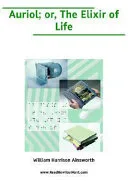
The Auriol; Or, Elixir of Life
 82
82

The Auriol; Or, Elixir of Life
Harrison Ainsworth’s 'The Auriol; Or, Elixir of Life' attempts to chart the internal landscape of alchemical pursuit through narrative. The strength of the work lies in its consistent allegorical framework, depicting the Great Work not merely as a chemical process but as a profound psychospiritual transformation. However, the narrative can occasionally become dense, with passages that prioritize symbolic exposition over narrative momentum. The section detailing the 'coniunctio oppositorum' provides a compelling, albeit abstract, depiction of the integration of dualistic forces, a cornerstone of alchemical theory. It serves as a valuable, if sometimes challenging, exploration for dedicated students of the subject.
📝 Description
82
Harrison Ainsworth's 2006 novel 'The Auriol; Or, Elixir of Life' uses allegory to explore alchemical concepts.
Harrison Ainsworth's 2006 novel, 'The Auriol; Or, Elixir of Life,' offers a narrative structure for understanding alchemical principles and their application to human experience. The book is written for dedicated students of Hermeticism, alchemy, and comparative mysticism who respond to allegorical storytelling for conveying complex philosophical and spiritual ideas.
It connects to a recent increase in attention to alchemical traditions, built on centuries of esoteric thought. Published in 2006, its appearance coincided with occult and metaphysical studies becoming more visible outside of niche communities. The novel engages with older alchemical texts, providing a modern view of their persistent enigmas. Central to 'The Auriol' are themes of spiritual change, achieving the Philosopher's Stone, and the symbolic Great Work. The story uses allegorical characters and settings to show stages of internal growth and the soul's purification, similar to how alchemy refines base metals into gold.
Published in 2006, 'The Auriol' emerges during a period of renewed interest in alchemical and Hermetic traditions. It draws upon established esoteric thought, offering a contemporary interpretation of classic alchemical texts. The narrative itself functions as an allegorical depiction of spiritual transformation, mirroring the alchemical process of refining the self.
💡 Why Read This Book?
• Gain insight into the symbolic language of alchemy, specifically how the concept of the Philosopher's Stone is presented as a metaphor for spiritual perfection, a perspective not easily found elsewhere. • Understand the allegorical representation of the Great Work as a psychospiritual journey, a key theme elaborated through the narrative's progression, offering a unique interpretive lens. • Explore the concept of the 'coniunctio oppositorum' as depicted in the text, providing a concrete literary example of the integration of opposites, a fundamental principle in Hermetic philosophy.
⭐ Reader Reviews
Honest opinions from readers who have explored this book.
❓ Frequently Asked Questions
What is the primary goal of the 'Great Work' as depicted in 'The Auriol'?
The 'Great Work' in 'The Auriol' is presented as a process of spiritual transmutation and purification, aiming for the attainment of the Philosopher's Stone, symbolizing ultimate wisdom and spiritual perfection.
When was 'The Auriol; Or, Elixir of Life' first published?
'The Auriol; Or, Elixir of Life' was first published in 2006, placing it within the contemporary revival of interest in esoteric and alchemical studies.
Does the book offer practical alchemical recipes?
No, 'The Auriol' focuses on the allegorical and symbolic aspects of alchemy, presenting it as a spiritual and psychological journey rather than a literal guide to laboratory procedures.
What is the significance of the 'coniunctio oppositorum' in the context of this book?
The 'coniunctio oppositorum' represents the union of opposites, a crucial stage in the alchemical process that the book uses to illustrate the integration of disparate elements within the self or the cosmos.
Who is Harrison Ainsworth in the context of esoteric literature?
Harrison Ainsworth is the author of 'The Auriol; Or, Elixir of Life', contributing to the field of modern esoteric writing with works that explore complex metaphysical and alchemical themes.
Is 'The Auriol' considered a primary source for alchemical study?
While not a historical primary source from antiquity, 'The Auriol' is considered a significant secondary work that interprets and explores alchemical principles for a modern audience, offering a unique perspective.
🔮 Key Themes & Symbolism
The Great Work as Spiritual Journey
The narrative frames the alchemical 'Great Work' not as a mere chemical experiment but as an arduous spiritual ascent. It details the symbolic stages of purification, transformation, and integration, paralleling the refinement of base metals into gold with the soul's journey toward enlightenment. The text emphasizes inner alchemy, where the external processes mirror internal psychic and spiritual evolution, seeking a perfected state of being.
Symbolism of the Philosopher's Stone
Central to the book is the allegorical representation of the Philosopher's Stone. It is depicted not just as an agent of material transmutation but as the ultimate symbol of spiritual attainment, wisdom, and immortality. The pursuit of this elusive substance drives the narrative, illustrating the aspirant's quest for knowledge, self-mastery, and union with the divine principle.
Integration of Opposites
The concept of the 'coniunctio oppositorum,' or the union of opposites, is a recurring motif. The book explores how seemingly contradictory forces—such as male and female, spirit and matter, light and dark—must be harmonized and integrated to achieve wholeness. This principle is fundamental to the alchemical process, signifying the reconciliation of dualities within the self and the universe.
Allegory and Metaphor in Esotericism
Ainsworth utilizes rich allegory and metaphor to convey complex esoteric doctrines. The text serves as an example of how ancient alchemical symbolism can be reinterpreted for contemporary understanding. It demonstrates the power of narrative to illuminate abstract philosophical and mystical concepts, making them accessible to those who engage with its symbolic language.
💬 Memorable Quotes
Direct passages from the work, attributed to the author.
“The true gold is not mined from the earth, but forged within the crucible of the soul.”
— This highlights the central theme that alchemy, as presented in the book, is primarily an inner, spiritual process of purification and transformation, rather than a literal pursuit of material wealth.
“Separation precedes union; the dross must be purged before the essence can ascend.”
— This points to the necessity of dissolution and purification in any transformative process. It suggests that facing and integrating one's lower aspects is a prerequisite for spiritual elevation.
“The Serpent devours its tail, signifying the eternal cycle of death and rebirth necessary for renewal.”
— This refers to the Ouroboros symbol, representing cyclical time, eternity, and the self-sufficiency of the alchemical process, where endings lead to new beginnings.
“To find the Elixir is to find the hidden kingdom within oneself.”
— This interpretation equates the legendary Elixir of Life with self-knowledge and inner spiritual realization, suggesting that true immortality or fulfillment comes from internal discovery.
“The marriage of the Sun and Moon is the key to unlocking the Prima Materia.”
— This alludes to the alchemical marriage of masculine (Sun) and feminine (Moon) principles, seen as essential for activating the fundamental substance (Prima Materia) from which all things are formed.
🌙 Esoteric Significance
Tradition
The work is firmly rooted in the Western Hermetic and alchemical traditions. It draws upon the foundational principles of Hermeticism, particularly the concept of 'As Above, So Below,' and interprets the alchemical Great Work as a spiritual path toward realizing the divine potential within the human microcosm, aligning with the broader Hermetic goal of gnosis and spiritual perfection.
Symbolism
Key symbols include the Philosopher's Stone, representing ultimate wisdom and spiritual attainment; the Ouroboros, symbolizing eternity and cyclical renewal; and the 'coniunctio oppositorum,' the union of opposites, signifying the integration of dualistic forces necessary for wholeness and transformation within the alchemical process.
Modern Relevance
Contemporary practitioners of Jungian psychology and those interested in archetypal symbolism find resonance in the book's exploration of the psyche's transformative journey. It also appeals to modern alchemists who focus on spiritual and psychological interpretations over purely material pursuits, offering a narrative framework for understanding these complex internal processes.
👥 Who Should Read This Book
• Students of Hermeticism and Western Esotericism: Those seeking to understand the allegorical and symbolic dimensions of alchemy beyond historical laboratory practices will find a detailed narrative interpretation. • Comparative Mysticism Scholars: Individuals researching the universal themes of transformation, spiritual quests, and symbolic language across different traditions will appreciate its allegorical depth. • Aspiring Practitioners of Inner Alchemy: Readers interested in personal growth and spiritual development through symbolic frameworks will find the depiction of the Great Work as an internal process particularly relevant.
📜 Historical Context
Published in 2006, Harrison Ainsworth's 'The Auriol; Or, Elixir of Life' arrived during a significant resurgence of interest in Western esoteric traditions, particularly Hermeticism and alchemy. This period saw a growing number of academic and popular works exploring occult philosophy, moving it from the fringes into broader discourse. The book engages with a lineage of alchemical literature that stretches back to figures like Paracelsus and the Rosicrucians, offering a modern narrative interpretation of their symbolic language. It emerged in an intellectual climate where comparative religion and mysticism were gaining traction, influenced by thinkers like Carl Jung, who explored alchemy's psychological dimensions. While not directly engaging with contemporary figures, its themes echo contemporary explorations of consciousness and transformation found in various spiritual movements, contrasting with purely materialistic scientific paradigms of the time.
📔 Journal Prompts
The symbolic representation of the Philosopher's Stone in the narrative.
The stages of the Great Work as depicted through the protagonist's journey.
The meaning of the 'coniunctio oppositorum' within the story's arc.
Reflections on the 'crucible of the soul' metaphor.
The cyclical nature suggested by symbols like the Ouroboros.
🗂️ Glossary
Great Work
The central process in alchemy, involving the purification, transformation, and perfection of matter and spirit, often symbolized by the creation of the Philosopher's Stone.
Philosopher's Stone
A legendary alchemical substance believed to be capable of transmuting base metals into gold and granting immortality; metaphorically, a symbol of spiritual perfection and enlightenment.
Elixir of Life
A mythical potion said to confer eternal life or youth; in esoteric contexts, often synonymous with the Philosopher's Stone or a state of spiritual realization.
Coniunctio Oppositorum
Latin for 'union of opposites,' a key alchemical concept representing the reconciliation of dualistic forces (e.g., masculine/feminine, spirit/matter) into a unified whole.
Prima Materia
The fundamental, undifferentiated substance from which all matter is derived, according to alchemical theory; the starting point of the Great Work.
Ouroboros
An ancient symbol depicting a serpent or dragon eating its own tail, representing eternity, cyclicality, and the unity of all things.
Crucible
A vessel used for melting and heating substances to very high temperatures; metaphorically, a place or situation of severe testing and transformation.