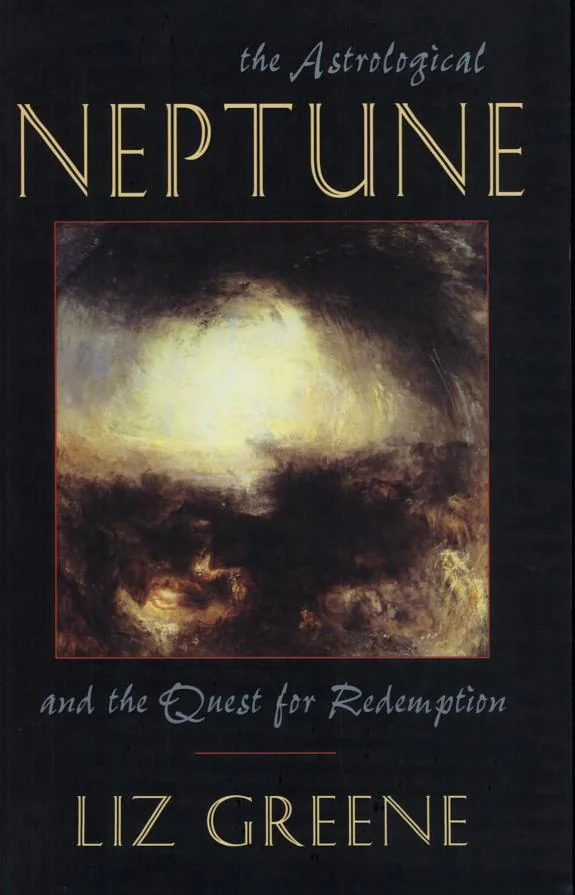
The Astrological Neptune and the Quest for Redemption
 80
80

The Astrological Neptune and the Quest for Redemption
Liz Greene's extensive exploration of Neptune offers a densely packed, archetypally rich perspective on a planet notoriously difficult to pin down. Her strength lies in connecting astrological symbolism to vast swathes of human cultural output, from the Dionysian rites to the existential angst of modern art. The book truly shines when it dissects the Neptunian influence in mythology and literature, providing compelling interpretations. However, the sheer volume of material can sometimes feel overwhelming; a reader less familiar with psychological astrology might struggle to fully grasp the intricate connections Greene draws between planetary transits and complex societal phenomena. The section detailing Neptune's role in collective delusion, citing examples like the Salem witch trials, is particularly potent, illustrating the destructive potential of unacknowledged Neptunian energies. It’s an indispensable, if demanding, resource for understanding the planet of dreams and dissolution.
📝 Description
80
Liz Greene's 2000 book analyzes Neptune as the astrological archetype of redemption.
Liz Greene's "The Astrological Neptune and the Quest for Redemption" examines Neptune not just as a planet but as a potent archetype of illusion, spirituality, and the dissolution of boundaries. Greene argues that this archetype is central to understanding humanity's universal search for meaning and transcendence, which the book terms 'redemption.' She traces Neptune's influence through various cultural expressions, connecting its astrological significance to psychological states and mythological narratives.
The work is intended for students of astrology, psychology, and comparative mythology who are interested in the deeper psychological and spiritual aspects of astrological symbolism. Readers will find value in its approach to understanding themes such as addiction, spiritual seeking, artistic inspiration, and collective delusion through an astrological lens. It is particularly suited for those investigating the archetypal roots of human suffering and the desire for escape or salvation.
Published in 2000, this book emerged during a period when astrological studies were increasingly integrating depth psychology. Greene's work builds on traditions that link celestial bodies to human consciousness, drawing parallels with figures like Dane Rudhyar and Carl Jung. It reflects a late 20th-century trend of re-examining ancient myths and symbols through modern psychological frameworks. Greene connects astrological placements with mythological narratives and psychological states, offering a perspective on Neptune that aligns with an interest in the sublime and the elusive.
💡 Why Read This Book?
• Gain a nuanced understanding of Neptune's archetype as the engine of redemption, moving beyond superficial interpretations of escapism and illusion, as detailed in the chapter on "The Longing for Redemption." • Discover how the Neptunian drive manifests across diverse cultural domains, from art and religion to politics and fashion, providing concrete examples that enrich one's symbolic vocabulary. • Learn to integrate Neptune's energies constructively, navigating the potentials for spiritual seeking and creative inspiration while mitigating the risks of addiction and delusion, as discussed in the book's psychological analyses.
⭐ Reader Reviews
Honest opinions from readers who have explored this book.
❓ Frequently Asked Questions
What is the original publication year of Liz Greene's The Astrological Neptune and the Quest for Redemption?
The Astrological Neptune and the Quest for Redemption by Liz Greene was first published in December 2000, marking its entry into astrological literature at the turn of the millennium.
How does Liz Greene define Neptune in astrology?
Greene defines Neptune as the astrological symbol for the deep-seated human longing for redemption, a force that drives quests for meaning, spirituality, and transcendence across individual and collective levels.
What cultural areas does the book explore Neptune's influence in?
The book examines Neptune's manifestation in literature, myth, politics, religion, fashion, and art, demonstrating its pervasive influence on human culture and consciousness.
Is this book suitable for beginner astrologers?
While accessible, the book's depth and psychological complexity make it most rewarding for intermediate to advanced astrology students or those with a background in psychology and mythology.
What is the central argument of The Astrological Neptune and the Quest for Redemption?
The central argument is that Neptune represents the fundamental human yearning for redemption, influencing our search for the ideal, our spiritual inclinations, and our susceptibility to illusion and dissolution.
What kind of 'redemption' does Neptune symbolize according to Liz Greene?
According to Greene, Neptune symbolizes a redemption that can range from ecstatic spiritual union and artistic transcendence to escapism and collective delusion, reflecting the planet's dual nature.
🔮 Key Themes & Symbolism
The Archetype of Redemption
Greene posits Neptune as the primary astrological symbol for humanity's innate desire for redemption. This theme is explored not as a singular religious concept but as a pervasive psychological and spiritual drive manifesting in art, idealism, and the search for meaning. The work traces how this longing propifies individual lives and collective movements, suggesting that understanding Neptune is key to comprehending our deepest aspirations and potential for both disillusionment and spiritual fulfillment.
Neptune in Culture and Myth
This theme involves Greene's extensive analysis of how the Neptunian archetype is reflected in various cultural expressions. She examines its presence in mythology, literature, religious movements, and artistic endeavors, showing how these spheres embody the planet's qualities of illusion, compassion, dissolution, and transcendence. By linking astrological symbolism to tangible cultural outputs, the book offers a framework for interpreting the collective unconscious and its expression through societal narratives and creative forms.
The Shadow of Neptune
Beyond its spiritual and artistic connotations, the book confronts the darker aspects of Neptune's influence. This theme addresses how the planet's energy can manifest as addiction, delusion, escapism, and the dissolution of boundaries in destructive ways. Greene explores the psychological mechanisms behind these phenomena, arguing that conscious engagement with Neptune's archetype is crucial for avoiding its pitfalls and distinguishing genuine spiritual seeking from self-deception or escapist fantasy.
Psychological Integration of Neptune
The work emphasizes the practical application of understanding Neptune for psychological integration. It suggests that by recognizing Neptune's archetypal patterns in personal lives and collective events, individuals can better read through the challenges associated with this complex planet. The goal is to harness Neptune's potential for creative inspiration, spiritual growth, and empathetic connection while developing resilience against its capacity for illusion and confusion.
💬 Memorable Quotes
Direct passages from the work, attributed to the author.
“The longing for redemption is a many-headed daimon that dwells within the most earthbound and prosaic of souls.”
— This statement expresses Greene's core thesis, framing the desire for something beyond the mundane as a fundamental, almost primal, force that resides even in the most seemingly ordinary individuals.
“She explores Neptune themes in literature, myth, politics, religion, fashion, and art to show how this energy manifests.”
— This highlights the book's methodological approach, emphasizing Greene's broad, cross-cultural survey to demonstrate the pervasive and complex ways Neptune's influence shapes human experience and societal constructs.
“The work explores how the Neptunian drive can lead to profound disillusionment or ecstatic union.”
— This interpretation of the book's content points to the dualistic nature of Neptune, acknowledging its capacity to bring about both deep disappointment and sublime spiritual or creative experiences.
💡 Key Ideas
Editorial paraphrase of the work's core concepts — not direct quotes.
Neptune is the astrological symbol that describes this energy.
This quote directly links the abstract concept of the 'longing for redemption' to its planetary astrological representation, establishing Neptune as the celestial key to understanding this universal human yearning.
Understanding Neptune helps to decode the allure of escapism and the search for the ideal.
This paraphrase captures a key takeaway, suggesting that astrological insight into Neptune provides clarity on the psychological motivations behind desires to escape reality and the persistent human pursuit of perfection or ultimate truth.
🌙 Esoteric Significance
Tradition
Greene's work is firmly rooted in the Western esoteric tradition, particularly its modern psychological and archetypal branches. It draws heavily on Jungian psychology and comparative mythology, integrating these into an astrological framework. While not strictly Hermetic or Kabbalistic, it engages with the symbolic language and archetypal currents that underpin many esoteric systems, seeking to understand cosmic principles through their manifestation in human consciousness and culture.
Symbolism
Central to the book's symbolism is Neptune itself, representing the dissolution of boundaries, spiritual longing, and the search for the transcendent. Other key symbols include the 'quest for redemption,' symbolizing humanity's inherent drive towards spiritual completion or escape from suffering, and the archetypes of illusion and idealism, which represent the dual potential for both divine inspiration and profound delusion inherent in the Neptunian principle.
Modern Relevance
Contemporary thinkers and practitioners in depth psychology, archetypal astrology, and consciousness studies continue to draw on Greene's foundational work. Her nuanced understanding of Neptune informs discussions on spirituality, addiction, artistic creativity, and collective phenomena like mass delusion or spiritual movements. The book remains a touchstone for those exploring the intersection of the psyche, culture, and the cosmos in the 21st century.
👥 Who Should Read This Book
• Individuals interested in the psychological dimensions of astrology: This book offers a deep dive into how planetary archetypes, specifically Neptune, correlate with complex psychological states, offering insights for self-understanding and therapeutic exploration. • Students of comparative mythology and religion: Readers seeking to understand the symbolic threads connecting diverse myths, spiritual quests, and religious phenomena will find Greene's cross-cultural analysis informative. • Artists, writers, and creatives: Those exploring the source of inspiration, the nature of artistic genius, and the potential for illusion in creative work will benefit from Greene's examination of Neptune's role in the arts.
📜 Historical Context
Liz Greene's *The Astrological Neptune and the Quest for Redemption*, first published in 2000, emerged during a period of significant intellectual cross-pollination between psychology, mythology, and esoteric studies. The late 20th century saw a growing appetite for depth perspectives on astrological archetypes, moving beyond simple horoscopic interpretations. Greene's work builds upon the psychological astrology pioneered by figures like Dane Rudhyar and the Jungian exploration of myth. At the time, mainstream academic circles often viewed astrology with skepticism, yet within esoteric and psychological communities, there was a robust dialogue. Greene’s comprehensive approach, linking planetary symbolism to vast cultural narratives, positioned her work as a substantial contribution to contemporary astrological thought, offering a more nuanced and integrated understanding of Neptune than previously widely available.
📔 Journal Prompts
The Neptunian longing for redemption as a driving force in your life narrative.
Reflect on instances where Neptune's qualities of illusion or dissolution have shaped your perceptions.
Identify a mythological figure or artistic creation that embodies the archetype of Neptune explored in the book.
Analyze how collective Neptunian themes, such as spiritual movements or mass media narratives, manifest in contemporary society.
Consider the balance between seeking the ideal and succumbing to escapism, as represented by Neptune.
🗂️ Glossary
Neptune
In astrology, the planet Neptune is associated with illusion, spirituality, compassion, addiction, dreams, the dissolution of boundaries, and the search for the transcendent or redemptive.
Archetype
A universal, archaic pattern or image that derives from the collective unconscious and is the psychic counterpart of an inherited structure.
Quest for Redemption
A central theme in the book, representing the profound and often unconscious human drive to escape suffering, find meaning, or achieve spiritual fulfillment and wholeness.
Daimon
In this context, a powerful, guiding spirit or inner force, often with ambivalent connotations, that influences human behavior and destiny, as described in relation to the longing for redemption.
Dissolution
The process of breaking down boundaries, whether psychological, physical, or spiritual, often associated with Neptune's influence, leading to potential union or confusion.
Idealism
The pursuit of perfect or exalted standards, often linked to Neptune's influence, which can manifest as noble aspiration or unrealistic fantasy.
Escapism
The tendency to seek distraction and relief from unpleasant realities, especially by engaging in fantasy or subjective experience, a common Neptunian manifestation.
This book appears in 1 collection
🔮 Readers Also Liked
Browse all →









From the “Astrology” Collection
View all →









More Free Astrology & Cosmology Books
View all →