Chinese astrology

 74
74

Chinese astrology
Julie Mars' "Chinese Astrology" offers a structured approach to a system often presented with overwhelming detail. The book succeeds in demystifying the core mechanics of the zodiac, the elements, and their interplay. Its clarity on the "Bazi" or Four Pillars is particularly commendable, providing a solid foundation for readers new to the subject. However, the work sometimes leans towards a purely descriptive stance, leaving the deeper philosophical underpinnings of the Wu Xing (Five Elements) somewhat underdeveloped for those seeking a more profound connection to its Taoist roots. A particularly insightful section details the compatibility between the 12 animal signs, illustrating potential strengths and challenges in relationships with concrete examples. While comprehensive in its foundational explanations, it could benefit from more advanced case studies to showcase the system's predictive power in more complex scenarios. Overall, it serves as a competent and accessible introduction to a vast subject.
📝 Description
74
Julie Mars' Chinese astrology book explains the 12 animal signs and five elements.
This book explains Chinese astrology, a system rooted in ancient Chinese philosophy. It uses celestial observations and calculations to interpret destiny based on birth date and time. Unlike Western astrology, it centers on a 12-year cycle with animal signs, incorporating the Five Elements and Yin/Yang principles.
The origins of Chinese astrology trace back to the Han Dynasty. Early astronomical work was tied to calendars and governance. The sexagenary cycle, combining the Ten Heavenly Stems and Twelve Earthly Branches, forms the zodiac's structure. Integrating the Five Elements and Yin/Yang theories created a complex analysis of cosmic influences.
The core of Chinese astrology is its cyclical and elemental framework. The 12 animal signs—Rat, Ox, Tiger, Rabbit, Dragon, Snake, Horse, Goat, Monkey, Rooster, Dog, and Pig—each have distinct traits. These are modulated by the Five Elements, which are Wood, Fire, Earth, Metal, and Water, and their interactions.
Chinese astrology is part of a larger cosmological tradition that views the cosmos as an interconnected system of energies and influences. Its development alongside calendrical systems, agriculture, and imperial governance shows its practical application in understanding natural cycles and human affairs. The integration of the Five Elements (Wu Xing) and the principles of Yin and Yang demonstrates a worldview where balance and interaction between fundamental forces are key to interpreting events and character.
💡 Why Read This Book?
• Gain a foundational understanding of the 12 Animal Signs and their inherent characteristics, allowing for more accurate self-assessment and recognition of personality archetypes in others, as detailed in the chapter on the "Rat" sign. • Learn the principles of the Five Elements (Wu Xing) and how they interact with Yin and Yang, providing a framework for understanding dynamic energies and potential imbalances in life, as explained in the section on "Wood" and "Fire" interactions. • Discover the concept of the "Four Pillars of Destiny" (Bazi), enabling you to interpret the unique energetic blueprint of any individual based on their birth year, month, day, and hour, as presented in the "Bazi Construction" chapter.
⭐ Reader Reviews
Honest opinions from readers who have explored this book.
❓ Frequently Asked Questions
What is the primary difference between Chinese and Western astrology?
The primary difference lies in their calendrical systems. Western astrology uses the sun's apparent position in the zodiac constellations, which is based on the solar year. Chinese astrology relies on a lunisolar calendar and a 12-year cycle of animal signs, incorporating the Five Elements and Yin/Yang.
How are the Five Elements (Wu Xing) applied in Chinese astrology?
The Five Elements—Wood, Fire, Earth, Metal, and Water—are fundamental to Chinese astrology. They are assigned to years, months, days, and hours, and their interactions (generating and overcoming cycles) are used to analyze personality, relationships, and predict fortune within the context of an individual's birth chart.
What does the "Year of the Dragon" signify in Chinese astrology?
The Dragon is considered one of the most auspicious and powerful signs in the Chinese zodiac. Individuals born in a Dragon year are often perceived as charismatic, ambitious, courageous, and natural leaders, though they can also be seen as proud or demanding.
Can Chinese astrology predict specific events?
While Chinese astrology primarily focuses on inherent character traits and general life potentials, the "Four Pillars of Destiny" (Bazi) can be used to analyze periods of good or challenging fortune, offering insights into potential trends and influences rather than deterministic predictions of specific events.
What is the significance of the Chinese zodiac's 12-year cycle?
The 12-year cycle is based on the orbital period of Jupiter around the sun, which is approximately 12 years. Each year is associated with one of the 12 animals: Rat, Ox, Tiger, Rabbit, Dragon, Snake, Horse, Goat, Monkey, Rooster, Dog, and Pig, each with its own characteristics.
How does the concept of Yin and Yang relate to Chinese astrology?
Yin and Yang represent complementary opposites. In Chinese astrology, they are applied to the animal signs and elements to provide a more nuanced understanding of an individual's energetic makeup. For example, some signs or elements are classified as predominantly Yin or Yang, influencing their expression.
🔮 Key Themes & Symbolism
The 12 Animal Signs
The book meticulously details the characteristics associated with each of the twelve animals of the Chinese zodiac: Rat, Ox, Tiger, Rabbit, Dragon, Snake, Horse, Goat, Monkey, Rooster, Dog, and Pig. It explores their individual personalities, strengths, weaknesses, and compatibility with other signs. This cyclical system, rooted in ancient folklore and observation, provides a framework for understanding human nature and interpersonal dynamics through distinct archetypes.
The Five Elements (Wu Xing)
Central to the system are the Five Elements: Wood, Fire, Earth, Metal, and Water. The work explains how these elements are not static but exist in dynamic relationship, both supporting and overcoming each other. Their application to birth charts, known as Wu Xing theory, allows for a deeper analysis of an individual's constitution, potential challenges, and the flow of energy (Qi) throughout their life.
Yin and Yang Polarity
The interplay of Yin and Yang is woven throughout the interpretation of the zodiac signs and elements. This duality represents complementary forces—passive and active, dark and light, feminine and masculine. Understanding the balance or imbalance of Yin and Yang in a person's chart, as derived from their birth data, is crucial for a holistic assessment of their temperament and destiny.
The Four Pillars of Destiny (Bazi)
This book introduces the concept of Bazi, or the Four Pillars of Destiny, which is the a core part of Chinese astrological analysis. It involves constructing a chart based on the birth year, month, day, and hour, each represented by a Heavenly Stem and an Earthly Branch. The resulting eight characters are analyzed to reveal an individual's character, relationships, career path, and fortune.
💬 Memorable Quotes
Direct passages from the work, attributed to the author.
“The Rat is known for its adaptability and sharp intellect, often finding opportunity where others see none.”
— This highlights the Rat's capacity for resourcefulness and quick thinking, suggesting its influence can bring about advantageous circumstances through keen observation and agile problem-solving.
“Wood fosters Fire, yet Fire consumes Wood; this elemental dance dictates much of life's inevitable cycles.”
— This illustrates the interdependent yet potentially destructive relationship between elements in Chinese cosmology, framing life's challenges and growth as a natural consequence of these fundamental energetic interactions.
“A balanced Bazi chart suggests a life of relative harmony, while imbalances point to areas requiring focused attention.”
— This emphasizes the diagnostic value of the Four Pillars system, indicating that one's birth chart can serve as a map for understanding personal equilibrium and identifying specific areas for personal development or mitigation.
“The Dragon's inherent power can manifest as leadership or as overwhelming ambition.”
— This points to the dual nature of the Dragon sign, suggesting that its potent energies, while capable of great achievement, also carry the potential for excess or dominance if not properly managed.
“Metal needs Water to be shaped, mirroring how structure requires fluidity to become useful.”
— This offers a metaphorical interpretation of the Metal-Water relationship, suggesting that rigid frameworks (Metal) become practical and effective only when combined with adaptability and flow (Water).
🌙 Esoteric Significance
Tradition
Chinese astrology is a core component of the Taoist tradition, deeply embedded within its cosmological framework. It views the universe as a dynamic interplay of Qi (vital energy), governed by Yin and Yang and the Five Elements. Unlike Western Hermeticism's focus on macrocosm-microcosm correspondence through planetary archetypes, Chinese astrology emphasizes the cyclical and elemental forces present at the moment of birth as the primary determinants of destiny.
Symbolism
Key symbols include the 12 animals of the zodiac, each embodying specific characteristics and archetypes that represent phases of the cosmic cycle. The Five Elements (Wood, Fire, Earth, Metal, Water) symbolize fundamental forces and transformations. The Yin/Yang symbol represents duality and balance. The "Four Pillars of Destiny" (Bazi) itself is a symbolic representation of the cosmic energies – Heaven, Earth, and Humanity – imprinted at birth.
Modern Relevance
Contemporary practitioners of Feng Shui, Traditional Chinese Medicine (TCM), and various forms of East Asian spirituality frequently utilize Chinese astrology, particularly the Bazi system. Thinkers and wellness advocates exploring holistic health and Eastern philosophies often draw upon its principles to understand personal energy, relationships, and life path optimization, seeing it as a practical tool for self-awareness and harmonious living.
👥 Who Should Read This Book
• Individuals curious about Eastern esoteric systems seeking an alternative to Western astrology, who will appreciate the unique cyclical and elemental framework. • Aspiring practitioners of Feng Shui or Traditional Chinese Medicine, as a foundational understanding of Bazi is crucial for advanced study in these fields. • Those interested in comparative mythology and cultural studies, looking to understand the cosmological beliefs that have shaped East Asian societies for centuries.
📜 Historical Context
The development of Chinese astrology is deeply intertwined with ancient Chinese astronomy and cosmology, flourishing significantly during the Han Dynasty (206 BCE – 220 CE). Early forms were linked to calendrical systems essential for agriculture and imperial rituals. The sexagenary cycle, a sixty-year system combining the Ten Heavenly Stems and Twelve Earthly Branches, formed its structural backbone. This period saw the integration of Taoist philosophical concepts, including Yin and Yang and the Five Elements (Wu Xing), transforming astrological practice into a sophisticated method for understanding human destiny and cosmic influences. While its scientific basis was debated alongside emerging rationalist schools like Mohism in earlier periods, its cultural pervasiveness grew. The system became a vital tool for governance, personal guidance, and understanding the mandate of heaven. Its influence spread across East Asia, impacting Korean, Japanese, and Vietnamese astrological traditions, making it a core part of East Asian esoteric thought.
📔 Journal Prompts
The Rat's adaptability in navigating challenges.
Wood's generative relationship with Fire.
The concept of Yin and Yang balance in your daily life.
Interpreting the animal sign of your birth year.
The Earth element's influence on stability.
🗂️ Glossary
Bazi
Literally 'Eight Characters,' referring to the four pairs of Heavenly Stems and Earthly Branches derived from a person's birth year, month, day, and hour, forming the core of Chinese astrological analysis.
Wu Xing
The Five Phases or Five Elements: Wood, Fire, Earth, Metal, and Water. These are fundamental forces in Chinese philosophy that interact in generating and overcoming cycles, influencing all aspects of the cosmos and human life.
Yin and Yang
A fundamental concept in Chinese philosophy representing complementary, interconnected, and interdependent forces (e.g., passive/active, dark/light, feminine/masculine) whose balance is essential for harmony.
Heavenly Stems
Ten cyclical symbols (Jia, Yi, Bing, Ding, Wu, Ji, Geng, Xin, Ren, Gui) that form the basis of the Chinese calendar and are used in Bazi calculations.
Earthly Branches
Twelve cyclical symbols, corresponding to the 12 Chinese zodiac animals (Rat, Ox, Tiger, etc.), used in conjunction with Heavenly Stems to form the Bazi chart.
Qi
The vital life force or energy that flows through all things in the universe, central to Taoist philosophy and influencing health, destiny, and the environment.
Qi Men Dun Jia
An advanced form of Chinese divination that uses a complex chart based on time, often employed for strategic planning and decision-making, considered a more esoteric art.
🔮 Readers Also Liked
Browse all →





More by Julie Mars
All books →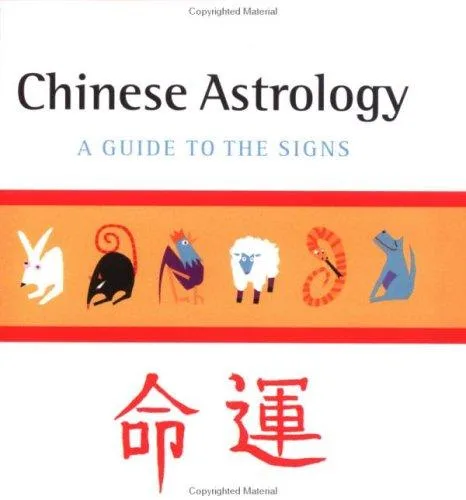
More Free Astrology & Cosmology Books
View all →