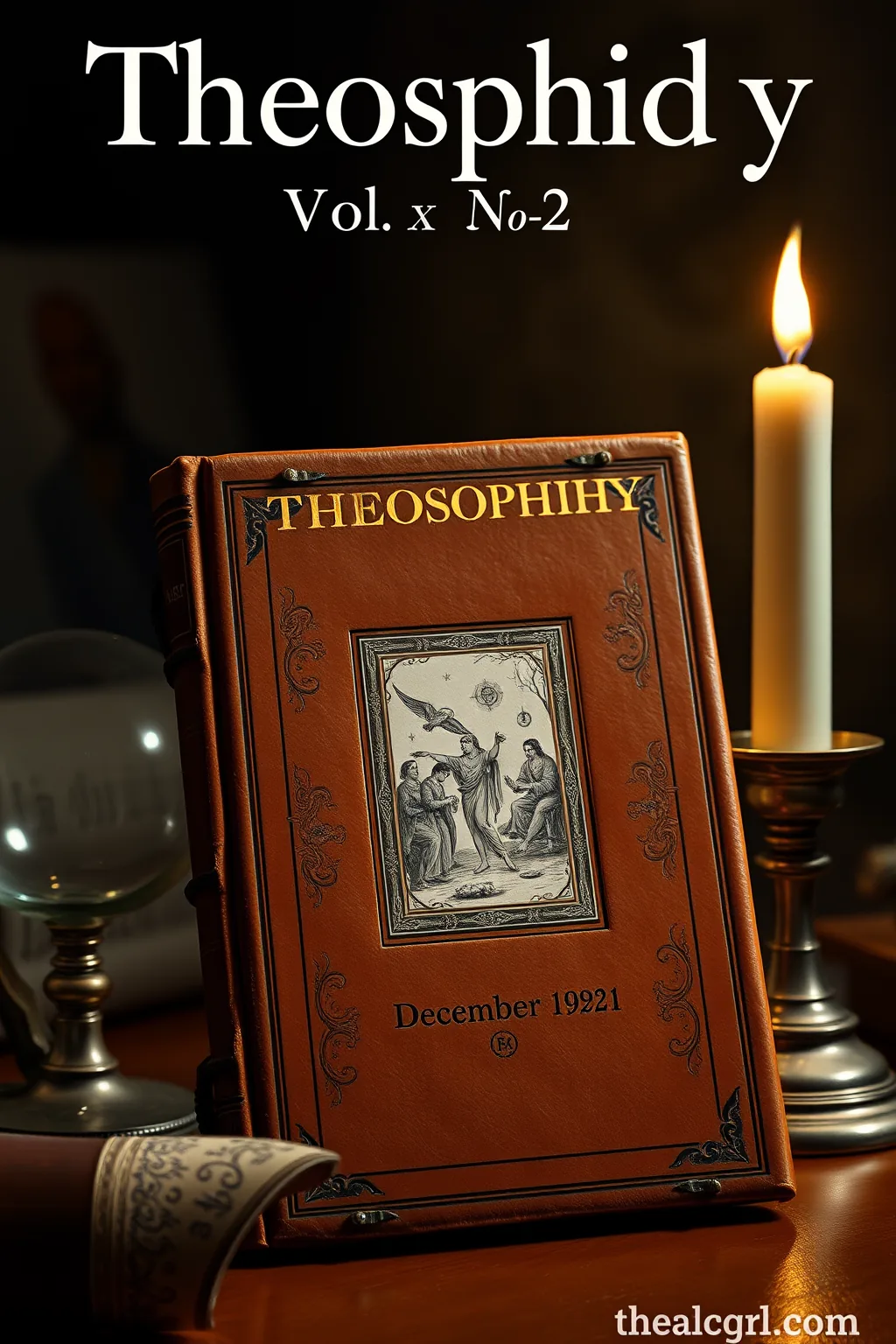
Theosophy Vol-X,No-2,December 1921
 73
73

Theosophy Vol-X,No-2,December 1921

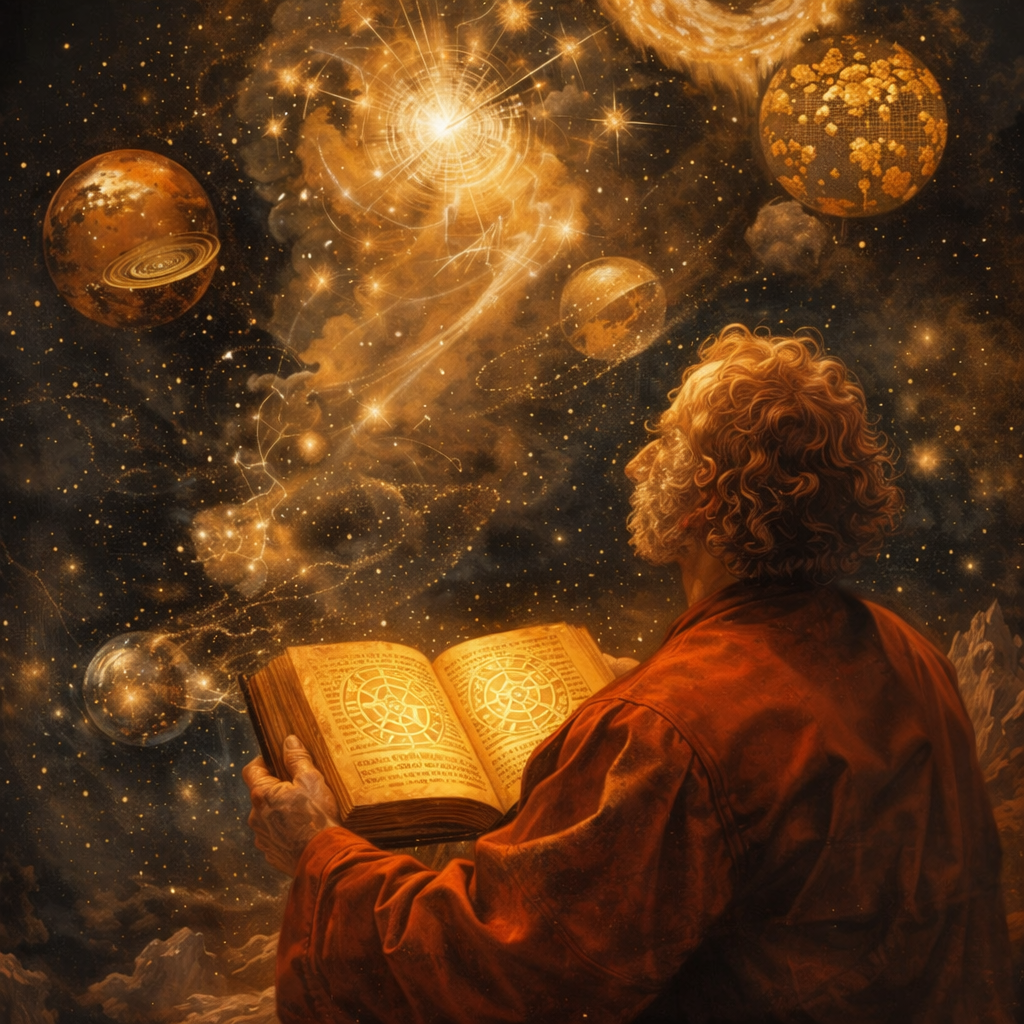

Review by Sophia Crane (Associate Editor) — This December 1921 issue of 'Theosophy' is a potent distillation of foundational esoteric thought. It expertly navigates complex concepts, offering clarity on subjects ranging from reincarnation to the unseen hierarchies that govern existence. The articles within this volume serve as vital conduits, connecting readers to the profound philosophical underpinnings of Theosophy. Its strength lies in its accessibility to those genuinely seeking deeper spiritual understanding, providing a robust intellectual framework for practitioners and scholars alike. An essential read for anyone engaged with the Anthroposophical and Theosophical movements.
📝 Description
73
The December 1921 issue of Theosophy explored the spiritual evolution of consciousness.
This issue of Theosophy, published in December 1921, contains teachings on spiritual evolution and the structure of the cosmos. It addresses the hidden aspects of consciousness and aims to stimulate the spiritual capacities of its readers. The content is geared towards individuals seeking knowledge beyond ordinary experience, hinting at universal principles that form the basis of reality. This volume reflects the ongoing human pursuit of understanding. It is presented as a guide for those seeking deeper meaning in life and an introduction to the philosophical foundations of the Great White Brotherhood's doctrines.
The writing in this journal is direct, aiming to convey specific concepts rather than generalities. It assumes a reader interested in metaphysical subjects and the esoteric traditions of the early 20th century. The discussions within are intended to prompt contemplation on the nature of existence and humanity's place within it, drawing on the Theosophical movement's established ideas.
Published in 1921, this issue of Theosophy belongs to the early 20th-century esoteric revival. It engages with themes central to the Theosophical Society, founded by Helena Blavatsky. The journal's content likely reflects the society's efforts to synthesize Eastern and Western mystical traditions and to disseminate its interpretations of ancient wisdom. This period saw a widespread interest in spiritualism, occultism, and alternative philosophies, and this publication is a product of that milieu, addressing concepts of hidden knowledge and spiritual development.
💡 Why Read This Book?
Uncover the timeless wisdom of the Theosophical movement. This issue offers a unique window into the spiritual currents of the early 20th century, exploring profound concepts of universal brotherhood, karma, and the evolution of consciousness. Ideal for seekers of hidden knowledge, scholars of comparative religion, and practitioners aiming to deepen their understanding of esoteric philosophy.
⭐ Reader Reviews
Honest opinions from readers who have explored this book.
❓ Frequently Asked Questions
What is Theosophy?
Theosophy, as presented in this volume, is a synthesis of ancient wisdom traditions, seeking to understand the underlying principles of all religions and philosophies, and to reveal the divine nature inherent in all beings.
Who were the primary influences on this publication?
While the author is unknown, this issue reflects the teachings of Helena Blavatsky and the broader Theosophical Society, drawing from Eastern philosophies and Western esoteric traditions.
What is the significance of the December 1921 publication date?
This date places the issue within a vibrant era of occult and spiritual revival, marking a crucial period for the dissemination and development of Theosophical ideas globally.
Can this volume be understood by someone new to Theosophy?
Yes, while rich in detail, the articles are often presented with an introductory tone, making it accessible to those new to the subject, provided they have an earnest desire to learn.
What are 'unseen hierarchies' mentioned in Theosophy?
These refer to various orders of spiritual beings, from elemental forces to advanced Masters, who are understood to guide the evolutionary processes of the cosmos and humanity.
🔮 Key Themes & Symbolism
The Nature of Consciousness and the Self
This theme studies the many-sided nature of human consciousness, exploring its connection to the divine and its journey through various planes of existence. It posits that the true Self is eternal and transcendent, veiled by the personality. The exploration encourages readers to look beyond the ephemeral and to seek the eternal spark within, a core tenet of esoteric philosophy that guides the seeker towards self-realization and spiritual liberation through understanding the deeper layers of being.
Universal Brotherhood and the Path of Evolution
Central to Theosophical thought, this theme illuminates the concept of an underlying unity binding all life. It posits that spiritual evolution is a collective endeavor, guided by universal laws such as karma and reincarnation. The articles likely explore how embracing universal brotherhood fosters individual growth and contributes to the betterment of humanity, presenting a compelling vision of interconnectedness and shared destiny that transcends superficial divisions.
Symbolism and the Unveiling of Hidden Meanings
This theme addresses the vital role of symbolism in esoteric traditions as a language of the soul, capable of conveying profound truths that elude ordinary discourse. It suggests that understanding the symbolic language of ancient myths, scriptures, and cosmological diagrams is key to unlocking deeper layers of meaning. The exploration invites readers to engage with these symbols not as mere decorative elements but as potent keys to spiritual insight and cosmic understanding.
💬 Memorable Quotes
Direct passages from the work, attributed to the author.
“The veil of Maya is thin for those who seek.”
— This aphorism suggests that illusion (Maya) can be overcome by those who actively pursue spiritual understanding and truth.
“Within the silence, the cosmos speaks.”
— Highlights the importance of inner stillness and meditation for perceiving the subtle truths and divine order of the universe.
“Karma combines the collection of existence.”
— Emphasizes the law of cause and effect as the fundamental principle shaping all experiences and the destinies of all beings.
“The pilgrim's path is inward.”
— Points to the journey of spiritual growth as an internal quest, requiring introspection and self-discovery rather than external seeking.
“Enlightenment is not found, but remembered.”
— Suggests that spiritual realization is the uncovering of inherent divine knowledge rather than the acquisition of something new.
🌙 Esoteric Significance
Tradition
This volume is deeply rooted in the Theosophical tradition, a modern esoteric movement founded by Helena Blavatsky. It draws heavily from ancient Eastern philosophies, particularly Vedanta and Buddhism, synthesizing them with Western Hermeticism and Gnosticism. The core aim is to reveal the perennial philosophy—the underlying unity of all religions and the hidden wisdom of the ages—offering a path towards spiritual evolution and cosmic understanding.
Symbolism
The esoteric significance of this issue lies in its potential use of symbolism as a language of the soul. Texts within this framework often employ archetypal imagery, cosmological diagrams, and allegorical narratives to convey profound truths about the universe and human consciousness. Key symbols might include the serpent, the lotus, the triangle, and the caduceus, each representing complex concepts like cyclical time, spiritual awakening, divine trinity, and healing wisdom, inviting deep contemplation and intuitive understanding.
Modern Relevance
In contemporary times, the insights offered in this 1921 publication remain remarkably relevant. As humanity faces global challenges and seeks deeper meaning, the Theosophical emphasis on universal brotherhood, interconnectedness, and the inner journey provides a vital perspective. The exploration of consciousness, karma, and spiritual evolution offers tools for personal growth and ethical living, resonating with a growing interest in mindfulness, holistic well-being, and the search for a more profound understanding of our place in the cosmos.
👥 Who Should Read This Book
This issue is indispensable for seekers of profound spiritual knowledge, offering foundational insights into Theosophy and Anthroposophy. Scholars of comparative religion, occult history, and philosophy will find it a valuable primary source. Practitioners of meditation, yoga, and other esoteric disciplines can deepen their understanding of core principles. Beginners curious about life's deeper mysteries will find an accessible, yet rigorous, introduction to a rich intellectual and spiritual tradition, providing a framework for their personal quest.
📜 Historical Context
Published in December 1921, this issue of 'Theosophy' emerges from a period of intense spiritual and philosophical ferment. Following the seismic shifts of World War I, many sought solace and answers in esoteric traditions. Theosophy, with its synthesis of Eastern and Western thought, its emphasis on universal brotherhood, and its exploration of ancient mysteries, resonated deeply. This era saw a surge in interest in psychic phenomena, reincarnation, and alternative spiritual paths. The journal served as a vital platform for disseminating these ideas, fostering a global community of seekers and scholars grappling with the profound questions of existence in a rapidly changing world, aiming to provide a framework for understanding the unseen forces shaping humanity's destiny.
📔 Journal Prompts
Reflect on a moment you felt a profound sense of connection with all living things. What might this suggest about universal brotherhood?
Consider the concept of karma. How might past actions, seen or unseen, be influencing your present circumstances?
Explore a personal symbol that holds deep meaning for you. What hidden truths does it represent?
In what ways does your current understanding of consciousness differ from the Theosophical perspective presented?
How can the principles of Theosophy be practically applied to foster greater understanding and compassion in your daily life?
🗂️ Glossary
Maya
In Sanskrit, 'Maya' refers to illusion, the phenomenal world that conceals the true spiritual reality. It is the veil that creates the perception of separation and individuality, obscuring the underlying unity of all things.
Karma
The universal law of cause and effect, where every action, thought, and intention generates a corresponding reaction that shapes an individual's experiences, both in this life and in future existences.
Reincarnation
The doctrine that the soul, upon the death of the physical body, is reborn into a new physical form, continuing its evolutionary journey through successive lives.
Theosophical Society
An international organization founded in 1875 by Helena Blavatsky, William Quan Judge, and others, dedicated to promoting the study of comparative religion, philosophy, and science, and to forming a nucleus of the universal brotherhood of humanity.
Perennial Philosophy
A philosophical perspective that posits a common core of metaphysical teachings, ethical values, and spiritual insights shared by various world religions and mystical traditions throughout history.
This book appears in 2 collections
🔮 Readers Also Liked
Browse all →






From the “Theosophy” Collection
View all →




More Free Theosophy & Anthroposophy Books
View all →