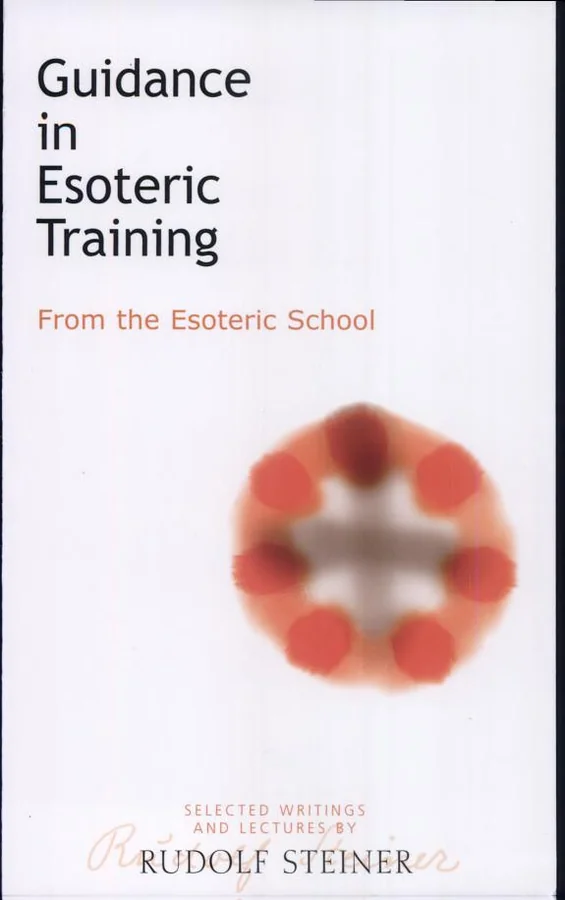
Guidance in Esoteric Training
 74
74

Guidance in Esoteric Training
Steiner’s Guidance in Esoteric Training offers a rigorously structured approach to spiritual practice, eschewing the often vague pronouncements found in lesser works. The strength lies in its systematic presentation of exercises, moving from daily meditations to weekly and monthly observances, all grounded in a Western Rosicrucian lineage. One limitation, however, is the inherent difficulty for the uninitiated reader to grasp the underlying principles without significant prior exposure to Steiner's broader philosophical system. A particularly striking passage involves the detailed instructions for morning exercises, which aim to imbue the waking consciousness with spiritual intention. While demanding, the clarity of the exercises themselves provides a tangible pathway for dedicated students. This work serves as a practical manual for those committed to a disciplined, Western esoteric path.
📝 Description
74
Rudolf Steiner's Guidance in Esoteric Training compiles lectures from 1903-1922 on spiritual self-development.
Collected Works volume 245 (CW 245) gathers Rudolf Steiner's lectures and writings from 1903 to 1922. The focus is on practical exercises and meditations for spiritual growth, presented within his Esoteric School framework. Steiner distinguishes these methods from Eastern traditions, aiming for a Western esoteric path. The book details a structured approach to inner development, suitable for individuals committed to disciplined spiritual practice. It encourages rigorous self-examination and dedicated effort to cultivate higher consciousness and inner faculties. The teachings emerged during a period of significant spiritual inquiry in Europe, building upon Theosophy and developing into Anthroposophy. Steiner sought to anchor esoteric training in a modern Western, Rosicrucian impulse, distinct from the prevailing Orientalism of the era. The goal is to adapt these practices for contemporary understanding and experience.
This volume is situated within the Western esoteric tradition, specifically the development of Anthroposophy from its Theosophical roots. Steiner's work contrasts with the widespread interest in Eastern spiritual systems during the late 19th and early 20th centuries. He aimed to establish a distinct path of spiritual training grounded in a modern Western, Rosicrucian impulse. The practices described are designed to be accessible and relevant to contemporary European consciousness, emphasizing conscious will and disciplined awareness.
💡 Why Read This Book?
• Gain access to specific exercises for morning and evening routines, as detailed in CW 245, offering a structured method for integrating spiritual practice into daily life. • Understand the Rosicrucian impulse in Western esoteric training, as presented by Steiner from 1904-1914, providing a unique alternative to Eastern spiritual disciplines. • Develop practical techniques for spiritual self-development through meditations and practices adapted for modern consciousness, as outlined in this collection of lectures.
⭐ Reader Reviews
Honest opinions from readers who have explored this book.
❓ Frequently Asked Questions
What is the primary focus of Rudolf Steiner's Guidance in Esoteric Training?
The book focuses on practical exercises and meditations for spiritual self-development, derived from lectures given to members of his Esoteric School between 1904 and 1914.
When were the original lectures compiled in Guidance in Esoteric Training published?
The selected lectures and writings were compiled and published, first appearing in 1998, with the original material dating from 1903 to 1922.
How does Steiner's approach in this book differ from Eastern methods?
Steiner's methods arise from the Western, Rosicrucian stream of esoteric tradition and are specifically adapted for modern European consciousness, differing in their cultural and spiritual orientation.
What types of exercises are included in the volume?
The volume includes various exercises for morning and evening, as well as practices structured for the days of the week and the months of the year.
What is the significance of CW 245?
CW 245 refers to the volume number in Rudolf Steiner's Collected Works, indicating that 'Guidance in Esoteric Training' is a specific compilation of his writings and lectures within his comprehensive body of work.
Is prior knowledge of Anthroposophy required to understand this book?
While prior knowledge can be beneficial, the book aims to provide guidance for spiritual self-development. However, understanding the underlying principles of Anthroposophy will enhance comprehension of the esoteric context.
🔮 Key Themes & Symbolism
Western Esoteric Practice
This volume champions a distinct Western esoteric path, rooted in the Rosicrucian tradition, as presented by Rudolf Steiner. It emphasizes that spiritual development can and should be cultivated through methods specifically adapted to modern European consciousness, contrasting with the often-adopted Eastern approaches. The work provides a framework for understanding the unique spiritual currents flowing through Western culture and history, offering practical exercises designed to awaken inner faculties and connect with spiritual realities inherent in this lineage.
Disciplined Inner Cultivation
Central to the teachings is the principle of rigorous self-discipline as the foundation for genuine spiritual progress. The book details specific exercises for daily, weekly, and monthly practice, illustrating a methodical approach to inner transformation. This systematic cultivation aims to refine consciousness, develop higher perception, and achieve a conscious connection with the spiritual world. It requires dedicated effort and consistent application, moving beyond passive contemplation to active, directed inner work.
Spiritualization of Consciousness
The core objective presented is the transformation of ordinary human consciousness into a vessel for spiritual awareness. Through prescribed meditations and exercises, individuals are guided to spiritualize their thinking, feeling, and willing. This process involves perceiving the spiritual dimensions of everyday life and developing the capacity to consciously engage with supersensible realities. The aim is not detachment from the world, but a deepened, spiritually informed engagement with it.
Rosicrucian Impulse
The book explicitly connects its teachings to the Rosicrucian tradition, presenting Steiner's work as a modern manifestation of this ancient esoteric stream. This connection highlights a lineage focused on inner transformation, wisdom, and the development of higher knowledge through disciplined inner work. Understanding this Rosicrucian impulse provides a historical and spiritual context for the exercises and meditations offered, positioning them within a specific Western esoteric lineage.
💬 Memorable Quotes
Direct passages from the work, attributed to the author.
“Exercises for morning and evening, for the days of the week, and for the months of the year.”
— This highlights the practical, structured nature of the training offered. It suggests a holistic approach that integrates spiritual development into the entire cycle of a person's life, from the daily rhythm to the annual progression.
“In contrast to Eastern methods of inner development, these arise from the Western, Rosicrucian stream.”
— This statement defines the specific origin and orientation of Steiner's teachings, differentiating them from other spiritual traditions and emphasizing their suitability for a Western, modern consciousness.
“Adapted fully to modern consciousness.”
— This points to the relevance and applicability of these esoteric practices for individuals living in the contemporary world. It suggests that the methods are designed to overcome the specific challenges and characteristics of modern thinking and perception.
“Selected lectures and writings from 1903 to 1922 (CW 245).”
— This factual anchor grounds the work historically and bibliographically, indicating its origin within a specific period of Rudolf Steiner's prolific output and its place within his Collected Works.
“Material given by Rudolf Steiner to members of his Esoteric School (1904-1914).”
— This specifies the original audience and context for the teachings, implying a certain depth and level of engagement expected from students within a structured esoteric school environment.
🌙 Esoteric Significance
Tradition
This work is firmly rooted in the Western esoteric tradition, specifically drawing from the Rosicrucian impulse as interpreted and modernized by Rudolf Steiner. It represents a significant departure from the prevailing Orientalism in Western spiritual movements of the late 19th and early 20th centuries. Steiner sought to establish an esoteric path that was uniquely Western, adapted to the intellectual and psychological range of modern European consciousness, while still maintaining a connection to ancient wisdom streams.
Symbolism
While the book focuses heavily on practical exercises, underlying symbolism from the Rosicrucian tradition informs its approach. The rose and the cross, central to Rosicrucianism, symbolize the union of the spiritual (rose) and the material/human (cross). The exercises themselves often work with inner light, cosmic forces, and transformative processes that echo alchemical symbolism, representing the purification and elevation of the human being.
Modern Relevance
Contemporary practitioners of Anthroposophy and related spiritual disciplines continue to utilize the exercises presented in this volume. Thinkers and educators in Waldorf (Steiner) education indirectly benefit from the principles of spiritual development outlined here. Furthermore, individuals exploring Western contemplative traditions and seeking structured, non-dogmatic paths for inner growth find Steiner's systematic approach relevant to modern psychological and spiritual needs.
👥 Who Should Read This Book
• Aspiring students of Anthroposophy seeking a foundational guide to Steiner's practical spiritual exercises and meditations. • Practitioners of Western esoteric traditions interested in comparing and integrating Rosicrucian-based methods with their existing practices. • Individuals engaged in self-development who are looking for a structured, disciplined approach to cultivating higher consciousness rooted in Western thought.
📜 Historical Context
Guidance in Esoteric Training draws from lectures and writings produced between 1903 and 1922, a period of intense spiritual exploration in Europe. Rudolf Steiner was active within the Theosophical Society before founding Anthroposophy in 1912. This era saw a proliferation of esoteric movements, including spiritualism, Theosophy, and various Rosicrucian revivals, alongside significant developments in philosophy and psychology. Steiner's work differentiated itself by emphasizing a scientific approach to the spiritual, grounded in direct inner experience and conscious development, rather than solely relying on inherited dogma or mystical intuition. His approach contrasted with the more purely mystical or theurgic practices prevalent in some circles, and he actively sought to provide a spiritual path suitable for the rational and intellectual tendencies of the modern Western mind. Contemporaries like Annie Besant and C.W. Leadbeater were prominent figures in Theosophy during the earlier part of this period, representing a different stream of esoteric thought.
📔 Journal Prompts
Morning meditation preparation: How can the intention set in the morning exercise shape the perception of daily events?
Weekly rhythm: Reflect on the specific challenges and opportunities presented by the exercises for the days of the week.
Rosicrucian impulse: How does the Western focus, as described in CW 245, influence the approach to spiritual training compared to other traditions?
Conscious transformation: Identify one area of your ordinary consciousness that you aim to spiritualize through dedicated practice.
Evening reflection: How can the evening exercises serve to integrate the day's experiences with spiritual insights?
🗂️ Glossary
Esoteric School
A term used by Rudolf Steiner to refer to groups dedicated to the systematic study and practice of spiritual science, aiming for inner development beyond ordinary academic or religious instruction.
Rosicrucian
Pertaining to a mystical and esoteric tradition that emerged in Europe in the early 17th century, often associated with alchemy, Christian mysticism, and hidden wisdom.
CW 245
Refers to volume 245 of Rudolf Steiner's Collected Works (Gesamtausgabe), indicating the specific collection of lectures and writings this book is derived from.
Anthroposophy
A spiritual philosophy founded by Rudolf Steiner, seeking to understand the spiritual nature of the human being and the cosmos through a scientifically grounded approach to spiritual knowledge.
Spiritual Self-Development
The process of consciously cultivating one's inner capacities, consciousness, and connection to the spiritual world through dedicated study, meditation, and ethical living.
Modern Consciousness
The state of awareness and cognitive understanding characteristic of contemporary individuals, often marked by a strong emphasis on rationality, individualism, and scientific thinking.
Western Stream
Refers to esoteric and spiritual traditions originating in or developed within the cultural and intellectual history of Europe and the West, as opposed to Eastern traditions.
This book appears in 1 collection
🔮 Readers Also Liked
Browse all →







From the “Anthroposophy” Collection
View all →






More Free Theosophy & Anthroposophy Books
View all →