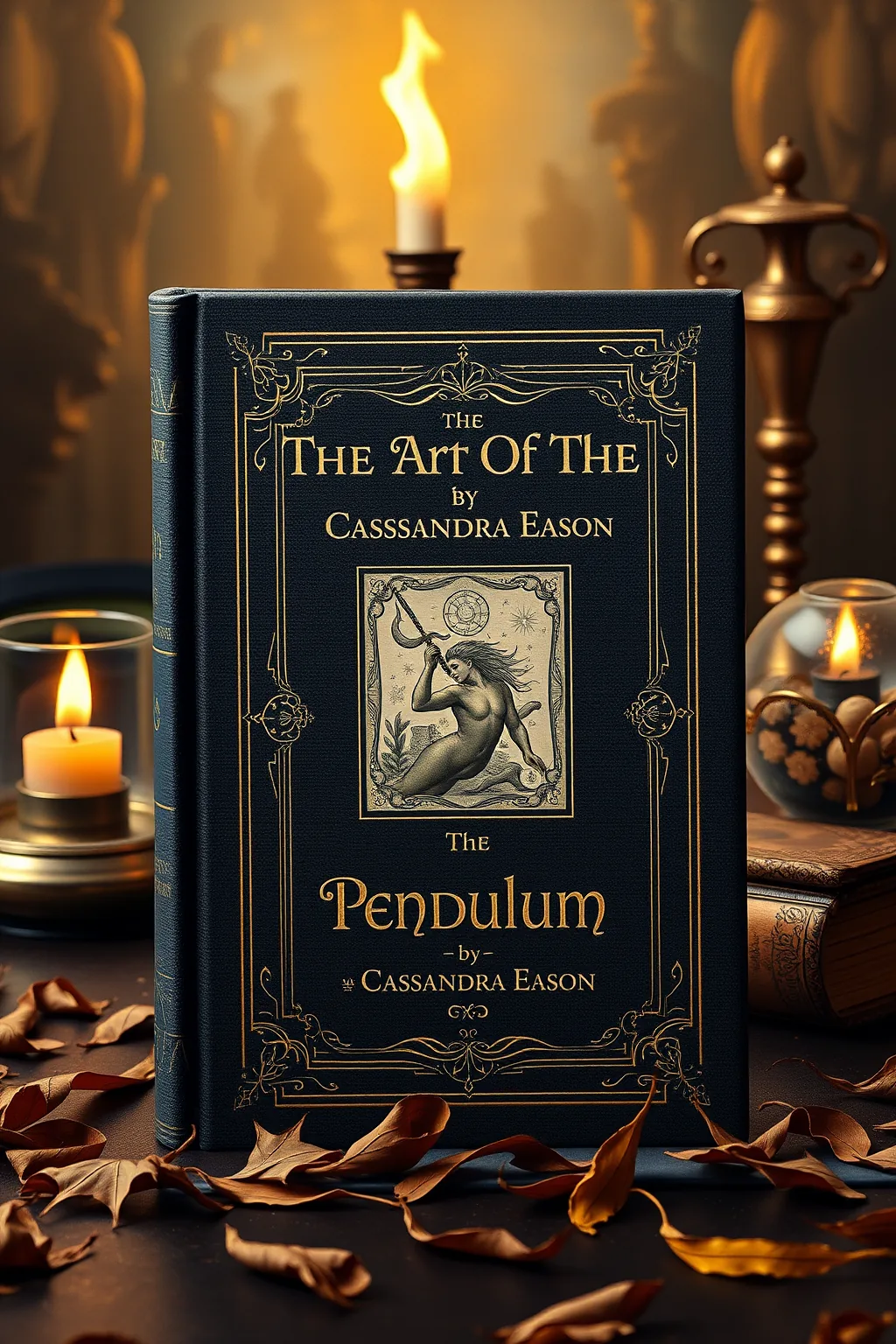
The Art Of The Pendulum
 73
73

The Art Of The Pendulum
Cassandra Eason's "The Art of the Pendulum" presents a clear, no-nonsense approach to a practice often shrouded in mystique. Its strength lies in its methodical breakdown of technique, moving from the practicalities of tool selection to sophisticated interpretation of swings and arcs. Eason avoids overly florid language, grounding the work in accessible explanations of how the pendulum interacts with subtle energies. A particular strength is the chapter on creating personal charts, empowering the user beyond pre-made templates. However, the book sometimes assumes a prior familiarity with energetic concepts that might leave absolute novices slightly adrift. The discussion on pendulum 'reading' for others, while present, could benefit from more detailed cautionary advice. Overall, it serves as a solid, dependable primer for anyone serious about learning pendulum dowsing.
📝 Description
73
Cassandra Eason's 1994 book details pendulum dowsing, a practice with roots stretching back centuries.
The Art of the Pendulum by Cassandra Eason provides a thorough introduction to using a pendulum for divination. The book explains how to choose a pendulum, how to hold it correctly, and how to interpret the subtle swings and patterns it makes. Eason frames the pendulum not just as a tool for fortune telling, but as a way to connect with one's own subconscious mind and unseen energies. It is suitable for those new to pendulum work, offering clear instructions for beginners. Experienced practitioners can also find ways to improve their skills and deepen their connection with the pendulum.
The book addresses individuals interested in esoteric topics, self-improvement, and energy work. It examines how the pendulum acts as an amplifier for intuition and subconscious awareness. Readers will learn about energetic resonance, the importance of focused intention, and the ethical use of dowsing for guidance. Eason also covers various pendulum charts and how to use them for different purposes.
Pendulum dowsing connects to a long history of seeking hidden knowledge through symbolic instruments. While dowsing for water or minerals has historical precedent, pendulum use as a distinct divinatory method grew within spiritualist and occult movements. Eason places this practice within the tradition of psychical research and the use of tools to access subtle information. It is part of a broader interest in intuition, energy work, and historical methods of divination.
💡 Why Read This Book?
• Learn specific techniques for selecting and cleansing your pendulum, ensuring it is attuned to your personal energy, a crucial first step detailed in the early chapters. • Understand the principles of energetic resonance and subconscious amplification as explained by Eason, allowing you to interpret pendulum movements beyond simple yes/no answers. • Explore the creation and use of personalized dowsing charts, empowering you to ask more nuanced questions and receive detailed guidance, as demonstrated with examples in the text.
⭐ Reader Reviews
Honest opinions from readers who have explored this book.
❓ Frequently Asked Questions
What is the historical origin of pendulum dowsing?
Pendulum dowsing's roots are intertwined with the older practice of dowsing rods, with evidence of their use dating back to 15th-century Germany for locating minerals and water.
Can I use any pendulum for dowsing?
While Eason discusses various materials, the book emphasizes that the best pendulum is one that feels right to you and resonates with your personal energy, suggesting a connection beyond mere material composition.
How does a pendulum work according to this book?
The book explains that the pendulum acts as an amplifier for the user's subconscious mind and subtle energetic fields, translating these into observable movements.
Are there ethical guidelines for using a pendulum?
Yes, Eason touches upon the importance of clear intention and responsible use, advising against using the pendulum for trivial matters or to manipulate others.
What is the difference between pendulum dowsing and using a dowsing rod?
While both are forms of dowsing, pendulum dowsing is often used for more subtle energies, personal guidance, and energetic diagnostics, whereas rods were historically more focused on physical elements like water or minerals.
When was 'The Art of the Pendulum' first published?
Cassandra Eason's 'The Art of the Pendulum' was first published in 2005.
🔮 Key Themes & Symbolism
Intuition and the Subconscious
Eason posits the pendulum as a tool to bridge the conscious and subconscious mind. The work explores how subtle energetic shifts, often imperceptible to the conscious intellect, can be amplified and translated into physical motion by the pendulum. This allows practitioners to access inner wisdom, receive guidance, and uncover hidden truths about themselves and their circumstances. The book details methods for quieting the mind to facilitate this connection, emphasizing that the pendulum doesn't 'know' things independently but rather acts as a receiver for the user's own deep knowing.
Energetic Resonance and Vibration
A core concept is that everything, including thoughts and intentions, possesses a vibrational frequency. The pendulum, sensitive to these subtle energies, is shown to resonate with the specific vibrations of questions asked or subjects considered. Eason explains how to attune the pendulum to the user's unique energetic signature, ensuring accurate responses. This principle underpins the book's approach to diagnosis and guidance, treating the pendulum as an instrument that interacts with the unseen energetic landscape surrounding individuals and situations.
Practical Application and Ethics
Beyond theory, 'The Art of the Pendulum' provides practical frameworks for using the tool in daily life. This includes techniques for creating custom charts, performing energetic assessments, and applying pendulum dowsing to areas such as healing, decision-making, and personal development. Eason also addresses the ethical dimension, stressing the importance of responsible use, clear intent, and respecting free will. The book guides readers to approach pendulum work with integrity, ensuring it serves as a tool for empowerment rather than manipulation.
Historical Divinatory Tools
The book situates pendulum dowsing within the broader historical context of divination and psychical research. It acknowledges the lineage of tools used to seek hidden knowledge, from ancient oracles to more modern psychical instruments. By exploring these connections, Eason frames the pendulum not as a novel invention but as a contemporary manifestation of humanity's enduring quest for understanding the unseen. This perspective adds depth, connecting the individual practice to a larger historical and cultural narrative of seeking truth.
💬 Memorable Quotes
Direct passages from the work, attributed to the author.
“The pendulum acts as an extension of your own intuition.”
— This interpretation highlights the pendulum's role not as an external oracle, but as a physical manifestation of the user's inner knowing and subconscious perceptions.
“Clarity of intention is paramount for accurate readings.”
— This emphasizes that the effectiveness of pendulum dowsing relies heavily on the user's mental focus and the precise formulation of their questions.
“Every pendulum has its own energy, and yours must resonate with it.”
— This suggests a symbiotic relationship between the practitioner and their tool, implying that a personal connection and energetic compatibility are essential for successful dowsing.
“Pendulum charts help to focus energy and provide structured answers.”
— This explains the function of dowsing charts as aids that channel the pendulum's movements into specific, interpretable responses, making complex information more accessible.
“Use the pendulum responsibly, for guidance, not control.”
— This underscores the ethical considerations inherent in divination, advocating for its use as a tool for self-awareness and informed decision-making rather than for manipulation.
🌙 Esoteric Significance
Tradition
The work aligns with the Western Esoteric tradition, particularly its branches focused on divination, psychical research, and energy work. It draws upon the Hermetic principle of 'As Above, So Below,' suggesting a correspondence between the macrocosm and the microcosm, with the pendulum acting as a bridge. While not explicitly Kabbalistic or Gnostic, it shares the broader esoteric aim of accessing hidden knowledge and understanding subtle forces that influence the material world.
Symbolism
The pendulum itself is a primary symbol, representing a focused point of energy and a conduit for answers. Its circular or arc-like movements can symbolize cycles, the flow of energy, or the unfolding of destiny. Dowsing charts, often featuring geometric patterns and symbolic representations (like zodiacal signs or planetary symbols), serve as symbolic maps that help interpret the pendulum's direction and intensity, translating abstract energies into concrete information.
Modern Relevance
Eason's approach to pendulum dowsing remains relevant for contemporary practitioners of energy healing, intuitive development, and mindfulness. Modern schools of thought in areas like Applied Kinesiology and bioresonance therapy echo the principles of energetic resonance discussed in the book. Furthermore, the emphasis on subconscious access and intuitive guidance appeals to current trends in personal development and self-help, making the pendulum a tool for navigating modern life's complexities.
👥 Who Should Read This Book
['• Beginning students of divination seeking a structured introduction to pendulum dowsing, learning fundamental techniques and interpretations.', '• Practitioners of energy healing interested in using the pendulum for diagnostics and identifying energetic imbalances in themselves or others.', '• Individuals exploring personal development and self-discovery who wish to access their subconscious mind for guidance and clarity.']
📜 Historical Context
Published in 2005, Cassandra Eason's "The Art of the Pendulum" emerged during a period of renewed interest in esoteric practices and alternative healing modalities. This era saw a confluence of New Age spirituality, psychological exploration of the subconscious, and a resurgence of interest in historical divination methods. Eason's work can be seen as contributing to a broader movement that sought to integrate ancient wisdom with modern understanding. Contemporaries like Doreen Virtue were also popularizing angel card readings and intuitive guidance during this time, reflecting a cultural appetite for accessible tools of self-discovery. While not directly engaging with academic esoteric scholarship, Eason's book tapped into the popular reception of dowsing, which had long been a subject of interest for groups like the Society for Psychical Research, albeit often viewed with skepticism by mainstream science.
📔 Journal Prompts
The pendulum's connection to your subconscious mind: explore its perceived role.
Reflect on the ethical considerations of using a pendulum for guidance.
Analyze the concept of energetic resonance as applied to pendulum movements.
Consider the historical lineage of dowsing tools and their symbolic meaning.
Evaluate the clarity of your intentions when formulating pendulum questions.
🗂️ Glossary
Dowsing
The practice of using a pendulum or rod to detect hidden substances, energies, or information, often believed to be guided by intuition or subtle forces.
Energetic Resonance
The principle that objects or beings vibrate at specific frequencies, and that these vibrations can influence or mirror one another, which is key to how a pendulum is thought to work.
Subconscious Mind
The part of the mind that is not currently in focal awareness but influences behavior and feelings, often considered the source of intuitive knowledge accessed via tools like the pendulum.
Pendulum Charts
Diagrams or grids used in dowsing, featuring letters, numbers, symbols, or categories, that help focus the pendulum's swings into specific answers or information.
Attunement
The process of aligning the pendulum's energy with the user's own, ensuring a personal connection and facilitating more accurate responses.
Intention
The conscious focus and purpose behind a question or action, considered vital for directing the pendulum's energy effectively and ethically.
Psychical Research
The investigation of paranormal phenomena, including telepathy, clairvoyance, and dowsing, often seeking empirical evidence or theoretical explanations.
🔮 Readers Also Liked
Browse all →







More by Cassandra Eason
All books →




More Free Divination & Tarot Books
View all →