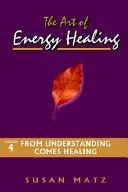
The Art of Energy Healing
 79
79

The Art of Energy Healing
Susan Matz’s *The Art of Energy Healing* attempts to bridge the gap between esoteric theory and lived experience, a common aspiration in contemporary self-help. The book’s strength lies in its direct encouragement of self-application, moving past abstract notions to concrete personal action. Matz asserts that true growth stems from recognizing one's current state and then actively choosing a new path. However, the work sometimes feels overly generalized, particularly in its early sections, which could benefit from more specific examples or case studies to illustrate the ‘how-to’ of energy healing. A passage discussing the courage to make different life choices, while conceptually sound, would be more impactful with clearer actionable steps. Ultimately, *The Art of Energy Healing* offers a functional, albeit sometimes basic, guide for those ready to enact internal shifts.
📝 Description
79
Published in December 2005, The Art of Energy Healing offers a practical guide to integrating esoteric ideas into everyday life.
Susan Matz's book, The Art of Energy Healing, provides a structured approach for individuals wanting to apply spiritual or energetic concepts to their daily lives. It moves beyond theory, focusing on actionable steps for personal development and conscious decision-making. The author posits that self-awareness is the first step in a larger process of change. The book is designed for those who have already begun exploring personal development or esoteric studies and are now ready to put those ideas into practice. Readers seeking methods for self-acceptance and the courage to change their life's direction will find valuable guidance within its pages. It aims to help individuals translate abstract spiritual ideas into tangible improvements in their lives.
The Art of Energy Healing appeared in 2005 during a time of broad interest in New Age and self-help literature that often combined psychological insights with spiritual practices. While not directly aligned with older traditions like Theosophy or Hermeticism, the book reflects a more recent cultural focus on accessible methods for personal empowerment and holistic well-being. It was influenced by popular figures who promoted positive affirmations and the mind-body connection, fitting into the early 21st century's embrace of alternative healing modalities.
💡 Why Read This Book?
• Learn to apply foundational esoteric principles to daily decisions, a concept detailed in the book's exploration of 'making different life choices' by recognizing current patterns. • Discover the practical process of self-acceptance as a prerequisite for personal transformation, a method Matz outlines starting from the initial step of 'seeing oneself.' • Gain courage to enact meaningful life changes by understanding the connection between inner awareness and external action, as presented in the book's framework for conscious choice.
⭐ Reader Reviews
Honest opinions from readers who have explored this book.
❓ Frequently Asked Questions
When was The Art of Energy Healing first published?
The Art of Energy Healing by Susan Matz was first published on December 1, 2005. This edition focuses on applying learned principles to real-life situations.
What is the primary goal of The Art of Energy Healing?
The book aims to guide readers from self-awareness towards acceptance and the courage to make conscious, different life choices, translating esoteric concepts into practical action.
Who is the intended audience for this book?
It is for individuals who have some familiarity with self-help or esoteric concepts and are looking for practical ways to integrate them into their lives for personal growth.
Does the book offer specific techniques for energy healing?
While the title suggests techniques, the book emphasizes the psychological and intentional aspects of energy healing, focusing on self-awareness, acceptance, and choice-making as core components.
What is the relationship between 'seeing oneself' and 'making different life choices' in the book?
'Seeing oneself' is presented as the initial step of awareness, leading to acceptance, which then empowers individuals with the courage to actively 'make different life choices'.
Is this book part of a larger series?
The blurb suggests readers might have learned from a 'series,' implying that The Art of Energy Healing builds upon or applies concepts previously introduced elsewhere by the author.
🔮 Key Themes & Symbolism
Self-Awareness as Foundation
The work posits that truly 'seeing oneself' is the indispensable first step in any journey of personal evolution. This isn't merely about acknowledging one's existence, but about a deep, honest appraisal of current states, beliefs, and patterns of behavior. This foundational understanding, the book argues, creates the necessary space for subsequent growth and change, acting as a stable platform from which to launch new intentions and life directions.
Acceptance as a Gateway
Acceptance is presented not as passive resignation, but as an active, courageous embrace of one's current reality. The text suggests that this non-judgmental acknowledgment of 'what is' is the critical juncture that unlocks the potential for genuine transformation. Without this stage, efforts to change can be met with internal resistance. Acceptance, therefore, serves as the bridge between awareness and the willingness to explore new possibilities.
Conscious Choice and Agency
The ultimate aim of the process outlined in The Art of Energy Healing is to cultivate the courage to 'make different life choices.' This theme emphasizes personal agency and the power of intention. By integrating self-awareness and acceptance, readers are encouraged to actively steer their lives, moving away from ingrained patterns towards more fulfilling and aligned paths. It highlights the transformative power inherent in conscious decision-making.
Application of Esoteric Concepts
This theme focuses on the practical application of what might be considered esoteric or energetic principles. The book moves beyond theory to demonstrate how these concepts can be directly integrated into everyday life. It's about making the subtle tangible, using inner understanding to influence outer circumstances and personal evolution, thereby explaining complex ideas for real-world benefit.
💬 Memorable Quotes
Direct passages from the work, attributed to the author.
“Seeing oneself is just the beginning; from there the journey moves towards a place of acceptance and the courage to make different life choices.”
— This captures the book's core progression: awareness is the starting point, leading to acceptance, which then empowers individuals to actively choose new directions and alter their life's trajectory.
“The work explores applying what has been learned to real life.”
— This highlights the book's practical orientation, aiming to bridge the gap between theoretical knowledge of esoteric or self-help concepts and their tangible implementation in daily existence.
“The journey involves developing the courage to make different life choices.”
— This interpretation underscores the book's focus on empowering the reader to take active control, framing personal growth as an act of bravery in choosing a new path.
“The book guides readers to apply learned principles to their real lives.”
— This captures the essence of the publication's purpose: to serve as a practical manual for integrating spiritual or personal development insights into the fabric of everyday existence.
💡 Key Ideas
Editorial paraphrase of the work's core concepts — not direct quotes.
From self-awareness, one moves towards acceptance.
This paraphrase emphasizes the sequential nature of the process described, positioning acceptance as a direct and necessary consequence of genuine self-recognition.
🌙 Esoteric Significance
Tradition
While not explicitly aligned with a single historical esoteric lineage such as Kabbalah or Theosophy, *The Art of Energy Healing* draws upon principles common in modern Western Esotericism and New Age thought. It emphasizes personal agency, the power of consciousness, and the interconnectedness of inner states and outer reality, concepts frequently explored in contemporary interpretations of Hermeticism and psychological approaches to spirituality.
Symbolism
The work primarily uses conceptual symbolism rather than overt arcane imagery. 'Seeing oneself' functions as a symbol for the initial state of consciousness, a mirror reflecting internal patterns. 'Acceptance' acts as a symbolic gateway, representing a threshold that must be crossed. 'Making different life choices' symbolizes the active, directional energy of transformation, representing the conscious redirection of one's life force.
Modern Relevance
This work appeals to contemporary practices in life coaching, mindfulness, and positive psychology, which also advocate for self-awareness and conscious choice. Thinkers and practitioners in fields focusing on manifestation, cognitive behavioral therapy influenced by spiritual concepts, and energy psychology can find the book's approach to integrating inner states with outer action relevant to their methodologies.
👥 Who Should Read This Book
• Individuals seeking practical methods to integrate spiritual or self-help concepts into their daily lives, moving beyond theory to application. • Those who have begun exploring personal growth and are ready to actively make significant life changes based on self-awareness and acceptance. • Readers interested in understanding the psychological underpinnings of personal transformation, focusing on conscious choice and personal agency in shaping one's reality.
📜 Historical Context
Published in December 2005, *The Art of Energy Healing* arrived during a burgeoning era for accessible self-help and New Age spirituality, which often sought to democratize complex psychological and esoteric ideas. While not a direct descendant of historical movements like the Hermetic revival or Gnosticism, it reflects the early 21st-century cultural landscape that embraced mind-body connection and personal empowerment. This period saw figures like Eckhart Tolle gain mainstream traction with works on presence and consciousness. Matz's book fits within this milieu, offering a practical toolkit for individuals looking to apply subtle energetic principles to tangible life improvements. It distinguished itself by focusing on the actionable transition from awareness to choice, rather than solely on theoretical frameworks. The book's reception was part of a broader trend of seeking practical spirituality outside traditional religious structures.
📔 Journal Prompts
Reflect on the concept of 'seeing oneself' as the initial step in personal transformation.
Explore the meaning of 'acceptance' in your current life circumstances.
Consider the courage required to 'make different life choices' based on newfound awareness.
How can the principles of applying learned concepts to real life be enacted this week?
Identify one pattern recognized through 'seeing oneself' that needs acceptance to change.
🗂️ Glossary
Seeing oneself
The initial stage of self-awareness described in the book, involving an honest and objective recognition of one's current thoughts, feelings, behaviors, and life situation.
Acceptance
The process of embracing one's current reality, including self-perceptions and circumstances, without judgment, as a necessary precursor to making intentional changes.
Making different life choices
The active process of consciously deciding to alter one's path, decisions, or behaviors, empowered by self-awareness and acceptance, to create a desired future.
Energy Healing (as applied here)
In this context, refers to the internal process of shifting one's state of being—awareness, acceptance, and intention—to positively influence personal circumstances and well-being.
Personal transformation
A significant and fundamental change in an individual's character, behavior, or life circumstances, driven by internal processes and conscious choices.
Esoteric principles
Underlying concepts related to consciousness, energy, and the subtle aspects of reality that are explored in spiritual or metaphysical traditions, applied here practically.
Conscious choice
Decisions made with deliberate awareness and intention, rather than being driven by unconscious patterns or external pressures.