The book of lies
 81
81

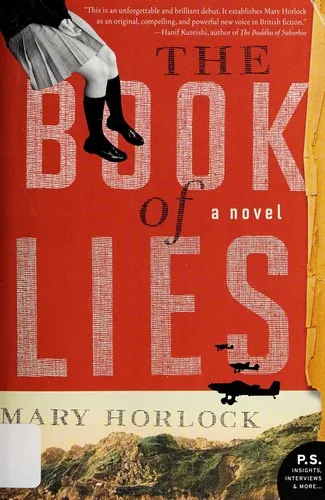
The book of lies
Mary Horlock’s The Book of Lies (2011) is an exercise in intellectual archaeology, unearthing the mechanisms of perceived reality. Unlike many contemporary works that offer facile answers, Horlock presents a complex tapestry of ideas that demands active participation. Her examination of the Gnostic concept of the Demiurge, for instance, is particularly compelling, reframing it as a pervasive force of societal and self-imposed limitation rather than a simple antagonist. The prose, while dense, possesses a singular clarity when dissecting the subtle ways illusion operates. However, the book’s greatest strength—its intricate layering of concepts—can also be its primary hurdle. A reader seeking a quick overview of occult theories might find themselves adrift in its philosophical currents. One particularly striking passage discusses the 'veil of Maya,' not as a divine illusion, but as a construct of the ego's fear of dissolution. The Book of Lies ultimately offers a challenging, yet rewarding, contemplation on the nature of truth and deception.
📝 Description
81
Mary Horlock's 2011 'The Book of Lies' examines deception, illusion, and belief systems.
Published in 2011, Mary Horlock's 'The Book of Lies' is not a simple guide. Instead, it presents interwoven narratives and philosophical questions about deception and illusion. The book probes the hidden structures that shape belief and challenges common ideas about truth and reality. It encourages readers to consider different views on the forces affecting human experience and perception. Horlock's prose is noted for its detail and its direct challenge to established norms.
This work is for readers interested in occult philosophy and comparative mythology. It suits those who look beyond surface explanations for a deeper understanding of esoteric thought. Readers who enjoy philosophical puzzles, literary studies of mystical ideas, and examinations of psychological archetypes will find significant content. The book demands careful thought and introspection from its audience.
Published in 2011, 'The Book of Lies' appeared during a time of renewed interest in esoteric traditions. Its themes connect to Gnosticism, Hermeticism, and postmodern philosophy's questioning of objective reality. The book attempts to bridge ancient ideas with modern scientific and psychological thought, finding its own place among such syntheses.
💡 Why Read This Book?
• Gain a nuanced understanding of Gnostic concepts like the Demiurge and gnosis, moving beyond simplistic interpretations as seen in the book's chapter on "The Architect of Illusions." • Explore the psychological underpinnings of deception and self-deception, as Horlock analyzes the "Inner Temple" as a locus of authentic being. • Appreciate a philosophical approach to the early 21st century esoteric landscape, understanding how the work engages with themes prevalent since 2011.
⭐ Reader Reviews
Honest opinions from readers who have explored this book.
❓ Frequently Asked Questions
What esoteric traditions does The Book of Lies draw upon?
The work is deeply influenced by Gnosticism, particularly its cosmology and ideas about illusion and demiurgic forces. It also engages with Hermetic principles and broader philosophical inquiries into the nature of reality.
Is The Book of Lies suitable for beginners in occult philosophy?
While accessible to those with some background, the book's dense philosophical style and intricate arguments make it more suited for readers with a prior interest in esoteric thought or comparative philosophy.
What is the significance of 'lies' in the context of the book?
The 'lies' refer not only to outright deception but also to self-imposed illusions, societal constructs, and the perceived limitations of empirical reality that obscure deeper, more authentic truths.
Does Mary Horlock offer practical exercises or rituals?
The book focuses primarily on philosophical exploration and conceptual analysis. While it may inspire introspection, it does not typically provide direct ritualistic or practical exercises in the vein of grimoires.
When was The Book of Lies first published?
The Book of Lies by Mary Horlock was first published in 2011, positioning it within the early 21st-century resurgence of interest in esoteric philosophy and comparative mysticism.
What are the main themes explored in the book?
Key themes include the nature of illusion, the concept of gnosis, the Gnostic Demiurge as a force of limitation, the idea of the 'Fall,' and the search for an 'Inner Temple' of authentic selfhood.
🔮 Key Themes & Symbolism
The Demiurge as Limitation
Horlock reinterprets the Gnostic Demiurge not as a malevolent deity but as the architect of perceived reality, including societal norms, egoic structures, and the limitations of empirical knowledge. The work posits that this 'creator' of illusion traps consciousness within a framework of false dichotomies and material focus. Understanding this concept is crucial for recognizing the boundaries of ordinary perception and the potential for transcending them, as explored in sections discussing the 'Architect of Illusions'.
Gnosis Beyond Knowledge
The book distinguishes between mere intellectual knowledge (episteme) and true gnosis. Gnosis is presented as an intuitive, experiential apprehension of reality, a direct knowing that bypasses rational faculties and linear thought processes. This form of understanding is seen as the key to liberating oneself from the Demiurge's constraints. The pursuit of gnosis is depicted as an internal journey towards recognizing one's true spiritual nature, a core tenet within many esoteric lineages.
The Inner Temple and Authentic Self
Central to Horlock's thesis is the concept of the 'Inner Temple' – a sacred, inviolable space within the individual consciousness. This inner sanctuary represents the seat of the authentic self, untouched by external deception or internal delusion. The book argues that the path to liberation involves fortifying and accessing this inner sanctum, shielding it from the pervasive 'lies' of the external world and the ego's manufactured narratives. It is the ultimate refuge and source of true wisdom.
The Nature of Illusion
Illusion, in The Book of Lies, is many-sided. It encompasses the deceptions of the material world, the seductive narratives of the ego, and the limitations imposed by language and conceptual thought. The work meticulously dissects how these layers of illusion obscure a more profound spiritual reality. By understanding the mechanics of illusion, readers are encouraged to see through the veils that obscure their own innate spiritual awareness and the interconnectedness of all things.
💬 Memorable Quotes
Direct passages from the work, attributed to the author.
“The architect of our perceived reality crafts the bars of our own prison.”
— This suggests that the forces limiting our understanding and freedom are not necessarily external, but are often inherent in the very structure of how we construct and interpret the world around us.
“Gnosis arrives not as an answer, but as the dissolution of the questioner.”
— This highlights the non-dualistic nature of true spiritual insight, implying that enlightenment transcends the subject-object duality and the need for empirical proof or rational justification.
“Within the sanctum of the Inner Temple, the elements of the outer world fade.”
— This metaphor emphasizes the importance of internal focus and spiritual discipline, suggesting that true peace and clarity are found by withdrawing from external distractions and cultivating inner awareness.
“The most potent lies are those we whisper to ourselves.”
— This points to the power of self-deception and the role of the ego in creating limiting beliefs and false identities that prevent us from recognizing our true spiritual nature.
“To see the veil is the first step; to pass through it, the final act.”
— This captures the journey of spiritual awakening, where recognizing the illusory nature of ordinary reality is essential, but the true transformation comes from actively transcending these limitations.
🌙 Esoteric Significance
Tradition
The Book of Lies is firmly rooted in the Gnostic tradition, reinterpreting its core concepts for a contemporary audience. It draws heavily on the Gnostic cosmology that posits a flawed creator (Demiurge) responsible for the material world and the subsequent illusion that traps human consciousness. Horlock’s work aligns with the Gnostic emphasis on gnosis—intuitive, direct spiritual knowledge—as the path to liberation from this flawed creation, distinguishing it from more devotional or ritualistic esoteric paths.
Symbolism
A primary symbol is the 'Demiurge,' representing not a literal deity but the principle of limitation, duality, and illusion that structures our perceived reality. The 'Inner Temple' symbolizes the sacred, authentic self, a sanctuary of pure consciousness within the individual, untouched by external deception. The 'Veil' is another crucial motif, representing the layers of illusion—societal, psychological, and conceptual—that obscure direct spiritual apprehension and must be pierced to attain gnosis.
Modern Relevance
Contemporary thinkers and practitioners interested in consciousness studies, critical theory, and post-Jungian psychology find resonance in Horlock's analysis of illusion and self-deception. Her work informs modern explorations of virtual reality, artificial intelligence, and the constructed nature of social realities, offering a philosophical lens to question the authenticity of digitally mediated experiences and societal narratives.
👥 Who Should Read This Book
• Students of Gnosticism and comparative religion seeking a modern, philosophical interpretation of ancient cosmological themes. • Philosophically inclined individuals interested in the nature of reality, illusion, and consciousness, particularly those drawn to challenging intellectual inquiries. • Readers exploring themes of self-deception and the construction of personal and societal narratives, who wish to understand the esoteric underpinnings of these phenomena.
📜 Historical Context
Mary Horlock’s The Book of Lies, published in 2011, emerged during a period where academic and popular interest in esoteric thought was experiencing a resurgence, partly fueled by the internet and a growing dissatisfaction with purely materialistic worldviews. While not directly a product of the Theosophical movement of the late 19th and early 20th centuries, its engagement with Gnostic themes of illusion and demiurgic creation echoes earlier explorations by figures like Helena Blavatsky. Horlock’s work can be seen as contributing to a broader intellectual current that sought to synthesize ancient mystical traditions with modern psychology and philosophy, a trend also evident in the writings of scholars and practitioners exploring Jungian archetypes and Hermetic philosophy. The book's critical reception was largely confined to specialized circles, where its sophisticated philosophical approach and critique of perceived reality were noted, distinguishing it from more introductory esoteric texts.
📔 Journal Prompts
The Demiurge as a force of limitation: How do societal structures or personal beliefs create an 'architected reality' in your life?
The nature of gnosis: Describe a moment of intuitive understanding that transcended rational thought.
The Inner Temple: What practices or mental states help you access your own sanctuary of authentic selfhood?
Identifying the 'lies': Reflect on a commonly held belief that might be a form of illusion.
The Veil of Maya: How does the perceived separation between self and other create limitations?
🗂️ Glossary
Demiurge
In Gnostic thought, the lesser creator-god, often seen as flawed or ignorant, responsible for the material world and its limitations, trapping spirit within matter.
Gnosis
Direct, intuitive spiritual knowledge or insight, often contrasted with empirical knowledge or belief; a core concept in Gnosticism for liberation.
Inner Temple
A metaphor for the sacred, hidden space within the individual consciousness that represents the authentic self, distinct from the ego and external influences.
Veil
Symbolic barrier representing illusion, ignorance, or the limitations of material perception that obscure a deeper spiritual reality.
Ego
In this context, the constructed sense of self, often based on societal conditioning and personal narratives, which can create illusions and obscure true spiritual identity.
Sophia
In some Gnostic systems, the divine feminine principle whose fall or error leads to the creation of the material world and the Demiurge.
Archons
Servants or rulers of the Demiurge, often seen as forces that maintain cosmic order and enslave humanity within the material realm.
🔮 Readers Also Liked
Browse all →









More by Mary Horlock
All books →
More Free Occult Philosophy Books
View all →